
Amundsen-Scott South Pole Station
The Amundsen-Scott South Pole Station: a remote research outpost at the bottom of the world, pushing the boundaries of science in extreme conditions.
Highlights
Must-see attractions

Social
From TikTok & Reddit
Best Time
Summer months offer slightly milder temperatures and more daylight.
Amundsen-Scott South Pole Station
Best Time
Summer months offer slightly milder temperatures and more daylight.
Highlights
Must-see attractions
The Amundsen-Scott South Pole Station: a remote research outpost at the bottom of the world, pushing the boundaries of science in extreme conditions.
"Mere words can't describe the experience of witnessing this place. You have to be here in person!"
Pack for Extreme Cold
Layering is key! Bring extreme cold weather gear, including insulated boots and gloves.
Prepare for Schedule Changes
Internet and schedules are satellite-dependent and can change frequently.

Highlights
Discover the most iconic attractions and experiences
Geographic South Pole Marker
Amundsen-Scott South Pole Station
Stand at the bottom of the world! The marker is updated annually due to ice sheet drift.

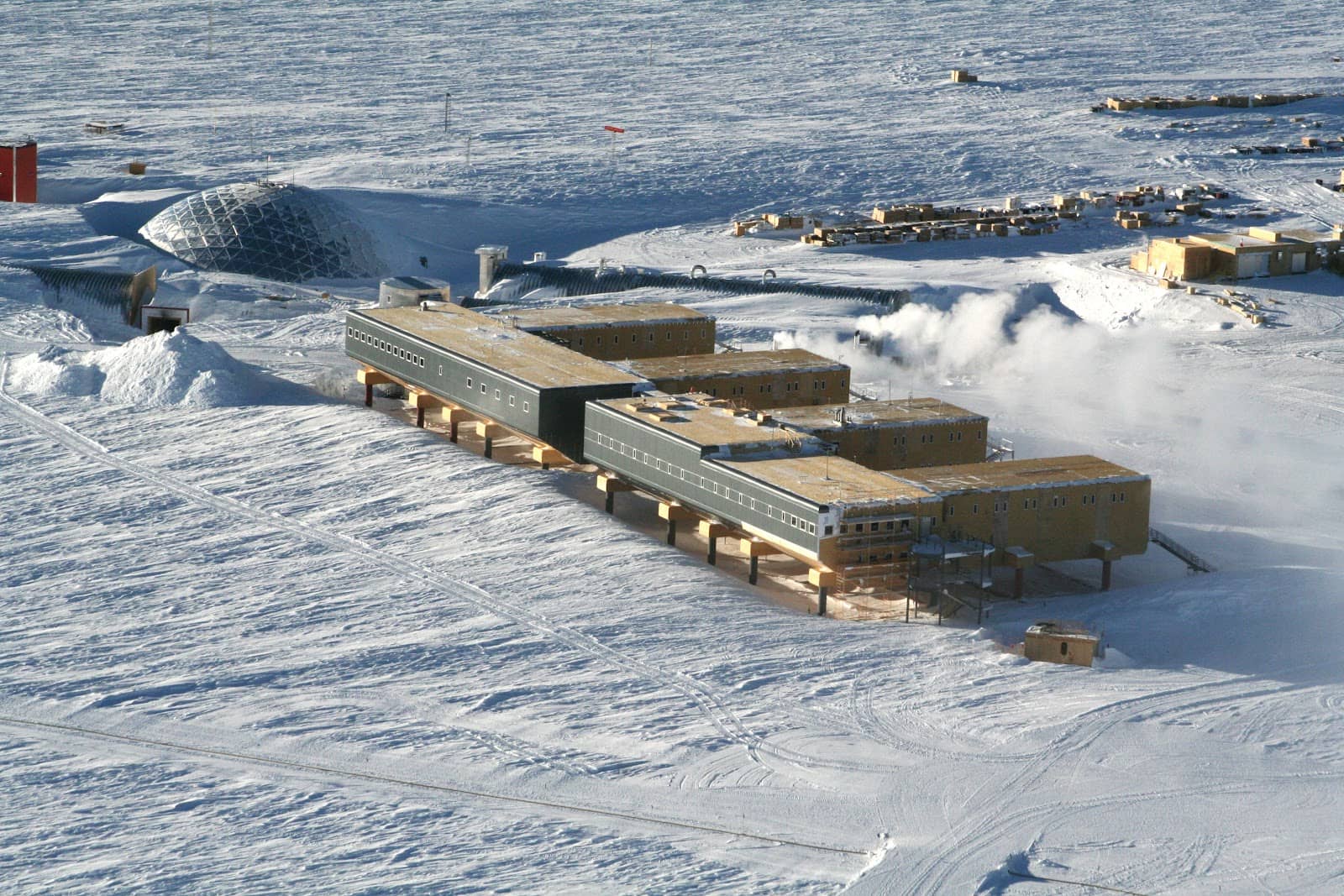
The Elevated Station
Amundsen-Scott South Pole Station
Explore the unique architecture designed for extreme Antarctic conditions, built to withstand brutal cold and snow.

Aurora Australis
Amundsen-Scott South Pole Station
Witness the breathtaking Southern Lights dancing across the polar night sky.
Plans like a pro.
Thinks like you
Planning Your Visit
Extreme Conditions & Preparation
Access & Logistics
+1Best Times
Insider Tips
from TikTok, Instagram & Reddit
Pack for Extreme Cold
Layering is key! Bring extreme cold weather gear, including insulated boots and gloves.
Prepare for Schedule Changes
Internet and schedules are satellite-dependent and can change frequently.
Respect the Environment
Follow all guidelines to protect the fragile Antarctic ecosystem. Leave no trace.
Stay Hydrated
The dry air can be dehydrating. Drink plenty of water, even if you don't feel thirsty.
Tips
from all over the internet
Pack for Extreme Cold
Layering is key! Bring extreme cold weather gear, including insulated boots and gloves.
Prepare for Schedule Changes
Internet and schedules are satellite-dependent and can change frequently.
Respect the Environment
Follow all guidelines to protect the fragile Antarctic ecosystem. Leave no trace.
Stay Hydrated
The dry air can be dehydrating. Drink plenty of water, even if you don't feel thirsty.
Mental Preparedness
Long periods of isolation and extreme conditions require mental resilience. Practice breathing exercises.
What Travellers Say
Reviews Summary
Visiting the Amundsen-Scott South Pole Station is described as a once-in-a-lifetime, unparalleled experience that mere words cannot capture. While the extreme cold and isolation are significant factors, the unique environment and scientific endeavors make it a profound journey. Some reviews humorously note the lack of aliens or unexpected 'hikes' to the beach. +1
"2019/2020 Poli here. If anyone has the chance to visit the South Pole, do it! It’s a once a lifetime experience and you won’t ever experience anything else like this ever again. Enjoyed my time a lot! 8/10 because no aliens in the tunnels underneath the station"
David Tedesco
"Mere words can't describe the experience of witnessing this place. You have to be here in person!
Do practice breathing exercises well before the start of expedition. It'll help you to cope with the pressure change much earlier.
Har Har Mahadev🙏🏽🔱
#vinsonmassif"
निलय भारद्वाज
"It was kinda chilly when me and my Uncle went. So we decided to walk to the beach it was a short walk but my uncle froze so I had to remove a star"
Jimmy Head
What People Like
What People Dislike
Frequently Asked Questions
🚇 🗺️ Getting There
Access to the Amundsen-Scott South Pole Station is highly restricted and primarily for scientific personnel. Most visitors arrive via McMurdo Station, followed by a flight. Independent travel is not possible.
The journey to the South Pole is extensive, often involving multiple flights and transit through McMurdo Station. It's a significant undertaking, not a casual trip.
Direct tourism to the Amundsen-Scott South Pole Station is not permitted. Access is limited to those with official scientific or logistical roles.
Flights, such as those through the Transantarctic Mountains, offer stunning views but are subject to weather. The journey is part of the adventure.
No, there is no public transportation. All movement is managed by station logistics.
🎫 🎫 Tickets & Entry
There are no 'tickets' for public entry. Access is granted through official scientific or support assignments.
The station operates year-round, but access for non-essential personnel is extremely limited, especially during the winter.
Opportunities are typically advertised through national Antarctic programs (e.g., U.S. Antarctic Program) for scientists and support staff.
As access is not for tourism, there are no entry fees. Costs are associated with the logistical support for research and operations.
Approval involves rigorous vetting, medical clearance, and a clear scientific or operational purpose.
🎫 🧭 Onsite Experience
It's an extreme environment with temperatures below -100°F. Life revolves around scientific work, station maintenance, and adapting to isolation.
Activities are primarily work-related. Limited recreation includes indoor facilities, observing auroras, and visiting the geographic marker.
Temperatures regularly drop below -100°F (-73°C), and with wind chill, it can feel much colder.
'Destination Zulu' refers to an exit point from the elevated station, leading to outdoor conditions where temperatures plummet.
No, you can see the Aurora Australis (Southern Lights) at the South Pole, not the Northern Lights.
🍽️ 🍽️ Food & Dining
The station provides meals for its residents. The menu aims to offer variety and sustenance for the challenging environment.
No, there are no public dining establishments. All food is prepared and served within the station's facilities.
While personal snacks might be permissible, the station provides all necessary meals. Bringing large amounts of outside food is generally not encouraged due to logistical constraints.
Food supplies are brought in via cargo flights and ships during the limited resupply windows, primarily during the summer.
Staff typically eat together in a communal dining area, fostering a sense of community.
📸 📸 Photography
Capture the unique landscape, the station architecture, the geographic marker, and the stunning auroras.
Use cameras with good low-light performance. Protect your gear from extreme cold and moisture. Extra batteries are essential as cold drains them quickly.
Photography is generally allowed, but always respect any restrictions on photographing sensitive areas or personnel.
Yes, the Aurora Australis is a prime subject. Long exposures are often needed.
Extreme cold can affect camera batteries, LCD screens, and even cause condensation issues when moving between extreme temperatures.
For Different Travelers
Tailored advice for your travel style
👨👩👧 Families with Kids
🧑🔬 Scientists & Researchers
🧑🔧 Support Staff
Deep Dives
In-depth insights and expert knowledge
Life at the Amundsen-Scott South Pole Station
Daily life is structured around work shifts, with many personnel working in science or support roles. Internet access, provided by satellites, can be unreliable and schedules often change, requiring flexibility.
Activities outside the station are limited and require extreme caution due to the cold. The main attractions are the geographic South Pole marker, which is updated annually, and the breathtaking Aurora Australis during the polar night.
+1 The station itself is a marvel of engineering, designed to withstand the brutal Antarctic climate and provide a habitable environment for its inhabitants. Navigating the Extreme Antarctic Climate
When venturing outside, even for short periods, it's crucial to wear multiple layers of insulated clothing, including extreme cold weather boots, gloves, and headwear. The station has specific protocols for outdoor excursions, often referred to as 'Destination Zulu,' which is an exit point where the wind can create even more severe conditions.
The polar night, lasting for months, brings continuous darkness and is a period when the auroras are most visible. While beautiful, this prolonged darkness can also impact psychological well-being, making mental preparedness and social interaction within the station vital for those who winter over.
The Science of the South Pole
Beyond astronomy, the station supports research in atmospheric sciences, monitoring greenhouse gases and ozone levels due to the pristine air quality. Glaciology is also a key area, with ice cores providing a historical record of Earth's climate. The station's location at 90° South means that ice movement is a significant factor, requiring the annual relocation of the geographic marker.
Recent reports have even hinted at unusual seismic activity beneath the ice, sparking scientific curiosity and investigation into subterranean phenomena.
The continuous darkness of the polar winter is not just a challenge but an opportunity for these specialized scientific endeavors, allowing for uninterrupted observation of celestial phenomena.
Social
from TikTok, Instagram & Reddit