Beijing Stone Carving Art Museum
Explore ancient Chinese stone art at the Beijing Stone Carving Art Museum, featuring Ming Dynasty temples and intricate historical carvings.
Highlights
Must-see attractions

Social
From TikTok & Reddit
Best Time
Free entry for first 200!
Beijing Stone Carving Art Museum
Best Time
Free entry for first 200!
Highlights
Must-see attractions
Explore ancient Chinese stone art at the Beijing Stone Carving Art Museum, featuring Ming Dynasty temples and intricate historical carvings.
"A hidden gem with fascinating stone carvings and a beautiful historic temple, perfect for a cultural escape."
🎯 Book Free Wednesday Slot
Reserve your free spot via WeChat mini-program the Wed before at 5 PM. Limited to 200!
🚶♀️ Easy Metro Access
Exit C of National Library station (Lines 4/9) is a 10-min walk.

Quick Facts
Rating
4.7 · 6 reviews
Type
Museum
Website
bjstoneartmuseum.org.cnHighlights
Discover the most iconic attractions and experiences
Vajra Throne Pagoda
Courtyard Center
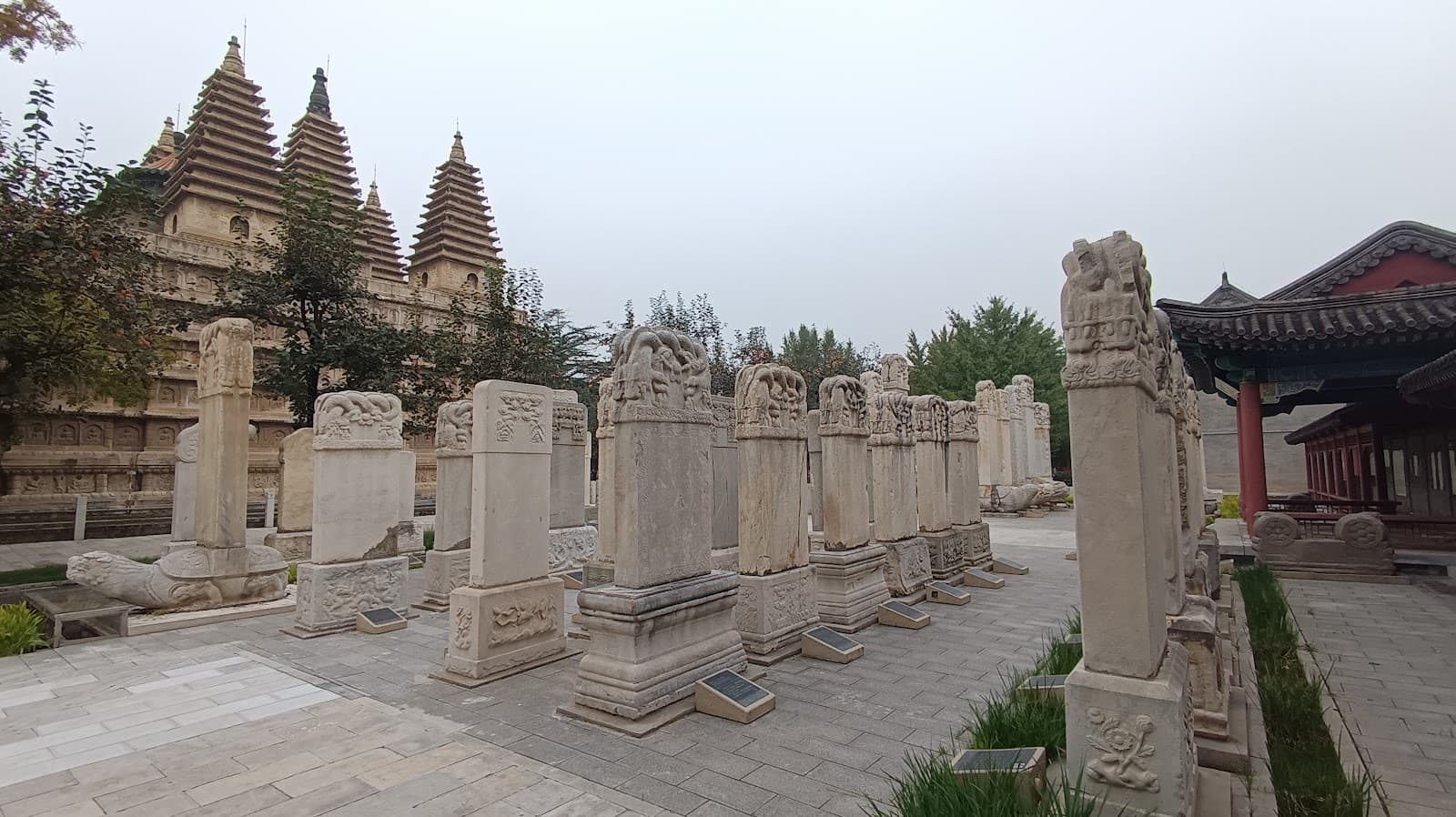
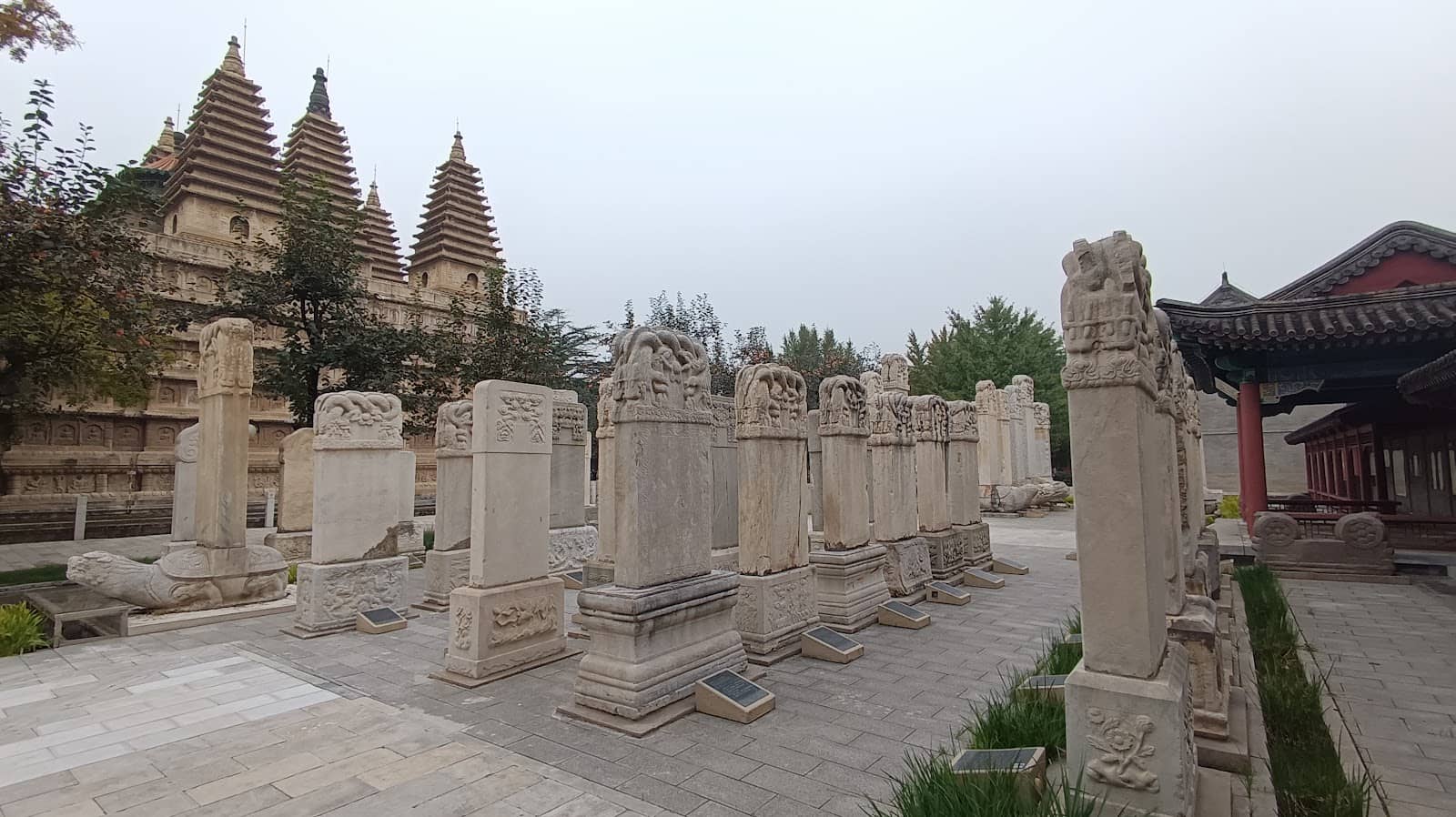
An impressive Ming Dynasty pagoda, a unique blend of Chinese and South Asian architectural styles.
Epitaphs and Tombstones
Western Stele Gallery
Discover ancient epitaphs and tombstones, including those of Ming/Qing officials and even Jesuit missionaries.
Calligraphic Model Maze
North Courtyard
A unique maze featuring calligraphy rubbing templates, offering a fun, interactive cultural experience.
Plans like a pro.
Thinks like you
Planning Your Visit
Book Your Free Wednesday Visit
Combine with Zoo or Library
Best Times
Insider Tips
from TikTok, Instagram & Reddit
🎯 Book Free Wednesday Slot
Reserve your free spot via WeChat mini-program the Wed before at 5 PM. Limited to 200!
🚶♀️ Easy Metro Access
Exit C of National Library station (Lines 4/9) is a 10-min walk.
🏛️ Combine with Zoo
It's directly opposite the Beijing Zoo entrance. Great for a full day out!
✨ Holographic Enhancements
See ancient village life models with added holographic actors for a dynamic display.
Tips
from all over the internet
🎯 Book Free Wednesday Slot
Reserve your free spot via WeChat mini-program the Wed before at 5 PM. Limited to 200!
🚶♀️ Easy Metro Access
Exit C of National Library station (Lines 4/9) is a 10-min walk.
🏛️ Combine with Zoo
It's directly opposite the Beijing Zoo entrance. Great for a full day out!
✨ Holographic Enhancements
See ancient village life models with added holographic actors for a dynamic display.
🖼️ English Signage
Exhibits are well-displayed with detailed English explanations.
What Travellers Say
Reviews Summary
Visitors praise the museum's rich collection of ancient stone carvings and epitaphs, particularly the historical Zhenjue Temple and its pagoda. The English signage and interactive elements like holographic displays and the calligraphy maze are appreciated, as is the convenient location near the zoo and metro. Some find the layout a bit crowded and note occasional issues with signage clarity.
"It's a 750 meter walk (10 min) from exit C of the National Library metro station on line 4 or 9. The museum is newly renovated. All the exhibit rooms are refreshed or new. There's a children's play area with a variety of activities and a rock climbing wall!! I was impressed with the indoor exhibits as everything was beautifully arranged and displayed with English signs with good detail. There was also small scale models of village of life in ancient times. This included hologram images of animated actors portraying life. These images really enhanced the dullness of the model. The indoor exhibits showcase stone archways, Buddha images, and calligraphy inscriptions.
The outdoor exhibits showcase the majority of the stone carvings which are mostly tall standing steles and tombstone caps. There's also a garden maze that has calligraphy rubbing templates (Calligraphic Model Maze). There are benches to relax and enjoy the view of Zhenjue Temple which sits in the middle of the courtyard. This is a beautiful site.
The entrance ticket includes admittance to the Zhenjue temple (Diamond Throne Pagoda). On Wednesdays, the first 200 visitors are free. Otherwise 20 RMB for adults.
The rear entrance of the Beijing Zoo is opposite the entrance of this museum."
Paulo Dutra
"This museum, centered around the Ming and Qing dynasty Zhenjue Temple pagoda and its surrounding courtyards, collects and displays stone carvings, steles, and epitaphs from various dynasties. The museum's core is the Vajra Throne Pagoda, with tomb stone carvings, epitaphs, and historical relics from institutions such as temples and guild halls displayed on the left and right sides. The back building on the north side of the museum houses three exhibition halls showcasing rubbings of stele carvings, architecture, and the historical development of stone carving.
This semester, I became aware of this location while taking a course on medieval epigraphic studies. I took advantage of the museum's free admission offer for the first 200 visitors on Wednesday mornings (reservations must be made via the WeChat mini-program at 5:00 PM the previous Wednesday) to visit.
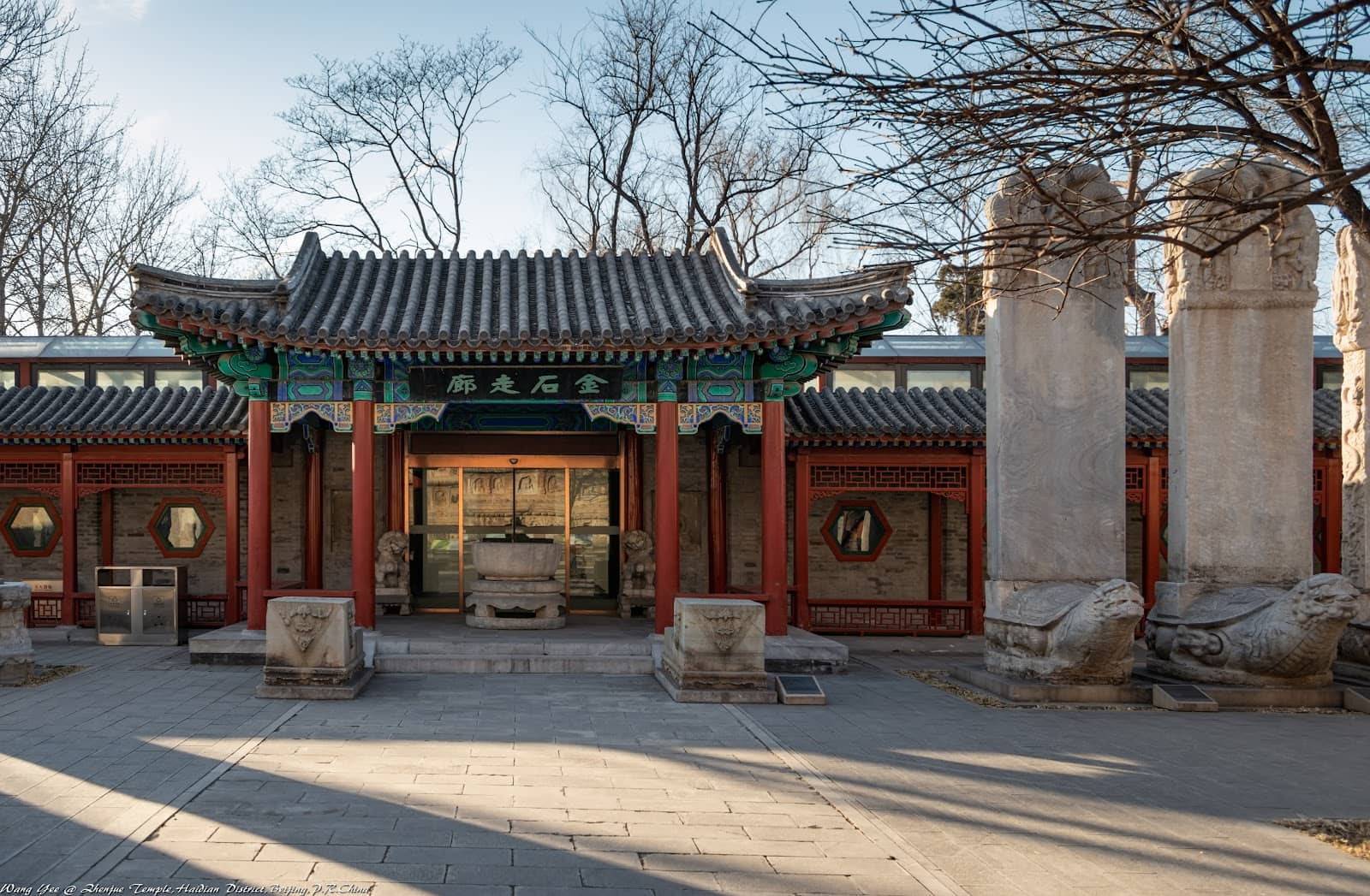
Because of my research orientation, I've paid particular attention to epitaphs. The majority of the epitaphs in the museum date from the Ming and Qing dynasties, with the earliest dating back to the mid-Tang Dynasty. The western stele gallery, located to the left of the pagoda, displays numerous epitaphs unearthed in Beijing, representing the identities of scholars, officials' families, members of the imperial clan, and Taoist priests. The earliest of these is the Tang Dynasty tomb stele of Wang Hui, located on the south side of the corridor. It dates to the 13th year of the Tianbao era (754) or the first year of the Guangde era (763). According to the introductory text beside the stele, the year on this stele does not match the recorded Chinese zodiac, a question worthy of study. I also noticed that the font at the beginning of several lines in the upper left corner of the stele is clearly unusual (the entire stele is written in regular script, but the font here resembles running script). The layout does not appear to be a later engraving. It is uncertain whether this is an unusual engraving. On the other side of the temple pagoda are tombstones for Qing Dynasty Jesuits and officials built by imperial decree. The former can be seen as a source of material for observing Sino-Western exchanges in recent history, specifically the Chinese context established for Christianity during the Ming and Qing dynasties. Each missionary's epitaph explains their origins, such as France (France), Ireland (Ireland), and the St. Vincent Society (now translated as "Saint Vincent Society" or "Saint Vincent Society") is translated as "Saint Vincent Society" (a translation still used today). The latter often uses Manchu and Chinese, or Manchu, Mongolian, and Chinese in a combination. This constitutes one of the many sources of historical material for the Ming and Qing dynasties.
In addition to tomb inscriptions, the museum also features areas for "Temple and Monastery Inscriptions" and "Comprehensive Inscriptions," which are stone tablets erected to commemorate the establishment and renovation of temples, local guild halls, and other organizations. These date from the Ming and Qing dynasties to the early years of the Republic of China.
Beyond the inscriptions, the courtyard is home to numerous persimmon trees. In autumn, their abundant fruit complements the museum's architecture, lending it a uniquely ancient charm. It also offers a great place to enjoy the scenery.
Generally speaking, the Beijing Stone Carving Art Museum's collection primarily consists of epitaphs from the Ming and Qing dynasties and stone carvings from local institutions. If there are any shortcomings, they are that the layout of the Forest of Steles is somewhat crowded due to space constraints. Furthermore, the textual descriptions are sometimes missing, worn, illegible, or misplaced. Furthermore, the English translations of some Manchu terms often use transliterated Chinese pinyin, rather than the more commonly used Manchu phonetic notation. This inevitably gives the impression of being less professional.
Despite these shortcomings, as a museum for the general public, it is clearly sufficient for understanding the stele carvings and enjoying the scenery. For tourists seeking sightseeing rather than research, this is still a worthwhile attraction."
Chih-Hsi Hu
"Hidden deep within the city, the Stone Carving Art Museum offers a tranquil escape amidst the hustle and bustle, making it easy to overlook. Due to its proximity to the Beijing Zoo, its reputation is often overshadowed by its neighbor, and many locals haven't even heard of it. This area was formerly the Zhenjue Temple, also known as the Five Pagodas Temple, dating back to the Ming and Qing dynasties. At the center of the park is the Vajra Throne Pagoda. I was drawn to this exotic building online, which at first glance looked a bit like South Asia, but it's actually authentically made in China. Surrounding the pagoda are numerous stone tablets and statues, and on the north side there's a green maze, a place where many parents and children have a blast. The museum is surrounded by exhibition rooms filled with stone carvings discovered and collected from various locations, each with its own unique story. The entire museum is small, and an hour is enough to explore. For a more immersive experience, hiring a guide might offer more.
Admission: 20 yuan, reservations must be made online in advance. Admission is free on Wednesdays.
Getting there: Get off at the National Library subway station and walk a few minutes along Wuta Temple Road, which borders the river. This road is relatively narrow and parking spaces are limited, so friends who drive themselves need to be careful."
xiuyi huang (一休哥)
What People Like
What People Dislike
Frequently Asked Questions
🚇 🗺️ Getting There
The easiest way is by metro. Take Line 4 or 9 to National Library station and use Exit C. It's about a 10-minute walk from there. If driving, be aware that parking is limited and the road can be narrow.
Yes, it's conveniently located directly opposite the main entrance of the Beijing Zoo. It's also a short walk from the National Library.
Many visitors combine a visit to the museum with the Beijing Zoo or the National Library for a full day of exploration.
The museum is relatively small, and an hour is generally sufficient for exploration. The grounds are pleasant for a stroll, especially in autumn.
Absolutely! The courtyards, especially around the Zhenjue Temple, offer a tranquil escape with benches to relax and enjoy the scenery.
🎫 🎫 Tickets & Entry
General admission is 20 RMB. However, the first 200 visitors on Wednesdays receive free entry.
You must make a reservation via the museum's WeChat mini-program. Reservations open the previous Wednesday at 5:00 PM and are limited to the first 200 visitors.
Yes, advance booking is required, especially if you plan to visit on a Wednesday for free entry. For other days, it's recommended to check their official booking channels.
Your admission ticket includes access to the museum's exhibits and the Zhenjue Temple (Diamond Throne Pagoda) within the courtyard.
The primary discount is the free entry for the first 200 visitors on Wednesdays, which requires advance booking.
🎫 🏛️ Onsite Experience
The museum showcases a significant collection of stone carvings, including ancient steles, epitaphs, Buddha images, and tombstone caps from various dynasties, primarily Ming and Qing.
Yes, there's a children's play area with activities and even a rock climbing wall! The Calligraphic Model Maze is also a fun interactive spot for families.
Most indoor exhibits are beautifully arranged with detailed English signs, making them accessible to international visitors.
The Zhenjue Temple, also known as the Five Pagodas Temple, is a historical Tibetan Buddhist royal temple dating back to the Ming Dynasty. It's a central feature of the museum grounds.
Photography policies can vary, but generally, photos for personal use are allowed in most areas. It's always best to check for any specific restrictions.
📸 📸 Photography
The Vajra Throne Pagoda in the courtyard is a stunning architectural subject. The intricate details on the stone carvings and epitaphs also make for compelling shots.
Generally, personal photography is permitted, but it's advisable to look for signage indicating any restrictions, especially for flash photography.
Many visitors capture the historical stone art, the unique pagoda, and the serene courtyard. The autumn persimmon trees also offer beautiful seasonal photo opportunities.
Focus on the detailed inscriptions on the steles and epitaphs, and the unique architectural elements of the Zhenjue Temple.
Morning light can be softer and less harsh, offering good conditions for capturing details. Weekday mornings also mean fewer people in your shots.
Social
from TikTok, Instagram & Reddit