Panjin Red Beach
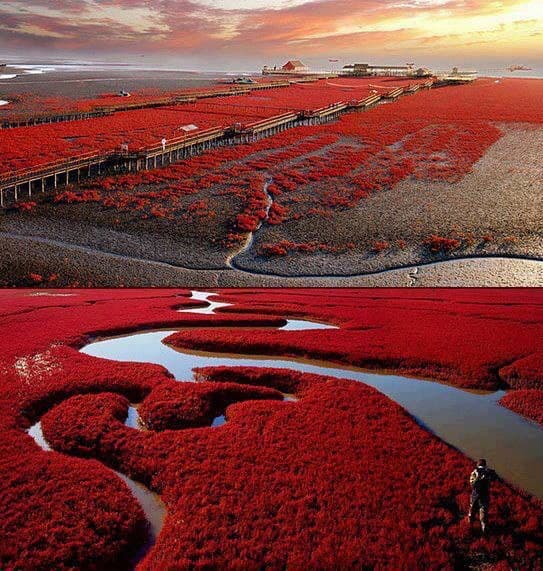
A breathtaking wetland where a unique plant turns vast marshlands into a vibrant crimson carpet each autumn.
Highlights
Must-see attractions

Social
From TikTok & Reddit
Best Time
Peak crimson color
Panjin Red Beach
Best Time
Peak crimson color
Highlights
Must-see attractions
A breathtaking wetland where a unique plant turns vast marshlands into a vibrant crimson carpet each autumn.
"Witness a natural wonder where the land itself blazes with color, a true 'red carpet' for the eyes."

🎯 Best Autumn Viewing
Visit in September/October for the most vibrant red! 🍂
🚶♀️ Stick to the Boardwalks
Protect the ecosystem; stay on designated paths.
Quick Facts
Rating
4.3 · 63 reviews
Type
Tourist Attraction
Highlights
Discover the most iconic attractions and experiences
The Crimson Sea of Suaeda Salsa
Main viewing areas
Witness the breathtaking landscape where the Suaeda salsa plant transforms into a vibrant crimson carpet.
Birdwatching Haven
Designated observation points
Spot rare red-crowned cranes and other migratory birds in this vital wetland sanctuary.

Wetland Boardwalk Experience
618-meter walkway
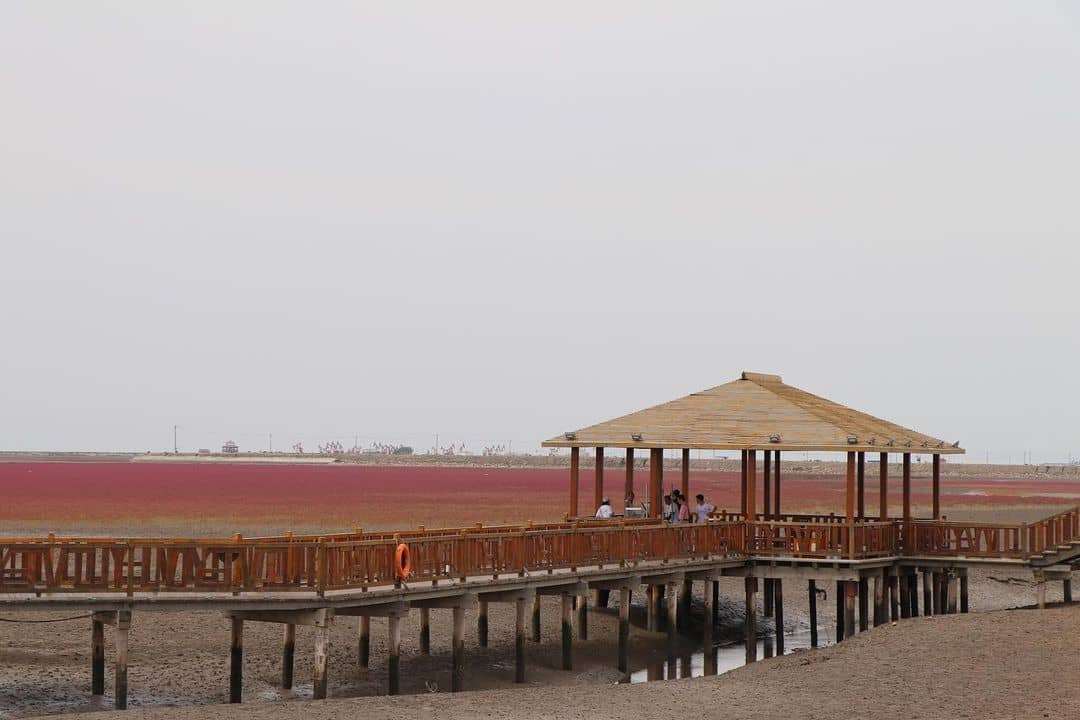
Stroll along the elevated walkway for panoramic views of the expansive red marshlands.
Plans like a pro.
Thinks like you
Planning Your Visit
Timing is Everything for the Crimson Carpet
Access and Conservation
Best Times
Insider Tips
from TikTok, Instagram & Reddit
🎯 Best Autumn Viewing
Visit in September/October for the most vibrant red! 🍂
🚶♀️ Stick to the Boardwalks
Protect the ecosystem; stay on designated paths.
📸 Capture the Colors
Bring your camera for stunning crimson landscapes.
🐦 Birdwatching Opportunities
Look out for red-crowned cranes and other wildlife.
Tips
from all over the internet
🎯 Best Autumn Viewing
Visit in September/October for the most vibrant red! 🍂
🚶♀️ Stick to the Boardwalks
Protect the ecosystem; stay on designated paths.
📸 Capture the Colors
Bring your camera for stunning crimson landscapes.
🐦 Birdwatching Opportunities
Look out for red-crowned cranes and other wildlife.
⏰ Avoid Golden Week
Expect huge crowds during national holidays.
What Travellers Say
Reviews Summary
Visitors are captivated by the unique, vibrant crimson landscape of Panjin Red Beach, a testament to the Suaeda salsa plant's autumn transformation. The area's rich biodiversity, including rare birds like red-crowned cranes, adds significant appeal. However, the limited accessibility to only a small section and potential for large crowds during peak times are noted drawbacks.
"The Red Beach is located in the biggest wetland and reed marsh in the world. Actually, hosts the most completed ecosystem that can be found: the nature reserve has become home to more than 260 kinds of birds and 399 kinds of wild animals. You can find the endangered Crown Cranes and Black Beaked Gulls there, which is why the famous beach is even called “home of the cranes.”
To keep the beautiful nature and its inhabitants safe, the area was granted state-level protection back in 1988. Even though most of the Red Beach is closed to the public, there still is a small section that works as a tourist attraction. We can assure you that the photos below are not an example of infrared photography, it’s just one of those places that are hard to believe really exist!"
mouthnna fahel
"Red Beach (simplified Chinese: 红海滩; traditional Chinese: 紅海灘; pinyin: Hóng hǎitān), located in Dawa County, Panjin, Liaoning, China, is famous for its landscape featuring the red plant of Suaeda salsa (Chinese: 碱蓬草) of the family Chenopodiaceae.[citation needed] It is based in the biggest wetland and reed marsh in the world. The landscape is composed of shallow seas and tide-lands. The Sueda is one of the few species of plant that can live in highly alkaline soil. Its growth cycle starts in April when it is colored light red, while the color of the mature species is deep red. Panjin Shuangtaizi River mouth state-level nature protection area (盘锦双台子河口自然保护区) preserves a very large, ecologically intact wetland. More than 260 kinds of birds and 399 kinds of wild animals live in it. It was promoted to the state-level nature protection area in 1988 and has applied to join the International person and biosphere protectorate network. The largest reed marsh in Asia is also located here, attracting many tourists. The reeds are used to make paper. The red-crowned crane (Grus japonensis) also reproduces here and it is also the endangered black-mouth gull's largest breeding area."
naurosebanu azad
"In the autumn, this is a great place to view a sea of red when Panjin Red Beach, designated an AAAA scenic spot, and the world’s largest and best-maintained wetland changes to a crimson colour. It is the seepweed (aka seablite) plant which turns a crimson red during its autumn maturing phase. While maturing it changes from a green to goldish and then the crimson red. During this period it is referred to as the “red carpet beach.”
There is a walkway built over a portion of the flat marshlands, enabling sightseers to get great breathtaking views miles of the 51 square miles of coastal wetlands. These coastal waters are also home to 260 varieties of birds and 400 species of wildlife. However4 during our golden week visit, we saw mostly thousands and thousands of sightseers.
Red Beach Scenic Area has three distinct points of interest, being, Red Beach’s 618-metre walkway over the wetlands, Reed Sea Crane-watching corridor which stretches about 130 km along the banks of Liaohe River and the shores of Bohai Bay, and Moon Bay Wetland Park.
To get to Panjin City from Guangzhou, we took a three hour and forty minute flight with from GZ to Shenyang, and then took the train to Panjin City. It was about a two-hour train ride."
bookingMentor
What People Like
What People Dislike
Frequently Asked Questions
🚇 🗺️ Getting There
The most common route is to fly into Shenyang (SHE) and then take a train to Panjin City (approx. 2 hours). From Panjin City, local transport like taxis or buses can take you to the Red Beach Scenic Area.
Yes, buses and taxis are available from Panjin City to the Red Beach Scenic Area. However, services might be less frequent outside of peak season.
Flights to Shenyang are frequent, followed by a train to Panjin. This combination offers a balance of speed and convenience for reaching the area.
While direct options might be limited, connecting through Shenyang is a reliable method. Consider booking train tickets in advance, especially during busy travel times.
The journey from Panjin City to the Red Beach typically takes around 30-40 minutes by taxi or bus, depending on traffic conditions.
🎫 🎫 Tickets & Entry
Admission fees can vary, but it's generally an affordable attraction. It's best to check the latest pricing closer to your visit, as it's designated as an AAAA scenic spot.
While not always mandatory, booking tickets in advance is recommended, especially during peak season (autumn) or national holidays to avoid disappointment and long queues.
Opening hours can vary seasonally. It's advisable to confirm the current operating times before your visit, particularly if you plan to arrive early or stay late.
No, only a small section of the vast wetland is open to the public as a tourist attraction to protect the delicate ecosystem.
Information on discounts for students, seniors, or children is not widely publicized. It's best to inquire directly with the ticket office or check official tourism websites.
📸 📸 Photography
Golden hour, shortly after sunrise and before sunset, offers the most dramatic lighting for capturing the vibrant red hues of the Suaeda salsa.
A wide-angle lens is great for capturing the expansive landscape, while a telephoto lens can be useful for spotting and photographing birds.
Drone usage is typically restricted in protected natural areas to avoid disturbing wildlife and the environment. It's best to check local regulations before flying.
The 618-meter walkway offers excellent vantage points. Look for areas where the red plants meet the water or create interesting patterns.
Yes, but maintain a respectful distance to avoid disturbing the birds and animals. Use a telephoto lens for close-up shots.
🎫 🌿 Nature & Wildlife
The striking red color comes from a plant called Suaeda salsa, which thrives in the alkaline soil and turns crimson in autumn. 
This wetland is a haven for over 260 bird species and 399 wild animals, including endangered red-crowned cranes and black-beaked gulls.
The Suaeda salsa plant is most vibrant red during its autumn maturing phase, typically in September and October.
Yes, it's part of the Panjin Shuangtaizi River mouth state-level nature protection area, emphasizing its ecological importance.
Yes, the area also features Asia's largest reed marsh, which is utilized for paper production.





Social
from TikTok, Instagram & Reddit