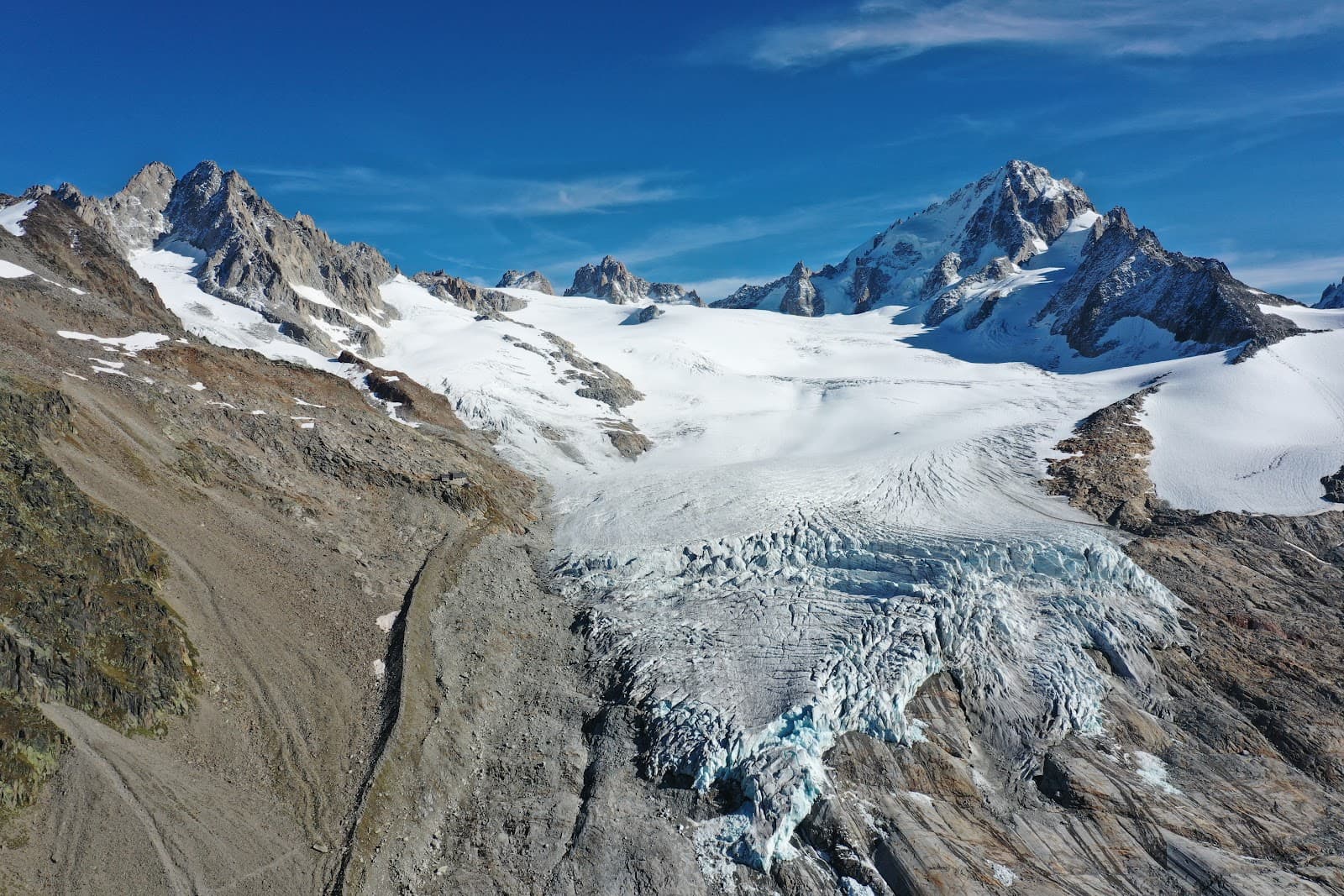
Glacier du Tour
A majestic, rapidly changing glacier in the Chamonix-Mont-Blanc valley, offering challenging hikes and breathtaking alpine vistas.
Highlights
Must-see attractions

Social
From TikTok & Reddit
Best Time
Best hiking conditions
Glacier du Tour
Best Time
Best hiking conditions
Highlights
Must-see attractions
A majestic, rapidly changing glacier in the Chamonix-Mont-Blanc valley, offering challenging hikes and breathtaking alpine vistas.
"A true spectacle of nature, the Glacier du Tour is a majestic, albeit rapidly disappearing, wonder."

🎒 Pack for the Hike
Sturdy hiking boots are essential for the challenging terrain. Bring layers, water, and snacks for this demanding trek.
🚶♀️ Consider a Guide
For safety and a deeper understanding, especially if attempting more advanced routes, hiring a guide is recommended.

Quick Facts
Rating
4.9 · 19 reviews
Type
Natural Feature
Highlights
Discover the most iconic attractions and experiences
Refuge Albert 1er Views
Near Glacier du Tour
Panoramic vistas of the majestic Glacier du Tour, Aiguille Verte, and Aiguille du Chardonnet. A perfect spot for an unforgettable alpine aperitif.


Glacier du Tour's Crevasses
Glacier du Tour
Witness the raw power of nature with the glacier's dramatic crevasses and seracs. A truly awe-inspiring, albeit rapidly changing, spectacle.

The Hike to Col de Balme
From Le Tour village
A challenging yet rewarding hike offering stunning alpine scenery and a unique perspective of the glacier.
Plans like a pro.
Thinks like you
Planning Your Visit
Timing Your Glacier Adventure
Respecting the Glacier's Power
Best Times
Insider Tips
from TikTok, Instagram & Reddit
🎒 Pack for the Hike
Sturdy hiking boots are essential for the challenging terrain. Bring layers, water, and snacks for this demanding trek.
🚶♀️ Consider a Guide
For safety and a deeper understanding, especially if attempting more advanced routes, hiring a guide is recommended.
📸 Capture the Views
Bring your camera to document the dramatic landscapes and unique glacial features.
💧 Stay Hydrated
Carry plenty of water, as the hike is strenuous and can be exposed to the sun.
Tips
from all over the internet
🎒 Pack for the Hike
Sturdy hiking boots are essential for the challenging terrain. Bring layers, water, and snacks for this demanding trek.
🚶♀️ Consider a Guide
For safety and a deeper understanding, especially if attempting more advanced routes, hiring a guide is recommended.
📸 Capture the Views
Bring your camera to document the dramatic landscapes and unique glacial features.
💧 Stay Hydrated
Carry plenty of water, as the hike is strenuous and can be exposed to the sun.
What Travellers Say
Reviews Summary
Visitors consistently praise the dramatic and majestic landscape of Glacier du Tour, highlighting its raw beauty and the awe-inspiring sight of its crevasses and seracs. The challenging hike is considered very beautiful by those who undertake it, with many recommending it for its spectacular views, especially from Refuge Albert 1er. However, there's a strong consensus on the glacier's rapid and concerning retreat due to climate change, with some noting its diminishing state.
"Dramatic landscape"
steve thompsett
"Very beautiful hike for good walkers of 17.5 km with 1420 m of elevation gain. Departure from the Tour car park – Chalet de Charamillon - Refuge Albert 1er – Col de Balme – Le Tour
Seen from the Albert 1er Refuge, the Tour glacier is majestic with its crevasses and seracs, unlike the vision you can have when you are at the Tour station. You can see many people walking there accompanied by guides or learning to walk on ice.
Very beautiful glacier that you have to go see"
Christian COUREAU
"A colossus of the CHAMONIX MONT BLANC valley although in rapid decline. In just 2 years it has lost tens of meters of its mass and has retreated hundreds of metres. With large blocks of blue ice in the exposed final part where there are often landslides. Dangerous to get too close. Full of giant cracks all over its surface. It has only a few years left to live in this rhythm of disappearing or remaining as a simple snowfield. Its current level is about 2700m- 2800m. A true spectacle of nature. The last glacier on French lands before entering the terrestrial of the high mountains: SWITZERLAND. I visited it twice in 2018 and 2020.
HIGHLY RECOMMENDED!!"
viorel viorescu bratu
What People Like
What People Dislike
Frequently Asked Questions
🚇 🗺️ Getting There
The most common starting point is the village of Le Tour. You can reach Le Tour from Chamonix by bus or car. From Le Tour, you can hike directly or take the Charamillon cable car and then the Autannes chairlift to shorten the ascent.
Yes, there is parking available at the Le Tour ski station, which serves as the primary trailhead for many hikes in the area, including those leading to Glacier du Tour.
While you can get close to the base area via the Charamillon cable car, to truly experience the glacier and reach viewpoints like Refuge Albert 1er, hiking is necessary.
From the village of Le Tour, you can hike directly (approx. 1200m elevation gain), or take the Charamillon cable car and Autannes chairlift to reduce the ascent. The hike from the top of the chairlift is still significant.
Yes, regular bus services connect Chamonix to the valley of Chamonix-Mont-Blanc, including Le Tour, making public transport a viable and eco-friendly option.
🎫 🎫 Tickets & Entry
There is no entry fee to see the Glacier du Tour itself. However, if you plan to use the Charamillon cable car or Autannes chairlift to shorten your hike, you will need to purchase tickets for those.
Operating hours for the Charamillon cable car vary by season. It's best to check the official Chamonix Mont-Blanc Valley website or local tourist information for the most up-to-date schedule, especially during shoulder seasons.
Yes, many local guides and mountain schools offer guided hikes and glacier tours to Glacier du Tour and surrounding areas. This is highly recommended for safety and to learn about the glacial environment.
The hiking trails leading to Glacier du Tour are generally free to access as they are part of the natural landscape and public mountain paths.
It is often possible to book cable car tickets online in advance, which can save time, especially during peak season. Check the official Chamonix lift company website.
🎫 🏞️ Onsite Experience
The hike is considered challenging, with significant elevation gain. A typical route to Refuge Albert 1er is around 11-17 km with over 1200m of elevation gain, requiring good physical fitness.
Wear sturdy hiking boots, comfortable hiking clothes in layers, and bring a waterproof jacket. The weather can change quickly in the mountains.
It is generally not safe to walk on the glacier without a qualified guide due to crevasses and unstable ice. Stick to marked trails and viewpoints.
While wildlife sightings are not guaranteed, you might spot marmots, ibex, or various alpine birds. Always maintain a safe distance and do not feed them.
Refuge Albert 1er offers accommodation, meals, and drinks. It's a popular stop for hikers and a great place to rest and enjoy the views.
📸 📸 Photography Tips
Early morning or late afternoon offer the best light for photography, with softer shadows and warmer tones. The 'golden hour' around sunset can be particularly magical.
A wide-angle lens is great for capturing the expansive mountain and glacier landscapes. A telephoto lens can be useful for details like ice formations or distant peaks.
The area around Refuge Albert 1er provides stunning panoramic views. The hike itself offers numerous vantage points with dramatic glacial scenery.
Include a person or a recognizable object in your frame to give a sense of scale. Shooting from a lower angle can also emphasize the glacier's immense size.
If you're taking photos from inside a vehicle (like the Glacier Express, though not directly applicable here), opening windows can help avoid reflections.







Social
from TikTok, Instagram & Reddit