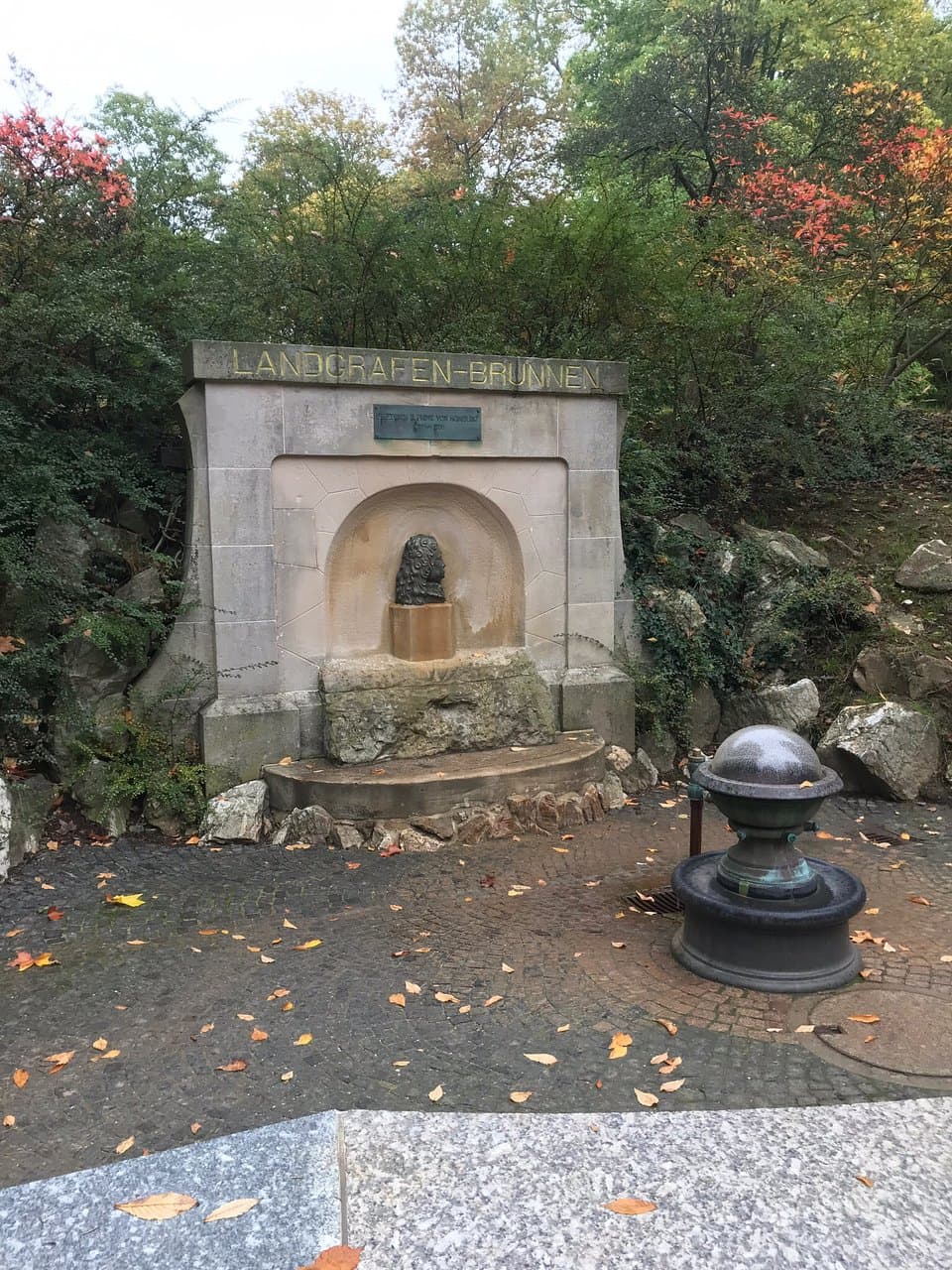
Landgrafenbrunnen
An Art Nouveau fountain in Bad Homburg's Kurpark, featuring therapeutic mineral water and a history of artistic change.
Highlights
Must-see attractions

Social
From TikTok & Reddit
Best Time
Pleasant park atmosphere
Landgrafenbrunnen
Best Time
Pleasant park atmosphere
Highlights
Must-see attractions
An Art Nouveau fountain in Bad Homburg's Kurpark, featuring therapeutic mineral water and a history of artistic change.
"A beautiful water fountain, a pleasant presence in the Kurpark with unique therapeutic water."
💧 Taste the Water Cautiously
The water is very salty and acidic; drink sparingly, as it's intended for therapeutic use.
🏛️ Admire the Art History
Note the Art Nouveau style and the history behind the nymph vs. Landgrave Friedrich II bust.
Quick Facts
Hours
Rating
4.4 · 16 reviews
Highlights
Discover the most iconic attractions and experiences
Art Nouveau Fountain Architecture
Kurpark, Bad Homburg
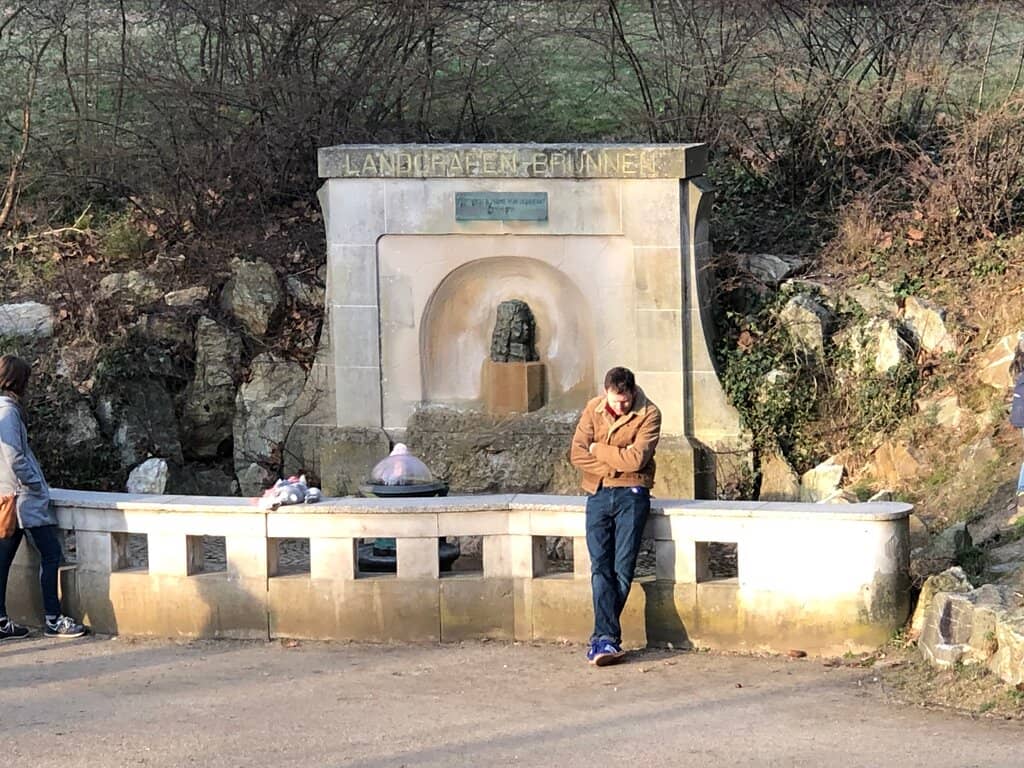
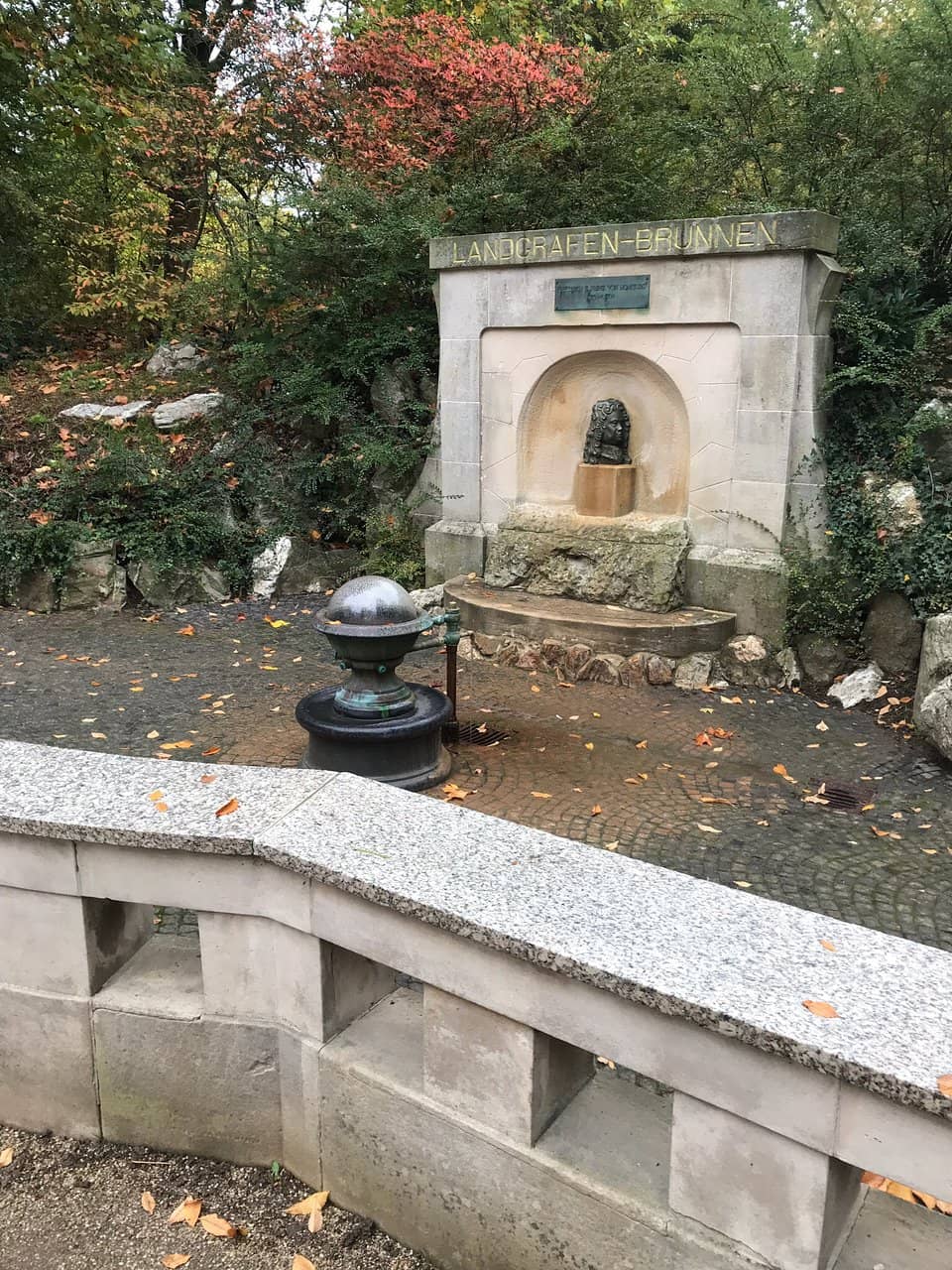
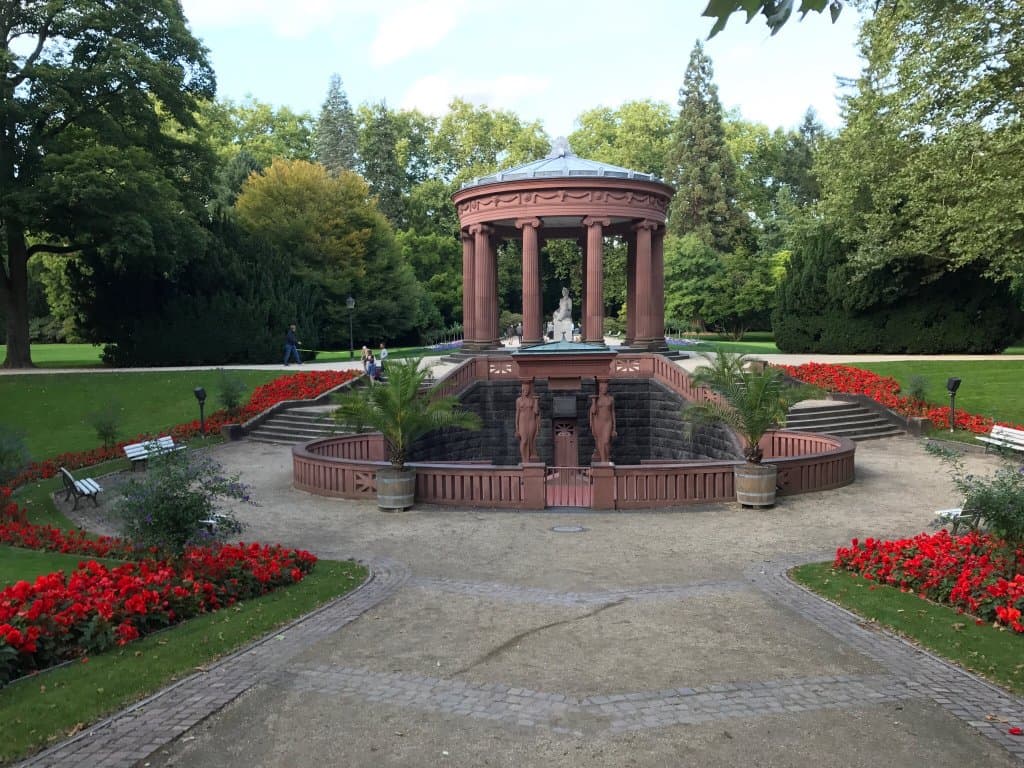
Admire the 1908 Art Nouveau design by Anton Lussmann, a beautiful centerpiece in the spa park.
Landgrave Friedrich II Bust
Front of the fountain
See the cast metal relief bust of Landgrave Friedrich II, added in 1955, replacing an earlier nymph sculpture.
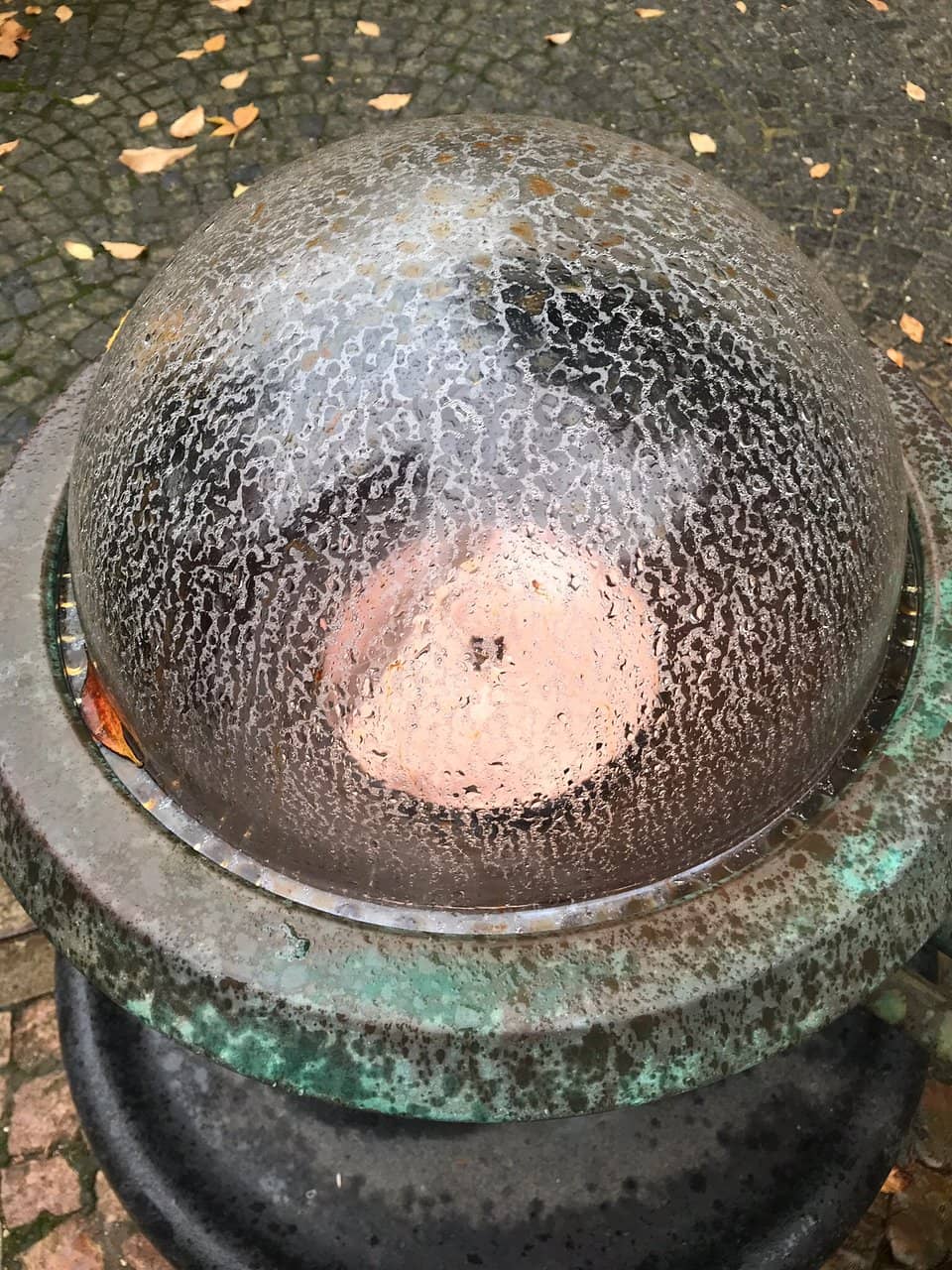
Therapeutic Mineral Water
Fountain taps
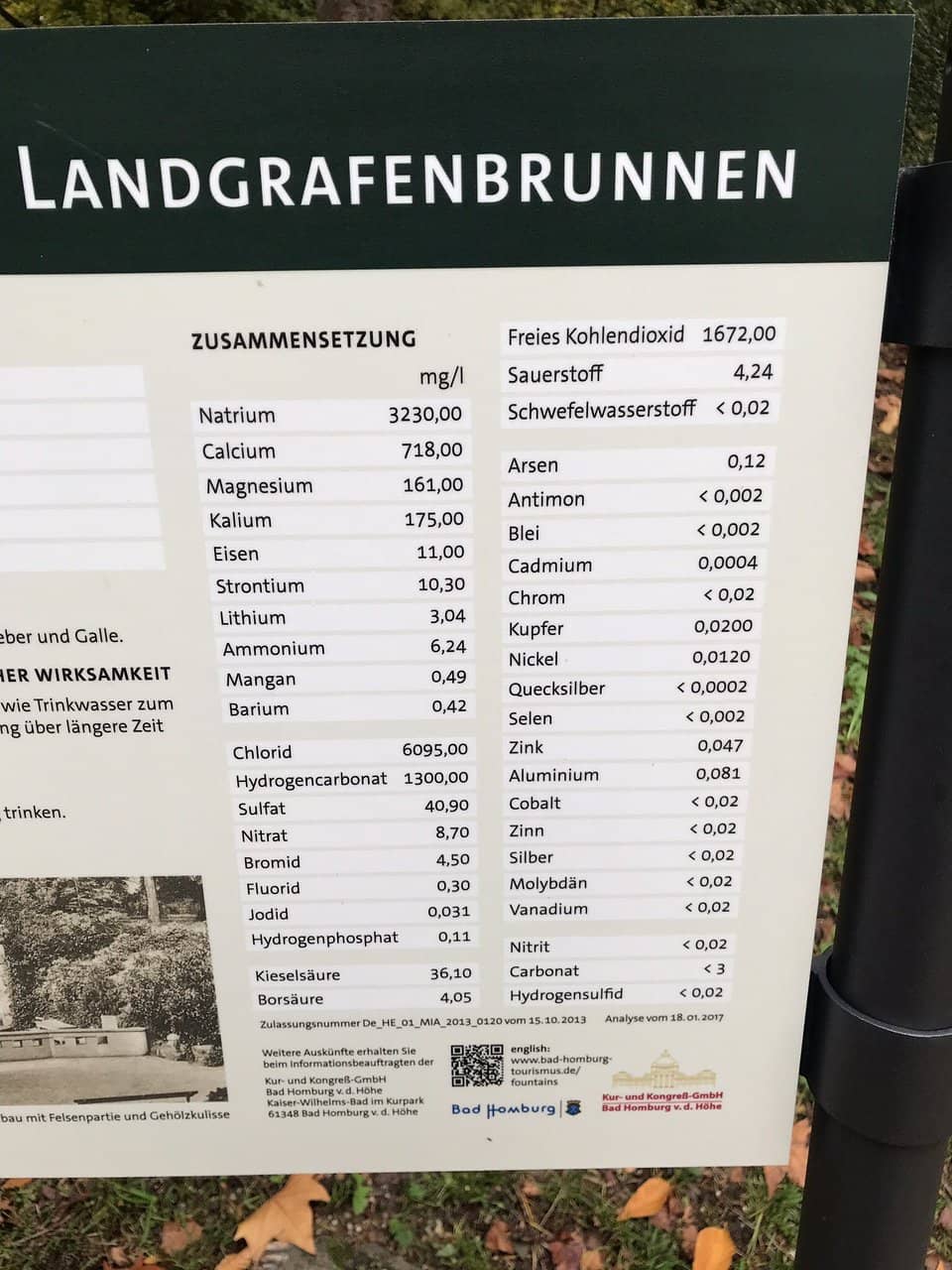
Experience the unique, iron-rich, salty water, historically used for liver and gallbladder treatments.
Plans like a pro.
Thinks like you
Planning Your Visit
Understand the Water's Purpose
Appreciate the Artistry
Best Times
Insider Tips
from TikTok, Instagram & Reddit
💧 Taste the Water Cautiously
The water is very salty and acidic; drink sparingly, as it's intended for therapeutic use.
🏛️ Admire the Art History
Note the Art Nouveau style and the history behind the nymph vs. Landgrave Friedrich II bust.
🌳 Enjoy the Kurpark Setting
The fountain is a lovely focal point within the beautiful and pleasant Kurpark.
📍 Find the Second Tap
Another tap for this water is located behind the bandstand in the park.
Tips
from all over the internet
💧 Taste the Water Cautiously
The water is very salty and acidic; drink sparingly, as it's intended for therapeutic use.
🏛️ Admire the Art History
Note the Art Nouveau style and the history behind the nymph vs. Landgrave Friedrich II bust.
🌳 Enjoy the Kurpark Setting
The fountain is a lovely focal point within the beautiful and pleasant Kurpark.
📍 Find the Second Tap
Another tap for this water is located behind the bandstand in the park.
What Travellers Say
Reviews Summary
Visitors find Landgrafenbrunnen to be a beautiful and historically interesting fountain within the pleasant Kurpark. The Art Nouveau architecture and the story behind its sculptures are appreciated, though the intense, salty mineral water is noted as being primarily for therapeutic use and not for casual drinking.
"A beautiful water fountain"
E K
"OK."
Martin D. Markovski
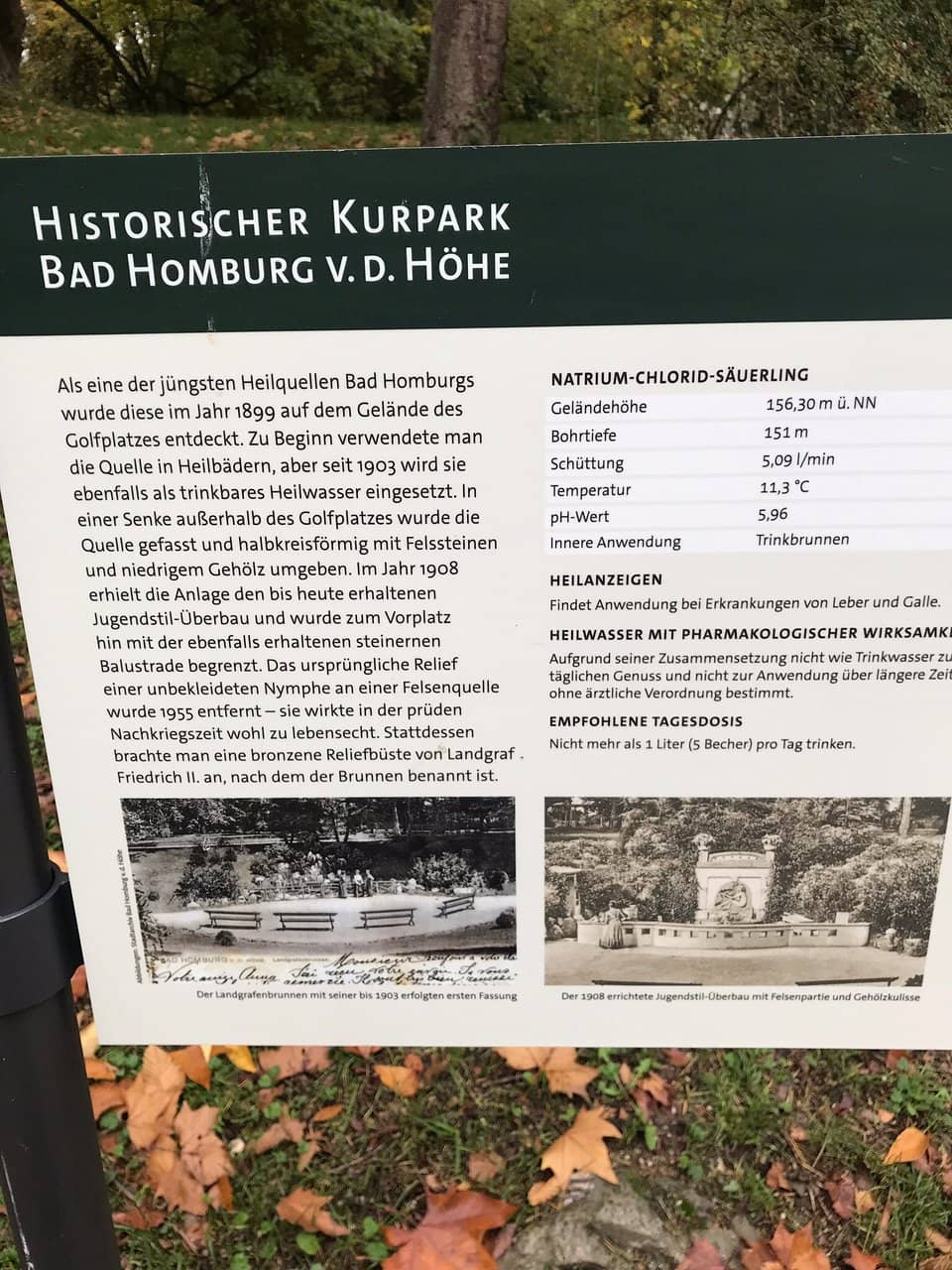
"The current fountain architecture was created in 1908 by the sculptor Anton Lussmann in Art Nouveau style. The small structure, facing the fountain avenue, was originally crowned by two flower-filled vases and featured a relief of a nymph at a rocky spring on its front. The depiction of the naked nymph met with criticism from the public, and it was therefore replaced in 1955 with a relief bust of Landgrave Friedrich II. This cast metal work is the work of Ortud Krüger-Stohlmann.
The fountain's water is an iron-rich sodium chloride acid solution with a temperature of 10.2 degrees Celsius. Another tap for this fountain's water is located behind the bandstand."
Jörg Krüger
What People Like
What People Dislike
Frequently Asked Questions
🚇 🗺️ Getting There
Landgrafenbrunnen is located within the Kurpark in Bad Homburg. You can reach the park by public transport, with several bus lines stopping nearby. Driving is also an option, with parking available around the park's perimeter.
The Kurpark is generally well-maintained with paved paths, making it accessible for wheelchairs and strollers. The area around the fountain is also flat and easy to navigate.
The Kurpark is typically open daily from early morning until late evening. There are no specific opening hours for the fountain itself, as it's an outdoor feature.
🎫 🎫 Tickets & Entry
No, entry to the Kurpark and access to the Landgrafenbrunnen are free of charge. It's a public space for everyone to enjoy.
There is no entrance fee for the Landgrafenbrunnen itself. It is freely accessible as part of the Kurpark.
The water is an iron-rich sodium chloride acid solution and is very salty. While it has therapeutic uses, it's advised not to drink it daily due to its intensity.
🎫 🧭 Onsite Experience
The current fountain architecture dates back to 1908, designed by Anton Lussmann in Art Nouveau style. It was later modified in 1955 with a relief bust of Landgrave Friedrich II.
The water is known for being one of the saltiest in the park, an iron-rich sodium chloride acid solution. It's historically used for liver and gallbladder ailments.
Originally, the fountain was crowned with two flower-filled vases and featured a relief of a nymph at a rocky spring. This was replaced by the bust of Landgrave Friedrich II due to public criticism.
Yes, another tap for this fountain's water is located behind the bandstand in the Kurpark.
The water from Landgrafenbrunnen has a temperature of approximately 10.2 degrees Celsius.
📸 📸 Photography
Capture the fountain's Art Nouveau details and the bust of Landgrave Friedrich II. The surrounding Kurpark offers beautiful backdrops, especially during spring and autumn.
Yes, photography is generally allowed in the Kurpark and around the Landgrafenbrunnen for personal use. Be mindful of other visitors.

Social
from TikTok, Instagram & Reddit