Kleincomburg St. Ägidius
A former Romanesque monastery church with a unique, colorful interior and layers of historical art.
Highlights
Must-see attractions

Social
From TikTok & Reddit
Best Time
Fewer crowds, peaceful atmosphere
Kleincomburg St. Ägidius
Best Time
Fewer crowds, peaceful atmosphere
Highlights
Must-see attractions
A former Romanesque monastery church with a unique, colorful interior and layers of historical art.
"An impressively simple Romanesque basilica with a unique, colorful interior."
🚶 Park & Path
Park at Comburg car park, cross Hessentaler Str., follow monastery path. Not ideal for strollers/wheelchairs.
🖼️ Interior Art
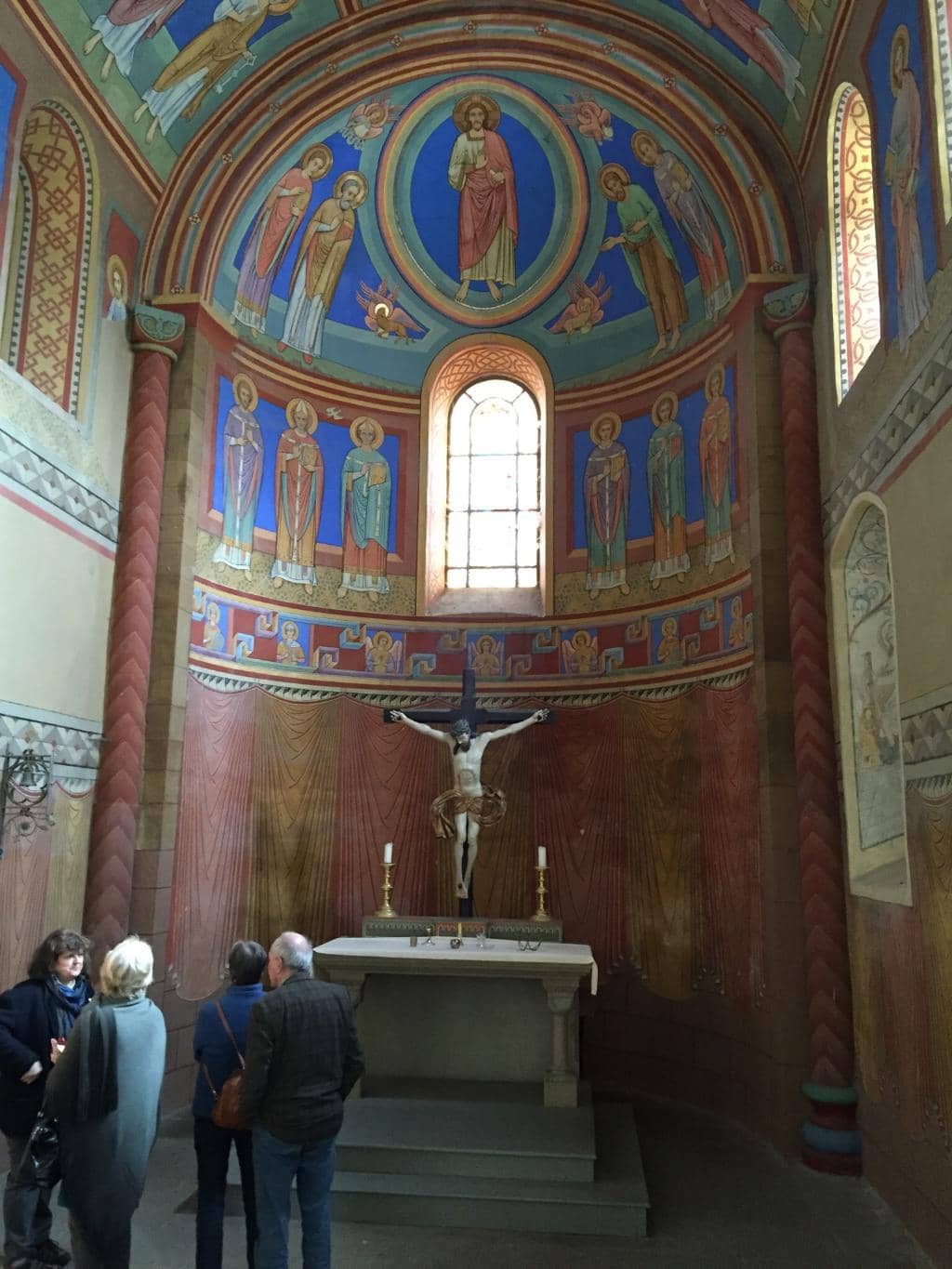
Appreciate the Romanesque basilica and its unique, colorful interior with historical painting layers.
Highlights
Discover the most iconic attractions and experiences
Romanesque Basilica
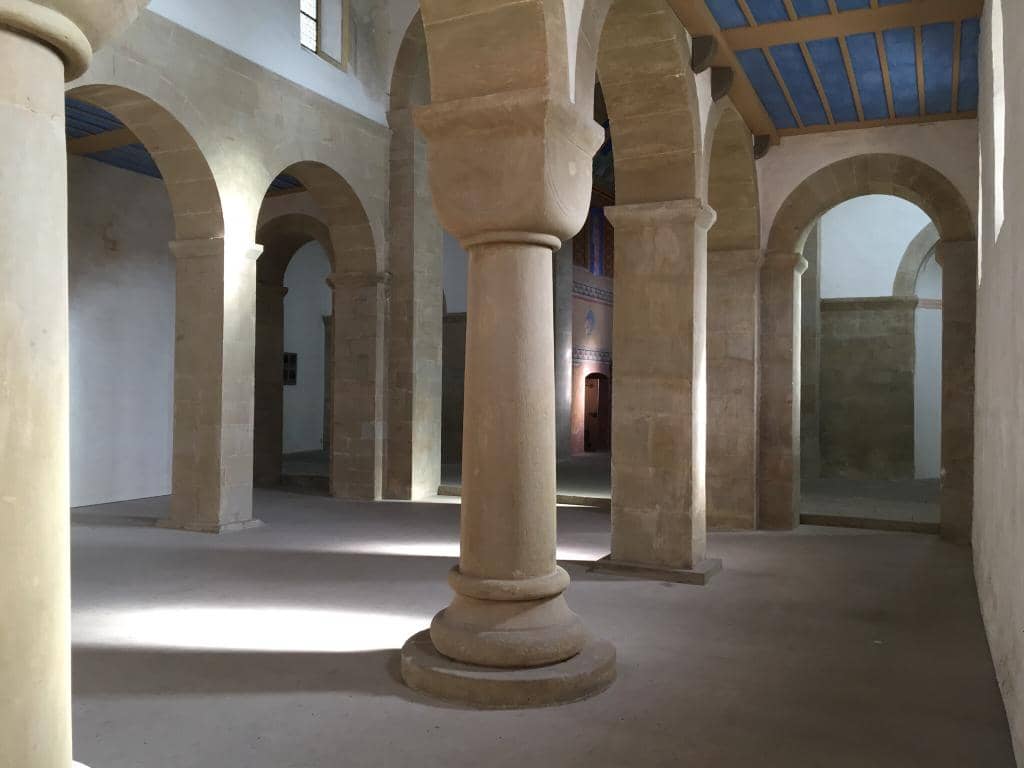
Experience the impressive simplicity and high-quality construction of this ancient Romanesque basilica.
Preserved Frescoes
Discover remnants of original frescoes in the choir and apse, offering a glimpse into medieval artistry.
Wooden Turret
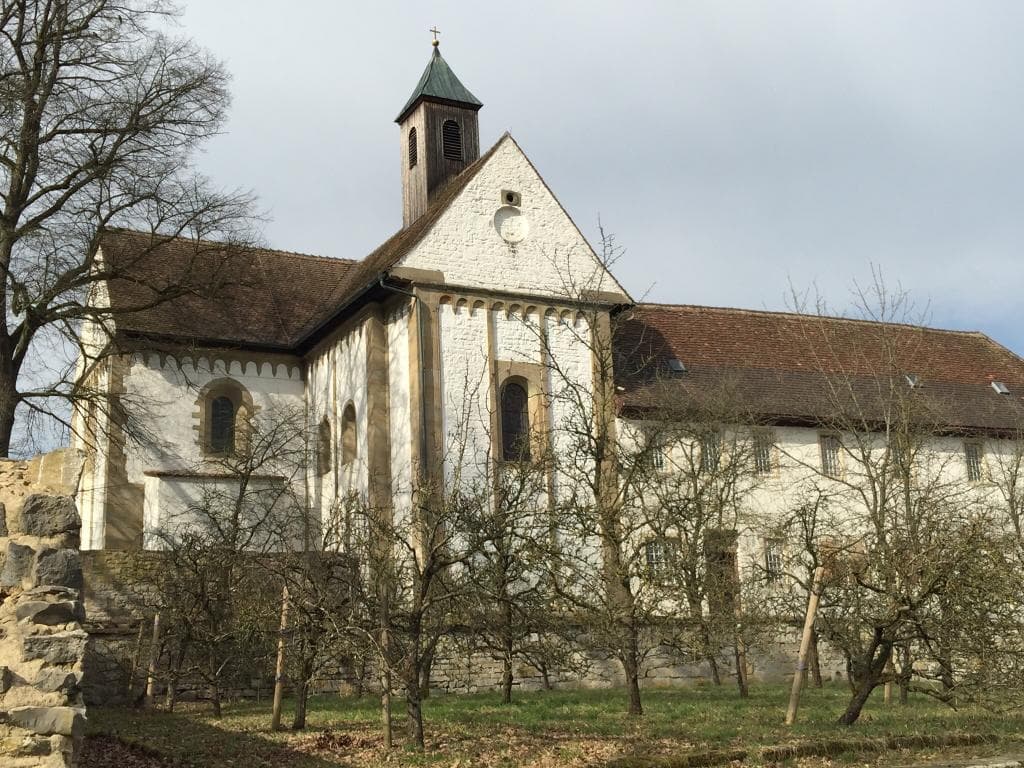
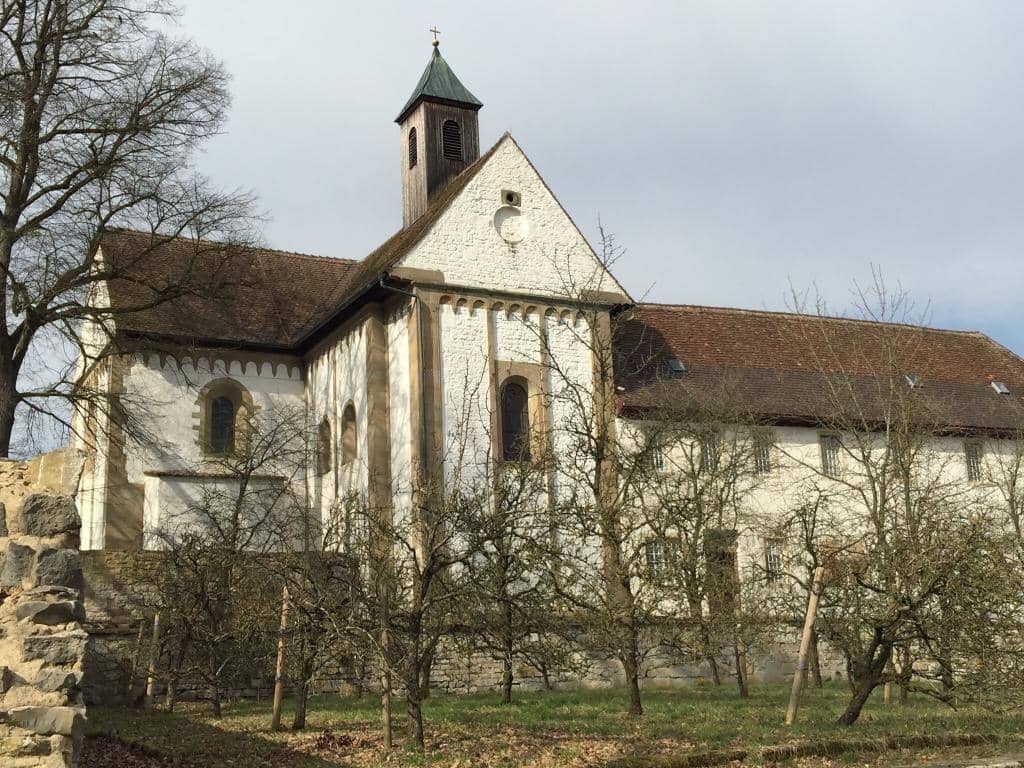
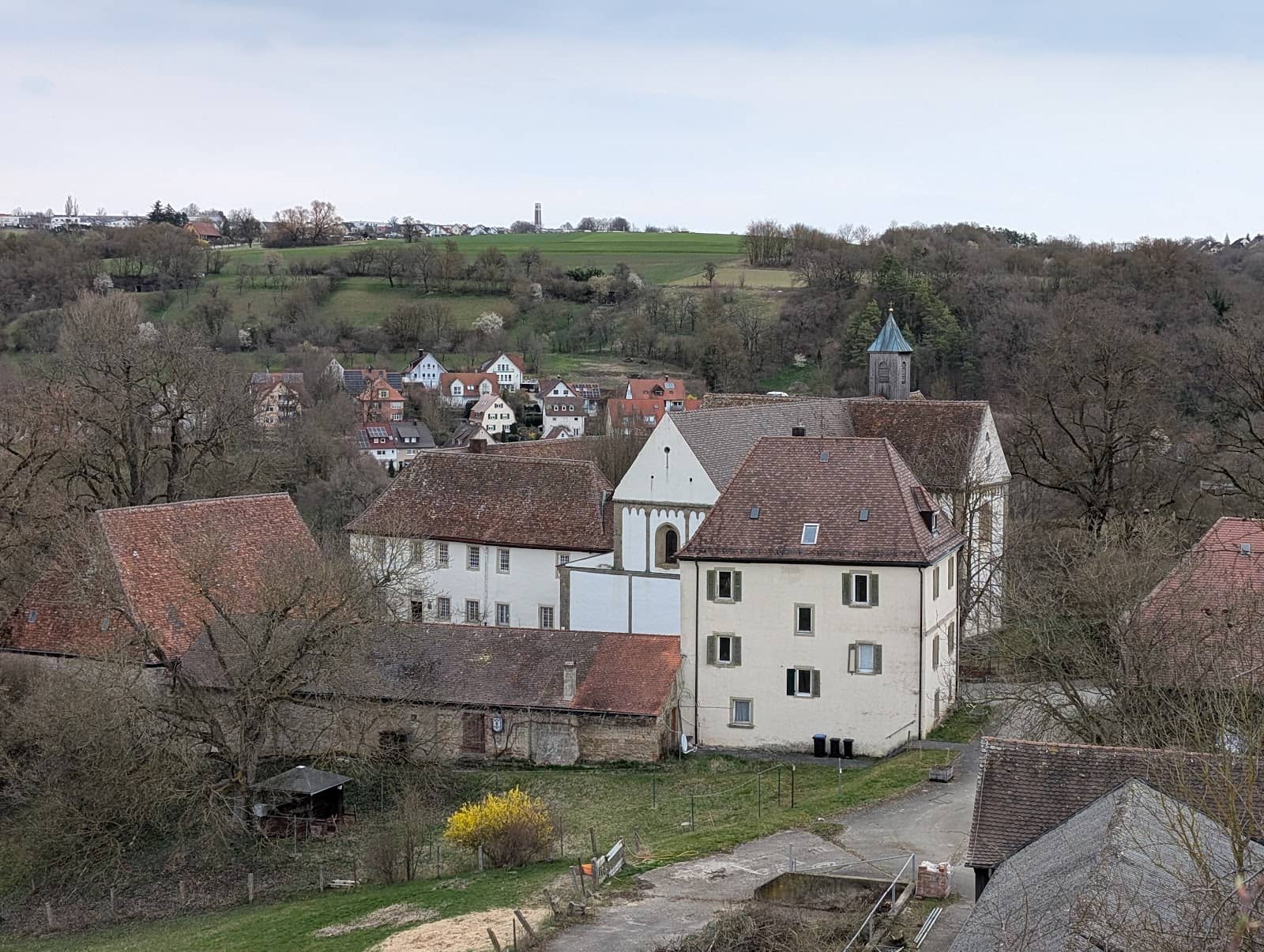
Admire the striking wooden turret on the choir roof, a distinctive architectural feature.
Plans like a pro.
Thinks like you
Planning Your Visit
A Glimpse into History
Access and Surroundings
Best Times
Insider Tips
from TikTok, Instagram & Reddit
🚶 Park & Path
Park at Comburg car park, cross Hessentaler Str., follow monastery path. Not ideal for strollers/wheelchairs.
🖼️ Interior Art
Appreciate the Romanesque basilica and its unique, colorful interior with historical painting layers.
🏰 Nearby View
After visiting, enjoy a beautiful view of Grosscomburg Castle just a short walk away.
Tips
from all over the internet
🚶 Park & Path
Park at Comburg car park, cross Hessentaler Str., follow monastery path. Not ideal for strollers/wheelchairs.
🖼️ Interior Art
Appreciate the Romanesque basilica and its unique, colorful interior with historical painting layers.
🏰 Nearby View
After visiting, enjoy a beautiful view of Grosscomburg Castle just a short walk away.
What Travellers Say
Reviews Summary
Visitors find Kleincomburg St. Ägidius to be an impressively simple yet historically rich Romanesque basilica. The unique, colorful interior and preserved frescoes are highlights, offering a distinct experience. However, accessibility for strollers/wheelchairs on the path and limited exploration of surrounding grounds are noted drawbacks.
"Former monastery church of a nunnery. Also called Kleincomburg. It is said to have been founded in 1108 by Count Heinrich von Comburg-Rothenburg, a brother of the founder of Comburg Monastery. However, sources are scant. The Romanesque basilica, with its high-quality construction technique, is in keeping with the period. Preserved frescoes, part of the interior paintings, were discovered in the choir and apse. After their exposure at the end of the 19th century, they were heavily painted over, causing significant damage to the structure. The faces, in particular, are lost. On the whitewashed walls, one can still see that something was underneath. In 1684, the church's interior was remodeled in the Baroque style. This was reversed in 1877, and a new, Neo-Romanesque painting was added, in keeping with the taste of historicism. In 1960, this was almost completely removed. Smaller sections were left as "windows into history." Today, the interior is very colorful, with the light walls providing a contrast. Rarely seen and unusual for a Catholic church. Externally, a wooden turret on the choir roof is striking. In the frenzy of renovations, the existing crossing tower was demolished as this was more in keeping with a Capuchin monastery church. In 1248, the Comburg family established a provostship with eight monks. What became of the nuns is not recorded. The provostship also ended in 1488. In 1594, a small hospital was built. In 1684, a Capuchin hospice was built, which became a monastery in 1713. After secularization, the property came to Württemberg. From 1821, it was owned by the Steinbach Catholic Church Foundation. It was used as a mother house and later part of a prison. Walking around it is not possible as it is partly privately owned. Information comes from Wikipedia and leobw. I liked this church, something different. Park in the Comburg car park on Hessentaler Str., cross this road, then follow the signposted monastery path and you'll be there after just a few meters. It goes through the Waschbachtal, so it's not ideal for strollers/wheelchairs."
Uwe Ohneburg
"An impressively simple Romanesque basilica. A few steps further, and you'll have the most beautiful view of the Grosscomburg Castle."
Andreas Mannert
""
Bogusław Lechowicz
What People Like
What People Dislike
Frequently Asked Questions
🚇 🗺️ Getting There
Park at the Comburg car park on Hessentaler Str., then cross the road and follow the signposted monastery path. It's a short walk from there.
The path through Waschbachtal to reach the church may not be ideal for strollers or wheelchairs due to its terrain.
No, walking around the entire complex is not possible as parts of the property are privately owned.
The recommended approach is via the monastery path from the Comburg car park, offering a scenic route.
Yes, there is a designated car park at Comburg on Hessentaler Str.
🎫 🎫 Tickets & Entry
Information regarding entry fees or tickets is not readily available, suggesting it may be freely accessible or operate on a donation basis. It's advisable to check local listings if specific access is required.
Specific opening hours are not widely published. As a former monastery church, it's best to visit during daylight hours or check for any local service times.
There is no mention of an admission fee in available descriptions, implying it might be free to enter.
While specific hours aren't listed, visiting on weekends is generally possible, though it might be busier.
While the church itself is accessible, parts of the surrounding monastery grounds are privately owned and may have restricted access.
🎫 🏛️ Onsite Experience
The church is primarily a Romanesque basilica, known for its high-quality construction technique from that period.
You can see preserved frescoes in the choir and apse, though they were heavily painted over and damaged in the past. Smaller sections remain as 'windows into history'.
The interior is notably colorful with light walls, a rare sight for a Catholic church, a result of Baroque and Neo-Romanesque renovations and subsequent removals.
The wooden turret on the choir roof is a striking and unusual architectural feature of the church.
Founded around 1108, it was initially a nunnery, later a provostship, and eventually housed Capuchins before secularization.
📸 📸 Photography
Photography is generally permitted inside churches, but it's always good practice to be respectful and check for any posted signs or ask if unsure.
The Romanesque basilica's interior, the preserved frescoes, and the exterior wooden turret are prime subjects. The view of Grosscomburg Castle nearby is also a great photo opportunity.
Afternoons often provide good natural light for interior and exterior shots, but check for any specific lighting conditions.
Drone usage is typically restricted in historical and religious sites. It's best to assume it's not allowed unless explicitly permitted.
While the church is accessible, parts of the surrounding grounds are privately owned, so be mindful of private property when taking photos.
For Different Travelers
Tailored advice for your travel style
👨👩👧 Families with Kids
🚶 History Buffs & Architecture Enthusiasts
📸 Photographers
Deep Dives
In-depth insights and expert knowledge
A Journey Through Time: The History of Kleincomburg St. Ägidius
Over the centuries, the church's interior has undergone significant transformations. Preserved frescoes, discovered in the late 19th century, were unfortunately heavily overpainted, leading to damage. The interior was later remodeled in the Baroque style in 1684, only to be reversed in 1877 with a Neo-Romanesque painting. In 1960, most of this was removed, leaving behind 'windows into history' on the whitewashed walls. This layering of styles creates a unique visual narrative. Externally, the wooden turret on the choir roof stands out as a distinctive feature, a contrast to the original crossing tower that was demolished.
The monastery's history also includes periods as a provostship with eight monks, and later, a Capuchin hospice and monastery. After secularization, it passed to Württemberg and was used for various purposes, including as a mother house and part of a prison. While the church itself is a focal point, the surrounding grounds have limited access due to private ownership, influencing the overall visitor experience.
Exploring the Interior: Art and Architecture
Remnants of medieval art are visible in the form of frescoes found in the choir and apse. While these have suffered from historical overpainting and damage, they offer a precious glimpse into the original decorative schemes. The decision in the 20th century to remove later additions, leaving 'windows into history,' allows visitors to see the different artistic periods that have shaped the church. This creates a unique visual dialogue between the past and the present, making the interior a subject of historical and artistic interest.
Beyond the frescoes, the striking wooden turret on the choir roof is a notable external feature that complements the church's unique character. The overall impression is one of historical depth and artistic resilience, offering a different kind of experience compared to more conventionally preserved religious sites.
Social
from TikTok, Instagram & Reddit