
Sahat Kulla Clock Tower Gjakova
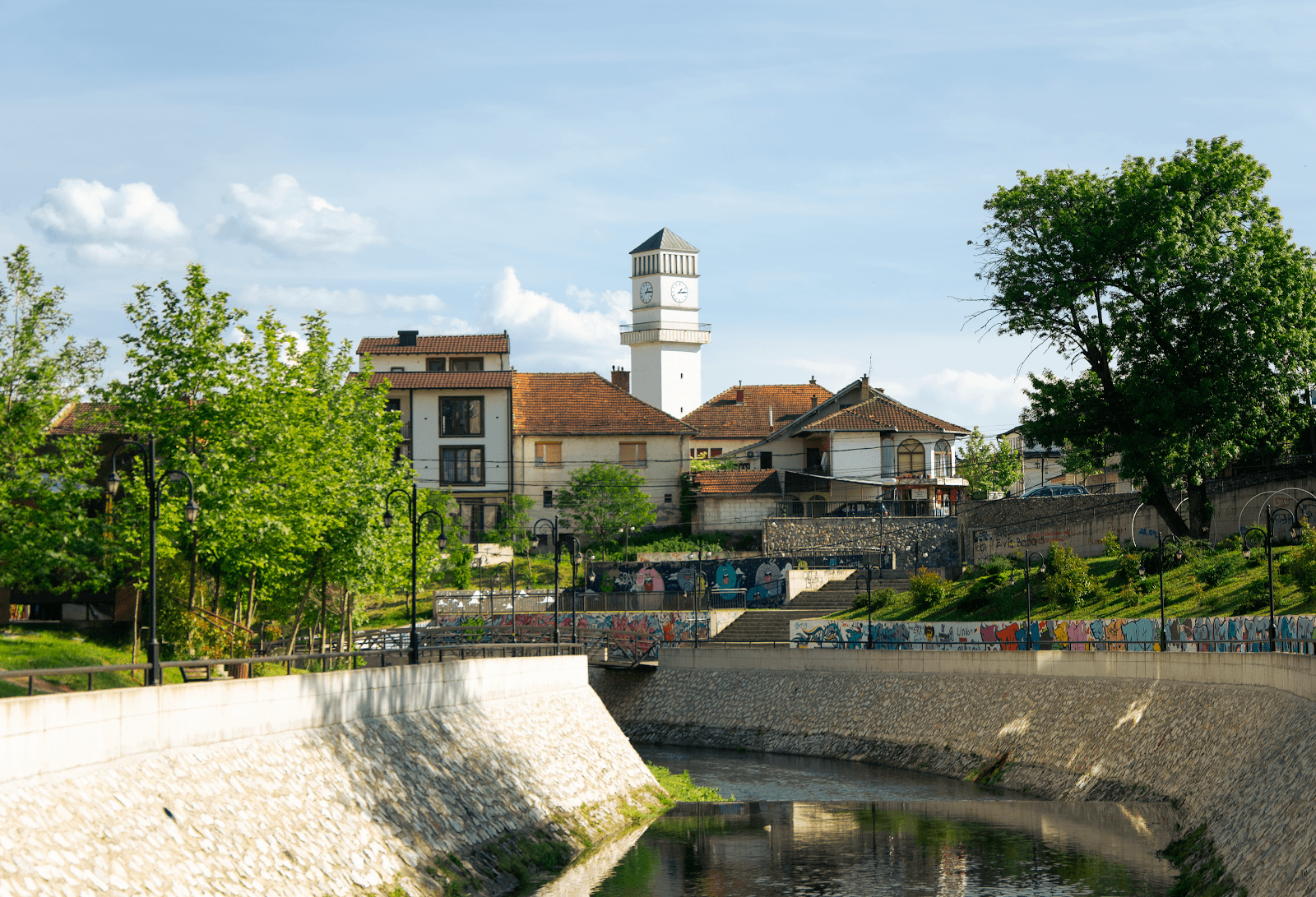
A historic Ottoman-era clock tower in Gjakova's old town, symbolizing past prosperity and resilience.
Highlights
Must-see attractions

Social
From TikTok & Reddit
Best Time
Enjoy fewer crowds
Sahat Kulla Clock Tower Gjakova
Best Time
Enjoy fewer crowds
Highlights
Must-see attractions
A historic Ottoman-era clock tower in Gjakova's old town, symbolizing past prosperity and resilience.
"A unique stone structure with a wooden observation deck, a must-see if you're around town."

📸 Capture the Details
Don't miss the unique mural at the tower's base!
🚶♂️ Explore the Bazaar
The tower is right by the old bazaar, perfect for a stroll.
Quick Facts
Hours
Rating
4.5 · 13 reviews
Type
Tourist Attraction
Highlights
Discover the most iconic attractions and experiences
The Clock Tower Exterior
Clock Square, Gjakova
Admire the unique stone architecture and wooden observation deck of this historic Ottoman-era landmark.
Bazaar Proximity
Adjacent to the Clock Tower
Experience the vibrant atmosphere of the old bazaar, a testament to Gjakova's historical trading significance.

Architectural Details
Base of the Clock Tower
Look for the unique mural sculpture at the base, featuring a crescent moon and a Star of David.
Plans like a pro.
Thinks like you
Planning Your Visit
Timing Your Visit to Sahat Kulla
Understanding Sahat Kulla's Significance
Best Times
Insider Tips
from TikTok, Instagram & Reddit
📸 Capture the Details
Don't miss the unique mural at the tower's base!
🚶♂️ Explore the Bazaar
The tower is right by the old bazaar, perfect for a stroll.
🕰️ No Entrance Fee
Enjoy the exterior views freely; there's no entry to the tower itself.
📍 Central Location
Easily accessible in the heart of Gjakova's old town.
Tips
from all over the internet
📸 Capture the Details
Don't miss the unique mural at the tower's base!
🚶♂️ Explore the Bazaar
The tower is right by the old bazaar, perfect for a stroll.
🕰️ No Entrance Fee
Enjoy the exterior views freely; there's no entry to the tower itself.
📍 Central Location
Easily accessible in the heart of Gjakova's old town.
What Travellers Say
Reviews Summary
Visitors appreciate the Sahat Kulla Clock Tower as a charming historical landmark in Gjakova's old town, noting its unique architecture and proximity to the vibrant bazaar. While there's no interior access, its exterior presence and historical significance are well-regarded.
"The Clock Tower (Sahat Kulla) was built in 1597 (immediately after the Hadum Mosque) in a location known as the "Clock Square" and characterized the rapid economic development of Gjakova at the time. In 1912, when the tower was burned by Montenegrin military forces (as part of the Balkan Wars), the bell tower was removed and transported to Montenegro. A new clock tower, measuring 4.10 meters on each side and approximately 30 meters high, was later built near the foundations of the previous one. Constructed mainly of stone, with a wooden observation deck and a lead-covered roof, the clock tower is unique in its kind.
The History of Gjakova (Gjakova)
The city of Gjakova has been inhabited since prehistoric times. During the Ottoman period, Gjakova served as a trading center on the route between Shkodra and Istanbul. It was also one of the most developed commercial centers in the Balkans at the time.
Gjakova was mentioned in the 1485 Ottoman register as a village with a market and had 54 households. Local Albanians transformed it into a town in the 16th century. Since its founding, it has been a settlement with an ethnic Albanian majority and grew around the founding structures built by Hadim Süleyman Efendi, a politically important local Albanian.
The city became an Ottoman trading center on the Shkodra-Istanbul route, and its marketplace was located near the Hadum Mosque, financed by Hadum Ağa and built by Mimar Sinan in 1594. Evliya Çelebi referred to it as a city in 1662, describing it as a thriving and attractive town of 2,000 stone houses with roofs and gardens. The public buildings were situated on a wide plain and included two richly decorated community mosques, several houses of worship, some lead-roofed inns, a pleasant bathhouse, and approximately 300 shops resembling nightingale nests. Between September 3 and 6, 1878, intense fighting took place in Iakovë between the nationalist Albanian League in Prizren and the Ottoman Empire. In the ensuing fighting, 280 Ottoman soldiers, including two Pashas, were killed and 300 wounded.
Modern Period
Gjakova suffered greatly from the Serbian and Montenegrin armies during the First Balkan War. Citing Austro-Hungarian sources, the New York Times reported in 1912 that gallows were hung on both sides of the road, turning the road into a "street of gallows."
Serbian priests forcibly converted Albanian Catholics to Serbian Orthodoxy. The Historical Institute in Pristina reported that Montenegro converted more than 1,700 Albanian Catholics to Serbian Orthodoxy in the Gjakova region in March 1913.
A mass killing of at least 377 Albanian men between the ages of 16 and 60 was carried out by Serbian police on April 27, 1999. This was the largest massacre of the Kosovo War.
The Roma neighborhood of Gjakova (Brekoc) was targeted and parts of it burned in mid-1999. Approximately 600 Roma were moved to a refugee camp outside the town, and as a result of political violence, 15 were reported killed or missing by August 1999. The majority of the 3,000-strong Serb population fled Gjakova in June 1999, leaving only five remaining Serbs, who live in a local Serbian Orthodox church under the protection of KFOR troops. In 2004, the last five remaining Serbs were expelled from Gjakova, and the local Serbian Orthodox Church was destroyed during a rebellion by ethnic Albanians as part of the March uprising in Kosovo. By the 2011 census, approximately 15 Serbs had returned to Gjakova.
To the northeast of the city lies the Metohija plain of western Kosovo, while to the southwest rises the peaks of the Cursed Mountains. The city also lies at the entrance to the Erenik Valley, where the Krena River flows north into the Erenik mountain stream. A few kilometers later, it flows into the White Drin, Kosovo's longest river. To the west of Gjakova lies the Gjakova Highlands, and to the northeast lies the Dushkaja district."
Abdurrahim Vural
"Clock Tower
Near the Bazaar
Nothing inside and no entrance...
Two pictures from the outside as you walk by"
Faisal
"Characteristic of all predominantly Muslim cities in Europe, the clock tower in Djakova has a strange mural sculpture at the base: a crescent moon next to a 6-pointed star of David. Located very close to the Hadum Mosque, it's a shame not to see it if you're around town"
Mirela Mihalcea
What People Like
What People Dislike
Frequently Asked Questions
🚇 🗺️ Getting There
Sahat Kulla is located in the heart of Gjakova's old town, often referred to as 'Clock Square'. It's easily walkable if you're already in the city center. If arriving by car, look for parking near the old bazaar area. +1
Yes, the clock tower is a central landmark and very accessible. It's situated within the historic bazaar area, making it a natural point of interest for anyone exploring Gjakova.
Gjakova is accessible by bus from major cities in Kosovo and neighboring countries. The nearest major airport is Pristina International Airport (PRN), about an hour's drive away. +1
🎫 🎫 Tickets & Entry
No, there is no ticket required to visit the Sahat Kulla Clock Tower. It is an outdoor landmark, and you can view its exterior and appreciate its presence in the square freely.
As an outdoor monument, Sahat Kulla does not have specific opening hours. You can view it at any time of day. Visiting during daylight is recommended for the best experience.
Unfortunately, there is no public access to go inside the Sahat Kulla Clock Tower. Visitors can admire its architecture and historical significance from the outside.
🎫 🧭 Onsite Experience
You can admire the tower's unique stone construction, its wooden observation deck, and the historical mural at its base. It's a key part of the Gjakova old town's charm.
Since you can only view it from the outside, a visit to Sahat Kulla itself might only take 15-30 minutes. However, it's best combined with exploring the adjacent old bazaar.
Pay attention to the tower's stone masonry and the distinctive mural at its base, which features a crescent moon alongside a Star of David, a unique detail for the region.
Absolutely! The clock tower, especially with the backdrop of the old bazaar, offers great photographic opportunities. The unique mural is also a distinctive subject.
📸 📸 Photography
Golden hour, just after sunrise or before sunset, can offer beautiful lighting for the clock tower and the surrounding bazaar. Midday can be harsh but still offers good visibility.
You can capture wide shots of the tower in its square, close-ups of the unique mural, and shots that include the bustling atmosphere of the adjacent old bazaar.
There are generally no restrictions on photography for personal use around the exterior of Sahat Kulla. Be mindful of people if you are taking close-up shots in the bazaar.
Social
from TikTok, Instagram & Reddit