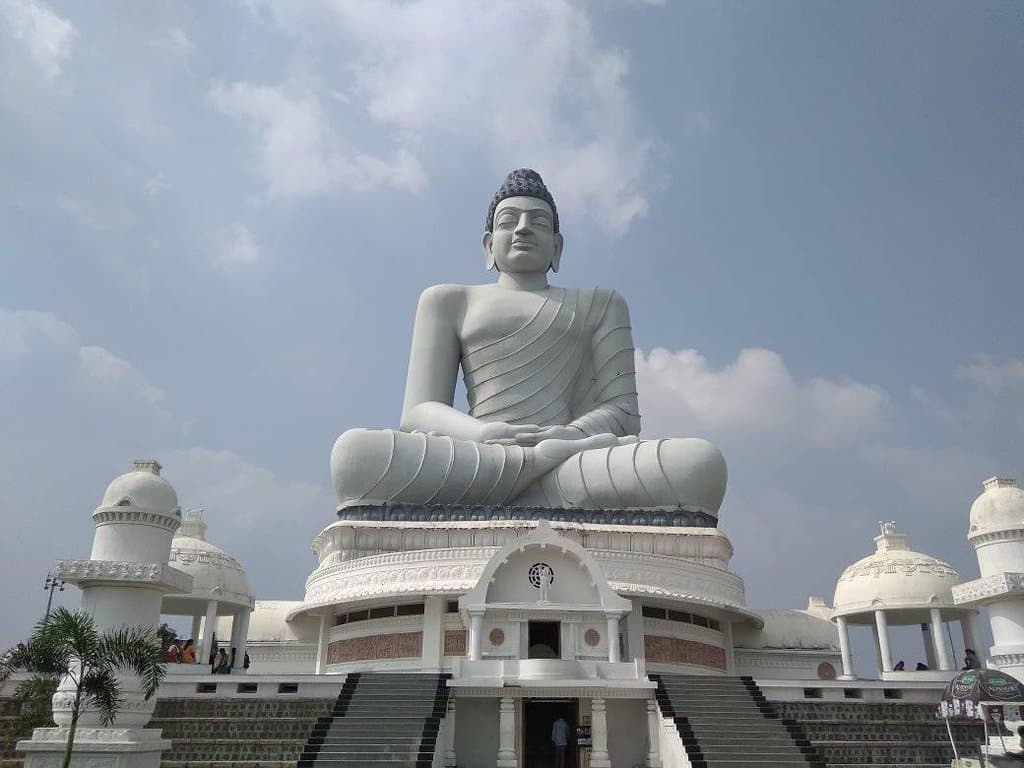
Amaravati Mahachaitya Stupa
Explore the remnants of a colossal ancient Buddhist stupa, once a major pilgrimage site, now showcasing incredible sculptures and history.
Highlights
Must-see attractions

Social
From TikTok & Reddit
Best Time
Beat the heat and crowds
Amaravati Mahachaitya Stupa
Best Time
Beat the heat and crowds
Highlights
Must-see attractions
Explore the remnants of a colossal ancient Buddhist stupa, once a major pilgrimage site, now showcasing incredible sculptures and history.
"A must-visit for an Amaravati day trip, housing many original artifacts found in the region."
🗺️ Use a Map App
Signage can be limited; a map app is crucial for easy navigation to the site.
🏛️ Visit the Site Museum
Discover original artifacts and gain deeper insights into the stupa's history.
Quick Facts
Hours
Rating
4.4 · 2,733 reviews
Type
Place of Worship
Highlights
Discover the most iconic attractions and experiences
The Great Stupa Remains
Main excavation site
Explore the vast brick drum and ayaka platforms of what was once a colossal Buddhist monument.
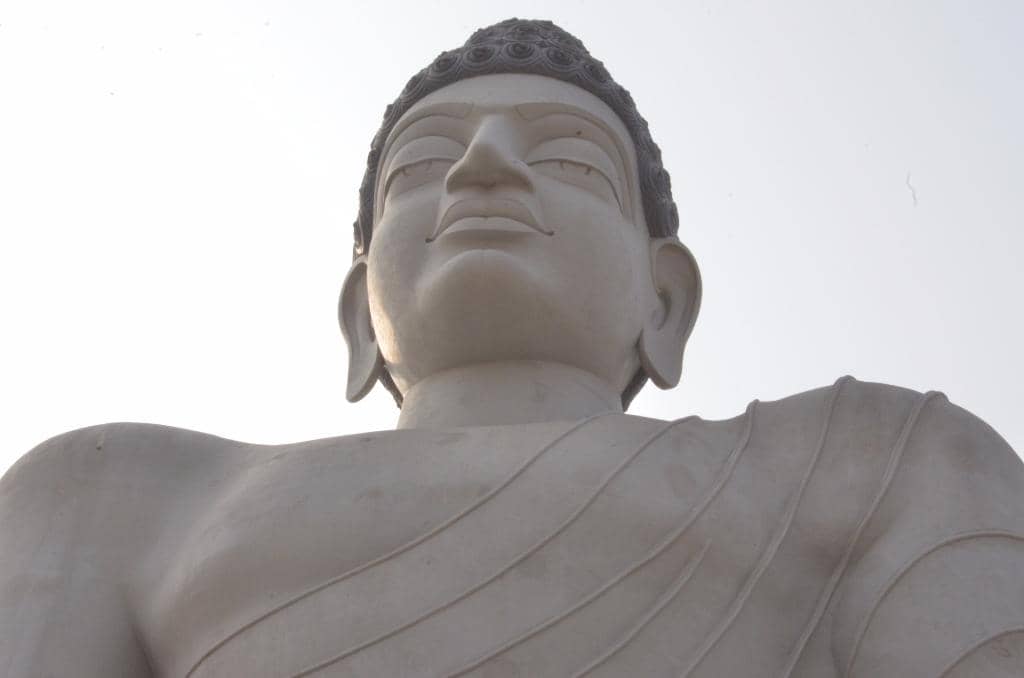
Site Museum Treasures
Adjacent museum
View original sculptures and artifacts unearthed from the site, showcasing intricate Buddhist art.
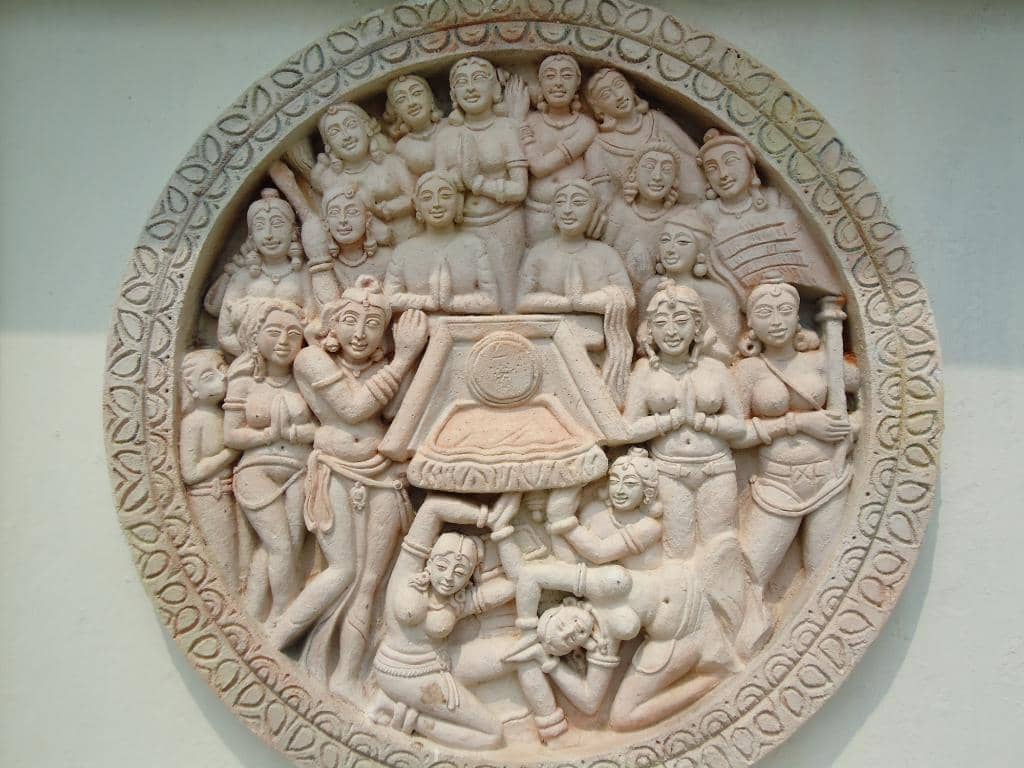
Sculptural Slab Fragments
Excavation site and museum
Admire detailed limestone carvings depicting Buddha's life and Jataka tales.
Plans like a pro.
Thinks like you
Planning Your Visit
Uncover Andhra's Buddhist Past
Navigating to the Stupa
Best Times
Insider Tips
from TikTok, Instagram & Reddit
NYT Highlights Amaravati’s Role in Shaping Buddhist Art History
The *New York Times* recently featured Amaravati, Andhra Pradesh, in a piece about ancient Buddhist art. It described Amaravati as a major Buddhist hub with a stunning stupa from the 2nd century BCE. The article also talks about how many of its sculptures are now in museums like…
🗺️ Use a Map App
Signage can be limited; a map app is crucial for easy navigation to the site.
🏛️ Visit the Site Museum
Discover original artifacts and gain deeper insights into the stupa's history.
Why doesn't Andhra capitalize on the fact that it used to be a hub of Buddhism
Alright, so I don't think many people really acknowledge this, so let me put it out there. Andhra used to be a great center of Buddhism. The Amaravati Stupa (yes that Amaravati) used to be an important site of Buddhist Activity, where some of the most important Sutras, including…
Amaravati, a city fast shaping up with dedicated regions. With the new Andhra Pradesh capital being developed with nine theme cities, Knowledge and Health regions are especially getting traction where university campuses and healthcare facilities have either been set up or are being constructed
Some people said that Amravati is being constructed on flood plains, is that true?
🚶♂️ Wear Comfortable Shoes
You'll be doing a lot of walking around the excavation site. :athletic_shoe:
💧 Stay Hydrated
Carry water, especially during warmer months, as facilities might be limited. :droplet:
Tips
from all over the internet
🗺️ Use a Map App
Signage can be limited; a map app is crucial for easy navigation to the site.
🏛️ Visit the Site Museum
Discover original artifacts and gain deeper insights into the stupa's history.
🚶♂️ Wear Comfortable Shoes
You'll be doing a lot of walking around the excavation site. :athletic_shoe:
💧 Stay Hydrated
Carry water, especially during warmer months, as facilities might be limited. :droplet:
What Travellers Say
Reviews Summary
Visitors praise the Amaravati Mahachaitya Stupa for its historical significance and the wealth of artifacts in its well-maintained site museum, noting the nominal entry fee. However, some find navigation challenging due to a lack of clear signage and suggest improvements in public transport accessibility.
"Wonderful museum that houses a lot of original artifacts found in the region. It's not too big, entry fee is very less, very well maintained... a must visit for an Amaravati day trip. This falls under the Archeological Survey of India (ASI), and hence a number of legitimate, valuable information is available on your fingertips if you get interested in a particular artifact."
Choiti Bandyopadhyay
"Maha Chaitya at Amaravati
The great stupa or Maha Chaitya at Amaravati was one of the biggest in Andhra Pradesh with probable diameter of 50 meters and a height of 27 meters. It has a brick built circular vedika or drum with projecting rectangular ayaka platforms in four cardinal directions measuring 7.20 x 2.10 meters each. Five ayaka pillars must have stood on each platform symbolically representing the five main events in Buddha’s life viz. the birth, the great renunciation, the enlightenment, the first sermon, and the final extinction. The drum and ayaka platforms were covered with sculptured slabs. Five crystal caskets containing bone pieces, pearls and gold flowers were discovered from the southern ayaka platform. This is a sariraka type of stupa and hence its great importance, mounted on this circular drum stood an anda or hemispherical dome. Tall sculptured dome slabs covered the vertical part of the dome, above which came decorations in stucco. Scenes from the life of Buddha, Jataka stories, animal motifs, floral decorations, formed the subject matter of these sculptures carved on the locally available light green lime stone. The dome was crowned by a harmika or box like structure over which stood a chhatra or umbrella all now missing except the remains of the plinth. The drum of the stupa had a well laid pradakshinapatha or circumambulatory path of 4 meters with paved with cuddapah slabs protected by a railing in stone on its extreme end, pierced on all the four sides by gateways projecting out. The railing consisted of updmvapatas or upright pillars, three suchis or cross bars connecting each pair of upright pillars, and ushnisha or coping stone running on top those pillars, seated lions stood on pillars guarding either side of the gate ways. The stone railing of later periods was highly ornamental.
The history of Mahachaitya is spread to a period of roughly over a thousand and seven hundred years (Circa 3rd Century BCE to circa 14th Century CE). The foundation of this maha stupa must have been laid by the great Mahadeva Bikshu an emissary of Emperor Asoka who was deputed to Mahishamandala for the propagation of the Buddhist norm. The first construction is believed to have been plain and modest.
The ornamental renovations were brought later during the next seven centuries. The stupa had received its rich patronage from Kings like Vasistiputra Pulumavi, Sivaskanda, Satakarni, Gautamiputra Yajna Sri Satakarni, Buddhist Monks like Acharyaa Nagarjuna, and Nuns like Nanda and lay Devotees like Utara, Khalata etc.
Evidence shows that the stupa was an object of worship receiving attention during the reign of the dynasties of the Satavahana, Ikshvaku, Chalukya, Pallava, Salankayaha, Vishnukundin Kakatiya and Kota kings.
The Chinese Traveller Yuvan Chwang and the Tibetan Historian Taranath glorified in their accounts the greatness of this ancient seat of Buddhism. Colonel Colin Mackenzie of the trignometrical survey had discovered these remains of this stupa in 1791 CE. Subsequently Archaeologists like Mr. Burgess, Mr. Rea, Sri TN Ramachandran, Dr. R. Subrahmanyan, Dr. K. Krishnamurthy and Dr. I Karthikeya Sarma have worked on it.
Out of the vast sculptural wealth this stupa has yielded, a good Number have become the objects of exhibition in the galleries of the British Museum London, Musie Guimet Germany, National Museum, New Delhi, Indian Museum, Calcutta, and Government Museum, Madras. The rest are on display in the site Museum."
Veludharan
"An archeological site with parts of an old stupa installed by emperor Ashoka. Full of greenery. There is also a museum."
Yesses Bee
What People Like
What People Dislike
Frequently Asked Questions
🚇 🗺️ Getting There
The stupa is located in Amaravati, Guntur district, Andhra Pradesh. While local buses are available, they can involve significant waiting times. Many visitors find it easier to reach by personal vehicle or taxi, as signage can be sparse. Using a map application on your phone is highly recommended for navigation.
Public transportation is an option, but be prepared for potential delays and waiting periods. It's advisable to check local bus schedules in advance if relying on them.
For exploring the stupa and surrounding areas, having your own vehicle or hiring a local taxi offers the most flexibility and convenience.
Unfortunately, many visitors report a lack of adequate signboards, making navigation challenging for those unfamiliar with the area.
Yes, taxis can be hired from nearby cities like Guntur or Vijayawada to reach the Amaravati Mahachaitya Stupa. It's a good option for a more comfortable journey.
🎫 🎫 Tickets & Entry
The entry fee is generally very nominal, making it an affordable visit. The site is maintained by the Archaeological Survey of India (ASI).
The site and museum are typically open during daylight hours. It's best to check for the most current timings upon arrival or through local information sources.
Advance booking is usually not required for the Amaravati Mahachaitya Stupa. Tickets can be purchased at the site.
Often, a single ticket grants access to both the stupa excavation site and the adjacent museum.
Concessions for students, children, or senior citizens might be available. Inquire at the ticket counter for details.
🎫 🏛️ Onsite Experience
You can explore the excavated remains of the Great Stupa, including its brick drum, ayaka platforms, and remnants of the stone railing. The site museum houses many of the original sculptures and artifacts.
The site is generally well-maintained by the Archaeological Survey of India, ensuring a pleasant experience for visitors.
Allocate at least 2-3 hours to comfortably explore the excavation site and the museum.
Official guides may be available, or you can rely on the information provided at the museum and interpretive signs.
The Amaravati Stupa was a major center of Buddhist activity and pilgrimage for over a thousand years, known for its impressive architecture and sculptures.
📸 📸 Photography
Photography is generally permitted at the excavation site and within the museum, but check for any specific restrictions on certain artifacts or areas.
Drone photography is typically not allowed at archaeological sites without prior permission from the authorities.
The large circular drum of the stupa and the intricate details of the sculptural fragments offer excellent photo opportunities. The museum also has well-lit displays.
Outdoor lighting at the excavation site is natural daylight. The museum has artificial lighting, which is usually adequate for photography.
A tripod might be useful for low-light conditions in the museum, but check if they are permitted inside.
Social
from TikTok, Instagram & Reddit