Keladi Rameshwara Temple
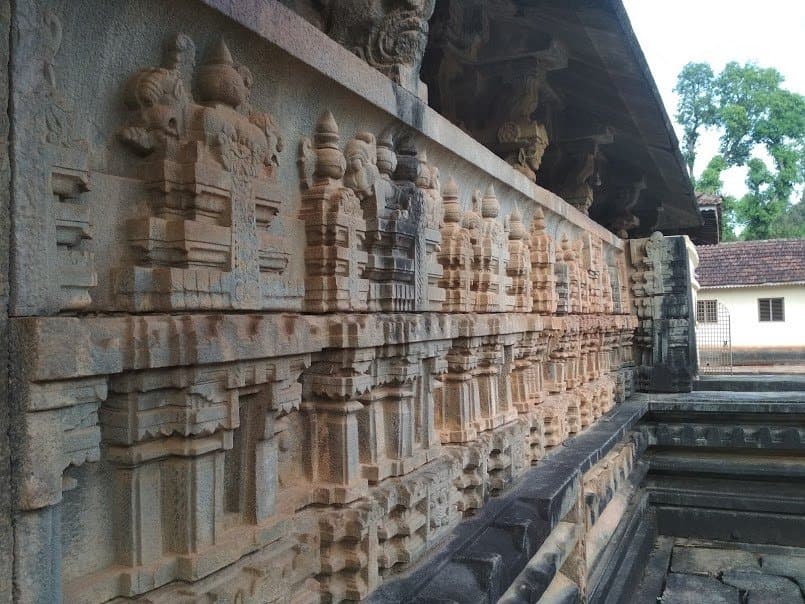
A 16th-century architectural marvel, Keladi Rameshwara Temple blends Hoysala & Dravidian styles, showcasing intricate carvings and historical signific...
Highlights
Must-see attractions

Social
From TikTok & Reddit
Best Time
Fewer crowds, peaceful atmosphere
Keladi Rameshwara Temple
Best Time
Fewer crowds, peaceful atmosphere
Highlights
Must-see attractions
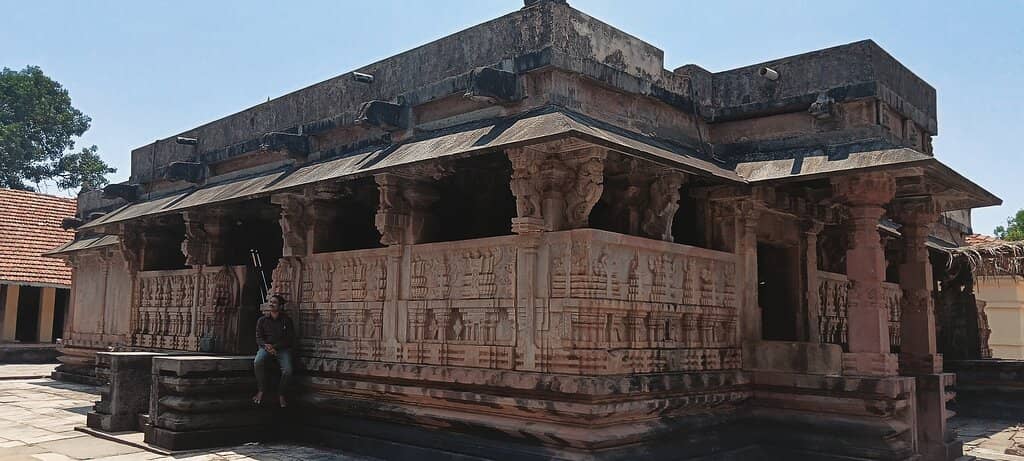
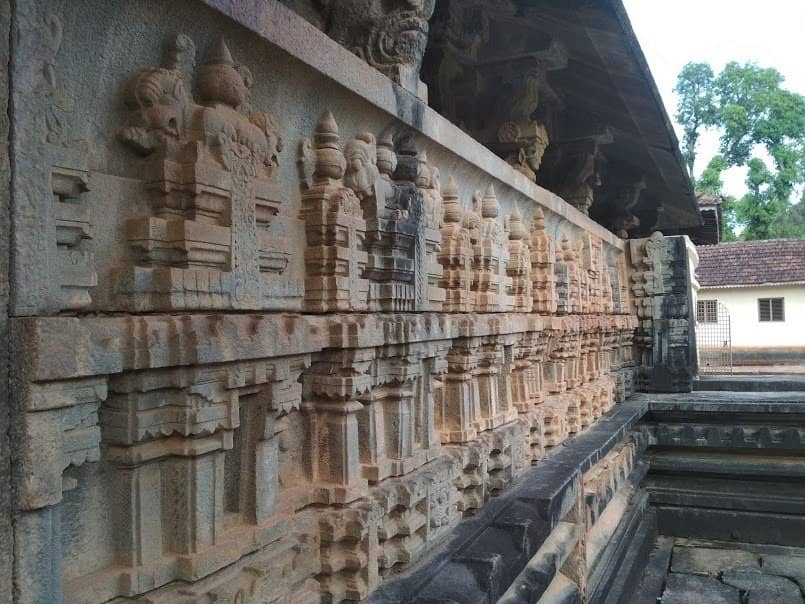
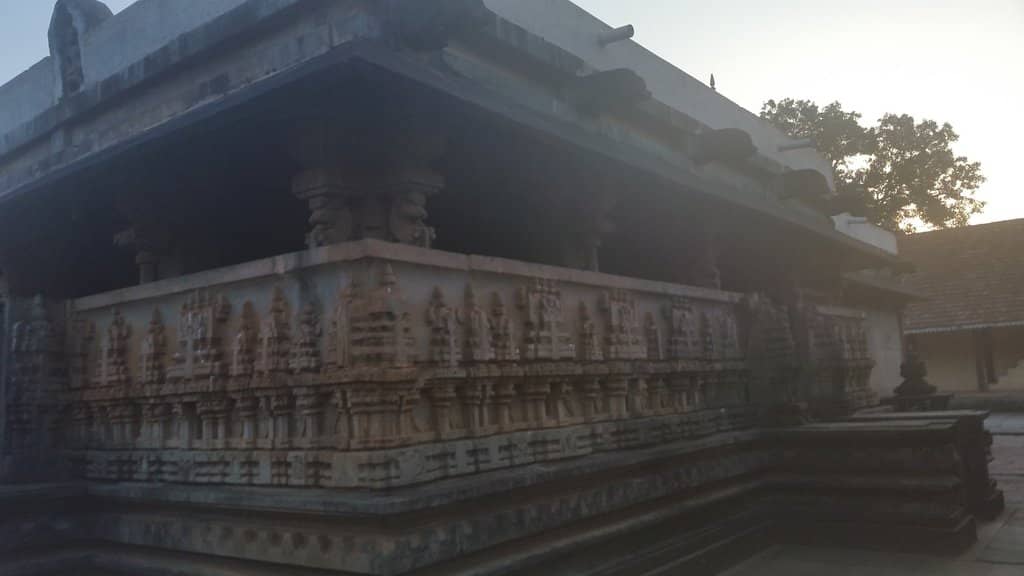
A 16th-century architectural marvel, Keladi Rameshwara Temple blends Hoysala & Dravidian styles, showcasing intricate carvings and historical significance.
"Gorgeous temple with stunning ceiling artwork and detailed stone carvings worth seeing!"
📸 Photography Etiquette
Photography is permitted, but avoid capturing the deity. Ask permission before photographing people.
👟 Watch Your Step
The temple floor can be slippery when wet, especially during monsoons. Exercise caution.
Quick Facts
Hours
Rating
4.7 · 1,074 reviews
Type
Hindu Temple
Highlights
Discover the most iconic attractions and experiences
Intricate Ceiling Artwork
Veerabhadra Temple
Marvel at the stunning wooden floral motifs and the mythical Gandabherunda on the ceilings. A true testament to ancient craftsmanship.
Mixed Architectural Styles
Main Temple Complex
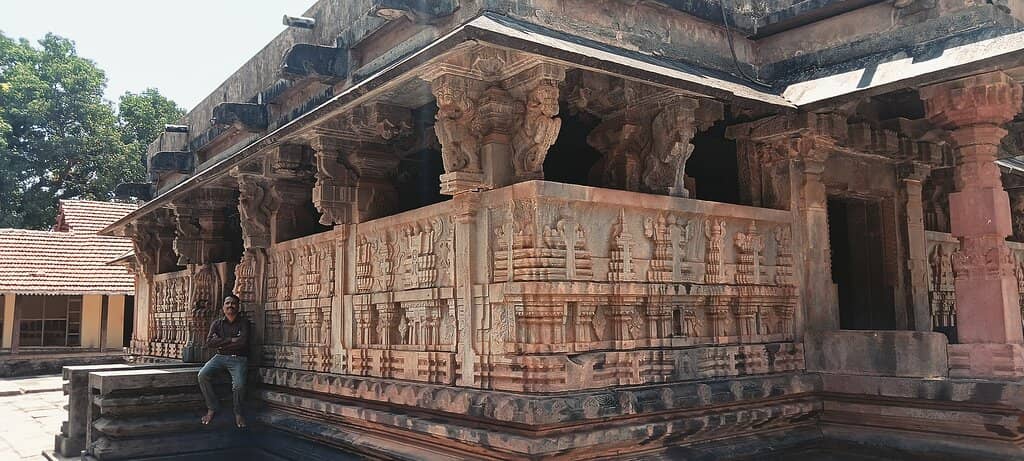
Experience the unique blend of Hoysala and Dravidian architectural styles, showcasing a rich historical and artistic fusion.
Relief Sculptures of Devotees
Mahamandapa
Observe the detailed relief sculptures depicting devotees, offering a glimpse into the devotional practices of the 16th century.
Plans like a pro.
Thinks like you
Planning Your Visit
Timing is Key for a Peaceful Visit
Respectful Attire and Photography Rules
Best Times
Insider Tips
from TikTok, Instagram & Reddit
📸 Photography Etiquette
Photography is permitted, but avoid capturing the deity. Ask permission before photographing people.
👟 Watch Your Step
The temple floor can be slippery when wet, especially during monsoons. Exercise caution.
🗣️ Local Guide Insights
Engage with knowledgeable locals like Saraswati for detailed explanations of carvings and history.
🏛️ Explore Nearby Attractions
Combine your visit with Jog Falls (32 km) or other local sights for a fuller experience.
Tips
from all over the internet
📸 Photography Etiquette
Photography is permitted, but avoid capturing the deity. Ask permission before photographing people.
👟 Watch Your Step
The temple floor can be slippery when wet, especially during monsoons. Exercise caution.
🗣️ Local Guide Insights
Engage with knowledgeable locals like Saraswati for detailed explanations of carvings and history.
🏛️ Explore Nearby Attractions
Combine your visit with Jog Falls (32 km) or other local sights for a fuller experience.
📜 Small Museum Available
Don't miss the small, though unlabeled, museum on-site for additional historical context.
What Travellers Say
Reviews Summary
Visitors praise Keladi Rameshwara Temple for its stunning architecture, intricate carvings, and historical significance as a former Nayaka capital. Many appreciate the peaceful ambiance and the detailed artwork, especially the ceiling motifs. However, some note that the temple floor can be slippery when wet and suggest better maintenance.
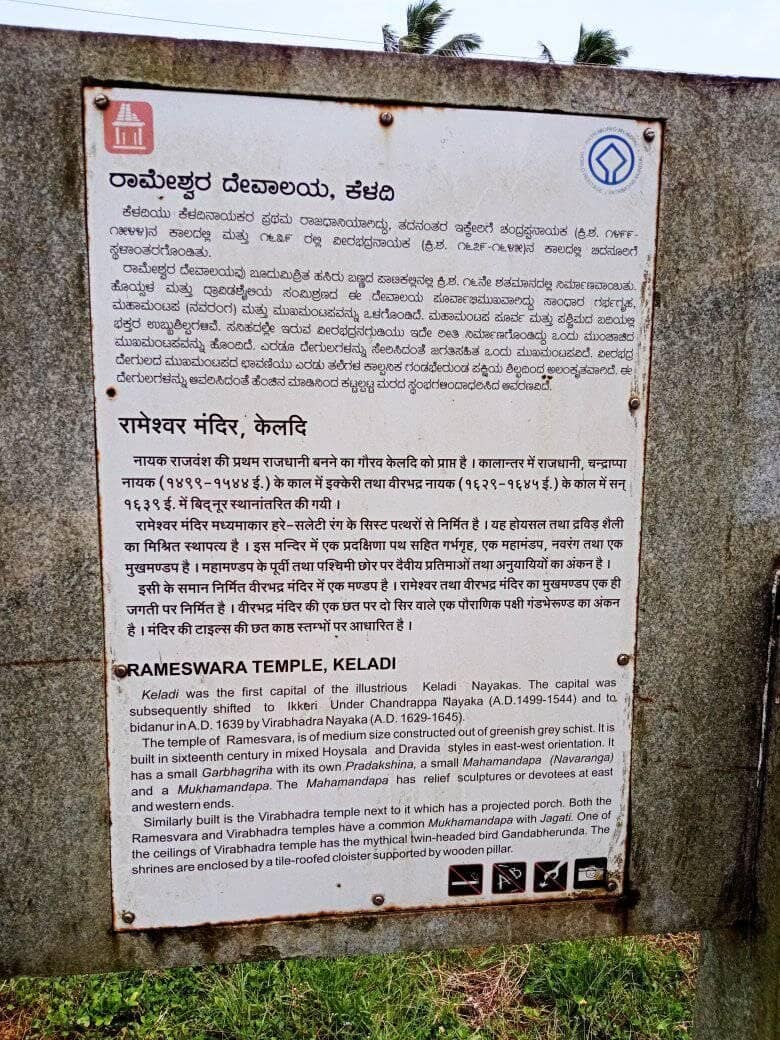
"Kalad was the first capital of the Illustrious Keladi Navakas. The capital was subsequently shifted to Ikkeri Under Chandrappa Nayaka (A.D.1499-1544) and to bidanur in A.D. 1639 by Virabhadra Nayaka (A.D. 1629-1645)
The temple of Ramesvara, is of medium size constructed out of greenish grey schist. It is built in sixteenth century in mixed Hoysala and Dravida styles in east-west orientation has a small Garthagriha with its own Pradakshina, a small Mahamandaps (Nawararigal and a Mukhamandapa. The Mahamandapa has relief sculptures or devotees at east and western ends
Similary built is the Virabhadra temple next to it which has a projected porch. Both the Ramesvara and Virabhadra temples have a common Mukhamandapa with Jagati One of the ceilings of Virabhadra temple has the mythical twin-headed bird Gandabherunda. The shirimes are enclosed by alle roofed cloister supported by wooden pillar"
Nitin A V
"Sixteen Century Sri Rameswara Temple, Keladi, Karnataka, India.
Keladi was the first capital of the illustrious Keladi Nayakas. The capital was subsequently shifted to Ikkeri under Chandrappa Nayaka (A.D. 1499–1544) and to Bidanur in A.D. 1639 by Virabhadra Nayaka (A.D. 1629–1645).
The temple of Ramesvara, is of medium size constructed out of greenish grey schist. It is built in sixteenth century in mixed Hoysala and Dravida styles in east-west orientation. It has a small Garbha-griha with its own Pradakshina, a small Mahamandapa (Navaranga) and a Mukhamandapa. The Mahamandapa has relief sculptures or devotees at east and western ends.
Similarly built is the Virabhadra temple next to it which has a projected porch. Both the Ramesvara and Virabhadra temples have a common Mukhamandapa with Jagati. One of the ceilings of Virabhadra temple has the mythical twin-headed bird Gandabherunda. The shrines are enclosed by a tile-roofed cloister supported by wooden pillar.
Excellent place, I was allowed to photograph except the deity. They also have a small museum though unlabeled."
Subrata Chakraborty
"Gorgeous temple!
Floor is quite slippery when it rains so be careful. Could be maintained better."
Highway To Hill (highway.to.hill)
What People Like
What People Dislike
Frequently Asked Questions
🚇 🗺️ Getting There
Keladi Rameshwara Temple is located approximately 8-11 km from Sagara. You can hire a taxi or auto-rickshaw from Sagara to reach the temple. Many visitors also combine this trip with a visit to Jog Falls, which is about 32 km away. 
Sagara is well-connected by road. You can take a bus from major cities in Karnataka like Bengaluru, Shivamogga, or Mangaluru. The nearest railway station is also in Sagara.
While direct public transport to Keladi might be limited, local buses from Sagara can take you close to the temple. Hiring a private vehicle offers more flexibility.
Yes, the temple is accessible by car, and there is usually space for parking nearby. The roads leading to Keladi are generally in good condition.
Keladi Rameshwara Temple is about 60-70 km from Shivamogga city, making it a feasible day trip from the district headquarters.
🎫 🎫 Tickets & Entry
Generally, there is no entry fee to visit the Keladi Rameshwara Temple. It is a functioning temple, and donations are welcome.
The temple is typically open from morning to evening, allowing visitors to explore during daylight hours. It's advisable to visit during temple timings, usually from sunrise to sunset.
As there is no entry fee, advance booking is not required for Keladi Rameshwara Temple.
While the temple is generally open throughout the day, it's best to avoid visiting during peak prayer times or very late at night to ensure a respectful experience.
Yes, it is recommended to dress modestly, covering shoulders and knees, as it is a place of worship.
🎫 🏛️ Onsite Experience
The temple complex features the Rameshwara, Veerabhadra, and Parvati shrines. Highlights include intricate ceiling artwork, Gandabherunda motifs, and relief sculptures of devotees.
Photography is generally permitted, but it's often restricted inside the inner sanctums or of the deity. Always check for signage and be respectful.
The temple is built in a mixed style, combining elements of Hoysala and Dravidian architecture, dating back to the 16th century.
While official guides might not always be present, you can often find locals with deep knowledge of the temple's history and carvings who can offer insights.
The Gandabherunda is a mythical twin-headed bird, and its depiction on the ceiling of the Veerabhadra temple is a significant artistic and cultural element of the temple.
🍽️ 🍽️ Food & Dining
Dining options are limited directly at the temple. You'll find more restaurants and eateries in the nearby town of Sagara, offering local Karnataka cuisine.
While Keladi is a small town, you might find small local eateries or tea stalls. For a wider variety of food, Sagara is the better option.
The region is known for traditional South Indian vegetarian dishes, including rice-based meals, dosas, idlis, and local specialties. Don't miss trying some authentic Karnataka thali.
Yes, vegetarian food is widely available and is the staple of South Indian cuisine in this region.
Packing your own snacks and water is a good idea, especially if you plan to spend a significant amount of time exploring or if you have specific dietary needs.
📸 📸 Photography
The temple's exterior architecture, the intricate ceiling carvings, and the relief sculptures offer excellent photographic opportunities. The surrounding green lawns also provide a beautiful backdrop.
Drone photography is generally not permitted at religious sites without prior permission from authorities. It's best to avoid using drones to prevent any issues.
Early morning or late afternoon offers the best natural light for photography, creating a warm and inviting ambiance. The golden hour can make the stone carvings stand out beautifully.
Photography of the deity inside the sanctum is usually prohibited. Always respect the temple's rules regarding photography.
A standard DSLR or mirrorless camera with a versatile lens will work well. Even smartphone cameras can capture stunning details, especially with good lighting.

Social
from TikTok, Instagram & Reddit