Chausath Yogini Temple
Ancient temples dedicated to the 64 Yoginis, showcasing unique circular and rectangular architecture with deep spiritual and historical roots.
Highlights
Must-see attractions

Social
From TikTok & Reddit
Best Time
Beat the heat and crowds
Chausath Yogini Temple
Best Time
Beat the heat and crowds
Highlights
Must-see attractions
Ancient temples dedicated to the 64 Yoginis, showcasing unique circular and rectangular architecture with deep spiritual and historical roots.
"A rare glimpse into Tantric traditions and architectural marvels, with some sites inspiring iconic modern structures."
🎯 Check Which Temple You're Visiting
Multiple Chausath Yogini temples exist; confirm your destination (Khajuraho, Morena, Hirapur) for accurate planning.
👟 Wear Comfortable Shoes
You'll be doing a lot of walking, especially at the Khajuraho site. Good footwear is essential.
Quick Facts
Rating
4.3 · 210 reviews
Type
Hindu Temple
Highlights
Discover the most iconic attractions and experiences
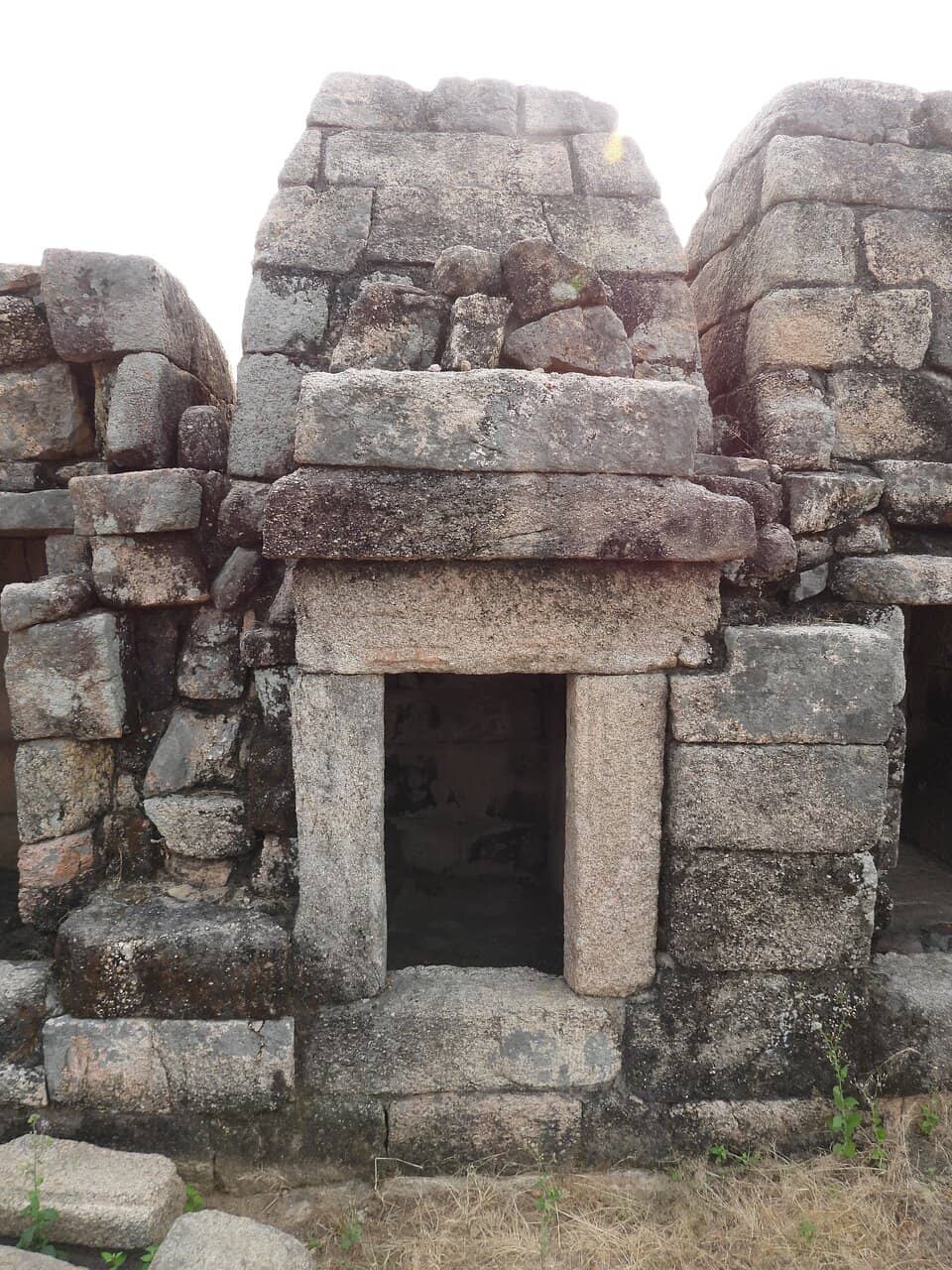
Unique Rectangular Layout
Khajuraho
Unlike most circular Yogini temples, this one boasts a rare rectangular design, offering a distinct architectural experience.
Architectural Inspiration
Morena
This circular temple is rumored to have inspired the design of India's old Parliament building, a fascinating historical connection.
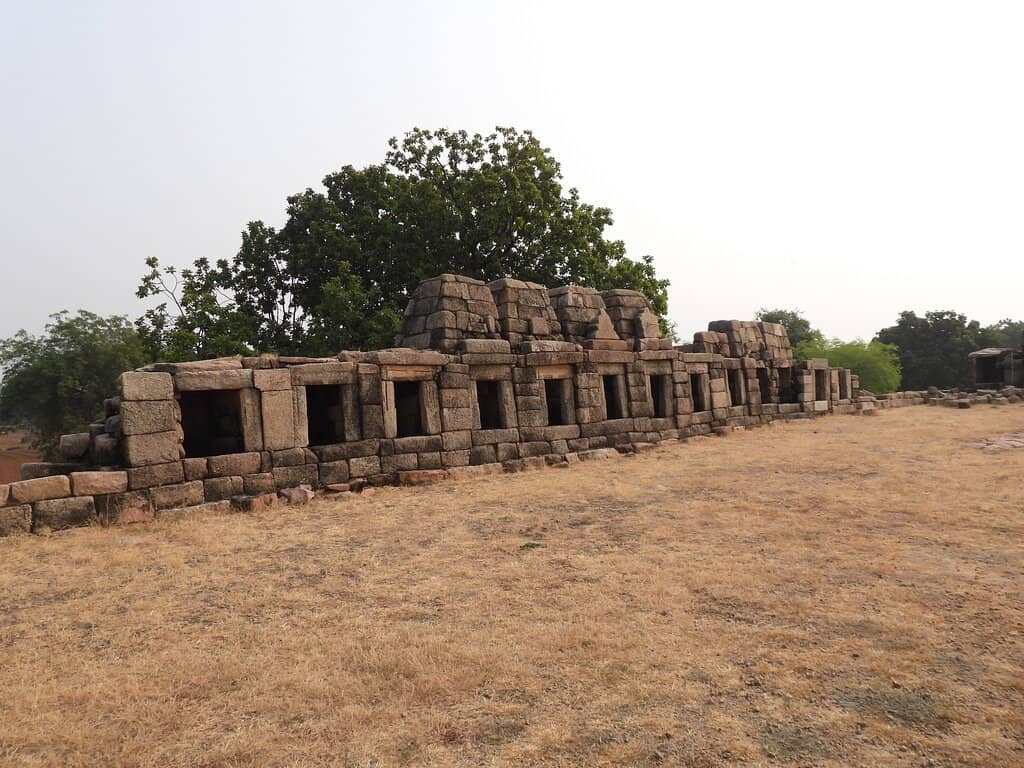
Ancient Granite Construction
Khajuraho
The oldest temple in Khajuraho, built entirely from indigenous granite, showcasing early Indian craftsmanship.
Plans like a pro.
Thinks like you
Planning Your Visit
Timing is Key for Fewer Crowds
Understand the Different Locations
Best Times
Insider Tips
from TikTok, Instagram & Reddit
🎯 Check Which Temple You're Visiting
Multiple Chausath Yogini temples exist; confirm your destination (Khajuraho, Morena, Hirapur) for accurate planning. 
👟 Wear Comfortable Shoes
You'll be doing a lot of walking, especially at the Khajuraho site. Good footwear is essential.
📸 Capture the Architecture
The unique circular and rectangular designs are incredibly photogenic. Visit during golden hour for best light.
💧 Stay Hydrated
Especially during warmer months, carry plenty of water, as facilities can be limited.
Tips
from all over the internet
🎯 Check Which Temple You're Visiting
Multiple Chausath Yogini temples exist; confirm your destination (Khajuraho, Morena, Hirapur) for accurate planning.
👟 Wear Comfortable Shoes
You'll be doing a lot of walking, especially at the Khajuraho site. Good footwear is essential.
📸 Capture the Architecture
The unique circular and rectangular designs are incredibly photogenic. Visit during golden hour for best light.
💧 Stay Hydrated
Especially during warmer months, carry plenty of water, as facilities can be limited.
⏳ Allow Ample Time
The Khajuraho site, in particular, requires time to explore its various structures.
What Travellers Say
Reviews Summary
Visitors are captivated by the unique architecture, particularly the rare rectangular layout in Khajuraho and the circular design in Morena, often linked to India's Parliament building. The spiritual significance tied to the 64 Yoginis and Tantric traditions is a major draw. However, some find the Khajuraho site lacking in maintenance compared to other famous temples.
"This earliest surviving temple in Khajuraho derives its name from the 64 (chausath, in Hindi) female goblins who attended the goddess Kali in her slaughter. There was a principal shrine at the centre that probably sanctified an image of the goddess herself.
ARCHITECTURE
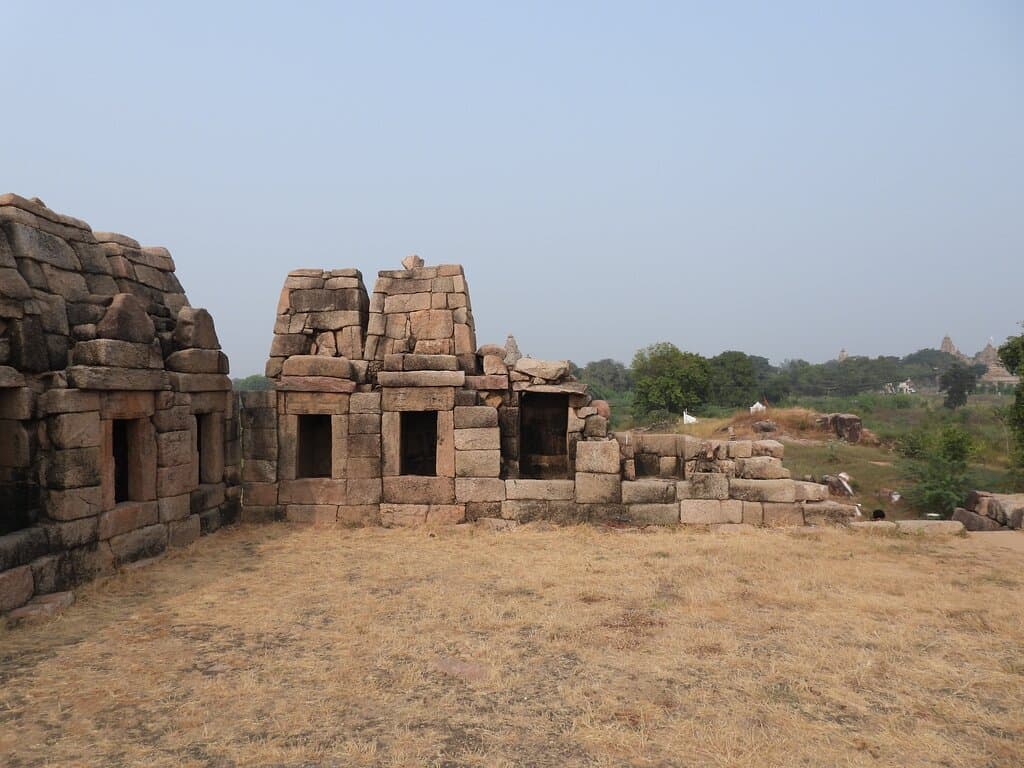
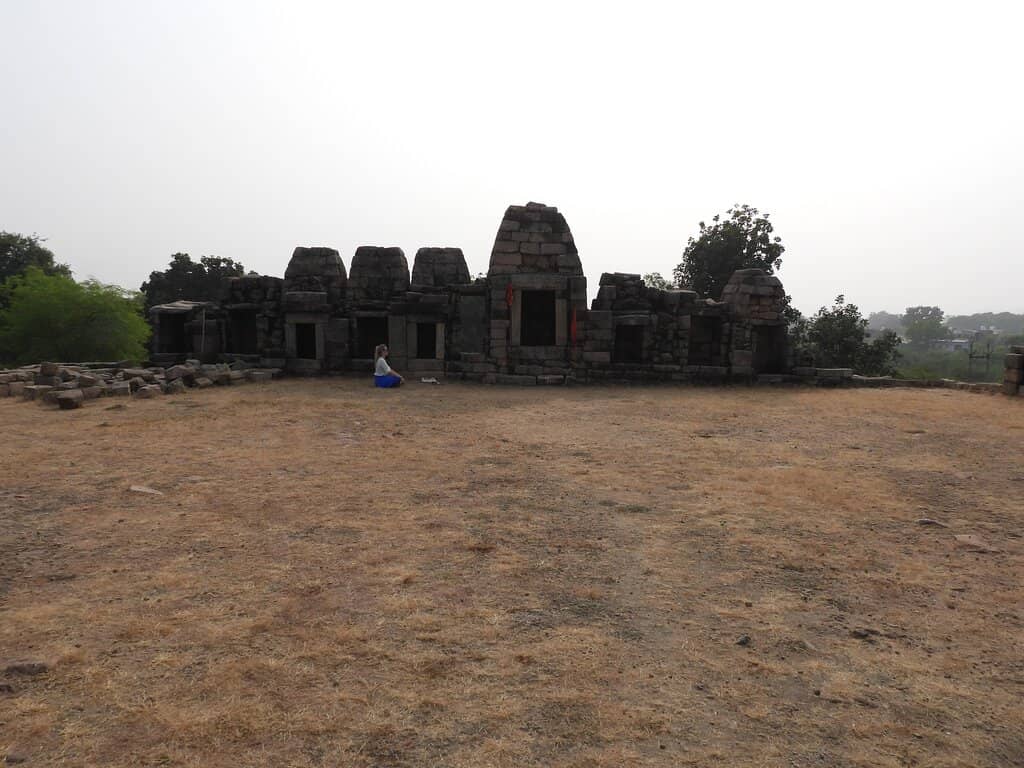
This is the only temple in Khajuraho built entirely out of granite, the indigenous stone, the others being built with a combination of granite and sandstone or latter exclusively. Another peculiarity that marks this temple is that this is the only temple facing north, unlike the others that traditionally face the East. Thirdly, unlike the other Yogini temples that have a circular plan, this is a quadrangular structure.
HISTORY & INSCRIPTIONS
It is believed that this Chausath Yogini Temple, was constructed in late 9th century, by Chandela Dynasty."
Veludharan
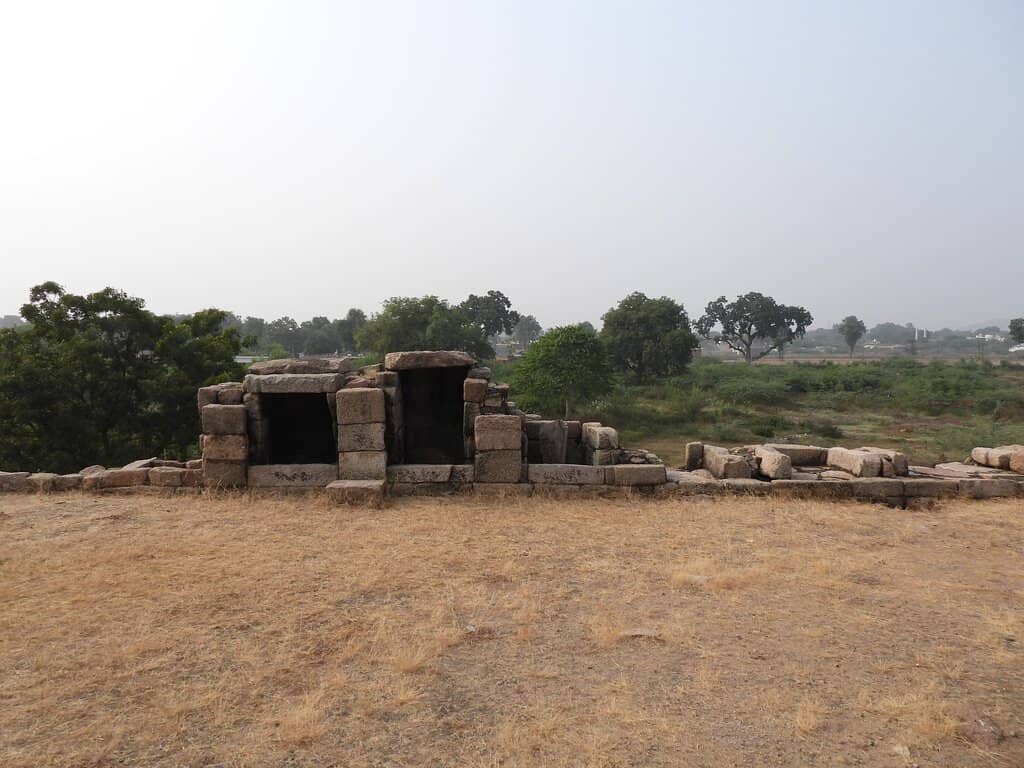
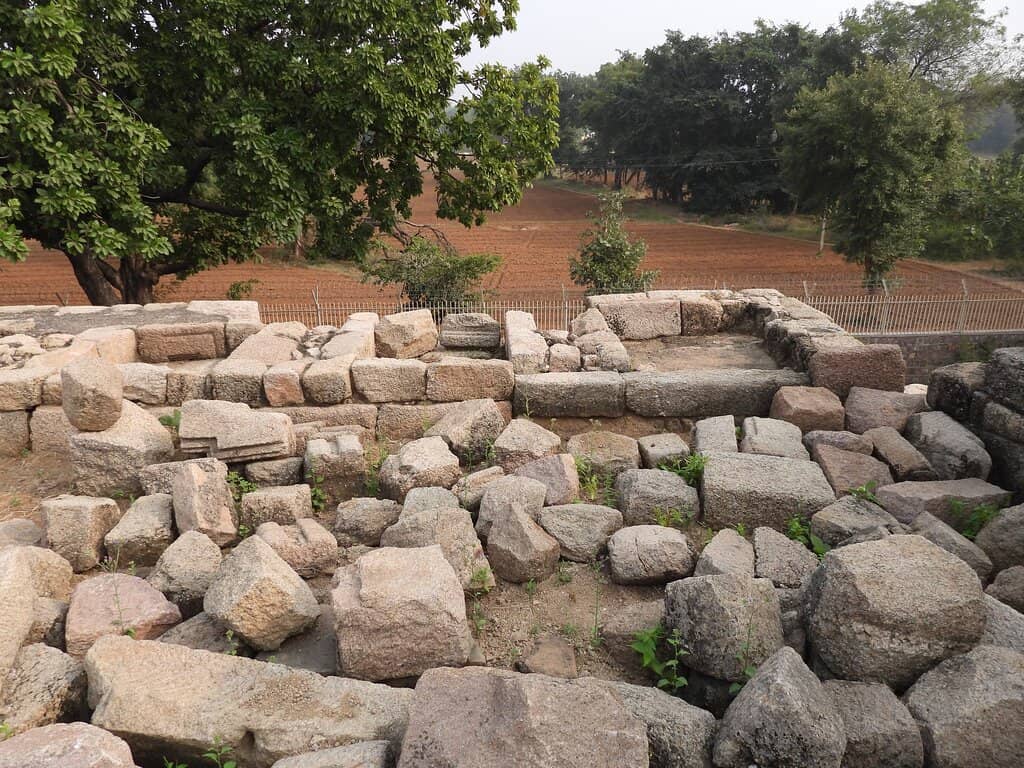
"The Chausath-yogini temple, made of coarse granite, is the earliest building at Khajuraho and is situated on a low granite outcrop to the south-west of the Siva-sagar tank. The temple has an exceptional plan and design. Standing on a lofty (5.4m high) platform, it is an open-air quadrangular (31- 4m x 18.3m) structure of sixty-seven peripheral shrines, of which only thirty-five have now survived. The shrines are tiny plain cells, each entered by a small doorway and roofed by a curvilinear shikhara of an elementary form. The shrine in the back wall, facing the entrance, is the largest and perhaps constituted the main shrine. A few simple mouldings on the façade are all the decoration that the temple displays, but despite its uncouth appearance and rugged bareness, it possesses an elemental strength and reveals some basic traits of Khajuraho style, such as a lofty platform and a jangha (wall) divided into two registers. Of all the yogini temples in India, this is the most primitive in construction and unique in being quadrangular and not circular on plan. The three surviving images, representing Brahmani, Mahesvari and Hingalaja (Mahishamardini) are massive and squat in form and are among the oldest sculptures of Khajuraho. The latter two are inscribed as Mahesvari and Hingalaja. They have been moved to the Archaeological Museum nearby. The evidence of the sculptural and architectural style, coupled with the early palaeography of the short labels on the images, indicates that the temple is probably datable to the last quarter of the ninth century. (Information from ASI)"
Vikas Singh
"Built in the 9th century this one is considered as the most old temple of Khajuraho. It was probably built by some other rulers (not Chandel) unlike the other structures on the premises which are all built by Chandel as the description of this one isn't found in any inscription.
Contrary to any other 64 yogini temple, the layout of this one is rectangular while all others are mostly circular (even the old parliament of India is believed to be inspired by the Chausath yogini temple of Moraina)
It was a group of 67 small temples 64 of yogini’s and 3 of goddess Brahmini, Mahishasur Mardini and Maheshwari. But now only 35 such temples are erected and intact while none has any idol inside it.
It's advisable to leave this temple and cover the rest of temples in the premises cause of its distance from the other groups and also the current condition of it."
Satyendra Sahu
What People Like
What People Dislike
Frequently Asked Questions
🚇 🗺️ Getting There
The Chausath Yogini Temple in Khajuraho is located within the main temple complex. You can walk from the ticket counter or take an e-rickshaw for a small fee (around 5 INR per person). Khajuraho is accessible by air, rail, and road, with the nearest airport and major railway station being in Khajuraho itself.
The Morena Chausath Yogini Temple is situated near Padavali, about 40 km from Gwalior. Gwalior has good rail and road connectivity. From Gwalior, you can hire a taxi or take a local bus towards Morena and then to Mitaoli village.
The Hirapur temple is about 20 km from Bhubaneswar. You can hire a taxi or an auto-rickshaw from Bhubaneswar to reach Hirapur.
While direct public transport to the temple sites can be limited, local buses often ply between major towns like Gwalior and Morena, or Bhubaneswar and surrounding areas. Hiring a taxi or auto-rickshaw is often the most convenient option for reaching the specific temple locations.
From Gwalior to Morena's Chausath Yogini Temple, it's about an hour's drive. From Bhubaneswar to Hirapur, it's approximately 30-45 minutes. Khajuraho's temple is within the town itself.
🎫 🎫 Tickets & Entry
No, the Chausath Yogini Temple in Khajuraho is part of the main Khajuraho temple complex. Your entry ticket for the complex covers access to this temple as well.
Most Chausath Yogini Temples are open from sunrise to sunset. It's advisable to check locally or with the Archaeological Survey of India (ASI) for specific timings, especially for less-visited sites.
Typically, there is an entry fee for the Chausath Yogini Temple in Morena, similar to other historical monuments managed by the ASI. It's best to confirm the current fee upon arrival.
While generally open during daylight hours, it's wise to confirm specific timings, especially if planning a visit very early or late. Some local guides might suggest specific auspicious times for visits.
Standard rules for visiting historical monuments apply, such as not touching sculptures, maintaining silence, and dressing modestly. Photography might have restrictions in certain areas.
🎫 🧭 Onsite Experience
The Chausath Yogini Temple in Khajuraho is unique for its rectangular layout, unlike the predominantly circular designs of other Yogini temples. The Morena temple is circular and is said to have inspired the old Indian Parliament building. +1
The temples are dedicated to the 64 Yoginis, powerful female deities in Tantric traditions, representing various aspects of the divine feminine.
The Khajuraho Chausath Yogini Temple, while historically significant as the oldest in the complex, is noted to be lacking in maintenance and importance compared to other Khajuraho temples.
Official guides are usually available at major sites like Khajuraho. Hiring a local guide can enhance your understanding of the history and mythology associated with the temples.
Modest clothing that covers your shoulders and knees is recommended out of respect for the religious nature of the sites. Comfortable walking shoes are a must.
📸 📸 Photography
Photography is generally allowed in the open areas of the temples, but check for specific restrictions, especially inside any remaining shrine structures or if there are any sensitive areas.
Early mornings and late afternoons offer the best natural light for photography, creating a beautiful ambiance and avoiding harsh midday sun. The 'golden hour' can make the ancient stone structures look stunning.
The circular design of the Morena temple and the unique rectangular layout of the Khajuraho temple are popular subjects. Shots capturing the scale and intricate details of the architecture are highly recommended.
Drone usage is typically restricted at historical and religious sites in India. It's best to check with local authorities or the ASI before attempting to fly a drone.
A wide-angle lens is useful for capturing the overall architecture, while a standard zoom lens can be used for details. A tripod might be helpful for low-light conditions, but check if their use is permitted.



Social
from TikTok, Instagram & Reddit