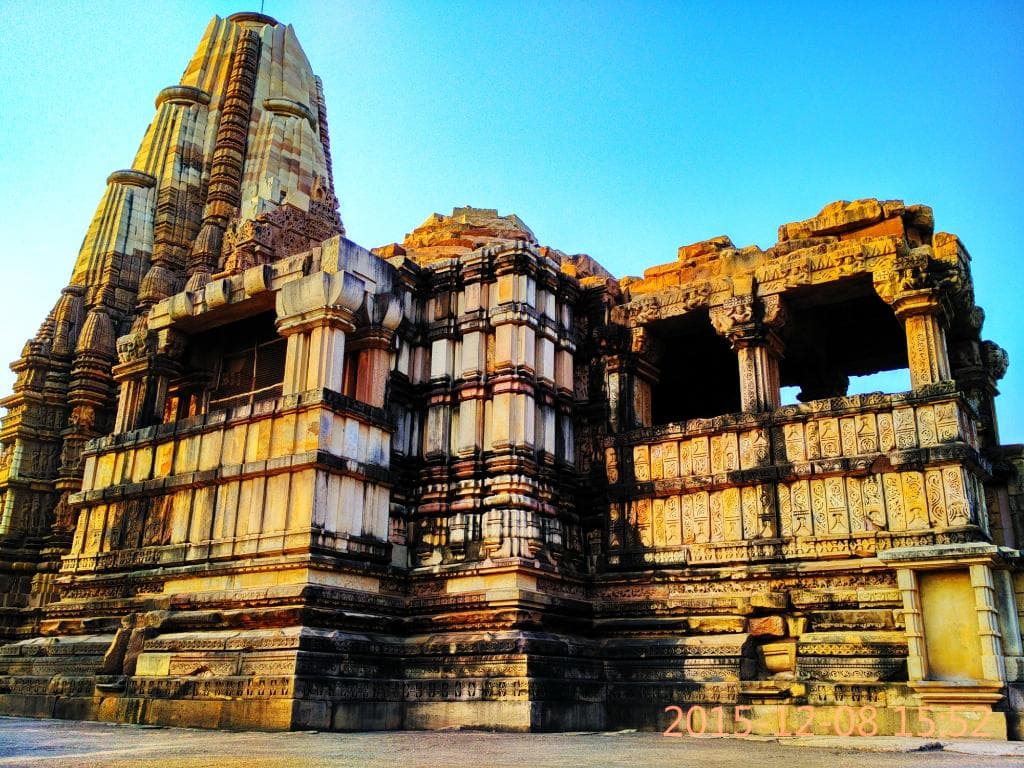
Javari Temple
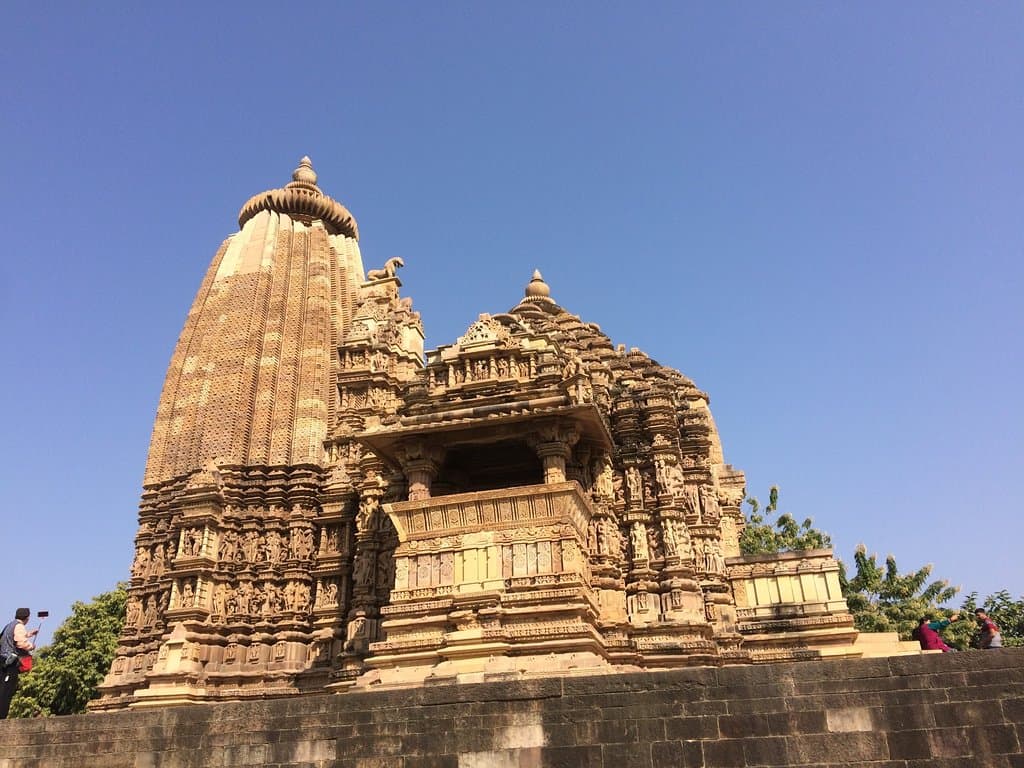
A smaller, yet architecturally rich Chandela-era temple dedicated to Vishnu, known for its unique carvings and slender spire.
Highlights
Must-see attractions

Social
From TikTok & Reddit
Best Time
Pleasant weather for exploring
Javari Temple
Best Time
Pleasant weather for exploring
Highlights
Must-see attractions
A smaller, yet architecturally rich Chandela-era temple dedicated to Vishnu, known for its unique carvings and slender spire.
"A gem of architecture, remarkable for its ornate Makara Torana and slender sikhara."
No Entry Fee
Enjoy the beauty of Javari Temple without an admission fee. :moneybag:
Respectful Attire
Dress modestly to show respect for this religious site. :pray:
Highlights
Discover the most iconic attractions and experiences
Ornate Makara Torana
Temple Entrance
Admire the intricately carved four-looped Makara Torana, a unique and detailed decorative archway at the temple's entrance.
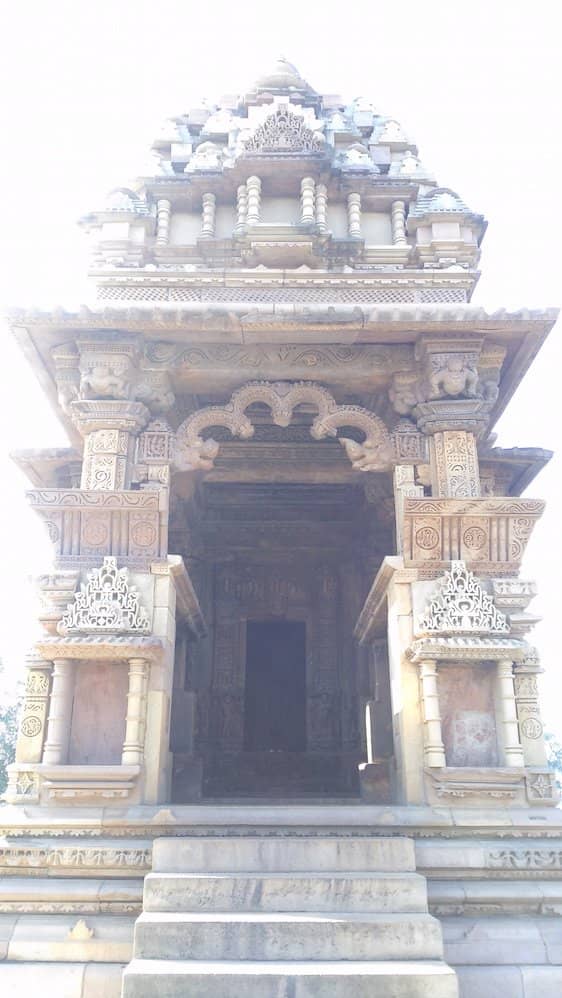
Slender Sikhara
Temple Spire
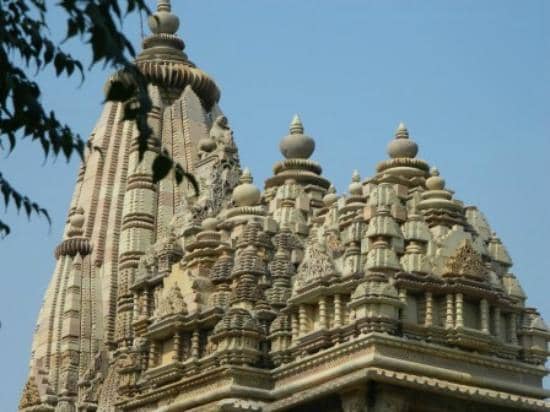
Marvel at the restored, slender, and soaring outline of the temple's sikhara (spire), a distinctive architectural feature.
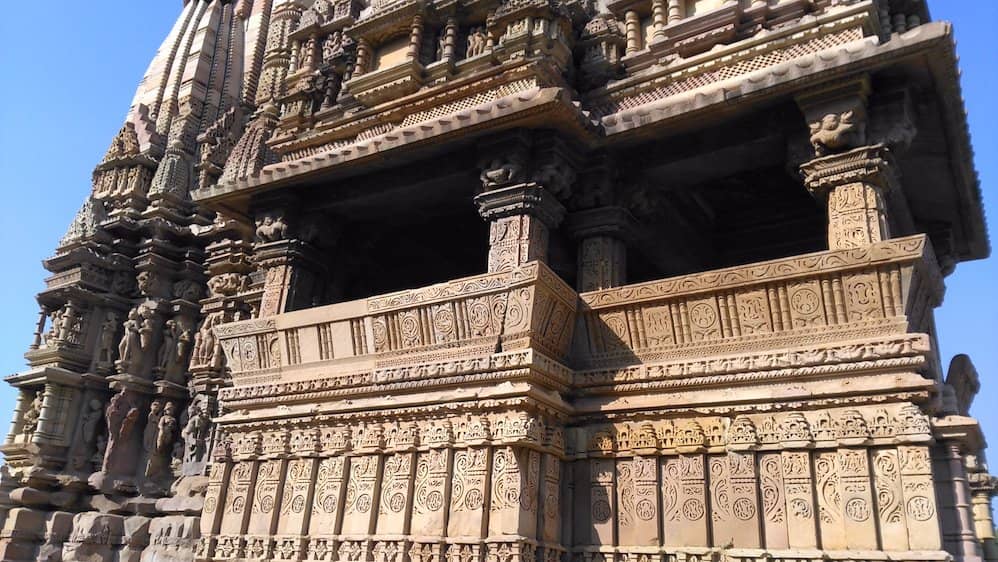
Sculptural Bands
Exterior Walls
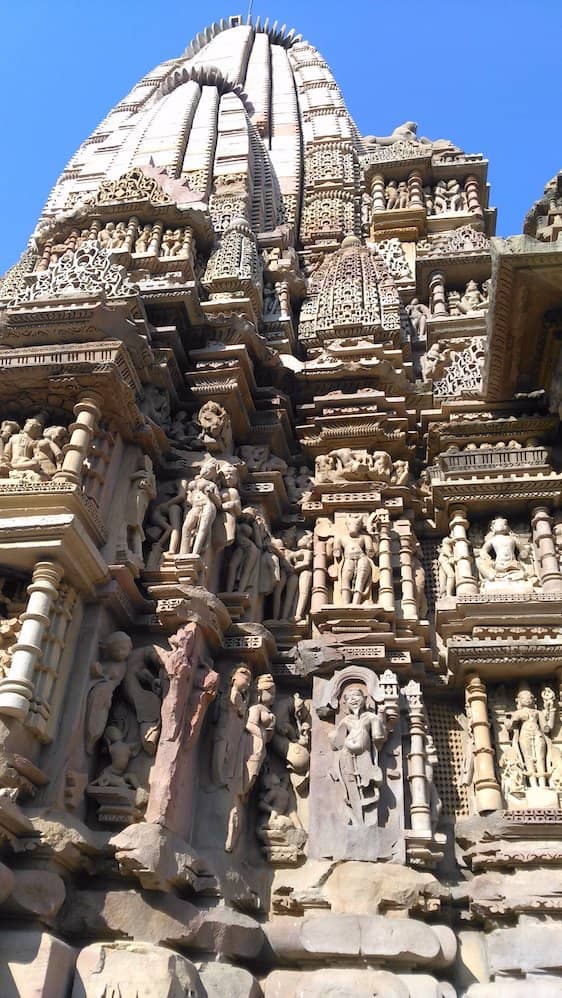
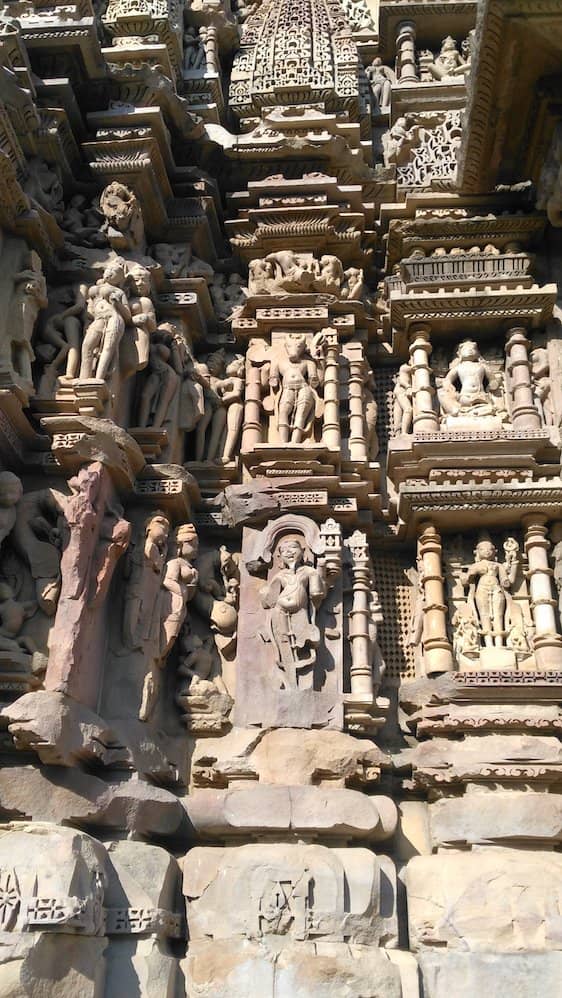
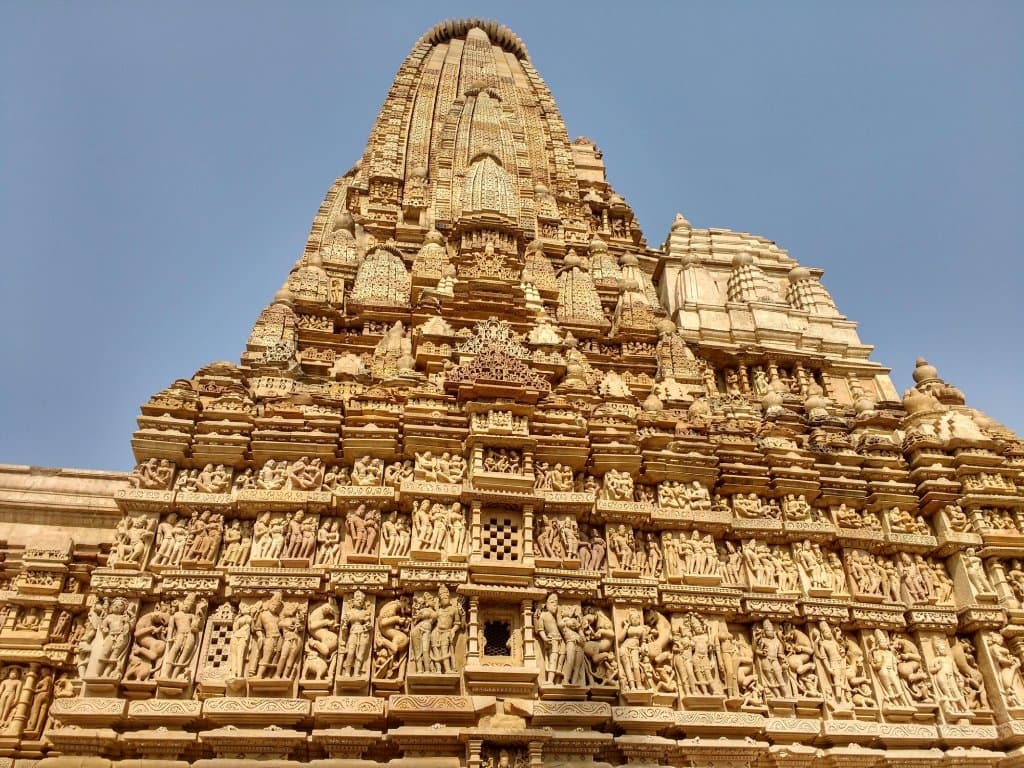
Examine the three rich bands of sculptures on the outer walls, showcasing detailed carvings of figures and mythological scenes.
Plans like a pro.
Thinks like you
Planning Your Visit
Respectful Visit to Javari Temple
Understanding Khajuraho's Heritage
Best Times
Insider Tips
from TikTok, Instagram & Reddit
No Entry Fee
Enjoy the beauty of Javari Temple without an admission fee. :moneybag:
Respectful Attire
Dress modestly to show respect for this religious site. :pray:
Explore Nearby Temples
Javari is part of a larger complex; see other Khajuraho temples too! :world_map:
Understand the Idol's Condition
Be aware the Vishnu idol is headless; it's a point of historical and current discussion. :information_source:
Tips
from all over the internet
No Entry Fee
Enjoy the beauty of Javari Temple without an admission fee. :moneybag:
Respectful Attire
Dress modestly to show respect for this religious site. :pray:
Explore Nearby Temples
Javari is part of a larger complex; see other Khajuraho temples too! :world_map:
Understand the Idol's Condition
Be aware the Vishnu idol is headless; it's a point of historical and current discussion. :information_source:
What Travellers Say
Reviews Summary
Javari Temple is praised for its intricate architecture, unique decorative elements like the Makara Torana, and its well-proportioned, slender sikhara. Visitors appreciate that it's a smaller, accessible part of the Khajuraho complex and that there's no entry fee. However, the damaged state of the Lord Vishnu idol is a significant point of discussion and concern for many.
"Javari Temple (1075-1100 CE)
The temple dedicated to Vishnu resembles the Chaturbhuj Temple and likewise has no pradakshina. Except the sanctum shikhara that has been restored, the temple stands intact and is the smallest among the developed Khajuraho temples. Circular frames, crowned with a diamond, arch the niches in the lower row of the walls, a unique feature of the temple and the ornate four looped makara torana embellishes the entrance.
HISTORY AND INSCRIPTIONS
This temple is also one of the oldest temples of Khajuraho. Historians believe that this temple may be constructed by Chandella rulers during 1075-1100 CE."
Veludharan
"This temple dedicated to Vishnu, is situated about 200 meters to the south of the Vamana temple. It is a small but well-proportioned nirandhara temple, consisting of a sanctum, vestibule mandapa and portico. It is a gem of architecture and is indeed remarkable as much for its ornate makara-torana as for the slender and soaring outline of its sikhara. The carving and the three bands of sculptures on its outer walls are as rich as on the larger temples. Generally, it resembles the Chaurbuja temple and is datable between circa 1075 and 1100. (Information from ASI)"
Vikas Singh
"The Javari Temple in Khajuraho, India, is a remarkable testament to the rich cultural and architectural heritage of ancient India. As part of the renowned Khajuraho Group of Monuments, a UNESCO World Heritage Site, the temple stands as a proud symbol of the artistic brilliance of the Chandela dynasty.
Constructed between approximately 975 and 1100 A.D., the Javari Temple is a stunning example of the Nagara style of temple architecture. Despite being one of the smaller temples in the Khajuraho complex, it possesses an undeniable charm and elegance that captivates every visitor. The temple's intricate carvings and sculptures showcase the high level of craftsmanship that has made Khajuraho famous around the world.
The temple is dedicated to Lord Vishnu, and the sanctum houses a beautiful statue of the deity. The exterior of the temple is adorned with detailed sculptures, each telling its own story, depicting various aspects of life, mythology, and divinity. The ornate shikhara (spire) of the temple adds to its grandeur, reaching towards the sky as a symbolic connection between the earthly and the divine.
The peaceful ambiance of the Javari Temple, combined with its historical significance and architectural beauty, makes it a must-visit for anyone exploring Khajuraho. Whether you are a history enthusiast, an admirer of art and architecture, or a spiritual seeker, the Javari Temple offers a profound experience that is both visually and spiritually enriching.
Javari Temple is a hidden gem within the Khajuraho Group of Monuments, offering a perfect blend of history, art, and spirituality. It is a site that will leave you with a deep appreciation for the timeless beauty and cultural legacy of ancient India."
Arvind Otta
What People Like
What People Dislike
Frequently Asked Questions
🚇 🗺️ Getting There
Javari Temple is located in Khajuraho, Madhya Pradesh. The nearest airport is Khajuraho Airport (HJR), with flights from major Indian cities. You can also reach Khajuraho by train to Khajuraho Railway Station. From the railway station or airport, auto-rickshaws and taxis are readily available to take you to the temple complex. It's often visited as part of a tour of the Khajuraho Group of Monuments.
Yes, Javari Temple is part of the Eastern Group of Khajuraho temples and is relatively easy to access. It's often visited on foot or by a short auto-rickshaw ride from other major sites within Khajuraho. The temple is situated on a high platform, making it visible and accessible.
For exploring the various temple groups in Khajuraho, including Javari Temple, auto-rickshaws are a popular and convenient option. Many visitors also choose to hire a local guide who can arrange transportation. Walking is feasible between closely located temples within the same group.
🎫 🎫 Tickets & Entry
No, there is no entry fee required to visit Javari Temple. It is freely accessible to all visitors, making it a great addition to your Khajuraho itinerary.
Javari Temple, like most of the Khajuraho monuments, is generally open from sunrise to sunset. It's advisable to visit during daylight hours to fully appreciate the intricate carvings and architecture.
While Javari Temple is part of the UNESCO World Heritage Site of Khajuraho Group of Monuments, it does not require a separate ticket for entry, unlike some other major monuments within the complex.
🎫 🏛️ Onsite Experience
Javari Temple is noted for its unique circular frames crowned with diamonds arching the niches in its lower walls. It also features an ornate four-looped Makara Torana at the entrance and a slender, soaring sikhara. Despite being one of the smaller temples, its proportions and detailed carvings are remarkable.
Historians believe Javari Temple was constructed by Chandella rulers between 1075 and 1100 CE, making it one of the older temples in Khajuraho. It is dedicated to Lord Vishnu and showcases the Nagara style of temple architecture.
The idol of Lord Vishnu at Javari Temple is currently in a decapitated condition, meaning its head is missing. This has been a subject of recent discussion and petitions regarding restoration.
Yes, local guides are available at the Khajuraho monument complex, including near Javari Temple. Hiring a guide can provide deeper insights into the history, mythology, and architectural significance of the temple.
Photography is generally allowed at Javari Temple for personal use. However, tripods and professional photography equipment might require special permissions. Always be respectful and avoid intrusive photography, especially of other visitors.
🍽️ 🍽️ Food & Dining
While there are no direct food stalls within the immediate vicinity of Javari Temple, Khajuraho town offers various dining options. You can find restaurants and cafes serving local and international cuisine a short distance away.
Khajuraho offers a range of culinary experiences, from traditional North Indian thalis to continental dishes. Local specialties often include regional vegetarian and non-vegetarian curries.
For Different Travelers
Tailored advice for your travel style
👨👩👧 Families with Kids
Since there's no entry fee, it's a budget-friendly addition to your itinerary. The open space around the temple can also be a place for kids to stretch their legs. However, be prepared to explain the historical context and the current condition of the idol in an age-appropriate manner, as it's a topic of discussion.

🏛️ History & Architecture Enthusiasts
Study the three bands of sculptures on the exterior walls, which are as rich as those on larger temples, and appreciate the slender, soaring outline of the restored sikhara. The temple's well-proportioned nirandhara design (without a circumambulatory path) and its historical context as a Vishnu temple provide a rich subject for study and admiration.
Deep Dives
In-depth insights and expert knowledge
The Architectural Marvel of Javari Temple
The temple's exterior walls are embellished with three rich bands of sculptures, showcasing a high level of craftsmanship. These carvings depict various aspects of life, mythology, and divinity, characteristic of Khajuraho's artistic legacy. The ornate Makara Torana at the entrance, a decorative arch featuring mythical sea creatures, is particularly noteworthy for its detail. The slender and soaring outline of its sikhara (spire), which has been restored, adds to the temple's graceful silhouette, reaching towards the sky.
Dedicated to Lord Vishnu, the Javari Temple offers a serene ambiance that complements its historical significance and architectural beauty. It's a site that invites visitors to appreciate the timeless artistry and cultural legacy of ancient India. The temple's intact structure, save for the sanctum's shikhara restoration and the idol's condition, allows for a comprehensive understanding of Chandela temple design.
Historical Context and Recent Discussions
Recently, the Javari Temple has been at the center of public and legal discussions due to the damaged state of its Lord Vishnu idol, which is headless. A petition was filed in the Supreme Court seeking the restoration of the idol. However, the court declined to entertain the plea, with the Chief Justice reportedly making remarks that sparked controversy, suggesting prayers to the deity for restoration or that such decisions fall under the Archaeological Survey of India (ASI).
+3These discussions highlight a broader debate about heritage preservation, religious faith, and the role of the judiciary in matters of historical sites and religious artifacts. While the temple structure itself is well-preserved, the condition of the idol and the subsequent legal proceedings have brought renewed attention to the Javari Temple, emphasizing its importance not just as an architectural marvel but also as a site of contemporary cultural and religious dialogue.
+1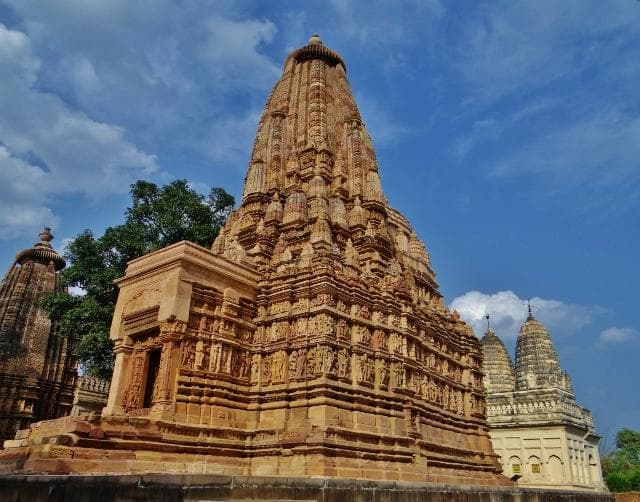

Social
from TikTok, Instagram & Reddit