
Mahishasuramardini Cave Temple Mahabalipuram
A 7th-century Pallava rock-cut marvel, famed for its dynamic sculptures of Durga battling Mahishasura and Vishnu's cosmic slumber.

Highlights
Must-see attractions

Social
From TikTok & Reddit
Best Time
Golden hour light, fewer crowds
Mahishasuramardini Cave Temple Mahabalipuram
Best Time
Golden hour light, fewer crowds
Highlights
Must-see attractions
A 7th-century Pallava rock-cut marvel, famed for its dynamic sculptures of Durga battling Mahishasura and Vishnu's cosmic slumber.
"A masterpiece of Pallava art, this cave temple vividly narrates ancient myths in stone. "

🌅 Catch the Golden Hour
Visit for sunrise or sunset for stunning light on the sculptures and great photos.
🚶♂️ Explore the Royal Seat
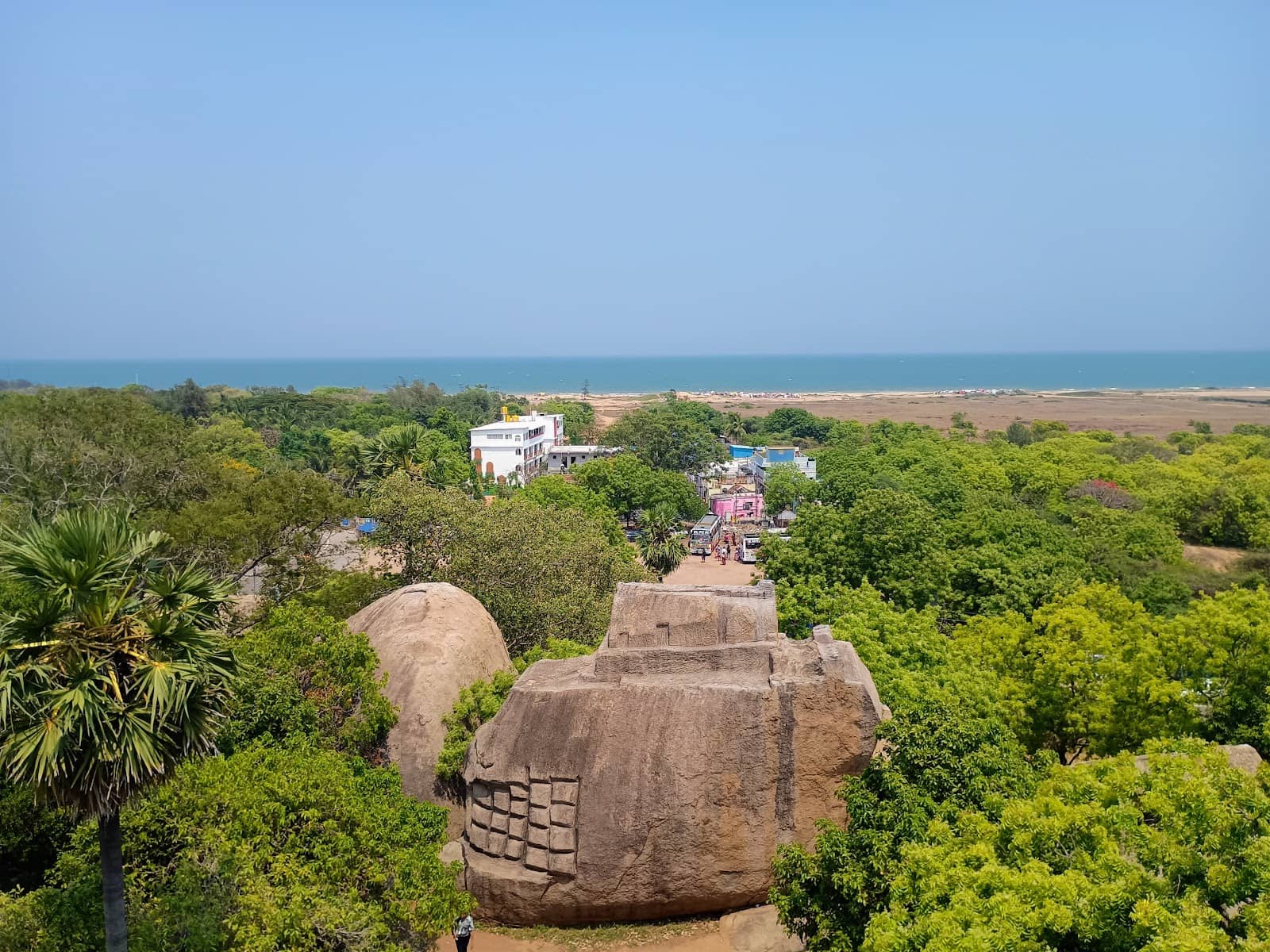
Climb to the carved throne for panoramic views and a sense of history.
Highlights
Discover the most iconic attractions and experiences
Mahishasuramardini Panel
Southern wall
Goddess Durga in fierce combat with the buffalo demon Mahishasura. A masterpiece of dynamic sculpture.

Anantashayana Panel
Northern wall
Lord Vishnu in cosmic slumber on the serpent Adishesha. A scene of serene tranquility.

Pallava Pillars
Facade
Slender, fluted pillars characteristic of early Pallava architecture.
Royal Seat Carving
Hilltop
A large, rock-carved throne offering panoramic views of the surroundings.
Plans like a pro.
Thinks like you
Planning Your Visit
Timing is Key for the Best Views
Understand the Artistry
Best Times
Insider Tips
from TikTok, Instagram & Reddit
🌅 Catch the Golden Hour
Visit for sunrise or sunset for stunning light on the sculptures and great photos.
🚶♂️ Explore the Royal Seat
Climb to the carved throne for panoramic views and a sense of history.
🧐 Appreciate the Details
Take time to observe the intricate carvings and understand the mythological stories.
💧 Stay Hydrated
Mahabalipuram can get hot; carry water, especially during midday visits. :droplet:
Tips
from all over the internet
🌅 Catch the Golden Hour
Visit for sunrise or sunset for stunning light on the sculptures and great photos.
🚶♂️ Explore the Royal Seat
Climb to the carved throne for panoramic views and a sense of history.
🧐 Appreciate the Details
Take time to observe the intricate carvings and understand the mythological stories.
💧 Stay Hydrated
Mahabalipuram can get hot; carry water, especially during midday visits. :droplet:
👟 Comfortable Footwear
You'll be walking and climbing a bit, so wear comfortable shoes. :athletic_shoe:
What Travellers Say
Reviews Summary
Visitors praise the Mahishasuramardini Cave Temple for its stunning Pallava-era rock-cut sculptures, particularly the dynamic Mahishasuramardini panel and the serene Anantashayana depiction. The historical significance and architectural ingenuity are highly appreciated, with many enjoying the panoramic views from the carved royal seat. Some find the site can get crowded during peak hours, and the midday heat can be intense.
"The Mahishasuramardini Cave at Mahabalipuram, a UNESCO World Heritage site, stands as a prime example of Pallava dynasty rock-cut architecture. Dated to the 7th century CE, this cave temple is a testament to the artistic and engineering prowess of the Pallava kings, particularly King Mahendravarman I or his son, Narasimhavarman I. Carved from a single large rock, its simple yet elegant facade features a pillared porch and three cells, or shrines, at the rear. The pillars are slender and fluted, a distinctive feature of early Pallava architecture. The cave's design beautifully integrates a natural rock formation with intricate sculptural work, creating a sacred space that feels both monumental and intimate.
The cave's interior is renowned for its magnificent bas-relief panels, which are the focal point of the temple's artistic expression. The northern wall features a stunning panel depicting the slumber of Vishnu, known as Anantashayana. In this serene scene, Lord Vishnu is shown reclining on the cosmic serpent Adishesha, surrounded by various divine and human figures. The composition is calm and harmonious, with a sense of cosmic tranquility that contrasts sharply with the dynamic scene on the opposite wall.
On the southern wall, the cave's namesake, the Mahishasuramardini panel, comes to life with incredible energy and detail. This dynamic sculpture depicts the goddess Durga engaged in a fierce battle with the buffalo-headed demon Mahishasura. Durga is shown in a triumphant pose, mounted on her lion and wielding a bow, while her adversaries are in a state of chaotic defeat. The scene is full of movement, tension, and power, with figures frozen in mid-action. This panel is considered a masterpiece of Indian art, capturing the emotional intensity and drama of the mythological narrative.
The Mahishasuramardini Cave, while seemingly simple in its architectural form, is a profound cultural and religious artifact. It not only represents a significant phase in the development of rock-cut temples in Southern India but also serves as a powerful medium for storytelling through stone. The contrasting panels of Vishnu's slumber and Durga's battle encapsulate the duality of divine power the tranquil and the fierce. A visit to this cave is a journey back in time, allowing one to stand in awe of a bygone era's faith, artistic vision, and unwavering devotion, forever immortalized in the granite of Mahabalipuram."
Rizwan Uddin
"Nice place to see view some historical caves"
Mr_whose_ theboss
"There’s a simple yet impressive throne carved straight into the rock, sitting at the top of a few steps on the hill. It’s quite large, with enough room for someone to sit and look out over the nearby village and hills. At one end, there’s a carved lion that faces north. It dates back to the Pallava period in the seventh century, and while it carries a local tale linking it to Yuddhishtira from the Mahabharata, it’s believed to be a royal seat carved for a king who would pause and survey the land.
Reaching the throne only takes a short climb. Climbing up, you sense how naturally the craftsmen shaped it right into the rock, using both myth and landscape in their work. When seated, the breeze around you feels freeing, and the view spreads out below in a calming, almost meditative way.
Most visitors spend around thirty minutes here. It’s a quiet spot showing how art, history, and nature blend together. It doesn’t feel like a tourist trap but more like a gentle reminder of how life and power used to connect with these lands and legends."
Hemachandran S
What People Like
What People Dislike
Frequently Asked Questions
🚇 🗺️ Getting There
Mahabalipuram is accessible by road from Chennai (approx. 1.5-2 hours). You can hire a taxi or take a bus. Once in Mahabalipuram, the cave temple is centrally located and easily reachable on foot or by auto-rickshaw.
Yes, the Mahishasuramardini Cave Temple is an integral part of the Group of Monuments at Mahabalipuram, a UNESCO World Heritage site.
Many visitors prefer to walk between the main monuments like the Shore Temple, Pancha Rathas, and the Mahishasuramardini Cave. Auto-rickshaws are also readily available for longer distances.
Yes, there are parking areas available in Mahabalipuram, though they might be a short walk from the specific cave temple. It's advisable to check local signage upon arrival. :car:
Ride-sharing apps like Uber and Ola are generally available for travel from Chennai to Mahabalipuram, offering a convenient option.
🎫 🎫 Tickets & Entry
Entry to the Mahishasuramardini Cave Temple itself is generally free. However, if you plan to visit other monuments within the Mahabalipuram UNESCO site, a composite ticket might be required for some areas.
The cave temple is typically open from sunrise to sunset, allowing visitors ample time to explore. It's always a good idea to confirm current timings locally. :clock1:
Generally, there is no separate fee for photography for personal use. However, professional photography or videography might require special permissions and fees. :camerawithflash:
While the cave temple itself may not require a ticket, some of the larger monuments within the Mahabalipuram complex might offer online booking options through the Archaeological Survey of India (ASI) website. :computer:
Visitors are expected to respect the historical and religious significance of the site. Avoid touching the sculptures and refrain from littering.
🎫 🧭 Onsite Experience
Most visitors spend around 30 minutes to an hour exploring the cave temple and its sculptures, including the climb to the royal seat.
The Mahishasuramardini panel and the Anantashayana panel are the highlights. Don't miss the detailed Pallava pillars and the carved royal seat.
The main cave entrance is accessible, but the climb to the royal seat involves steps. Some areas might be challenging for those with significant mobility issues. :wheelchair:
Official guides are often available at the Mahabalipuram site. Hiring a guide can enhance your understanding of the history and mythology. :bustsinsilhouette:
Early morning or late afternoon, especially during sunrise and sunset, offers the best light for photography, minimizing harsh shadows and capturing the sculptures beautifully.
📸 📸 Photography
The panels themselves are stunning. The view from the royal seat offers a great panoramic shot. Golden hour light enhances the textures of the rock carvings.
Tripods might be restricted in certain areas or require special permission. It's best to check with local authorities or guides on-site. :camerawithflash:
Drone usage is typically prohibited in and around historical monuments and UNESCO World Heritage sites due to security and preservation concerns. :noentrysign:
For the sculptures, a moderate aperture (f/8-f/11) can ensure sharpness. For sunrise/sunset, consider a wider aperture and adjust ISO for low light. :iphone:
Capture the dynamic action of the Mahishasuramardini panel and the serene repose of the Anantashayana panel. The contrast is striking.
For Different Travelers
Tailored advice for your travel style
👨👩👧 Families with Kids
🏛️ History Buffs & Art Enthusiasts
📸 Photographers
Focus on capturing the dynamism of the battle panel and the serenity of Vishnu's slumber. The panoramic view from the royal seat is also a fantastic shot. Be mindful of lighting conditions and consider a tripod for low-light situations, though check for restrictions. :camerawithflash:Deep Dives
In-depth insights and expert knowledge
The Artistry of Pallava Rock-Cut Architecture
The cave's design is functional and symbolic. The pillared porch leads to a central shrine, with two side chambers. The rear walls of these chambers are adorned with magnificent bas-relief sculptures that tell epic stories. The Mahishasuramardini Mandapa is named after the most prominent panel, depicting the goddess Durga's victory over the demon Mahishasura. This dynamic scene is a testament to the Pallava sculptors' ability to imbue stone with movement and emotion. The contrasting panel of Anantashayana, depicting Lord Vishnu in his cosmic slumber, offers a moment of profound peace and spiritual contemplation.
These rock-cut temples were not just places of worship but also served as centers for artistic expression and storytelling. The craftsmanship involved in shaping these monumental sculptures from solid rock is awe-inspiring. Visiting the Mahishasuramardini Cave allows you to step back in time and witness the ingenuity and devotion of the Pallava artisans, whose work continues to captivate visitors centuries later.
Mythology and Symbolism
In stark contrast, the Anantashayana panel portrays Lord Vishnu reclining on the cosmic serpent Adishesha, floating on the primordial ocean. This scene represents the state of cosmic rest and regeneration, a period of profound peace before the universe is recreated. The presence of various deities and celestial beings around Vishnu signifies the cyclical nature of creation and dissolution. Together, these two panels within the same cave offer a powerful duality: the active, fierce aspect of divine power in battle and the passive, serene aspect of divine repose.
The Royal Seat carving on the hilltop, while not directly part of the cave's interior sculptures, adds another layer of historical and symbolic significance. Believed to be a royal seat for a king to survey his land, it connects the divine narratives within the cave to the earthly realm of governance and power. This blend of mythology, divine representation, and historical context makes the Mahishasuramardini Cave a rich site for understanding ancient Indian beliefs and artistic expressions.
Experiencing Sunrise and Sunset Views
As the day progresses, the cave offers a different kind of magic during sunset. The setting sun paints the sky with vibrant hues of orange, pink, and purple, creating a breathtaking backdrop for the temple. Visitors can also enjoy the view of the sun setting behind the lush green foliage on the opposite side of the cave, providing a beautiful contrast to the seaside sunrise.
The cooler evening air makes it a pleasant time to explore the site and reflect on its historical significance. Many visitors find these moments to be incredibly peaceful and meditative, connecting them with the natural beauty and ancient aura of Mahabalipuram.
Social
from TikTok, Instagram & Reddit