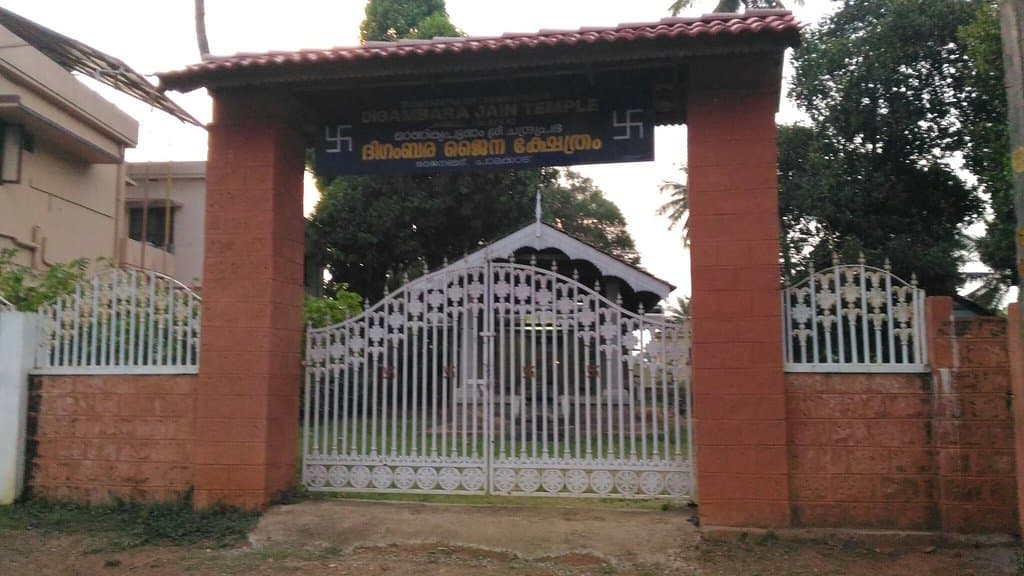
Jainimedu Jain Temple
A 15th-century Jain temple in Palakkad, Kerala, known for its ancient granite walls and serene atmosphere. A rare glimpse into Jain heritage.

Highlights
Must-see attractions

Social
From TikTok & Reddit
Best Time
Peaceful and spiritual ambiance
Jainimedu Jain Temple
Best Time
Peaceful and spiritual ambiance
Highlights
Must-see attractions
A 15th-century Jain temple in Palakkad, Kerala, known for its ancient granite walls and serene atmosphere. A rare glimpse into Jain heritage.
"Experience the tranquility and unique architecture of one of Kerala's few surviving Jain temples."

🤫 Photography Prohibited
Remember, no photos inside the temple. Be mindful and respectful of the sacred space. :camerawithflash:
🚗 Local Auto is Best
For getting around Palakkad to the temple, local autos are the most convenient and recommended mode of transport. 🚕

Quick Facts
Rating
4.3 · 201 reviews
Type
Place of Worship
Highlights
Discover the most iconic attractions and experiences
Ancient Granite Walls
Temple exterior
Marvel at the impressive 32-foot long, 20-foot wide granite walls, a testament to 15th-century architecture.
Chandraprabha Idol
Inner sanctum
Pay homage to Chandraprabha, the eighth Tirthankara, enshrined within this rare Jain structure in Kerala.
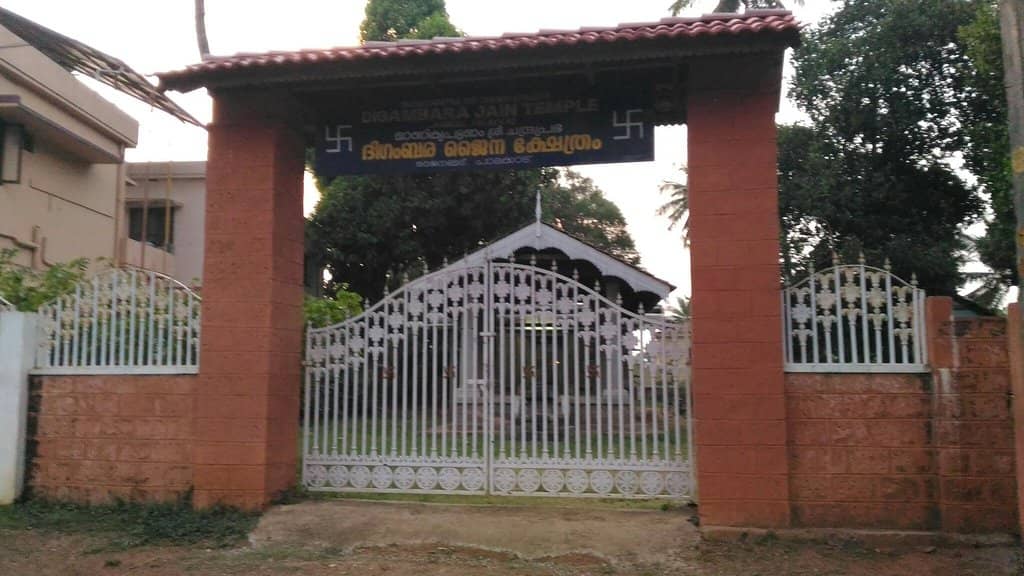
Jain Heritage in Kerala
Temple premises
Experience one of the few surviving vestiges of Jainism in Kerala, offering a glimpse into its historical presence.
Plans like a pro.
Thinks like you
Planning Your Visit
Timing is Key for Tranquility
Respectful Visit Essential
Best Times
Insider Tips
from TikTok, Instagram & Reddit
🤫 Photography Prohibited
Remember, no photos inside the temple. Be mindful and respectful of the sacred space. :camerawithflash:
🚗 Local Auto is Best
For getting around Palakkad to the temple, local autos are the most convenient and recommended mode of transport. 🚕
🙏 Dress Modestly
Cover shoulders and knees out of respect for the religious site. :womanintunic:
🕰️ Check Temple Timings
Timings are 0700-1030 hrs & 1700-1900 hrs. Plan your visit accordingly. :clock1:
Tips
from all over the internet
🤫 Photography Prohibited
Remember, no photos inside the temple. Be mindful and respectful of the sacred space. :camerawithflash:
🚗 Local Auto is Best
For getting around Palakkad to the temple, local autos are the most convenient and recommended mode of transport. 🚕
🙏 Dress Modestly
Cover shoulders and knees out of respect for the religious site. :womanintunic:
🕰️ Check Temple Timings
Timings are 0700-1030 hrs & 1700-1900 hrs. Plan your visit accordingly. :clock1:
🧘♀️ Find Inner Peace
This calm place is ideal for meditation and experiencing positive energy. :lotus_position:
What Travellers Say
Reviews Summary
Visitors praise Jainimedu Jain Temple for its serene atmosphere, historical significance, and unique Jain architecture, a rare find in Kerala. The impressive granite walls and the peaceful ambiance are frequently highlighted. Some note that photography is prohibited inside, and while the temple is generally quiet, it can see more visitors in May.
"Jain Temple, Palakkad
Location: Sri Chandraprabha Digambar Basti, Chunnambuthara, Vadakkanthara
Temple timings: 0700 - 1030 hrs & 1700 - 1900 hrs
More than 500 years old, the Jain Temple at Jainimedu is well known for its granite walls which are 32 feet long and 20 feet wide. Located on the south banks of River Kalpathy, this ancient temple is enshrined with the images of Jain Tirthankaras and Yakshinis.
The temple, dedicated to Chandraprabha, the eighth 'Tirthankara', is one of the few surviving structures in Kerala featuring typical Jain architecture.
Jainimedu Jain temple is a 15th-century Jain temple located at Jainimedu, 3 km from the centre of Palakkad, Palakkad district, Kerala, India. It is dedicated to Chandraprabha, a Tirthankar of the Jain faith.
The celebrated Malayalam poet Kumaranasan, wrote his monumental poem Veenapoovu (The fallen flower) at a Jain house near here. The place name 'Jainimedu' itself is related to this temple.
The Jain temple was constructed in the 15th century by a family of diamond merchants from Karnataka. It was created by Inchana Satur.
According to local legend, the Digambar Jain temple at Jainimedu, located about three km from Palakkad town, was built by a family of diamond merchants who came from Kanakahalli in Karnataka centuries back.
Three merchant brothers Ejjenna Shetty, Doddu Shetty and Payappa Shetty used to visit Kerala for trade. During one such visit, the second brother Doddu Shetty - died of some illness. Their brother's untimely demise saddened the two others.
They visited Elacharya Muni, a Jain saint living in the area to find a way to relieve themselves of their sorrow and built the temple in memory of the deceased brother according to the sage’s advice.
They later settled around the shrine with their families and in due course of time around 400 Jains came to be settled in and around the temple.
As majority of them were pearl and diamond merchants, the place later came to be known as Manikyapattanam(diamond town) and Muthupattanam (pearl town). The place also came to be known as 'Jainimedu' due to the presence of the Jain temple.
Though modern historians say that the structure could not be more than five centuries old, members of the Shetty family, who live near the temple, claim that the structure was about 2500 years old.
As per information passed on by Vasantha Kumari, a successor of Shetty family and ancestor of the jains living here, the temple was built between BC 100-500. Some people say that their ancestors had roots in Gomadhagiri in Magadha in ancient India. But some others said they had come from Karnataka,
Though a large number of Jains had lived here before, they had moved to many other parts of the state, especially to places like Wayanad in north Kerala. Now, the only remaining family of direct descendants of the original settlers is that of Vasantha Kumari.
The shrine, built of huge granite blocks, is located in 70 cents of green-rich plot at Jainimedu. With walls devoid of glittering ornamentations and attractive decorations, the 32-feet high structure comprises four divisions.
As in the Hindu shrines, the idols of serpent gods can be spotted in its premises.
The temple was in a dilapidated condition for the past several years. At that time, there were around 400 Jain families in Jainimedu. The temple was renovated in 2013 and a Panch Kalyanak was performed.
A three-day idol installation ceremony was conducted as a prelude to the renovation and was well attended by devotees from across Kerala, Tamil Nadu and Karnataka.
he rituals were led by Bhuvanakeerthi Bhattakara Swamiji, the head of Kanakagiri Jain Mutt.
The temple is 32 feet long and 20 feet wide and displays the images of Jain Tirthankaras and Yakshinis.
The present priest was very helpful and explained about Jainism and its principles.
This is one of the few places in Kerala where the vestiges of Jainism in Kerala have survived
Photos by Viswas Menon
© Viswas Menon
Write up compiled by Viswas Menon"
Viswas K.P Menon
"The place is so quiet,calm and peaceful.I suggest everyone should visit atleast once to see how the positive energy flows from these place.Had a talk to the man who lived near the temple who was following Jainism,and could hear more about the temple and its history! The visit was a pure bliss."
Divya Mohan
"One and only jain temple situated in palakkad district,
It have over 2000 years of heritage ,
Now the temple is modified and the daily poojaas are done bye the last jain family they are doing their job very well 👌"
Sujith Sunil
What People Like
What People Dislike
Frequently Asked Questions
🚇 🗺️ Getting There
Jainimedu Jain Temple is located about 3 km from the center of Palakkad town. The most convenient way to reach it is by local auto-rickshaw, which is readily available.
While specific parking details aren't widely mentioned, local autos are the primary mode of transport, suggesting that parking might be limited or not a primary concern for visitors arriving by auto.
Information on direct bus routes to the temple is scarce. It's generally recommended to take an auto-rickshaw from Palakkad town for ease of access.
Palakkad is well-connected by road and rail. You can reach Palakkad by bus or train and then take a local auto to the Jainimedu Jain Temple.
The temple is built with granite blocks and has a historical structure. While the main areas are accessible, it's advisable to check for specific accessibility features if needed.
🎫 🎫 Tickets & Entry
There is no mention of entry tickets for Jainimedu Jain Temple. It is generally considered a place of worship accessible to visitors.
The temple timings are typically from 07:00 to 10:30 AM and again from 5:00 PM to 7:00 PM. It's always a good idea to confirm these timings before your visit.
No admission fee is typically charged for visiting the Jainimedu Jain Temple. Donations are usually accepted.
The temple underwent renovation in 2013, which included a Panch Kalyanak ceremony.
The temple is generally open daily during its specified timings. However, it's always wise to check for any special closures or events.
🎫 🧭 Onsite Experience
This 15th-century temple is one of the few surviving Jain structures in Kerala, dedicated to Chandraprabha, the eighth Tirthankara, and showcases typical Jain architecture.
Photography is strictly prohibited inside the Jainimedu Jain Temple. Visitors are asked to respect this rule.
For a peaceful and spiritual experience, visiting early in the morning (7-10:30 AM) or late in the afternoon (5-7 PM) is recommended, as crowds are usually low.
Visitors should dress modestly, maintain silence, and be respectful of the religious practices. It's a place for quiet contemplation.
Built in the 15th century by diamond merchants from Karnataka, the temple is named 'Jainimedu' due to its Jain inhabitants. It has a rich history tied to trade and Jain heritage in the region.
📸 📸 Photography
No, photography is prohibited inside the Jainimedu Jain Temple. Visitors are requested to respect the sanctity of the place.
While photography inside is not permitted, the exterior architecture and the serene surroundings might offer some visual appeal, but the focus should remain on the spiritual experience.
Focus on capturing the essence of the place through your memory and perhaps the peaceful ambiance from the exterior, respecting the no-photography rule.
Photography is typically prohibited in religious sites to maintain the sanctity and prevent disruption to worshippers and the spiritual atmosphere.
The restriction is usually for the interior. Capturing the impressive granite walls from the exterior is generally acceptable, provided it doesn't disturb anyone.
Social
from TikTok, Instagram & Reddit