Area Archeologica di Gianola Villa di Mamurra
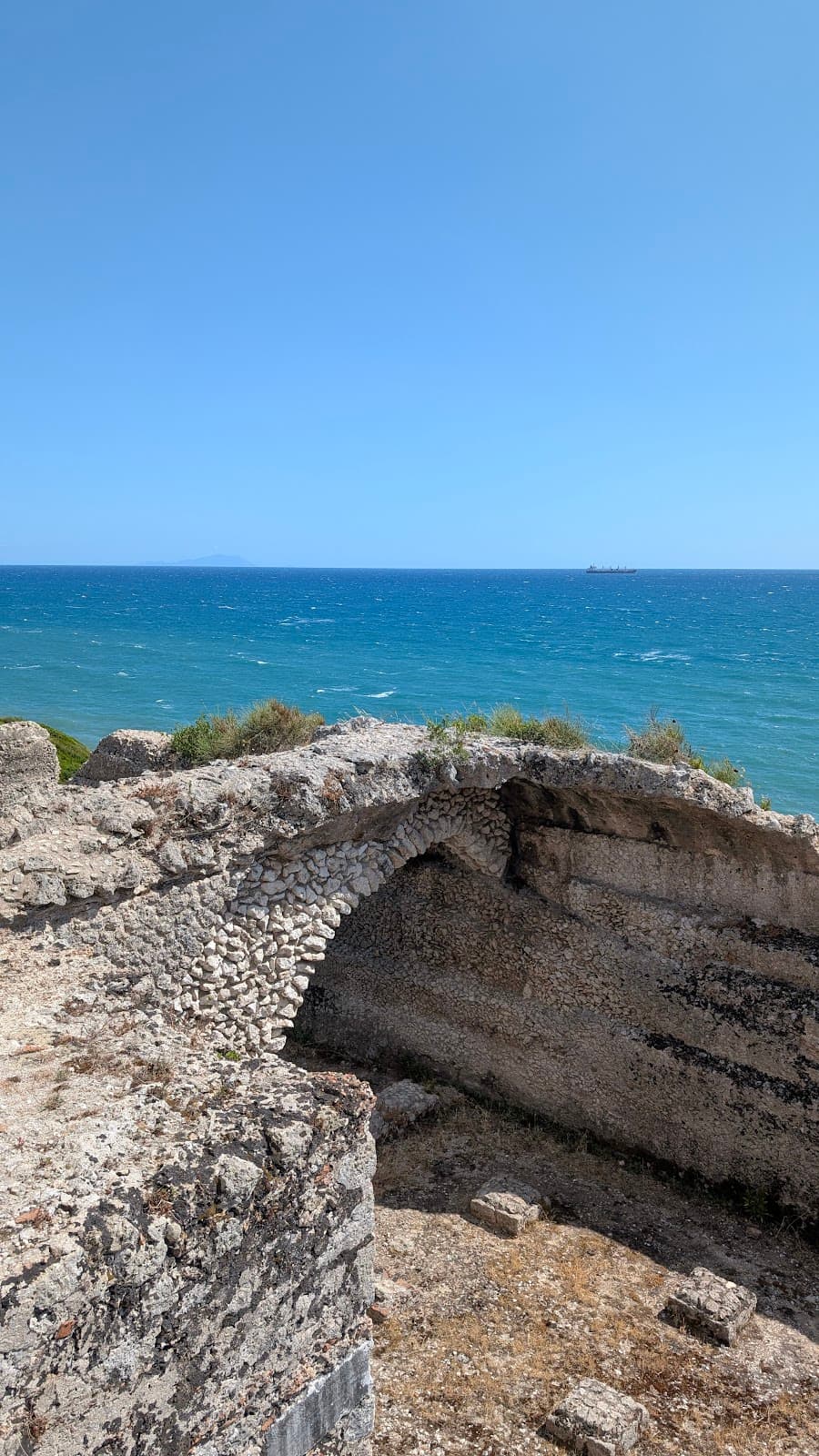
Explore the remnants of Mamurra's Roman villa and its impressive cistern, set amidst a beautiful, unspoiled landscape near Formia.
Highlights
Must-see attractions

Social
From TikTok & Reddit
Best Time
Potentially open, but verify first.
Area Archeologica di Gianola Villa di Mamurra
Best Time
Potentially open, but verify first.
Highlights
Must-see attractions
Explore the remnants of Mamurra's Roman villa and its impressive cistern, set amidst a beautiful, unspoiled landscape near Formia.
"A site of historical interest with a magnificent Roman cistern, though access can be unpredictable."

Confirm Opening Status
Always double-check current opening hours and access before visiting, as it can be closed unexpectedly. ⚠️
Wear Comfortable Shoes
The site involves walking through ruins and natural landscapes, so sturdy footwear is recommended. :athletic_shoe:

Quick Facts
Rating
3.1 · 7 reviews
Type
Historical Landmark
Highlights
Discover the most iconic attractions and experiences
The Roman Cistern
Heights of Formia
An immense, ancient cistern, potentially a model for Mamurra's villa, showcasing Roman engineering prowess.
Scattered Villa Remains
Throughout the site
Explore remnants of the octagonal villa, hinting at its former grandeur and two-story structure.

Unspoiled Landscape
Surrounding area
Enjoy a scenic walk through a magnificent, untouched natural environment.
Plans like a pro.
Thinks like you
Planning Your Visit
Access & Opening Hours
Site Condition & Exploration
Best Times
Insider Tips
from TikTok, Instagram & Reddit
Confirm Opening Status
Always double-check current opening hours and access before visiting, as it can be closed unexpectedly. ⚠️
Wear Comfortable Shoes
The site involves walking through ruins and natural landscapes, so sturdy footwear is recommended. :athletic_shoe:
Manage Expectations
Be aware that parts of the villa are privately owned and inaccessible, and ruins may be unmarked. 💁
Tips
from all over the internet
Confirm Opening Status
Always double-check current opening hours and access before visiting, as it can be closed unexpectedly. ⚠️
Wear Comfortable Shoes
The site involves walking through ruins and natural landscapes, so sturdy footwear is recommended. :athletic_shoe:
Manage Expectations
Be aware that parts of the villa are privately owned and inaccessible, and ruins may be unmarked. 💁
What Travellers Say
Reviews Summary
Visitors find the Area Archeologica di Gianola Villa di Mamurra to be a site of historical interest, particularly its Roman cistern and scattered ruins, set within a beautiful landscape. However, many report significant issues with accessibility, with the site frequently found closed despite advertised opening hours, and parts of the villa being privately owned and inaccessible.
"This Villa, from the Roman era, has been attributed to Mamurra, a Formia knight who became rich by following Caesar in his military exploits in Gaul.
The site has been reopened after years of work."
Giuseppe De Filippo
"From the website, it appears open and accessible. In reality, everything is closed, abandoned, and unmarked. There are only a few scattered ruins or concrete structures (which are also closed). The historic part of the villa itself was purchased by a private individual and closed to the public a year ago."
CHIARA DALLA VECCHIA
"Mamurra belonged to the equestrian order. He made his entire career and fortune thanks to Julius Caesar. Catullus, the gossip poet of the time, claims that they were lovers, at least as long as Caesar was not yet master of Rome... Mamurra followed Caesar in his conquest of Gaul. He was a general and above all prefect of engineers - praefectus fabrum. It was he who organized the two Roman incursions into Britain. He was in charge of the fleet. The conquest enriched him considerably and it was with this money that he built his summer villa - his main residence was on the Celio in Rome. Formia was an important port, which hosted the fleet of the Roman army. Hence the immense cistern which is located in the heights of the city (the largest of the time) and which can be visited on Sundays. Was this one used as a model for the villa of Mamurra—thirty-six columns? There are similarities. It is estimated that the ancient city must have been around two thousand square meters. It was octagonal in shape, on two floors. The cisterns were at the top and the living quarters at the bottom. You can see many remains here and there, but they are not very well marked. But the walk is definitely worth the detour. The unspoiled landscape is magnificent. Enjoy your visit."
Sylvain Desmille
What People Like
What People Dislike
Frequently Asked Questions
🚇 🗺️ Getting There
The site is located in Gianola, near Formia. While specific public transport details are scarce, it's often best reached by car. Be prepared for a walk once you arrive, as the ruins are spread out.
Information on dedicated parking is limited. If arriving by car, look for available street parking in the vicinity, but be mindful of local regulations.
Public transport options directly to the site are not widely advertised. It's advisable to check local bus routes in Formia or consider a taxi if not traveling by car.
🎫 🎫 Tickets & Entry
Information regarding ticket prices and purchase is inconsistent. Some sources suggest it's accessible, while others mention it being closed. It's crucial to verify current entry requirements locally.
The opening hours can be unreliable. While some signs and websites indicate weekend openings, visitors have reported finding it closed. Confirm directly with local authorities or check recent visitor feedback.
No, the main historic part of the villa was purchased by a private individual and is closed to the public. You can explore scattered ruins and structures on the grounds.
Information on guided tours is not readily available. It's recommended to inquire locally upon arrival, though self-guided exploration is the most common approach.
🎫 🧭 Onsite Experience
You can explore remnants of the Roman villa, including scattered ruins and concrete structures. The impressive Roman cistern is a notable feature. The surrounding landscape is also a highlight.
Recent reviews suggest the site can appear closed, abandoned, and unmarked in parts, with only scattered ruins visible.
Given the scattered nature of the ruins and the potential for walking, allocate at least 1-2 hours. This allows time for exploration and enjoying the landscape.
Facilities are generally not available at the archaeological site itself. It's advisable to use restrooms and purchase any refreshments before your visit.
While children might find the ruins interesting, the site's condition and lack of clear signage might make it challenging. Supervision is essential.
📸 📸 Photography
Focus on capturing the scale of the Roman cistern and the atmospheric scattered ruins. The surrounding natural landscape also offers beautiful photographic opportunities.
Drone regulations vary by location in Italy. It's essential to check with local authorities regarding permits and restrictions before flying a drone over the archaeological site.


Social
from TikTok, Instagram & Reddit