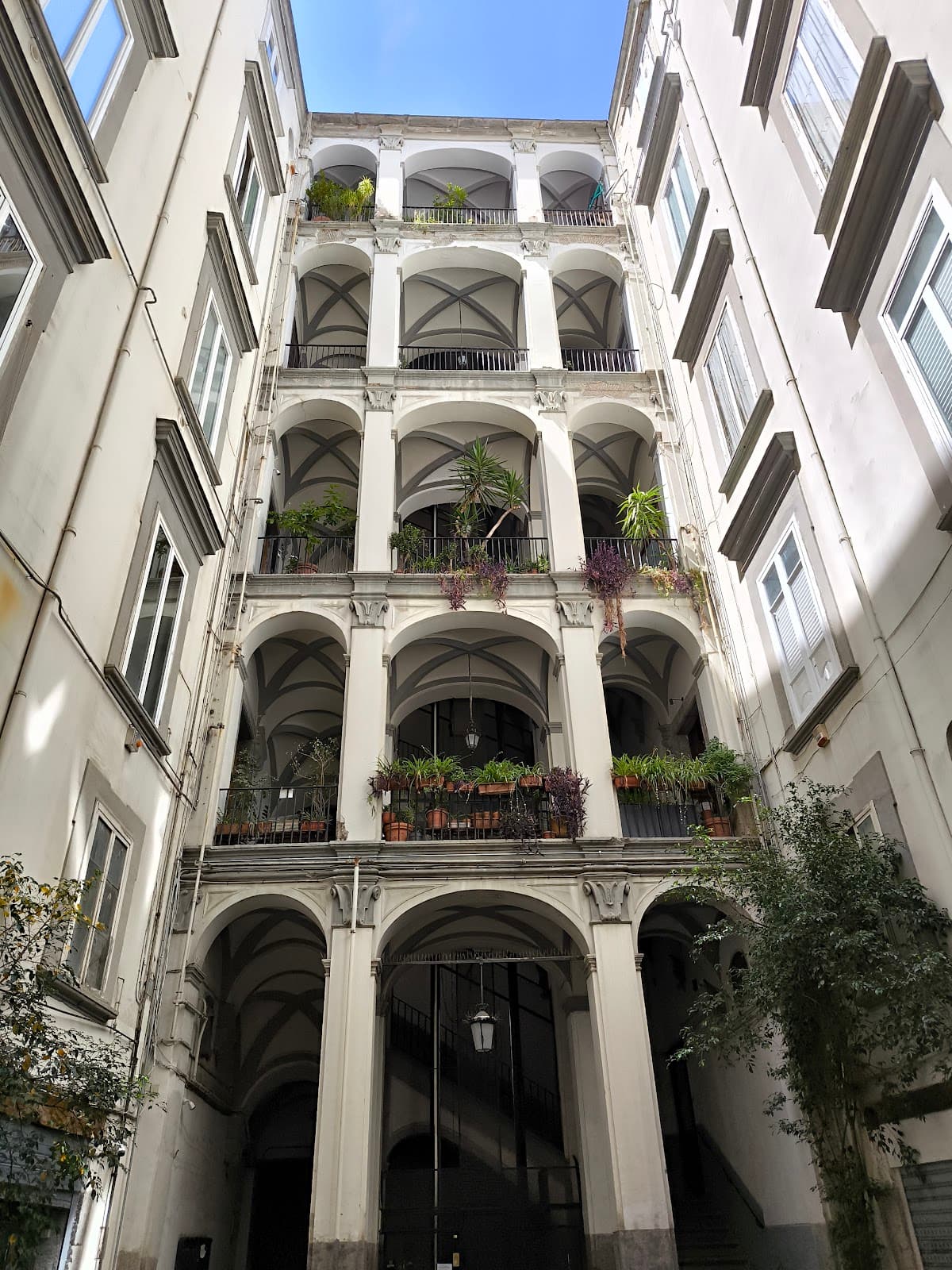
Palazzo di Sangro
A 16th-century Renaissance palace in Naples, historically linked to the Sansevero Chapel and home to a unique violin workshop.
Highlights
Must-see attractions

Social
From TikTok & Reddit
Best Time
Fewer crowds, more peaceful
Palazzo di Sangro
Best Time
Fewer crowds, more peaceful
Highlights
Must-see attractions
A 16th-century Renaissance palace in Naples, historically linked to the Sansevero Chapel and home to a unique violin workshop.
"A historic gem, though showing its age, with a magical violin workshop and a storied past."

Focus on History
Embrace the palace's historical significance, as parts are in disrepair. :classical_building:
Visit Sansevero Chapel
Don't miss the nearby chapel, a key part of the palace's history. :church:

Highlights
Discover the most iconic attractions and experiences
Historic Facade
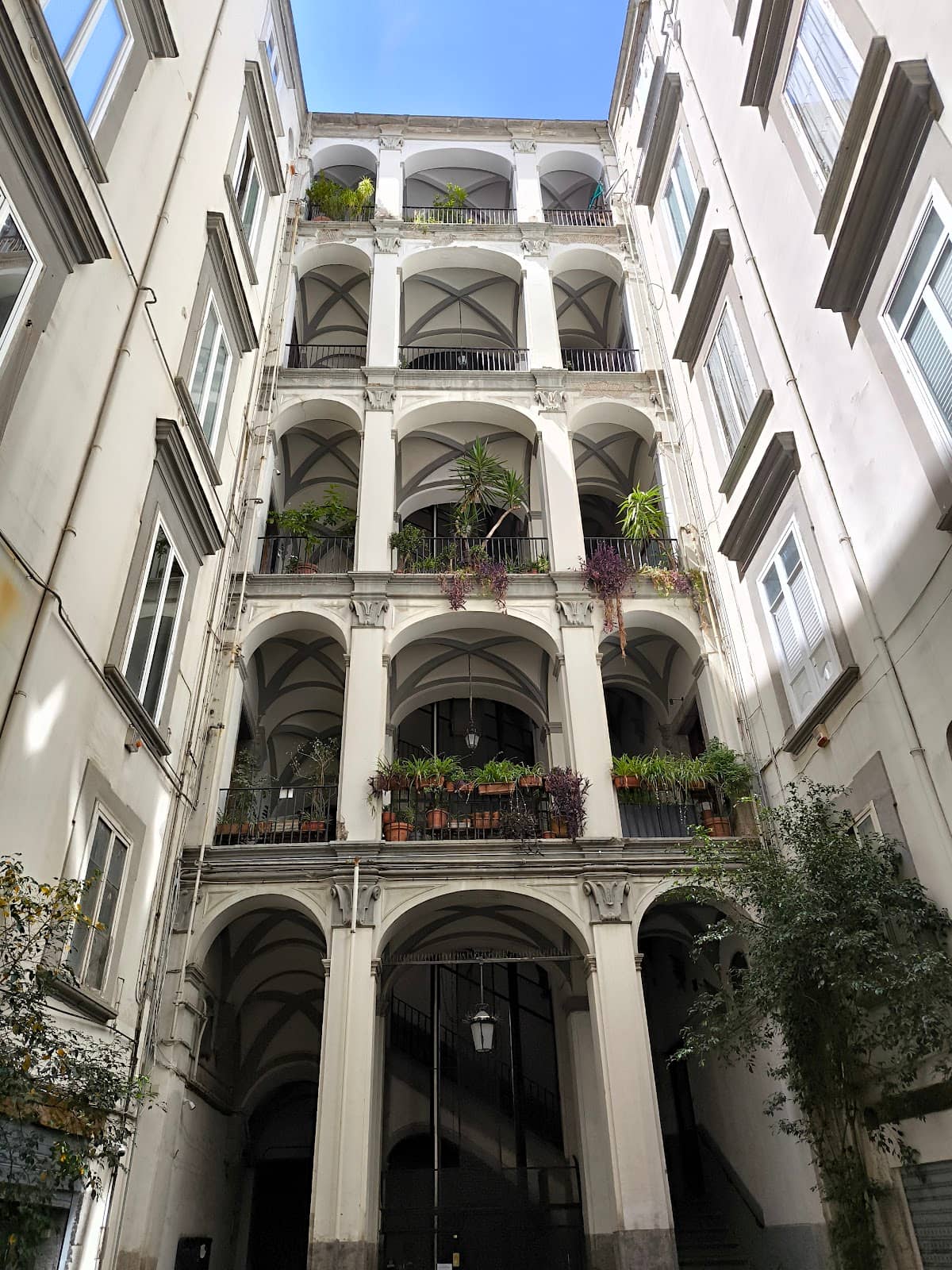
Admire the late-Renaissance architecture with its ornate embellishments and imposing stone portal.
Sansevero Chapel Link
Explore the nearby chapel, once connected by a now-collapsed passageway.
Violin Making Workshop
Discover the magical atmosphere of Luthier Gaetano Pucino's workshop within the palace.
Plans like a pro.
Thinks like you
Planning Your Visit
Navigating Palazzo di Sangro
Understanding the Sansevero Chapel Connection
Best Times
Insider Tips
from TikTok, Instagram & Reddit
Focus on History
Embrace the palace's historical significance, as parts are in disrepair. :classical_building:
Visit Sansevero Chapel
Don't miss the nearby chapel, a key part of the palace's history. :church:
Discover the Luthier
Seek out the unique violin-making workshop for a special experience. :musical_score:
Tips
from all over the internet
Focus on History
Embrace the palace's historical significance, as parts are in disrepair. :classical_building:
Visit Sansevero Chapel
Don't miss the nearby chapel, a key part of the palace's history. :church:
Discover the Luthier
Seek out the unique violin-making workshop for a special experience. :musical_score:
What Travellers Say
Reviews Summary
Palazzo di Sangro is a historically significant landmark in Naples, noted for its late-Renaissance architecture and its deep connection to the famous Sansevero Chapel. While many visitors acknowledge its historical importance and the unique violin workshop within, a recurring theme is its current state of disrepair, which can detract from the overall experience for some.
"Too many tourists."
Yanni H
"The Palazzo di Sangro is a late-Renaissance noble building located next to the church of San Domenico Maggiore. It was built in the 16th century by Paolo di Sangro, while Giovan Francesco Paolo di Sangro added the Sansevero Chapel, completed in 1613 by his son Alessandro. The façade was rebuilt in the 17th century based on a design by Bartolomeo Picchiatti. The palace reached its peak under Raimondo di Sangro in the 18th century, when he redesigned the famous chapel and added a passageway, which collapsed in 1889 and was never rebuilt. The interiors were embellished with decorations and frescoes, some of which were unfortunately destroyed in the collapse."
Francesco Gentile
"Palazzo De Sangro is a historic building in Naples, located in Piazzetta Nilo.
HistoryEdit
It was built in 1506 by Giovanni de Sangro, Duke of Vietri, and his wife Andreanna Dentice.
The building occupied the entire corner between Palazzo di Sangro and the Pignatelli property. It was divided in 1740 when the Duke of Corigliano purchased the portion overlooking Piazza San Domenico Maggiore, and the brothers Nicola, Placido, and Domenico di Sangro, Lords of San Lucido and Princes of Fondi, purchased the portion overlooking Piazzetta Nilo. The palace was then renovated in 1764 based on a design by Neapolitan Luca Vecchione.
The building features a remarkably long façade with a portal in piperno stone and ashlars enclosing a mixed arch; the windows feature alternating tympanums. The atrium is characterised by the painting of the coat of arms of the Dukes of Vietri, and the courtyard has a fountain and a chapel."
Maurizio Izzo
What People Like
What People Dislike
Frequently Asked Questions
🚇 🗺️ Getting There
Palazzo di Sangro is located in the historic center of Naples, near Piazzetta Nilo and San Domenico Maggiore. It's easily accessible by public transport. You can take a bus or the metro to the 'Dante' or 'Museo' stations and then enjoy a pleasant walk through the charming streets of Naples.
Yes, Palazzo di Sangro is situated in a prime location within Naples' historic center. It's very close to the Sansevero Chapel and the church of San Domenico Maggiore, making it easy to combine visits.
From Napoli Centrale (the main train station), it's a walk of about 20-30 minutes. Alternatively, you can take a short taxi ride or use public transport to get closer.
🎫 🎫 Tickets & Entry
Information regarding specific entry tickets for the Palazzo di Sangro itself can be limited as it's often viewed from the exterior or specific sections are accessible. However, the adjacent Sansevero Chapel requires tickets, which are highly recommended to book in advance due to popularity.
As a historic building, access to certain parts of Palazzo di Sangro might be restricted or vary. The Sansevero Chapel has specific opening hours, typically from morning to early evening, but it's best to check their official website for the most current information.
While the exterior is freely visible, access to specific interiors or private residences within the Palazzo di Sangro may not be open to the public or could have separate arrangements. The main draw for visitors is often the Sansevero Chapel.
No, the Palazzo di Sangro and the Sansevero Chapel are separate entities with their own ticketing. You will need to purchase tickets for the Sansevero Chapel independently.
🎫 🏛️ Onsite Experience
Many visitors note that Palazzo di Sangro is in a state of disrepair, reflecting decades of neglect. While historically significant, the interiors may not be as well-preserved as one might expect.
The violin making workshop, run by Luthier Gaetano Pucino, is described as a magical place with a strong soul. It offers a unique glimpse into traditional craftsmanship and is a highlight for many visitors.
For history enthusiasts and those interested in the context of the Sansevero Chapel, it can be worthwhile. Focus on the architectural details and the historical narrative rather than expecting pristine interiors.
The passageway once connected Palazzo di Sangro to the Sansevero Chapel, allowing residents to cross the street. Its collapse in the late 19th century is a notable part of the palace's history.
Official guided tours specifically for Palazzo di Sangro might be limited. However, many tours of Naples' historic center will include information about the palace and its context within the city's history.
📸 📸 Photography
Photography rules can vary depending on which parts of the Palazzo di Sangro are accessible. For the Sansevero Chapel, photography is generally prohibited to protect the artworks. Always check for signage or ask permission.

The exterior facade offers good photographic opportunities, especially with its architectural details. The courtyard, if accessible, might also provide interesting shots.
Capturing the entire facade can be challenging due to its location and surrounding buildings. Try different angles and times of day to get the best light.
For Different Travelers
Tailored advice for your travel style
👨👩👧 Families with Kids
Consider focusing on the exterior architecture and the story of the collapsed bridge connecting to the chapel as engaging points for younger visitors. The violin workshop could also be a point of interest if the children have an appreciation for music or craftsmanship.
🏛️ History Buffs & Architecture Enthusiasts
Delve into the history of the di Sangro family and their influence on the city. Understanding the palace's connection to the Sansevero Chapel and the story of the collapsed passageway adds significant depth to the visit.
Deep Dives
In-depth insights and expert knowledge
The Di Sangro Family and Their Legacy
One of the most prominent members was Raimondo di Sangro, an enigmatic figure in the 18th century. He was a scientist, inventor, alchemist, and patron of the arts, who significantly contributed to the redesign of the famous Sansevero Chapel. His influence is palpable in the palace's history, even though parts of it, like the connecting passageway to the chapel, have since collapsed.
Today, the Palazzo di Sangro, like many aristocratic palazzi in Naples, is often divided among different owners and shows signs of wear. However, its historical significance as the ancestral home of such a prominent family, and its connection to the artistic marvel of the Sansevero Chapel, makes it a point of interest for understanding Naples' rich past.
The Sansevero Chapel Connection
Tragically, this iconic passageway collapsed in the late 19th century and was never rebuilt. This event marked a physical separation, though the historical and cultural connection remains strong. Visitors often explore both sites sequentially, understanding that the palace was the seat of the family who commissioned and enriched the chapel with masterpieces like the Veiled Christ.
When visiting, it's important to note that while the Palazzo di Sangro might appear somewhat neglected, the Sansevero Chapel is a meticulously preserved treasure. Planning a visit to both provides a more complete picture of the di Sangro family's legacy and their impact on Neapolitan art and history.
A Hidden Gem: The Violin Workshop
Described by visitors as a 'magical place with a strong soul', the workshop offers a unique sensory experience. The air is filled with the scent of wood and varnish, and the walls are adorned with instruments in various stages of creation. Gaetano Pucino, often accompanied by his cat and bird, embodies the artistry and dedication that goes into crafting a fine violin.
For those seeking an authentic and intimate encounter with Neapolitan artistry, a visit to this workshop is highly recommended. It provides a stark contrast to the grandeur of the palace's past and the artistic intensity of the nearby chapel, offering a glimpse into a living tradition.
Social
from TikTok, Instagram & Reddit