Chiesa di San Domenico
Sacred spaces showcasing magnificent Baroque art and architecture, rich in history and spiritual significance.
Highlights
Must-see attractions

Social
From TikTok & Reddit
Best Time
Fewer crowds, peaceful atmosphere
Chiesa di San Domenico
Best Time
Fewer crowds, peaceful atmosphere
Highlights
Must-see attractions
Sacred spaces showcasing magnificent Baroque art and architecture, rich in history and spiritual significance.
"A must-see in Nardò, the church's facade has mysterious symbolism and iconography, very elaborate and difficult to understand."
Dress Respectfully
Cover shoulders and knees when visiting churches. 🙏
Check Opening Hours
Hours can vary, especially around religious services. :clock1:
Quick Facts
Rating
4.8 · 93 reviews
Type
Church
Highlights
Discover the most iconic attractions and experiences
Baroque Facades
Noto, Cosenza, Nardò
Marvel at the intricate and ornate Baroque architecture, a testament to artistic and religious devotion.

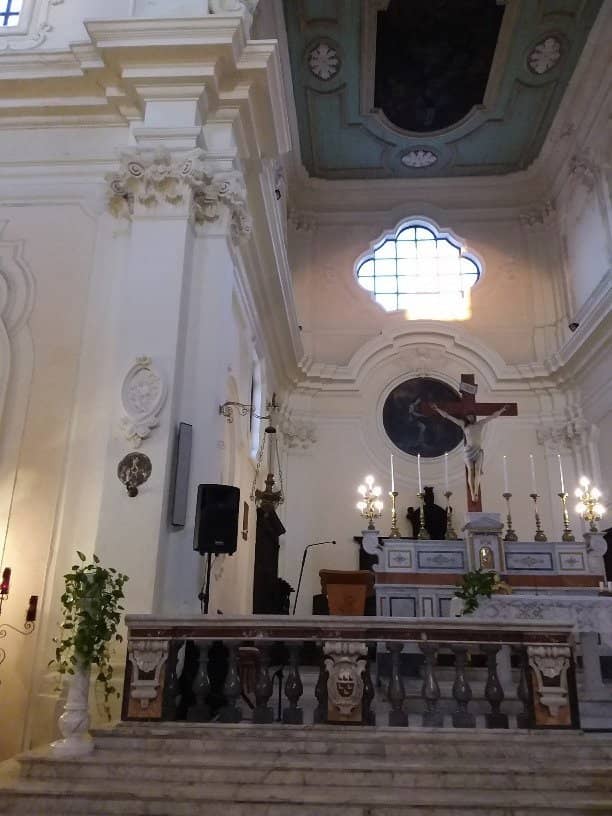
Artistic Interiors
Bologna, Palermo, Nardò
Discover stunning artworks, frescoes, and altars that tell stories of faith and history within these sacred spaces.
Historical Significance
Various locations
Explore churches that house relics, tombs of saints, and serve as centers of religious orders for centuries.
Plans like a pro.
Thinks like you
Planning Your Visit
Timing Your Visit
Understanding the Art & History
Best Times
Insider Tips
from TikTok, Instagram & Reddit
Dress Respectfully
Cover shoulders and knees when visiting churches. 🙏
Check Opening Hours
Hours can vary, especially around religious services. :clock1:
Look for Local Art
Many churches feature unique local artists and Baroque masterpieces. 🎨
Quiet Reflection
Take time to appreciate the art and serene atmosphere. ✌️
Tips
from all over the internet
Dress Respectfully
Cover shoulders and knees when visiting churches. 🙏
Check Opening Hours
Hours can vary, especially around religious services. :clock1:
Look for Local Art
Many churches feature unique local artists and Baroque masterpieces. 🎨
Quiet Reflection
Take time to appreciate the art and serene atmosphere. ✌️
Photography Etiquette
Be mindful of others and avoid flash photography. :camerawithflash:
What Travellers Say
Reviews Summary
Visitors consistently praise the stunning Baroque architecture, particularly the intricate facades, and the rich artistic interiors of the Chiesa di San Domenico churches. Many highlight the historical significance and the peaceful atmosphere for reflection. Some note that interiors can be more sober than exteriors, and parking or crowds can sometimes detract from the experience.
"The Chiesa di San Domenico, or Church of Saint Dominic, is a Catholic church dedicated to Saint Dominic, the founder of the Dominican Order. It is located in various cities, including Palermo, Italy, and Bologna, Italy, as well as other locations. The churches are significant landmarks, reflecting the history and artistic traditions of the Dominican friars. The church is one of the most beautiful monuments of the village of Nardò and deserves a careful visit outside and especially inside the church. This church has a very particular facade clearly made in different times and styles. You suddenly find it in front of you when you arrive in the square . The church of San Domenico is a church in the historic center of Nardo . The interior has a single nave with a Latin cross plan and three chapels on each side. Among the various altars, all redone, that of the Madonna del Rosario stands out with the fifteen mysteries placed on the altar on the left. Very beautiful ."
Jitendra Singh Panwar
"Another marvel of Lecce Baroque, the church of San Domenico is located in the historic center of Nardò and was built between 1580 and 1594. I highly recommend a visit to anyone who finds themselves in the Lecce area."
Roberto Iandoli
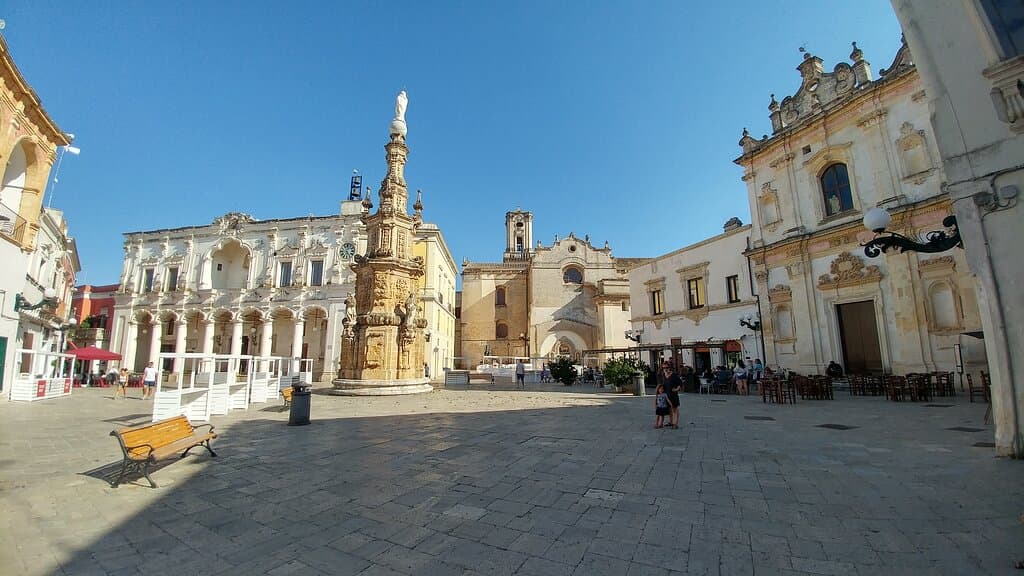
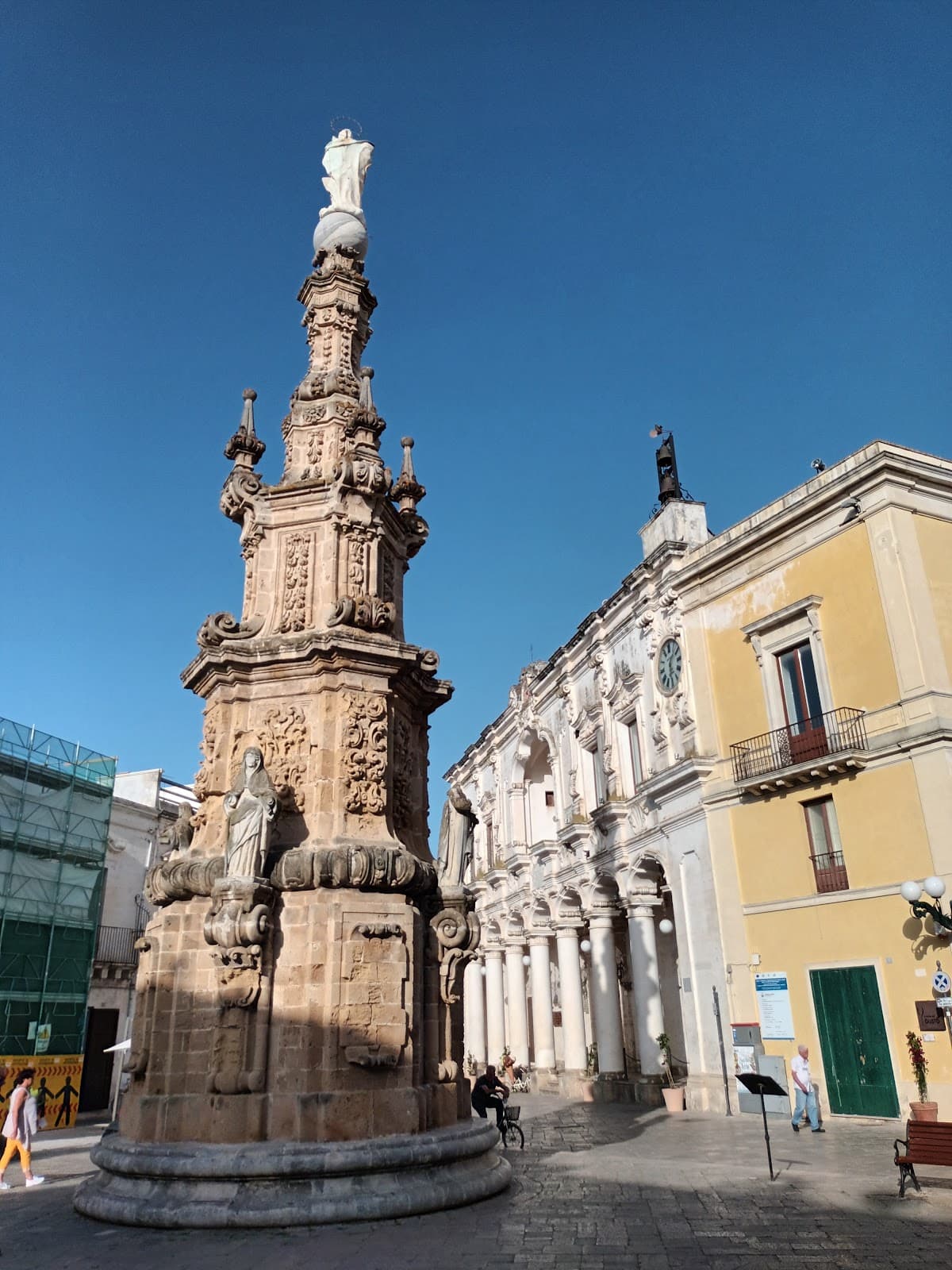
"In the historic center of the town of Nardò, we find a spectacular group of buildings representative of the Baroque architecture of the Salento region. Among these buildings, the façade of the Church of San Domenico stands out.
The Church of San Domenico was initially built in the late 16th century, dedicated to Saint Mary. It was part of a small adjacent monastery of the Dominican Order.
In 1743, a strong earthquake struck the Puglia region, particularly affecting the Salento region. Following this earthquake, the Church of San Domenico was seriously damaged, destroying much of its structure, except for the façade, one of its walls, and part of the sacristy. After this earthquake, it was decided to begin rebuilding the structure of the church, which originally had three naves, transforming it into a single nave, which enhanced the preaching of the Dominican Order after the Council of Trent.
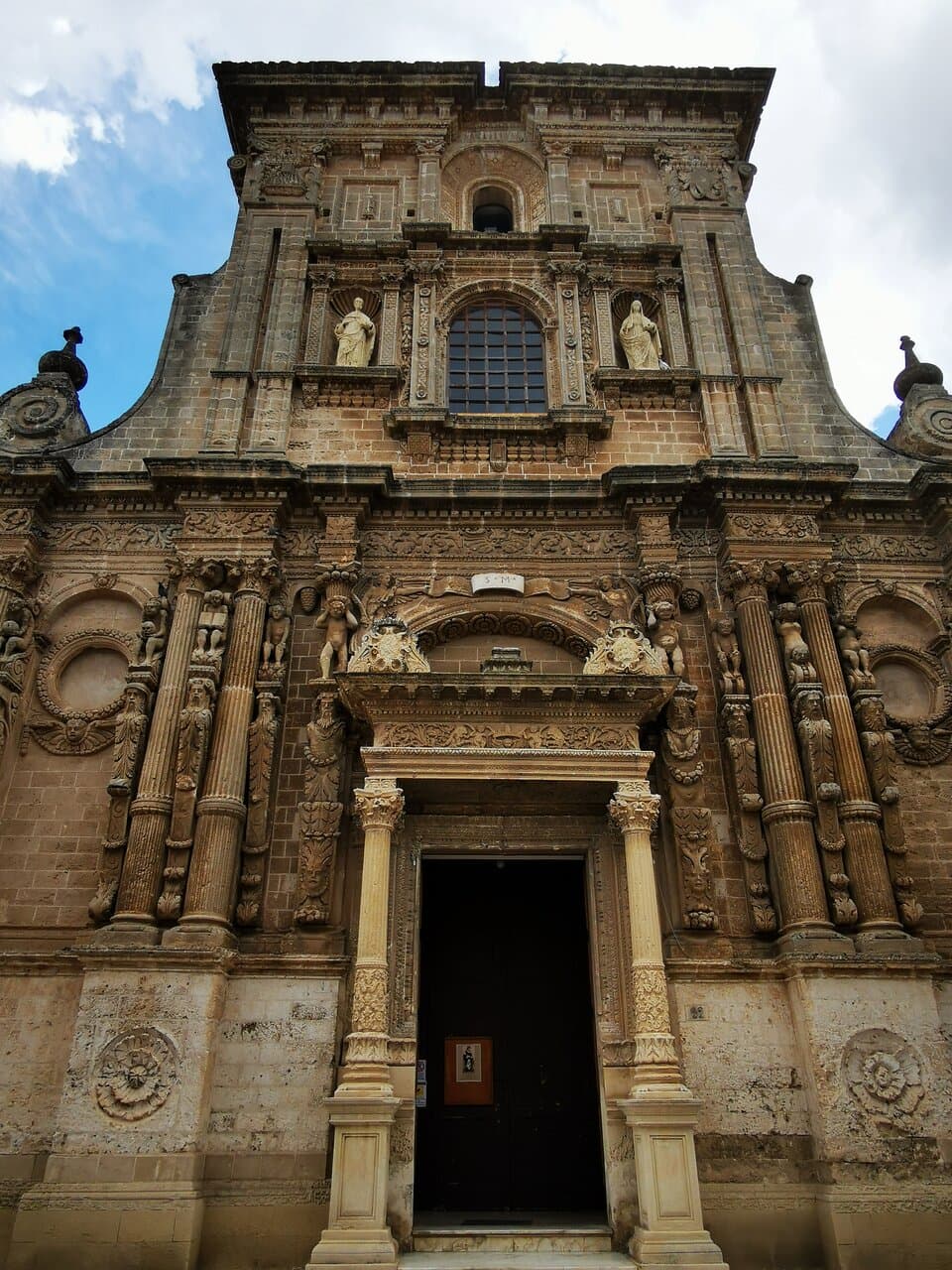
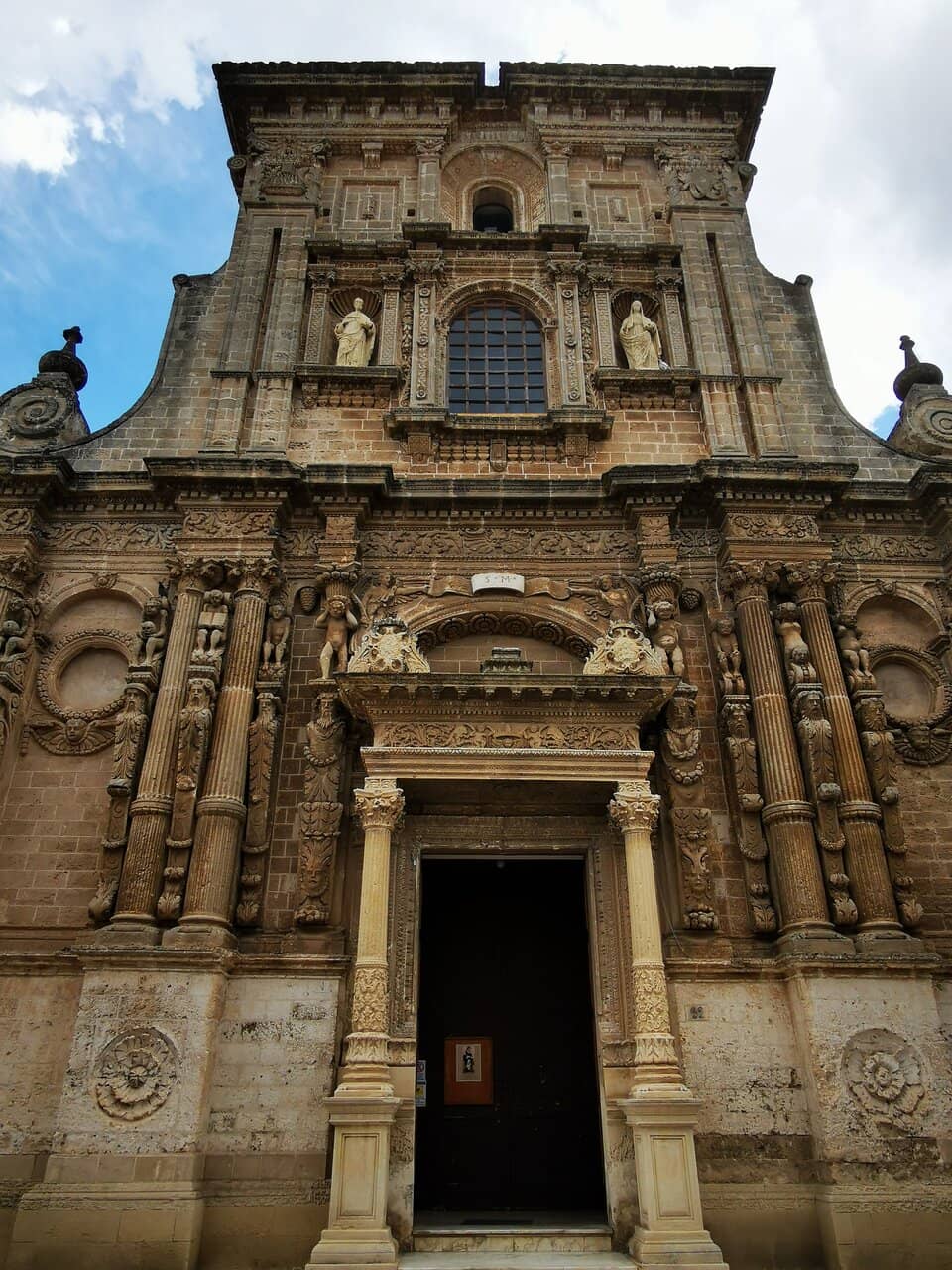
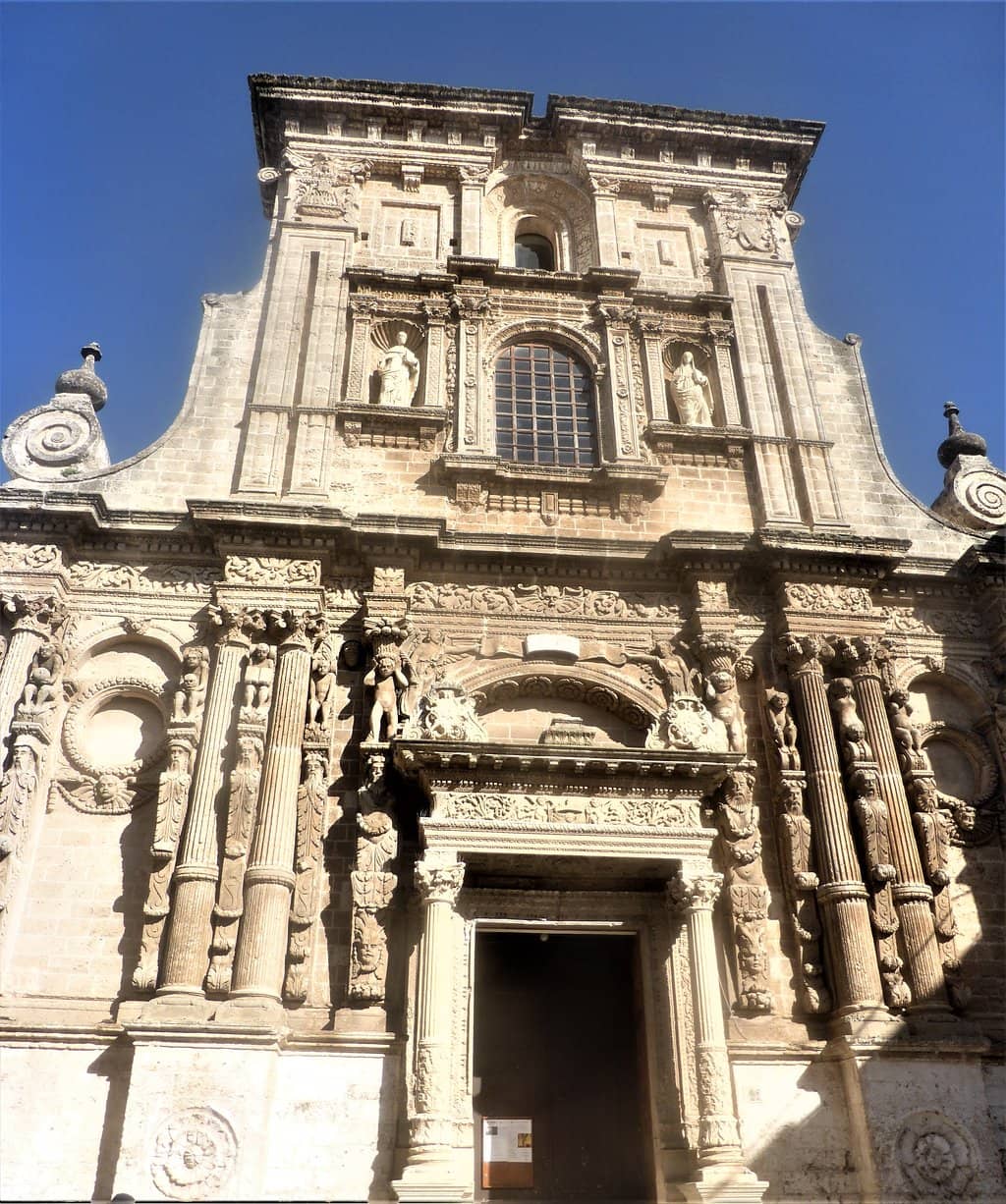
The façade of the Church of San Domenico is a magnificent example of Lecce Baroque. The façade is clearly divided into two sections built in different periods. In the lower section, the lintelled doorway is flanked by two small Corinthian columns supporting a semicircular pediment with two stone coats of arms. Above the doorway, a frieze decorated with geometric motifs and two angels holding a crown can be seen. The ensemble is complemented by eight fluted columns with Corinthian capitals on high bases supporting an entablature.
But the most significant aspect of this lower order is its extraordinary ornamentation, replete with human figures, some of them grotesque, placed like columns that act as small caryatids. Many of these human figures are plump, angel-like children (puttis), leaning on each other and alternating with pagan figures in mock-like forms wearing plant ornaments on their heads.
The upper section, on the other hand, is much simpler. With a large latticed window decorated with floral motifs, flanked by two niches with sculptures of Saint Dominic and Saint Catherine.
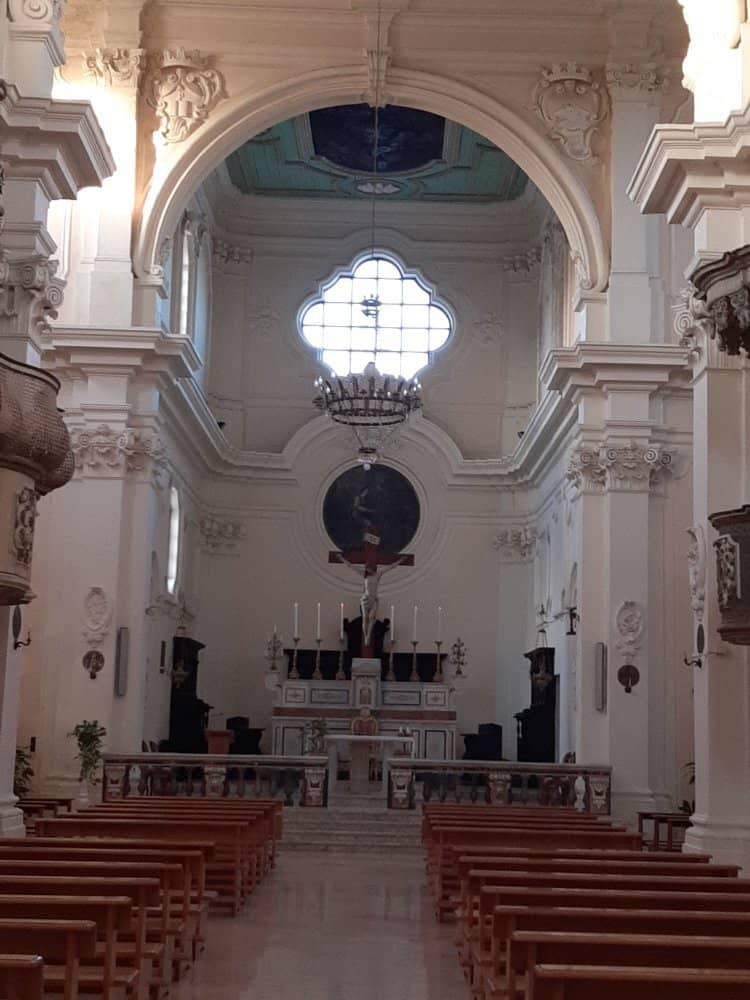
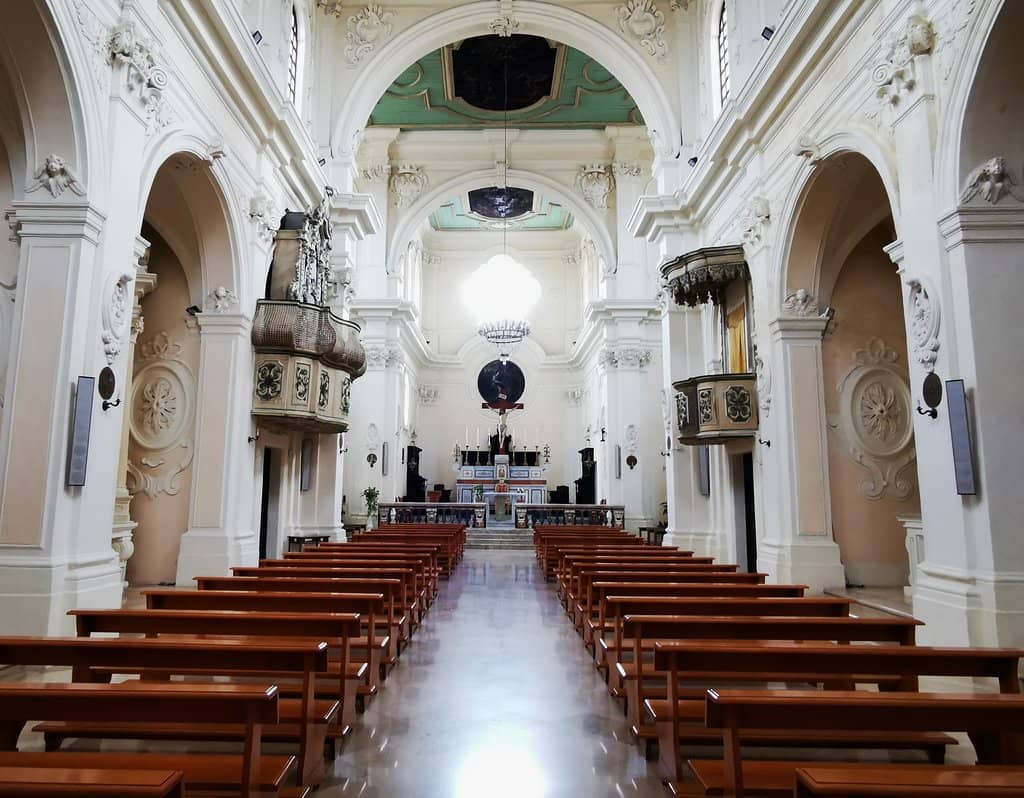
The church has a Latin cross plan with a single nave, surrounded by robust square pilasters supporting an entablature above which rises a wall of windows supporting a soft green painted wooden ceiling adorned with paintings. On the sides of the nave are six small chapels, among which the chapel of Our Lady of the Rosary stands out, with a 16th-century fresco by local painter Donato Antonio d'Orlando.
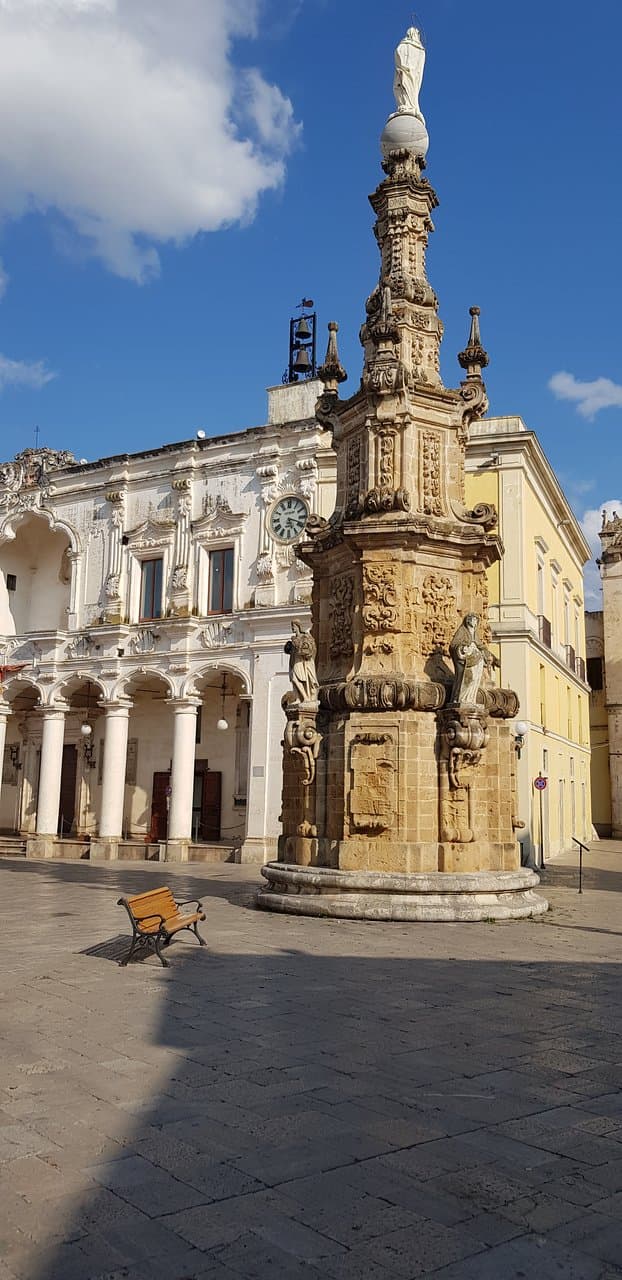
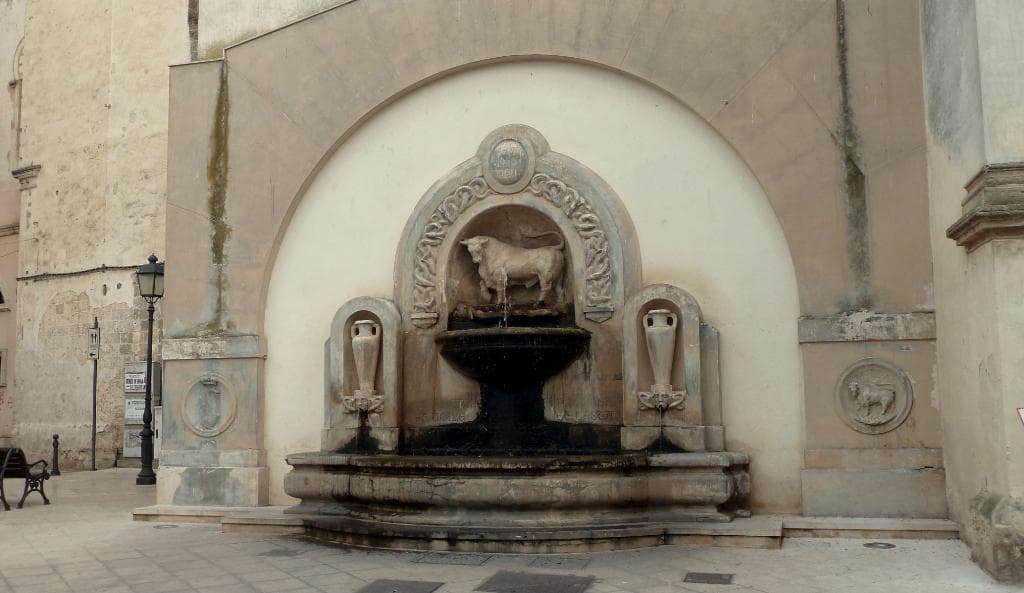
The interior of the church is much simpler than the façade and responds more to the ideas of the Counter-Reformation that were established in Europe following the Protestant reforms of the 16th and 17th centuries, with the aim of strengthening the Catholic faith through greater drama in the paintings and sculptures. Outside the temple, on one side behind the church and facing Piazza Salandra, is the iconic Fontana del Toro (Bull Fountain). There is a legend about the origin of the city of Nardò that tells how a bull, by digging its paw in the ground, caused a spring of water to emerge, which became a spring, thus marking the place where the first settlements of what would become the future city of Nardò would be established. Currently, the coat of arms of the city of Nardò is represented by a bull with the Latin motto "tauro non bovi."
The former convent adjacent to the church now houses an art school.
Admission to the church is free, but the worship of the parishioners is always respected.
This church's façade has mysterious symbolism and iconography, very elaborate and difficult to understand. The interior is worth visiting, but especially the details of the façade of this church are worth exploring. A must-see in Nardò."
Fernando Patacona
What People Like
What People Dislike
Frequently Asked Questions
🚇 🗺️ Getting There
The Chiesa di San Domenico in Palermo is centrally located and accessible by public transport or a short taxi ride from the city center. Many visitors find it convenient to walk if staying nearby.
Yes, the Basilica di San Domenico in Bologna is a prominent landmark in the city center, easily reachable on foot or by bus. It's a key site for those interested in the history of the Dominican Order.
Chiesa di San Domenico in Nardò is situated in the historic center, making it easily accessible on foot once you're in the town. Parking might be challenging, so consider arriving early or using designated parking areas outside the immediate center.
If you're visiting several churches named San Domenico, plan your route using local transit apps. For cities like Palermo or Bologna, consider a day pass for buses and trams to hop between attractions efficiently.
Driving directly to many historic churches can be difficult due to ZTL (Limited Traffic Zones) and limited parking. It's often best to park on the outskirts of the historic center and walk.
🎫 🎫 Tickets & Entry
Admission to most Chiesa di San Domenico locations is free, as they are active places of worship. However, some may have specific areas or exhibitions that require a ticket. Always check in advance.
Opening hours vary significantly by location and day. Many churches close for a few hours in the afternoon. It's crucial to check the specific hours for the Chiesa di San Domenico you plan to visit, especially on Sundays or holidays.
Yes, churches like San Domenico often host concerts, art exhibitions, and religious ceremonies. For example, string concerts have been held in Salerno's San Domenico.
You can visit during mass, but it's expected to be respectful and quiet. Some visitors prefer to visit outside of service times to explore more freely.
The Oratorio del Rosario within the Chiesa di San Domenico in Cosenza is often accessible with free admission, though donations are appreciated. It's a hidden gem showcasing Baroque architecture.
🎫 🏛️ Onsite Experience
The facade of the Chiesa di San Domenico in Nardò is its most striking feature, a magnificent example of Lecce Baroque with unique, elaborate ornamentation and grotesque figures. The interior is more sober.
The Basilica di San Domenico in Bologna houses significant artworks and the tomb of Saint Dominic himself. It's a treasure trove of art and history for the Dominican Order.
Absolutely. The Chiesa di San Domenico in Palermo is a significant historical and architectural site, offering a glimpse into the city's past and artistic heritage.
The 'Macchina delle Quarantore' is a rare and spectacular Baroque mechanism used during Easter, creating a unique triumph of lights within the church. It's a surprising and rare sight.
While not always advertised, local tourist offices or guides might offer tours, especially for more prominent churches like those in Palermo or Bologna. Inquire locally for the best experience.
📸 📸 Photography
Focus on the intricate Baroque facades, especially during golden hour for dramatic lighting. Inside, capture the altars, frescoes, and architectural details, but always be mindful of no-flash rules.
Generally, photography is allowed inside, but flash is usually prohibited to protect the artworks and maintain a respectful atmosphere. Always look for signage or ask church staff.
Its unique blend of styles, the detailed ornamentation with human figures, and the contrast between its two sections make it a fascinating subject for photographers.
Look for the 'Madonna del Rosario' altar in Nardò, the tomb of Saint Dominic in Bologna, or any unique Baroque altarpieces and ceiling paintings.
Late afternoon, during the 'golden hour,' offers beautiful light that accentuates the textures and details of the Baroque facades.

Social
from TikTok, Instagram & Reddit