Bridges over the Tiber
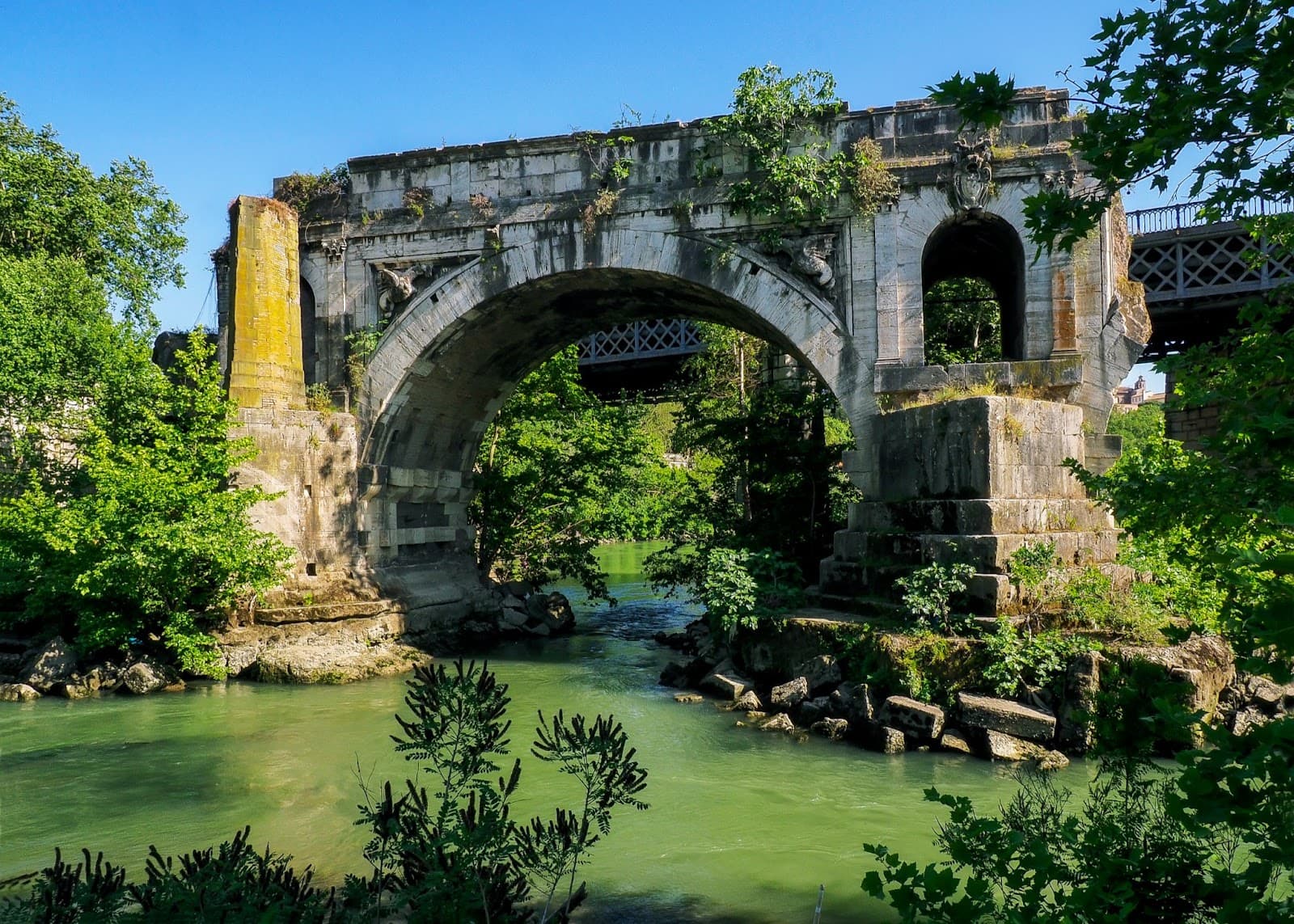
Rome's oldest stone bridge remnant, the Ponte Rotto, stands as a solitary arch in the Tiber, a poignant symbol of ancient engineering and resilience.
Highlights
Must-see attractions

Social
From TikTok & Reddit
Best Time
Golden hour magic
Bridges over the Tiber
Best Time
Golden hour magic
Highlights
Must-see attractions
Rome's oldest stone bridge remnant, the Ponte Rotto, stands as a solitary arch in the Tiber, a poignant symbol of ancient engineering and resilience.
"The great arch with a decadent and poetic aspect that emerges from the waters of the Tiber."
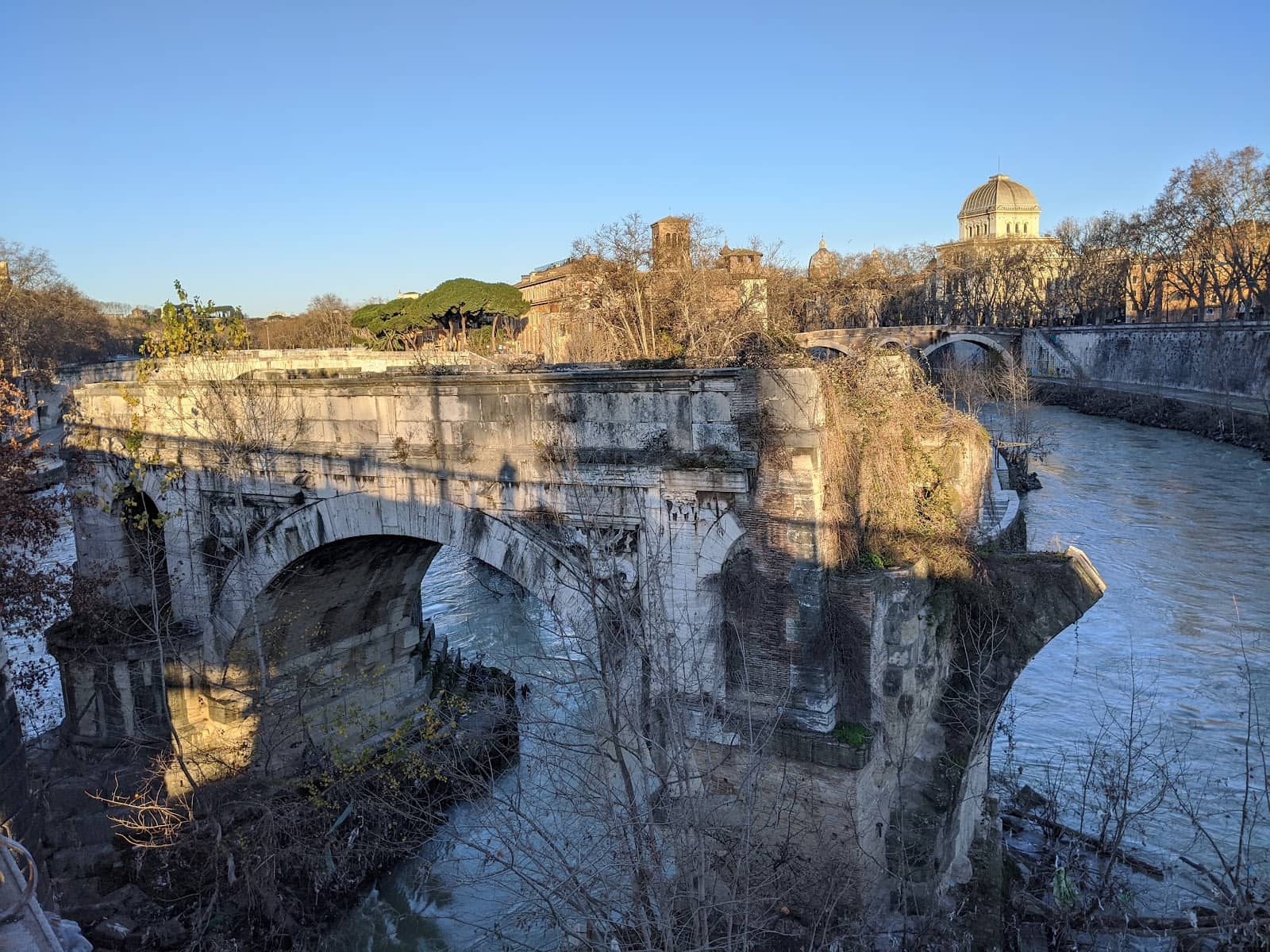
📸 Capture the Ruin
Best viewed from Ponte Palatino or Tiber Island. Sunrise/sunset offers magical light!
🚶♂️ Walk the Banks
Enjoy a stroll along the Tiber for different angles of this historic fragment.
Highlights
Discover the most iconic attractions and experiences
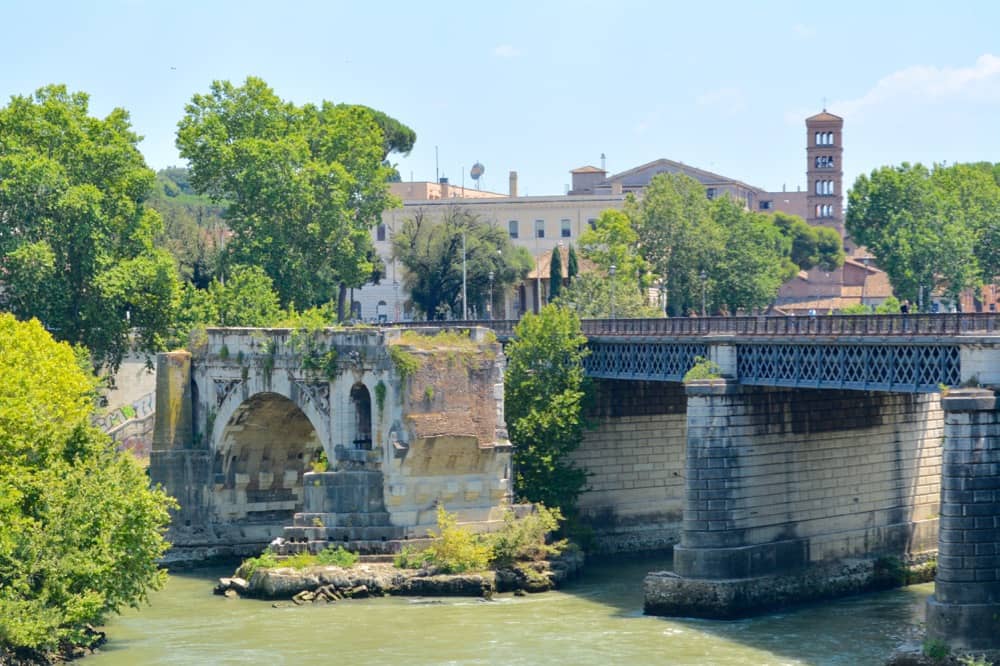
The Lone Arch
Tiber River
The iconic single arch emerging from the Tiber, a poignant remnant of Rome's oldest stone bridge.
Tiber Island Views
Near Tiber Island
Admire the bridge's melancholic beauty from the charming Tiber Island, offering unique perspectives.
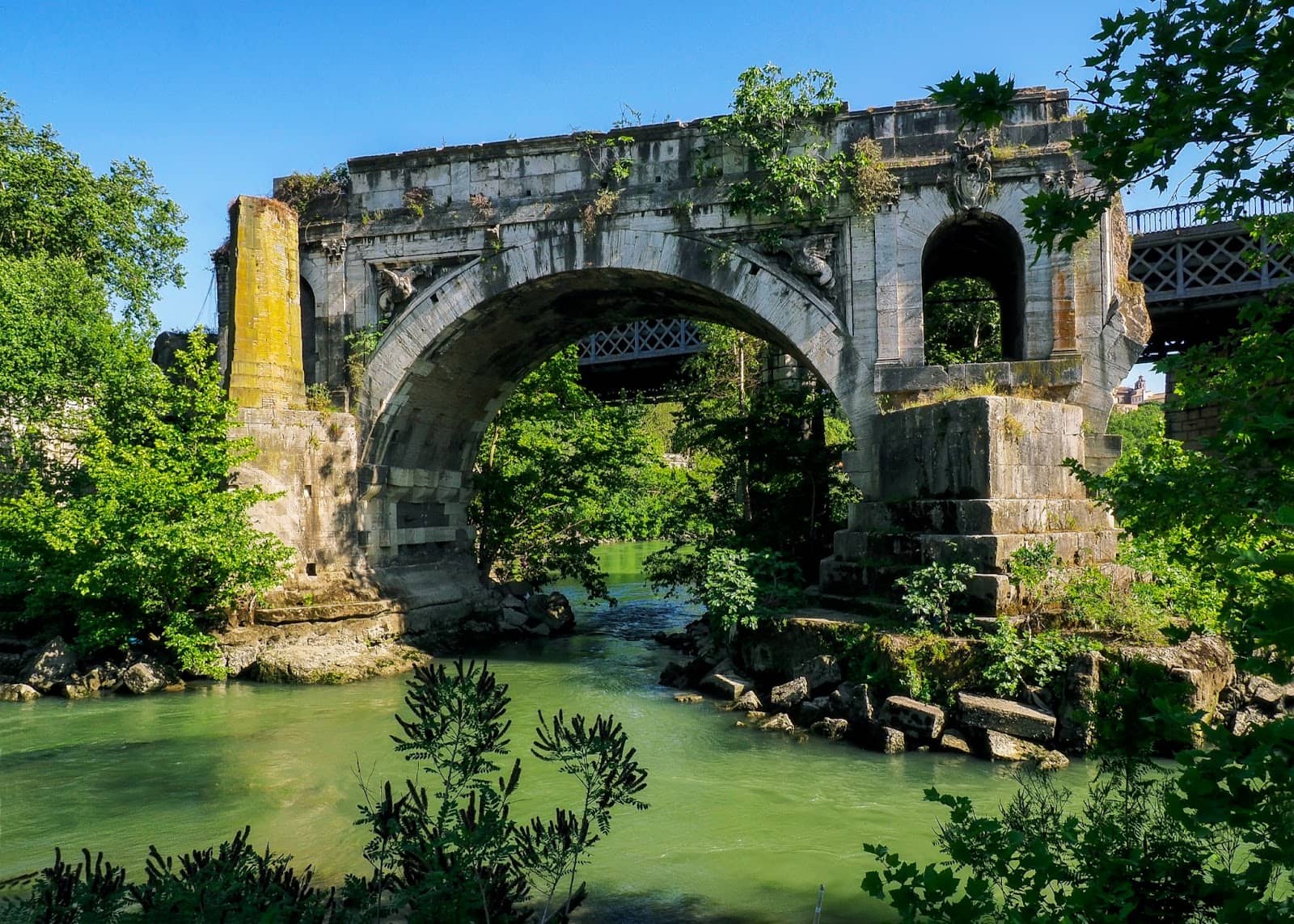
Ponte Palatino Vista
Adjacent to Ponte Palatino
Get a great vantage point of the Ponte Rotto by walking across the modern Ponte Palatino.
Plans like a pro.
Thinks like you
Planning Your Visit
Embrace the 'Broken Bridge' Charm
Timing is Key for Photos
Best Times
Insider Tips
from TikTok, Instagram & Reddit
📸 Capture the Ruin
Best viewed from Ponte Palatino or Tiber Island. Sunrise/sunset offers magical light!
🚶♂️ Walk the Banks
Enjoy a stroll along the Tiber for different angles of this historic fragment.
💡 Historical Context
Learn about its past as Pons Aemilius, the oldest stone bridge in Rome. +1
🚫 Inaccessible Ruin
Remember, it's a picturesque ruin, not a bridge to cross. Admire from a distance.
Tips
from all over the internet
📸 Capture the Ruin
Best viewed from Ponte Palatino or Tiber Island. Sunrise/sunset offers magical light!
🚶♂️ Walk the Banks
Enjoy a stroll along the Tiber for different angles of this historic fragment.
💡 Historical Context
Learn about its past as Pons Aemilius, the oldest stone bridge in Rome. +1
🚫 Inaccessible Ruin
Remember, it's a picturesque ruin, not a bridge to cross. Admire from a distance.
What Travellers Say
Reviews Summary
Visitors find the Ponte Rotto, or 'Broken Bridge,' a picturesque and historically significant ruin, offering a poignant glimpse into ancient Roman engineering. While its inaccessibility is noted, its melancholic beauty and unique presence in the Tiber River are widely appreciated, especially when viewed from nearby vantage points.
"It is commonly known as Ponte Rotto (Broken Bridge) but the great arch with a decadent and poetic aspect that emerges from the waters of the Tiber, not far from the Tiber Island, is actually what remains of the ancient Pons Aemilius, made of wood in the 2nd century BC and reconstructed of stone a century later.
It was the longest of Rome’s ancient bridges with an important strategic position, but definitively not lucky: placed obliquely to the current of the river, where the water turbulence is particularly strong, it was very often overwhelmed by the power of the Tiber. Damaged when not destroyed, it was then reconstructed several times. Even its name often changed over the centuries: with the renovation carried out by Augustus, Emperor and Pontifex Maximus, it was nicknamed “Pons Maximus”, then in the 9th century it became known as the Santa Maria Bridge when the Temple of Portunus was turned into the church of Santa Maria Egiziaca. In 1144, the bridge was renamed Senatorium Bridge, probably following a full restoration carried out at the expense of the Senators, Rome’s main administrators.Repairs and restorations also continued in the following centuries: the complete renovation of 1552, by Nanni di Baccio on a design by Michelangelo, proved to be ineffective and only five years later the bridge was again swept away by a flood. With the umpteenth reconstruction commissioned by Pope Gregory XIII Boncompagni in 1573 and remembered by a clearly legible inscription, as well as by the bas-reliefs with dragons that recall the papal coat of arms, the bridge was used to lead the new Acqua Felice pipeline to Trastevere, which fed the fountain in piazza di Santa Maria in Trastevere, but another violent flood on Christmas night in 1598 destroyed about half of the bridge, carrying away 3 arches and 2 piers. The remaining section of the bridge, anchored to the right bank, was used as a hanging garden until the end of the 17th century, when the precarious stability of the bridge made it completely unusable.In 1853, the three remaining arches were connected to the mainland on both sides with an iron footbridge. In 1887, the new footbridge was demolished along with two of the three arches to make room for a new bridge, Ponte Palatino."
Misiu martino
"Nice place. Historical land mark in roman empire. The broken bridge🗿🤘😘"
Krrish Sharuk
"Picturesque, but absolutely inaccessible. The Fallen bridge, or Ponte Rotto is the oldest "surviving" bridge in Rome. As it stands it is only good for a picture or two, but it does lend an air of ancient mystery to this stretch of the Tiber."
Bobby C
What People Like
What People Dislike
Frequently Asked Questions
🚇 🗺️ Getting There
The most famous bridge remnant, the Ponte Rotto (Pons Aemilius), is easily accessible by walking from the city center. It's located near Tiber Island and can be viewed from the adjacent Ponte Palatino. Public transport options like buses to Largo di Torre Argentina or tram lines serving Trastevere will bring you close.
Parking in central Rome is notoriously difficult and expensive. It's highly recommended to use public transport or walk. If you must drive, look for paid parking garages in the vicinity, but be prepared for traffic.
No, the Ponte Rotto is a historical ruin and is not accessible for walking across. It's meant to be admired from the riverbanks or nearby bridges like Ponte Palatino.
🎫 🎫 Tickets & Entry
No, viewing the Ponte Rotto and other bridges over the Tiber is completely free. You can walk along the riverbanks and admire them from public spaces.
The bridges are always visible as they are part of the cityscape. You can view them at any time of day or night, though nighttime views with city lights can be quite atmospheric.
📸 📸 Photography
For the most dramatic and picturesque shots, aim for the 'golden hours' during sunrise or sunset. The soft light beautifully highlights the ancient stones and the river.
Excellent viewpoints include the Ponte Palatino, Tiber Island, and the riverbanks on both sides. Experiment with different angles to capture the bridge's historical essence.
The juxtaposition of the ancient ruin with modern Rome, the reflections in the water, and the surrounding cityscape offer numerous photographic opportunities. Consider capturing the bridge at different times of day for varied moods.
🎫 🏛️ History & Significance
The most prominent remnant is the Ponte Rotto, originally the Pons Aemilius, built in the 2nd century BCE. It was Rome's oldest stone bridge, but suffered numerous flood destructions, leading to its current fragmented state. +1
It's called the 'Broken Bridge' (Ponte Rotto) because it has been repeatedly damaged and partially destroyed by floods of the Tiber River over centuries, leaving only a single arch.
The Pons Aemilius was crucial for connecting the Forum Boarium (cattle market) to Trastevere, facilitating trade and movement between the city center and agricultural areas.
The original Pons Aemilius was a long bridge with multiple arches. After numerous reconstructions and destructions, only one arch remains today.
For Different Travelers
Tailored advice for your travel style
👨👩👧 Families with Kids
Combine a visit with a walk around Tiber Island, which has a more playful atmosphere and is easily navigable. The nearby riverbanks also offer space for kids to move around, making it a manageable stop on a family itinerary.
📸 Photographers & Art Lovers
 Experiment with long exposures to capture the water's movement or focus on the textures of the ancient stones.
 Artists will find inspiration in its melancholic beauty and the sense of history it embodies. The bridge's fragmented state lends itself to artistic interpretation, whether through sketching, painting, or digital art. Consider the surrounding cityscape and the play of light and shadow for compelling compositions.
🚶♂️ History Buffs
Pair your visit with a walk to nearby historical sites like the Forum Boarium or the Temple of Portunus to further immerse yourself in the ancient Roman landscape. Understanding its context within the broader Roman Empire will enrich your appreciation of this enduring ruin.
Deep Dives
In-depth insights and expert knowledge
The Enduring Legacy of Pons Aemilius
Despite its initial grandeur, the Pons Aemilius was plagued by misfortune. Its placement, oblique to the Tiber's strong currents, made it particularly vulnerable to floods. Over centuries, it was repeatedly damaged and rebuilt, with significant destruction occurring in 1598, which led to the loss of most of its arches. The remaining fragment, a single, solitary arch, has become an iconic symbol of Rome's layered history and the ephemeral nature of even the most robust structures.
Today, the Ponte Rotto is more than just a historical relic; it's a source of inspiration for artists and photographers, its melancholic beauty capturing the imagination. It serves as a powerful reminder of Rome's enduring past, a silent observer of the modern city's vibrant life, and a symbol of resilience against the forces of time and nature.
Navigating the Tiber River Bridges
For a more comprehensive experience, consider exploring other bridges like the Ponte Sant'Angelo, famous for its angel statues and proximity to Castel Sant'Angelo, or the Ponte Sisto, a charming pedestrian bridge in Trastevere. Each bridge offers a unique vantage point of the city and the river, contributing to the overall Roman experience.
When exploring the bridges, comfortable walking shoes are a must, as Rome is best discovered on foot. Be prepared for crowds, especially during peak tourist seasons, but the views and historical context are well worth the effort.
Social
from TikTok, Instagram & Reddit