
Fontana di Villa Torlonia Rome
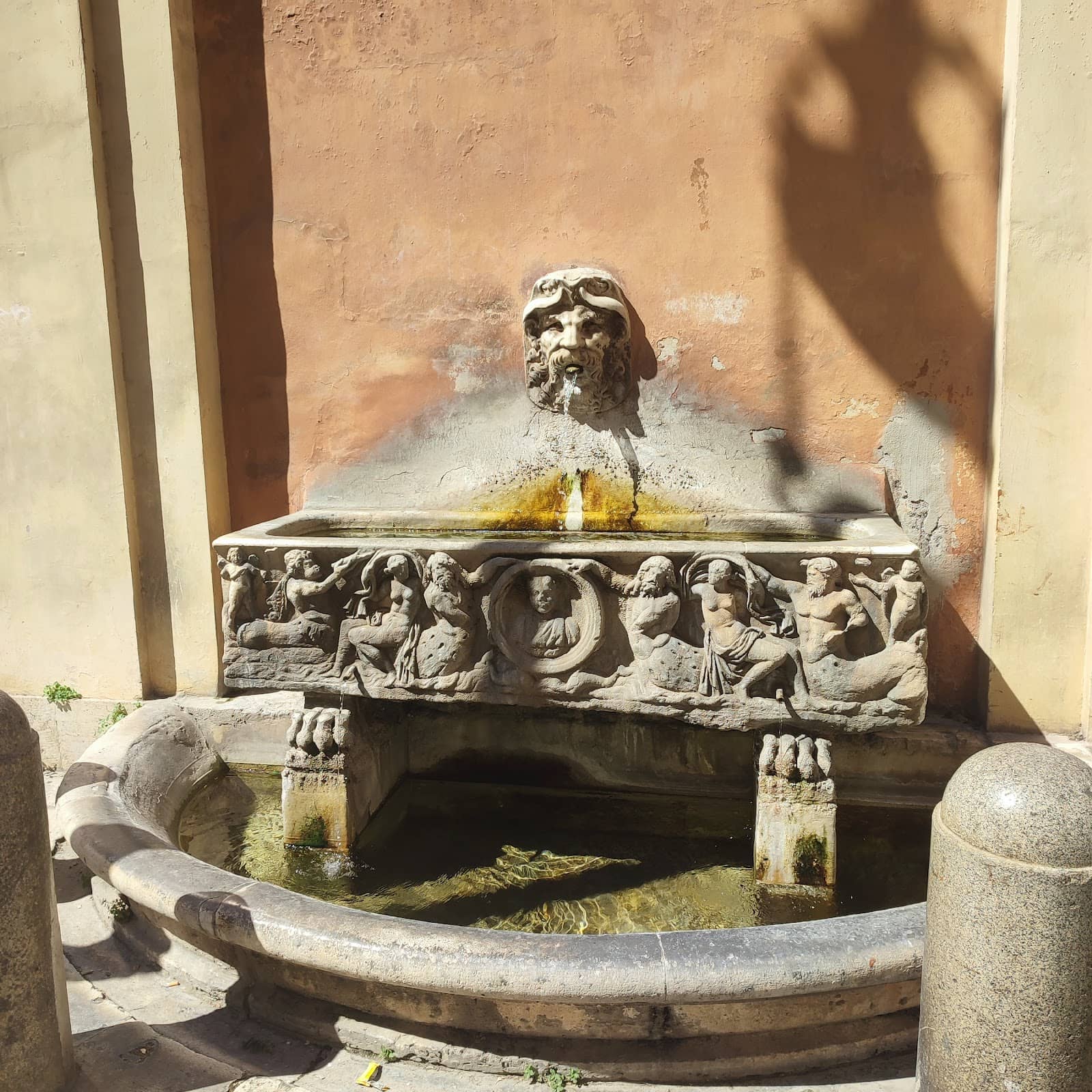
A 19th-century fountain featuring an ancient Roman sarcophagus, adorned with marine life and the Torlonia family crest.
Highlights
Must-see attractions

Social
From TikTok & Reddit
Best Time
Best light for sculptures
Fontana di Villa Torlonia Rome
Best Time
Best light for sculptures
Highlights
Must-see attractions
A 19th-century fountain featuring an ancient Roman sarcophagus, adorned with marine life and the Torlonia family crest.
"A gem of a fountain, blending ancient Roman art with 19th-century patronage."
📸 Capture the Details
Get close to appreciate the intricate carvings on the ancient sarcophagus and surrounding sculptures. :camerawithflash:
📍 Location, Location!
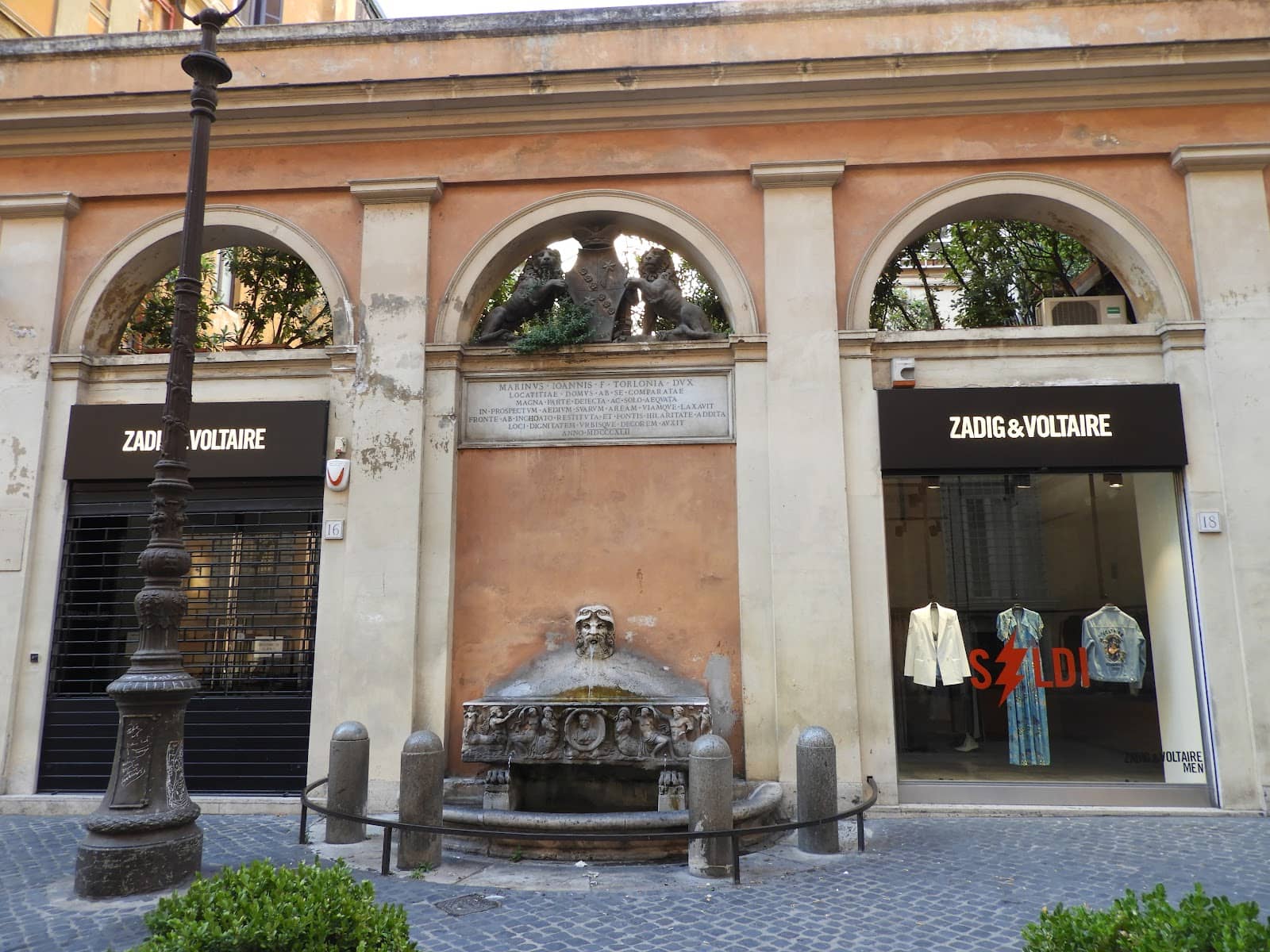
Find it on Via Bocca di Leone, near Palazzo Torlonia. It's a lovely surprise on your walk through the historic center. :world_map:
Quick Facts
Rating
4.3 · 3 reviews
Highlights
Discover the most iconic attractions and experiences
Ancient Sarcophagus Basin
Main fountain structure
A Roman sarcophagus from the 2nd-3rd century AD forms the heart of the fountain, adorned with marine life and portraits.
Torlonia Family Crest
Above the fountain
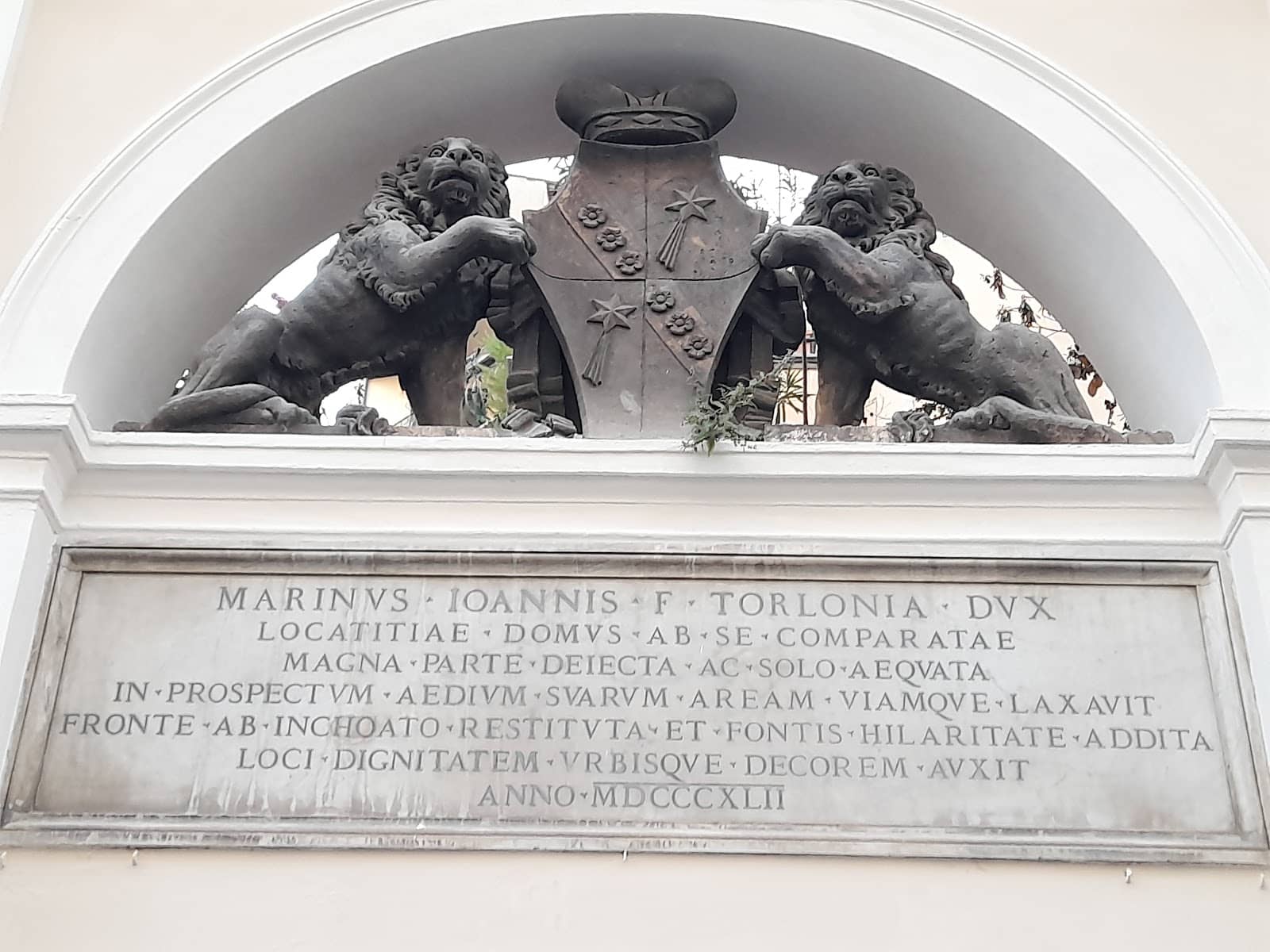
The prominent coat of arms of the Torlonia family, supported by two rampant lions, signifies the fountain's historical patronage.
Marine Sculptures
Sarcophagus and fountain elements
Intricate carvings of tritons, nereids, dolphins, and a grotesque mask bring the fountain's aquatic theme to life.
Plans like a pro.
Thinks like you
Planning Your Visit
A Hidden Gem in Plain Sight
Best Viewing Angles
Best Times
Insider Tips
from TikTok, Instagram & Reddit
📸 Capture the Details
Get close to appreciate the intricate carvings on the ancient sarcophagus and surrounding sculptures. :camerawithflash:
📍 Location, Location!
Find it on Via Bocca di Leone, near Palazzo Torlonia. It's a lovely surprise on your walk through the historic center. :world_map:
⏳ Historical Context
Read up on the Torlonia family and the fountain's 19th-century creation using ancient Roman elements. 📚
Tips
from all over the internet
📸 Capture the Details
Get close to appreciate the intricate carvings on the ancient sarcophagus and surrounding sculptures. :camerawithflash:
📍 Location, Location!
Find it on Via Bocca di Leone, near Palazzo Torlonia. It's a lovely surprise on your walk through the historic center. :world_map:
⏳ Historical Context
Read up on the Torlonia family and the fountain's 19th-century creation using ancient Roman elements. 📚
What Travellers Say
Reviews Summary
Visitors praise the Fontana di Villa Torlonia as a beautiful and unique fountain, particularly appreciating its use of an ancient Roman sarcophagus and intricate marine sculptures. Its central location makes it a charming discovery, though some note its condition could be better maintained.
"A stone's throw from Via dei Condotti (at the height of the Hotel d'Inghilterra) right in front of Palazzo Torlonia you can admire one of the most beautiful fountains of this type, whose basin is made of an ancient marble sarcophagus from the Roman era (this one in particular is made to rest on two lion's paws). The beauty of the sarcophagus, although damaged by time, is the marine theme that has two tritons at the center with thick beards and flowing hair holding a clipeus with the portrait of the deceased decorated underneath by two dolphins. At the ends, there are two half-naked nereids with a drape on their heads, two other tritons and two winged genies. The water comes out of the mouth of a head that has a somewhat leonine appearance (perhaps a reference to the paws) and flows into the sarcophagus from which it comes out through two spouts and falls into a semicircular marble basin at street level, protected by a small railing with columns. It was built in the first half of the 19th century based on a design by Antonio Sarti who had been commissioned to restore and embellish the palace by Don Martino Torlonia, whose coat of arms with the family stands out above the fountain between two rampant lions and at the top of an arch supported by pilaster strips. To remind us of the gesture - at his expense - a marble plaque with the inscription, where you will read: "Marinus Ioannis F. Torlonia Dux / Locatitiae domus ab se comparatae / magna parte deiecta ac solo aequata / in prospectum medium suarum aeram viamque laxavit / fronte ab inchoato restituta et fontis hilaritate addita / loci dignitatem urbisque decorem auxit / ANNO MDCCCXLII", convinced that works like these benefited the prestige of the palace but also of the area as a whole. It is a gem that I invite you to visit if you are in the area because it is very particular even if quite ruined. Helpful tips and information? Leave a like and check out other reviews made."
Roberto Cecchini
"The Torlonia Fountain is located in the historic center of Rome, in Rione IV (Campo Marzio), on Via Bocca di Leone.
The fountain, still in perfect working order today, was created in the 19th century on the wall of the recess facing the impressive 17th-century Palazzo Torlonia.
Like many of Rome's fountains, it was created using various archaeological finds from ancient Rome. Its façade is framed by two pilasters with round arches, featuring the Torlonia coat of arms supported by two splendid rampant lions. Below this is a large rectangular plaque indicating that the fountain was commissioned by Duke Don Marino Torlonia on land he owned.
The most notable of the works is the beautiful Roman sarcophagus (2nd-3rd century AD). The clypeus contains the bust of a man in a toga, and on each side are symmetrically depicted two fauns and a young, bare-breasted woman. Below, two large lion paws rest on marble blocks set in a semicircular marble basin at ground level.
At the top is a grotesque mask, with a spout pointing from its mouth, from which water pours into the sarcophagus. The sarcophagus, in turn, has two spouts on the lower right and left, from which water pours into the semicircular basin with a rounded edge.
The work has double protection: a low metal railing shaped like the basin, and four granite columns inside it.
The work is in fair condition considering its age."
Stefano Manzo
""
Misiu martino
What People Like
What People Dislike
Frequently Asked Questions
🚇 🗺️ Getting There
The fountain is located in the historic center of Rome, on Via Bocca di Leone, in Rione IV (Campo Marzio). It's easily accessible on foot from many central attractions like the Spanish Steps and Via dei Condotti. Several bus lines also stop nearby, making it convenient to reach via public transport.
Yes, the fountain is a short walk from the Spanish Steps, making it a perfect addition to a sightseeing itinerary in that area. You can easily combine a visit to both.
Many visitors find it best to approach from Via dei Condotti, as it's a well-known shopping street and leads you close to Palazzo Torlonia, where the fountain is situated.
🎫 🎫 Tickets & Entry
No, the Fontana di Villa Torlonia is a public fountain located on the street. There is no admission fee, and you can view it at any time.
As it's an outdoor public fountain, there are no specific opening hours. You can visit it day or night, though daytime offers better visibility for the sculptures.
Absolutely not! The Fontana di Villa Torlonia is a free-to-access public artwork in Rome.
📸 📸 Photography
The best time for photography is during the daytime when natural light illuminates the intricate details of the sarcophagus and sculptures. Early morning or late afternoon can offer softer light and fewer crowds.
There are no specific restrictions on photography for personal use. However, professional shoots might require permits. Always be mindful of pedestrians and traffic.
The most photogenic elements are the ancient Roman sarcophagus, the detailed marine sculptures, and the Torlonia family crest above. Capturing the water flow adds dynamism to your shots.
🎫 🏛️ History & Significance
The fountain was created in the first half of the 19th century, specifically around 1842, under the commission of Duke Don Marino Torlonia.
A key feature is the use of an ancient Roman sarcophagus from the 2nd-3rd century AD as the fountain's basin. It's adorned with mythological figures and historical portraits.
The design is attributed to Antonio Sarti, who was commissioned by Don Martino Torlonia to restore and embellish the adjacent Palazzo Torlonia.
The inscription commemorates Duke Don Marino Torlonia's efforts in renovating the area, highlighting his contribution to the palace's prestige and the city's decorum.
Social
from TikTok, Instagram & Reddit