Palazzo Piacentini Naples Italy
A monumental Rationalist masterpiece housing free exhibitions on Italian design and history, featuring stunning art and architecture.
Highlights
Must-see attractions

Social
From TikTok & Reddit
Best Time
Exhibitions often run on weekends.
Palazzo Piacentini Naples Italy
Best Time
Exhibitions often run on weekends.
Highlights
Must-see attractions
A monumental Rationalist masterpiece housing free exhibitions on Italian design and history, featuring stunning art and architecture.
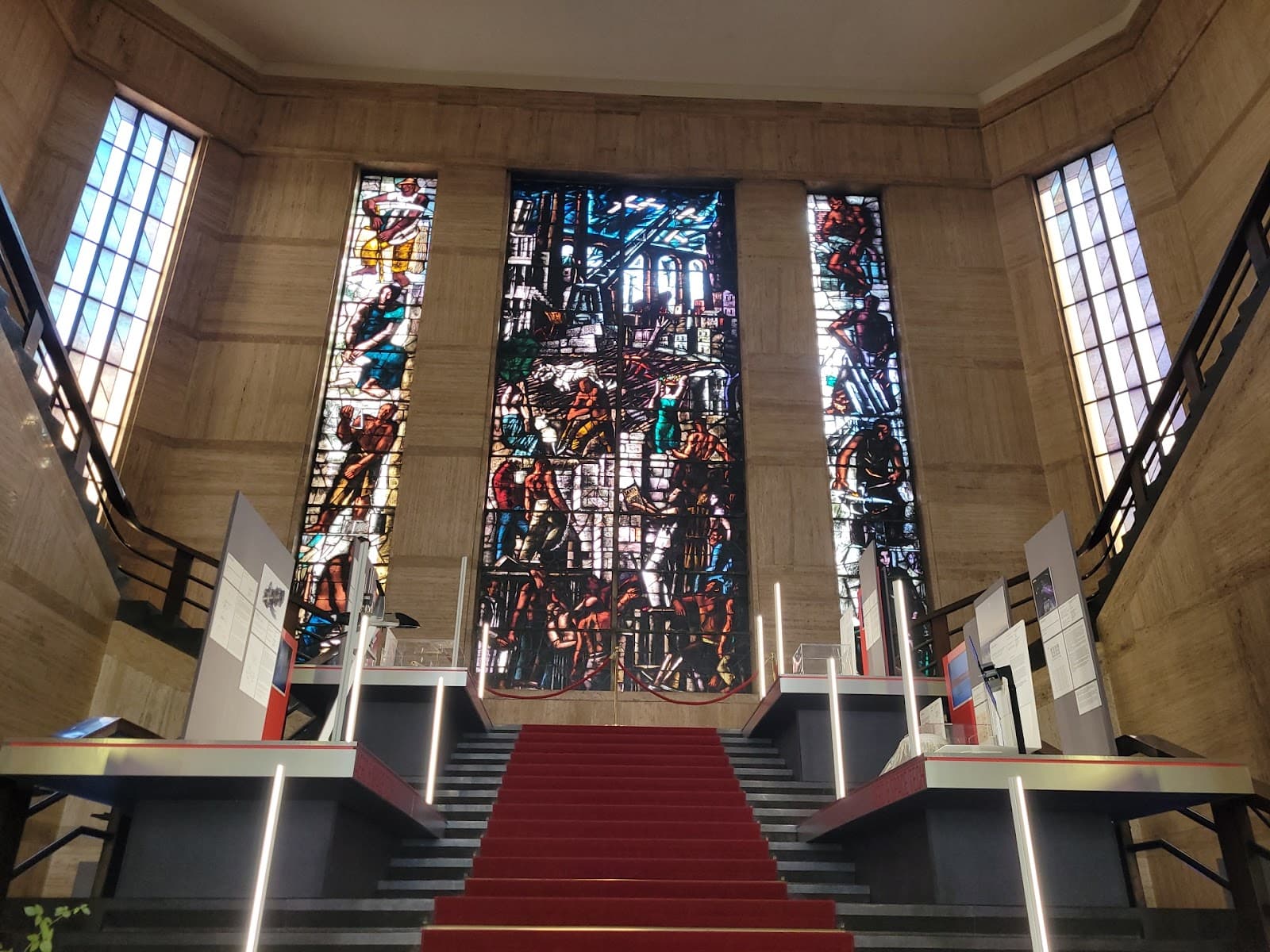
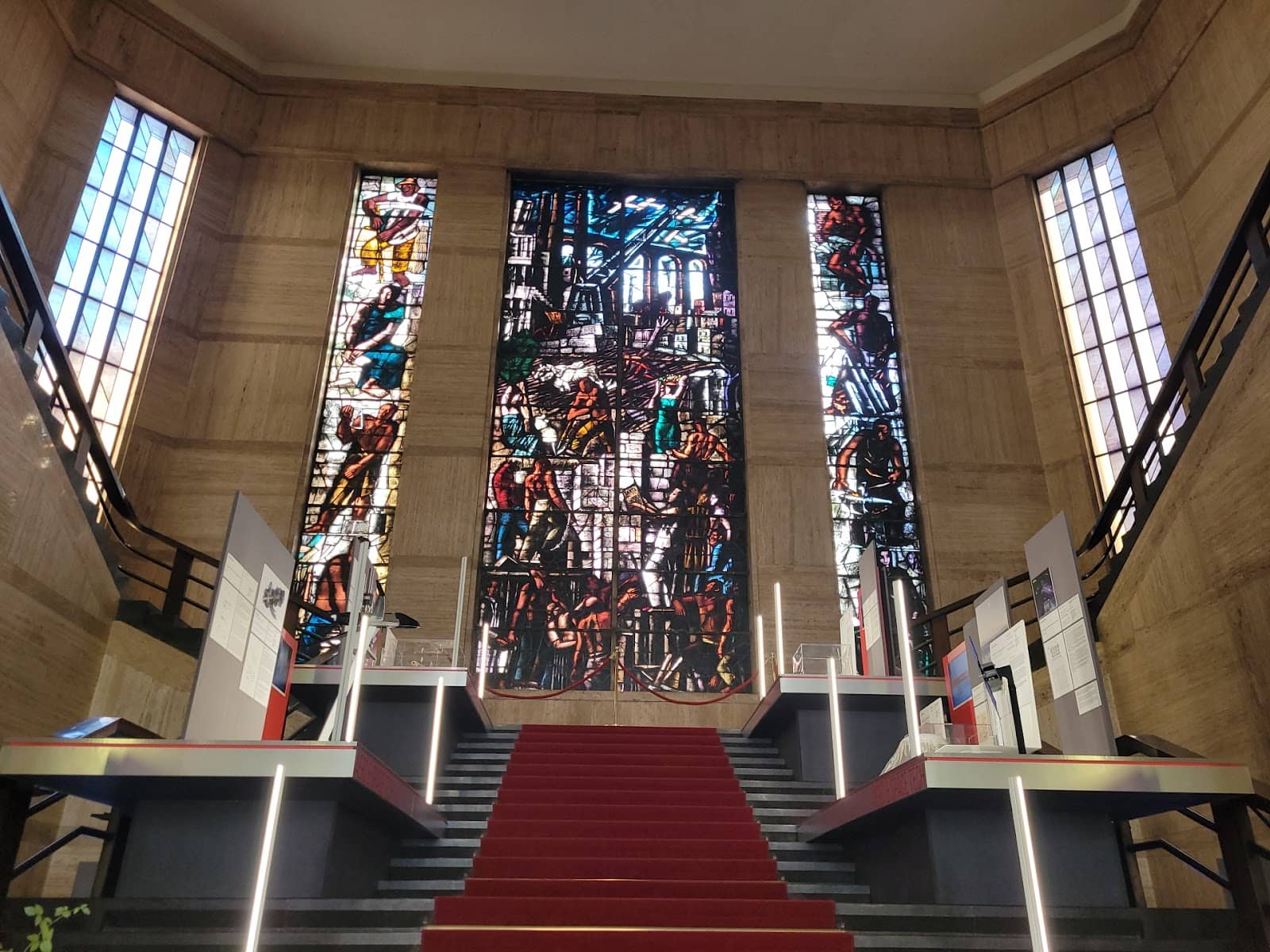
"A breathtaking atrium dominated by a masterpiece stained-glass window, a true gift from the future."

Free Entry Exhibitions
Many exhibitions are free! Just bring your ID.
Check Exhibition Dates
Exhibitions have specific end dates, so verify before you go.

Quick Facts
Rating
4.8 · 12 reviews
Type
Local Government Office
Highlights
Discover the most iconic attractions and experiences
Mario Sironi's 'Carta del Lavoro' Window
Main Atrium
A breathtaking stained-glass masterpiece inspired by the Charter of Labor, a symbol of work and art.
Hall of Honor
Main Hall
Admire magnificent tapestries and the golden statue of Autarchy in this stunning, monumental space.
Bronze Portal Bas-Reliefs
Building Exterior
An impressive 7-meter high bronze portal adorned with bas-reliefs depicting key human activities of the era.
Plans like a pro.
Thinks like you
Planning Your Visit
Check Exhibition Schedules
Verify Opening Hours & Access
Best Times
Insider Tips
from TikTok, Instagram & Reddit
Free Entry Exhibitions
Many exhibitions are free! Just bring your ID. +1
Check Exhibition Dates
Exhibitions have specific end dates, so verify before you go.
Bring Your ID
A valid document is often required for entry. +1
Explore Via Veneto
The palace is near the famous Via Veneto, perfect for a stroll.
Tips
from all over the internet
Free Entry Exhibitions
Many exhibitions are free! Just bring your ID. +1
Check Exhibition Dates
Exhibitions have specific end dates, so verify before you go.
Bring Your ID
A valid document is often required for entry. +1
Explore Via Veneto
The palace is near the famous Via Veneto, perfect for a stroll.
What Travellers Say
Reviews Summary
Visitors are consistently impressed by Palazzo Piacentini's stunning architecture, particularly the Sironi stained-glass window and the Hall of Honor. The building's historical significance as a symbol of Italian productivity and its role in hosting free, engaging exhibitions are frequently praised. Some visitors note that access can be limited to exhibition periods, and checking schedules in advance is recommended.
"A couple of years ago, it was a real surprise... a very pleasant one... and I can confirm it: it reaches its peak as soon as you cross the threshold, when, after passing through the beautiful bronze door, you find yourself facing a breathtaking atrium, dominated by the staircase leading to the stained-glass window designed by Sironi and inspired by the labor charter. An absolute masterpiece, it seems so modern that it still feels like a gift from the future. The building bears the name of the two architects who built it in the 1930s on the site of the Ludovisi neighborhood, which was then being redefined. Originally intended to be the headquarters of the Union of Trade Unions, the Duce wanted to create the headquarters of the Union of Corporations and thus a symbol of productivity. Rigid, essential lines are combined with fluid curves (an example is the parterre of the minister's antechamber with its mother-of-pearl stained-glass windows), always in keeping with the rationalism of the era. The magnificent Hall of Honor, with its splendid tapestries and golden statue of Autarchy, is stunning. The so-called "Parliament" and the "Globe Room" are just some of the precious gems you can admire in this institutional building. Interestingly, in the basement, accessed via a semi-helical staircase, is a small gas bunker. It's worth a visit and less preconceptions. Check out the photos I've posted and my other reviews of Rome and its wonders. If I've been helpful, click "helpful." Follow me if you like."
Roberto Cecchini
"Palazzo Piacentini-Vaccaro is located in the historic center of Rome, Rione XVI (Ludovisi) at Via Veneto 33. It is the current headquarters of the Ministry of Business and Made in Italy.
HISTORY:
It was built in 1932 by the great Roman architect and urban planner Marcello Piacentini, together with Giuseppe Vaccaro, on land owned by the Capuchin friars, owners of the nearby
Church of Santa Maria Immacolata.
ARCHITECTURE:
It was specifically designed to house a ministry and is characterized by modern (for the time) and simple lines, with a monumental feel, befitting its role as an institutional headquarters.
For the interior furnishings and artwork, several prominent artists were chosen, who created everything from chandeliers to splendid stained-glass windows, gigantic tapestries, sculptures, bas-reliefs, and more.
Worth noting is the stained-glass window "Carta del Lavoro" by Mario Sironi, a symbol of work and the arts.
A PORTAL THAT TELLS ABOUT WORK:
The exterior of the building also evokes emotion. The bronze portal, nearly 7 meters high, is decorated with eight bas-reliefs depicting the main human activities, at least in that era: agriculture, industry, commerce, land and air transport, liberal arts and plastic arts.
NOT EVERYONE KNOWS THAT …………. VIA VENETO and the DOLCE VITA:
Via Veneto is one of the world's most famous streets in Rome's historic center, recalling a social period in the 1960s known as the "Dolce Vita," made famous by the 1960 film of the same name by the great director Federico Fellini.
DISCOVERING ROME:
Rome is a mosaic of stories and secrets, where every corner hides a fragment of the past waiting to be rediscovered.
If this story has piqued your curiosity, I invite you to continue the journey with me, because every stone here tells a story."
Stefano Manzo
"It was an unforgettable day when we, FAI volunteers, visited the majestic Palazzo Piacentini-Vaccaro, a true gem in the heart of Rome.
RedInItaly's exhibition captivated our senses immediately upon entry. Modern objects, infused with various shades of red, created a powerful emotional experience, offering a vibrant start to our adventure in this historic place.
As we continued, the palace revealed its grandeur. The monumental atrium, the central staircase adorned with the stained-glass window of the Carta del Lavoro, and the Salone d'Onore, enriched by seven majestic tapestries by Ferruccio Ferrazzi, told a story of artistic passion and cultural heritage.
However, one thing that made the day special was reuniting with old companions. This reunion rekindled nostalgia and affection, creating a joyful atmosphere of sharing amidst so much beauty."
Riccardo “profxeni” Pau
What People Like
What People Dislike
Frequently Asked Questions
🚇 🗺️ Getting There
Palazzo Piacentini is located at Via Veneto 33, in the Ludovisi district of Rome. It's accessible by public transport, with several bus lines stopping nearby. The closest metro station is Barberini (Line A), about a 15-20 minute walk away.
Palazzo Piacentini, the subject of these details, is located in Rome, Italy, not Naples. It serves as the headquarters for the Ministry of Business and Made in Italy.
Via Veneto is well-served by public transportation. Buses are a convenient option. If you're coming from Termini Station, you can take a bus or a short taxi ride.
Parking in the Via Veneto area can be challenging and expensive. It's generally recommended to use public transport or a taxi to reach the Palazzo.
Depending on your starting point, it might be a pleasant walk. It's about a 20-minute walk from the Spanish Steps and a similar distance from Villa Borghese.
🎫 🎫 Tickets & Entry
For temporary exhibitions held at Palazzo Piacentini, entry is often free. However, it's crucial to check the specific exhibition details as a valid ID might be required for access. +1
Exhibitions at Palazzo Piacentini typically run on Saturdays and Sundays from 10:00 AM to 6:30 PM. Always verify the exact hours for the specific exhibition you plan to attend. +1
While the building itself is an institutional headquarters, temporary exhibitions hosted within it are frequently offered free of charge. +1
Generally, no reservation is needed for free exhibitions, but you will likely need to present a valid identification document. +1
Palazzo Piacentini is primarily the Ministry of Business and Made in Italy. Public access is usually limited to specific exhibition periods or organized tours.
🎫 🏛️ Onsite Experience
Inside, you can admire the breathtaking atrium with Sironi's stained-glass window, the Hall of Honor with tapestries, and various rooms showcasing Italian design and historical brands during exhibitions.
Information on accessibility for individuals with disabilities is not widely publicized. It's advisable to contact the Ministry or exhibition organizers directly for specific details.
Guided tours are not a regular offering for the general public, but may be available for specific events or groups. Check for special FAI (Fondo Ambiente Italiano) visits.
The Palazzo Piacentini is a prime example of Rationalist architecture, characterized by its monumental yet essential lines, combined with fluid curves.
Photography policies can vary depending on the exhibition. It's best to check for signage or ask staff on-site about restrictions.
📸 📸 Photography
The main atrium with the Sironi stained-glass window and the monumental staircase are highly photogenic. The Hall of Honor with its tapestries also offers stunning visual opportunities.
Photography rules can differ for each exhibition. While some may allow it, others might restrict it to preserve the artworks. Always look for signs or ask permission.
The Palazzo is ideal for architectural photography, capturing the grandeur of its design, and for documenting temporary exhibitions showcasing Italian art and design.
The entrance hall with the bronze portal and the central staircase leading up to the Sironi window are often highlighted as prime photo locations.
Natural light filtering through the stained-glass windows can create beautiful effects. Mid-day might offer the best ambient light, but check if flash photography is permitted.
Social
from TikTok, Instagram & Reddit