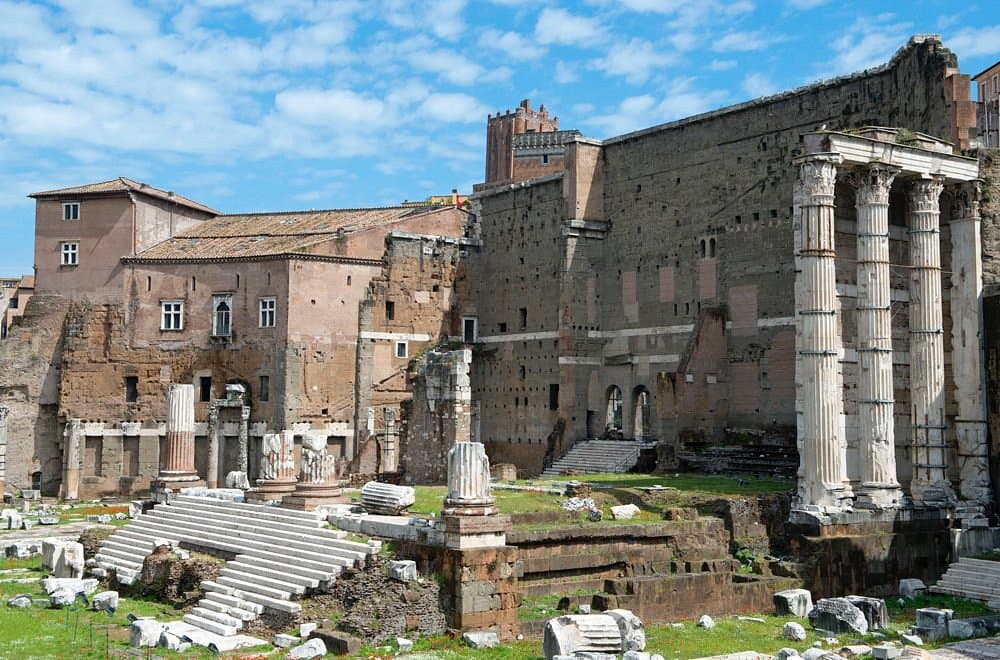
Temple of Mars Ultor Rome
Majestic ruins of a Roman temple dedicated to Mars the Avenger, a testament to Emperor Augustus's power and victory.
Highlights
Must-see attractions

Social
From TikTok & Reddit
Best Time
Fewer crowds, best light
Temple of Mars Ultor Rome
Best Time
Fewer crowds, best light
Highlights
Must-see attractions
Majestic ruins of a Roman temple dedicated to Mars the Avenger, a testament to Emperor Augustus's power and victory.
"A must-see, even if the ruins only give an idea of what the Temple looked like due to its historical value."
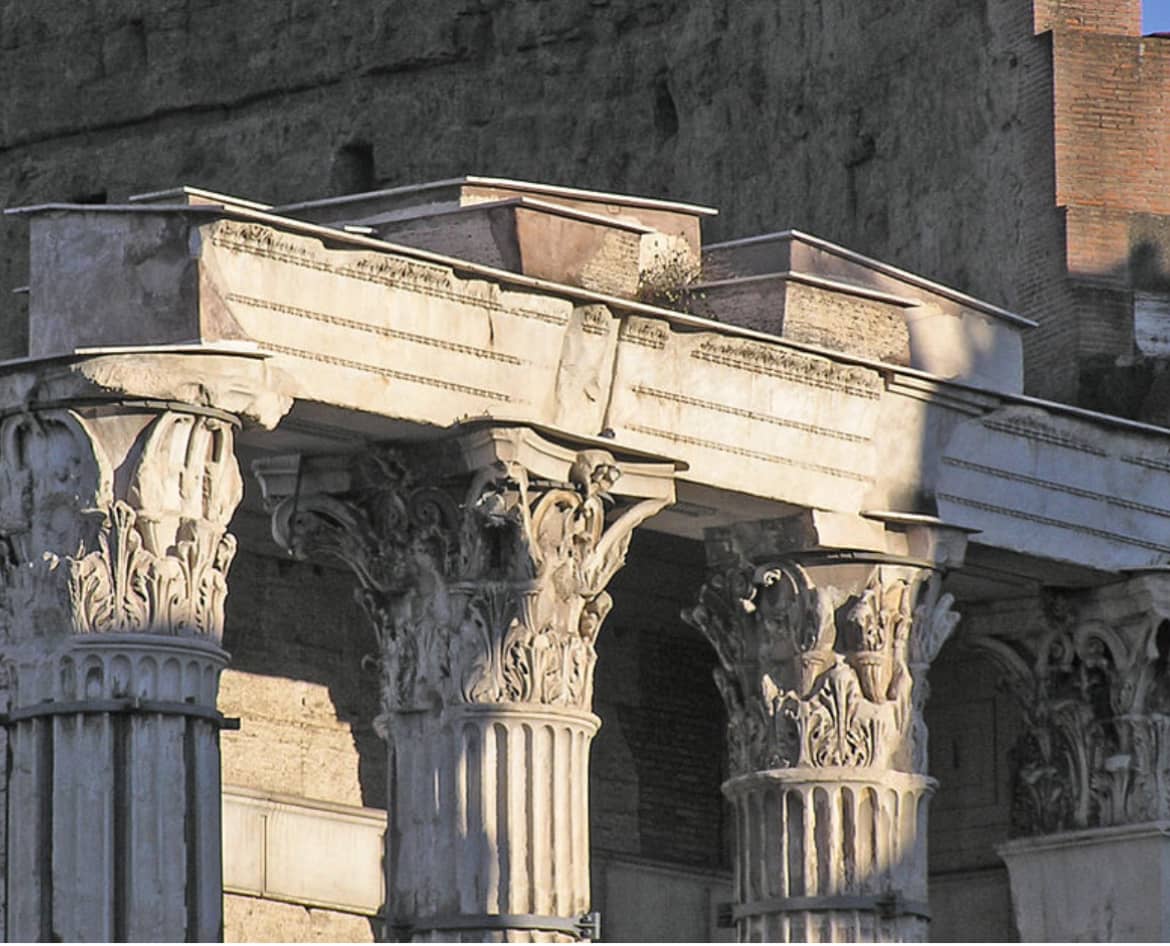
📸 Golden Hour Magic
Visit at sunrise or sunset for breathtaking photos of the columns.
🚶♀️ Walk the Imperial Forums
Combine your visit with other Imperial Forums for a comprehensive historical experience.
Quick Facts
Rating
4.5 · 34 reviews
Type
Historical Landmark
Highlights
Discover the most iconic attractions and experiences
Majestic Corinthian Columns
Forum of Augustus
Three towering Corinthian columns stand as a testament to the temple's former grandeur.
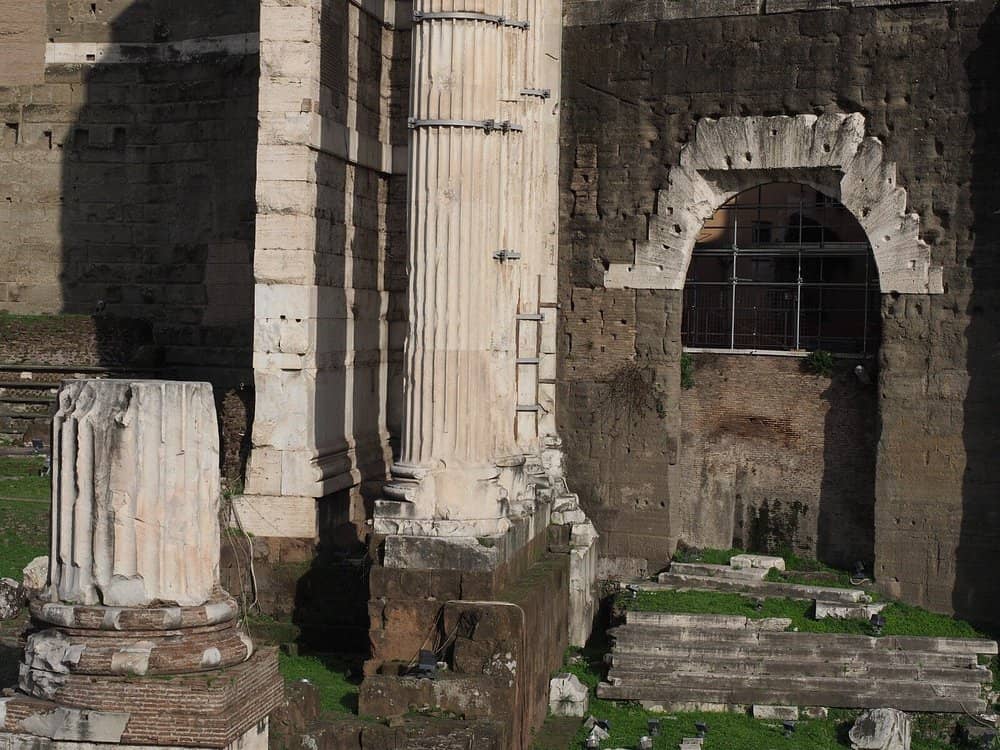
Imprint of the Pediment
Rear wall
See the ancient pediment's imprint on the back wall, a unique detail often missed.
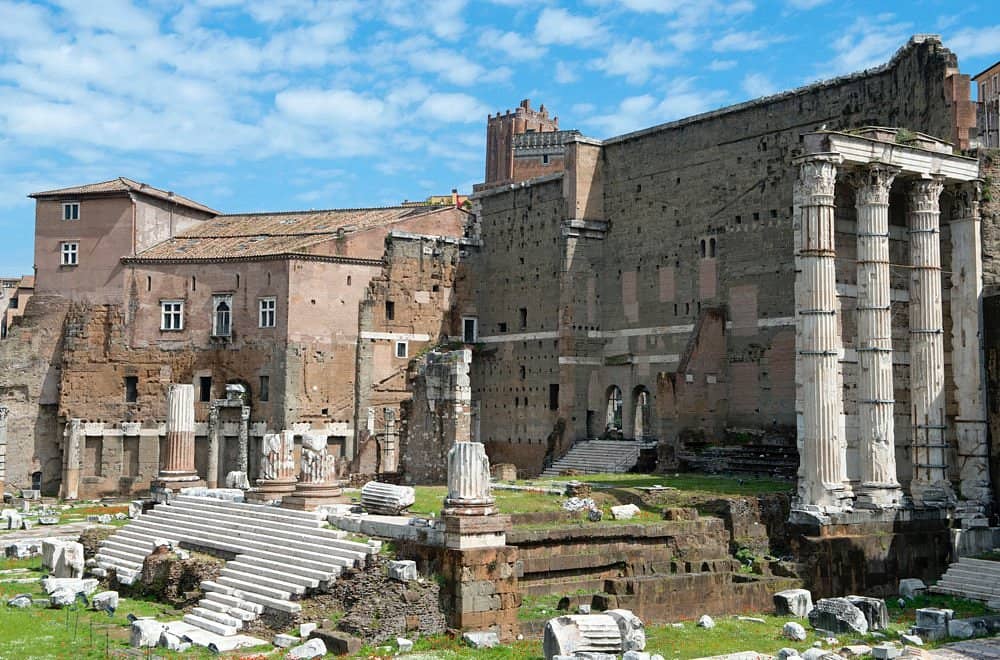
Ruined Staircase and Podium
Temple base
The remnants of the grand staircase and the elevated podium offer a glimpse into its original scale.
Plans like a pro.
Thinks like you
Planning Your Visit
Timing is Key for Photos
Understand Its Historical Context
Best Times
Insider Tips
from TikTok, Instagram & Reddit
📸 Golden Hour Magic
Visit at sunrise or sunset for breathtaking photos of the columns.
🚶♀️ Walk the Imperial Forums
Combine your visit with other Imperial Forums for a comprehensive historical experience.
The Temple of Mars Ultor in the Forum of Augustus, Rome, 2 BCE. The Senate would discuss matters of war and peace inside, while boys received their adult togas outside. Two attached exedrae held bust niches for hundreds of historic heroes, the Julio-Claudians, and personified conquered nations. [OC]
Don't miss the imprint of the ancient pediment on the back wall, which was built to counter the spread of fires. A tantalizing hint of what once was...
💧 Stay Hydrated
Especially in warmer months, carry water and wear a hat.
🧐 Look for Details
Don't miss the pediment imprint and signs of past structures.
Tips
from all over the internet
📸 Golden Hour Magic
Visit at sunrise or sunset for breathtaking photos of the columns.
🚶♀️ Walk the Imperial Forums
Combine your visit with other Imperial Forums for a comprehensive historical experience.
💧 Stay Hydrated
Especially in warmer months, carry water and wear a hat.
🧐 Look for Details
Don't miss the pediment imprint and signs of past structures.
What Travellers Say
Reviews Summary
Visitors find the Temple of Mars Ultor a compelling glimpse into Rome's imperial past, appreciating its historical significance and the grandeur of the remaining columns. While it's a ruin, its presence within the Forum of Augustus offers a powerful connection to ancient Roman life and politics. Some visitors note that its ruined state might not be as visually striking as other Roman landmarks, but its historical context is highly valued.
"Liked it"
Chloe Yadav
"As my followers have read many times, I'm a quarter Roman.... My mother was born in Rome to a Roman mother and a Piedmontese father....
My parents met in Rome and instilled in me their love for this wonderful Eternal City.
I have many friends and relatives here on my mother's side.
I have lived in Rome at various times.
My main office is in Rome, between Via di Forte Braschi and Via della Pineta Sacchetti.
The Temple of Mars Ultor is an ancient Roman temple that served as a dramatic backdrop to the back side of the Forum of Augustus.
It was dedicated to the Roman god Mars "the avenger," Mars Ultor, to whom Augustus had vowed a temple before his victory in the Battle of Philippi.
Construction likely began, along with that of the forum, only after Augustus had effectively secured power, between 30 and 27 BC, and was solemnly inaugurated forty years after the promise in 2 BC.
The idea of consecrating a temple to Mars the Avenger was entirely Augustus's. Before becoming emperor, he had made a vow to the Roman god of war during the Battle of Philippi in 42 BC, in which Caesar's assassins, Brutus and Cassius, were defeated, thus avenging his death.
This is also reported by the two "chroniclers" of the past, Suetonius and Ovid.
Today, the remains are visible thanks to the excavation and restoration work completed between 1930 and 1932 during the construction of the Via dei Fori Imperiali.
They include a large part of the podium, three Corinthian columns, and a pillar leaning against the wall behind the structure.
These columns still support part of the architrave, the original decoration of which can still be seen.
A must-see, even if the ruins only give an idea of what the Temple looked like due to its historical value.
This, as I believe those who follow me, has always fascinated me.... Since I was a child.
Strictly on foot, with water and a hat in the hottest periods.
Highly recommended.
Thank you."
Marco Carangelo (Dearangel)
"For the tourist—and even the Roman, of course—who strolls through the Imperial Forums, they appear as a single, indistinct entity...a mass of ruins that, in the imagination, once formed a square with monuments...yet the forums are distinct, dating to different eras and characterized by specific monuments. This one, for example, is the hinge of the Forum of Augustus and was built by Octavian Augustus to honor a vow and glorify the Battle of Philippi, where he avenged the murderers of his uncle (and adoptive father) Caesar. It was sumptuous, and political events also took place here, but like all monuments, over time it ceased to fulfill its function, especially due to its proximity to the Suburra, the poorer part of the city, which was often the victim of fires that not even the Great Wall could contain. If you look closely, besides the majestic, braced columns that remain standing, there's still a gateway to the other side, as well as the famous Pantani Arch, which had assumed a prominent role in later centuries, when the temple had already been sacked and a monastery and church had been built above it (note the clearly visible signs of the gabled roof trusses on the wall—Editor's note). If you'd like to see some of the temple's friezes, you can admire them in the nearby Museum of the Forum, in the hall of Trajan's Market. Need some useful info? Then leave a like and check out other reviews on Rome and beyond."
Roberto Cecchini
What People Like
What People Dislike
Frequently Asked Questions
🚇 🗺️ Getting There
The Temple of Mars Ultor is located within the Forum of Augustus, accessible by walking through the Imperial Forums. It's easily reached from the Colosseo metro station (Line B) or via numerous bus routes that stop nearby. Many visitors combine it with a tour of the Colosseum and Roman Forum.
The Temple of Mars Ultor is situated in the Forum of Augustus, which is generally accessible without a specific ticket, though it's often viewed as part of the larger Imperial Forums complex. For access to the Roman Forum and Palatine Hill, a separate ticket is required.
Walking is the best way to explore the Imperial Forums, including the Forum of Augustus and the Temple of Mars Ultor. Consider a guided tour to fully appreciate the history and significance of each forum.
Parking in the immediate vicinity of the Imperial Forums is very limited and often expensive. It's highly recommended to use public transport or a taxi to reach the area.
Yes, the remains of the Temple of Mars Ultor are visible from Via dei Fori Imperiali, though a closer inspection requires entering the Forum of Augustus area.
🎫 🎫 Tickets & Entry
The Temple of Mars Ultor is part of the Forum of Augustus and is generally accessible without a separate ticket, often viewed as part of the free-access Imperial Forums. However, access to adjacent archaeological areas might require tickets.
The Forum of Augustus, where the Temple of Mars Ultor is located, is typically open during daylight hours. Specific times can vary seasonally, so it's best to check official Rome tourism websites for the most current information.
As it's part of the Forum of Augustus, there is usually no direct entrance fee for viewing the Temple of Mars Ultor from the accessible areas.
While the Imperial Forums are not typically illuminated for nighttime visits, some special events or guided night tours might offer a different perspective. Check local listings for any such opportunities.
General photography for personal use is usually permitted. However, professional photography or the use of tripods might require special permits.
🎫 🏛️ Onsite Experience
Dedicated by Emperor Augustus in 2 BCE, it honored Mars the Avenger for his victory at the Battle of Philippi, avenging Julius Caesar's assassination. It was a key political and religious center.
Today, visitors can see a large part of the podium, three impressive Corinthian columns still supporting part of the architrave, and a pillar leaning against the rear wall. The imprint of the ancient pediment is also visible.
The Forum of Augustus, where the temple is located, has uneven terrain and ancient ruins, which can make wheelchair access challenging. Some areas might be navigable, but it's advisable to check accessibility details beforehand.
The area in front of the remaining columns offers classic views. For unique perspectives, try capturing the pediment imprint on the back wall or framing the columns with the surrounding ruins. Early morning or late afternoon light is ideal.
Yes, many guided tours of the Imperial Forums include the Forum of Augustus and the Temple of Mars Ultor. These tours provide in-depth historical context and can enhance your understanding.
📸 📸 Photography Tips
The 'golden hours' – shortly after sunrise and before sunset – offer the most dramatic and flattering light for photographing the temple's ruins. This lighting accentuates the textures of the marble and creates beautiful shadows.
For the columns, a wider aperture (lower f-number) can help isolate them against the background. Consider using a tripod for sharper images, especially in lower light conditions. Experiment with different focal lengths to capture both grand vistas and intricate details.
Absolutely! Look for the imprint of the ancient pediment on the rear wall, the intricate carvings on the surviving architrave, and the texture of the ancient marble. The juxtaposition of the ruins against the modern city can also make for compelling shots.
Visiting very early in the morning or on weekdays can significantly reduce the number of people in your shots. If crowds are unavoidable, try to use a shallow depth of field to blur them out or focus on details that don't include people.
A versatile zoom lens (like a 24-70mm equivalent) is ideal for capturing both the overall scale of the temple and its architectural details. A wide-angle lens can be useful for emphasizing the height of the columns and the expanse of the forum.
Social
from TikTok, Instagram & Reddit