
Tongariro Alpine Crossing
New Zealand's premier day hike, traversing a spectacular volcanic landscape with vibrant lakes and dramatic craters.
Highlights
Must-see attractions

Social
From TikTok & Reddit
Best Time
Best chance for clear skies
Tongariro Alpine Crossing
Best Time
Best chance for clear skies
Highlights
Must-see attractions
New Zealand's premier day hike, traversing a spectacular volcanic landscape with vibrant lakes and dramatic craters.
"One of the most beautiful hikes we've ever done, between Emerald Lakes, Blue Lake, and red craters!"

👟 Sturdy Hiking Boots
Essential for ankle support on volcanic terrain. Rent them if needed!
💧 Pack Plenty of Water
There are no reliable water sources along the 19.4km track. Stay hydrated!

Highlights
Discover the most iconic attractions and experiences
Emerald Lakes
Central part of the crossing
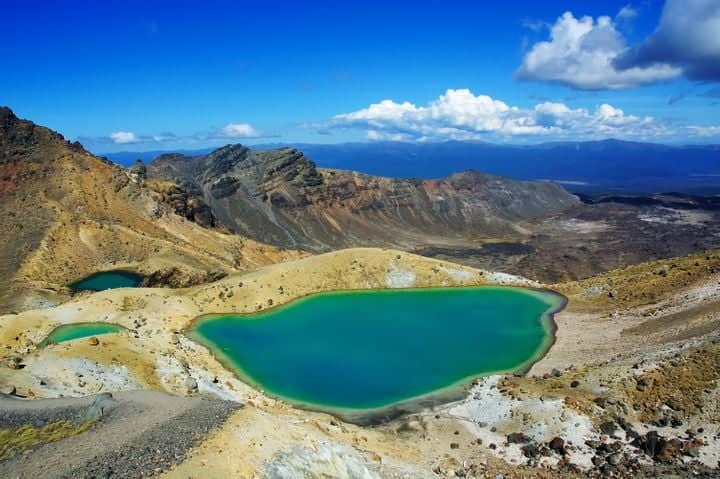
Vibrant, mineral-rich lakes with stunning turquoise and emerald hues against the volcanic landscape.
Red Crater
Highest point of the crossing
A dramatic volcanic crater with striking red and orange hues, offering panoramic views.

Mount Ngauruhoe (Mordor)
Visible from the crossing
The iconic, cone-shaped volcano that served as Mount Doom in The Lord of the Rings.
Plans like a pro.
Thinks like you
Planning Your Visit
Weather is King
Book Your Shuttle Early
Best Times
Insider Tips
from TikTok, Instagram & Reddit
👟 Sturdy Hiking Boots
Essential for ankle support on volcanic terrain. Rent them if needed!
💧 Pack Plenty of Water
There are no reliable water sources along the 19.4km track. Stay hydrated!
🧥 Layer Up!
Weather changes rapidly. Bring waterproofs, windproofs, and warm layers.
☀️ Sun Protection
Even on cloudy days, the sun can be intense at altitude. Hat, sunscreen, and sunglasses are a must.
Tips
from all over the internet
👟 Sturdy Hiking Boots
Essential for ankle support on volcanic terrain. Rent them if needed!
💧 Pack Plenty of Water
There are no reliable water sources along the 19.4km track. Stay hydrated!
🧥 Layer Up!
Weather changes rapidly. Bring waterproofs, windproofs, and warm layers.
☀️ Sun Protection
Even on cloudy days, the sun can be intense at altitude. Hat, sunscreen, and sunglasses are a must.
📱 Download Offline Maps
Cell service is unreliable. Have a map and navigation ready.
What Travellers Say
Reviews Summary
The Tongariro Alpine Crossing is widely praised as an epic and unforgettable hiking experience, with many calling it one of the best day hikes globally. Visitors are awestruck by the dramatic volcanic scenery, including the vibrant Emerald Lakes and the imposing Mount Ngauruhoe. However, the unpredictable alpine weather and the challenging terrain are frequently mentioned as significant factors to prepare for.
What People Like
What People Dislike
Frequently Asked Questions
🚇 🗺️ Getting There
Most hikers start at the Mangatepopo Car Park. You'll need to arrange a shuttle service to drop you off here and pick you up at the Ketetahi Car Park at the end of the crossing. Book shuttles in advance, especially during peak season. 
You can drive to the Mangatepopo Car Park, but it's a one-way hike, so you'd need to arrange transport back. Parking can also be limited. Shuttles are the most popular and convenient option.
Several shuttle companies operate between the start and end points. It's recommended to book at least 24 hours in advance. Some offer early morning departures for sunrise hikes.
While technically possible to arrange a private transfer or have someone drop you off and pick you up, shuttles are the most common and practical method for completing the one-way hike.
The drive to the Mangatepopo Car Park from nearby towns like National Park Village or Whakapapa Village is typically around 30-45 minutes. Shuttle services will factor this into their timings.
🎫 🎫 Tickets & Entry
No, the Tongariro Alpine Crossing itself is free to enter. However, you will need to pay for shuttle services or parking if you use them.
The crossing is open year-round, 24 hours a day. However, the best time to hike is during daylight hours, and weather conditions can close the track. Always check the Department of Conservation (DOC) website for alerts.
Tongariro National Park does not have an entrance fee. You can explore the park and its trails freely.
It's highly recommended to book your shuttle at least 24 hours in advance, and even earlier during peak season (summer months) to secure your preferred time slot.
No permits are required for the Tongariro Alpine Crossing itself. However, if you plan to camp in the park, you will need to book campsites in advance through the Department of Conservation (DOC).
🎫 🚶 Onsite Experience
The crossing is approximately 19.4 km (12 miles) and typically takes 6-8 hours to complete, depending on your fitness level and how often you stop for photos and breaks.
It's considered a challenging day hike due to its length, elevation gain, and the unpredictable alpine environment. Good fitness is required.
Wear sturdy hiking boots, layered clothing (including waterproof and windproof outer layers), a hat, and gloves. The weather can change drastically.
Yes, there are basic toilet facilities at the start (Mangatepopo), the Soda Springs area, and the end (Ketetahi). Plan your stops accordingly.
Climbing Mount Ngauruhoe is not part of the official crossing and is a very strenuous, dangerous, and often prohibited activity due to its steepness and scree slopes. Stick to the marked crossing route.
🍽️ 🍽️ Food & Dining
No, there are no food services or cafes along the Tongariro Alpine Crossing. You must carry all your own food and snacks for the entire hike.
Pack high-energy, non-perishable foods like sandwiches, trail mix, energy bars, fruit, and plenty of water. Consider a hot drink in a thermos for colder days.
It is not recommended to refill water bottles from streams or natural sources due to potential contamination. Carry enough water for the entire 19.4km hike.
You can purchase food and supplies in towns near Tongariro National Park, such as National Park Village, Ohakune, or Taupo, before heading to the trailhead.
Yes, many hikers stop for a picnic lunch at scenic spots along the trail. Ensure you pack out all your rubbish to keep the environment clean.
📸 📸 Photography
The Emerald Lakes, Red Crater, and views of Mount Ngauruhoe are iconic photo locations. The changing light throughout the day also offers unique photographic opportunities.
A wide-angle lens is great for capturing the vast volcanic landscapes. A sturdy tripod can be useful for sunrise/sunset shots. Protect your gear from the elements.
Yes, hiking for sunrise or sunset can yield spectacular photos, but it requires hiking in the dark and being extremely prepared for safety.
Use a waterproof camera bag or cover. Be mindful of windblown dust and rain, and wipe your lens frequently.
Drone usage is generally restricted in national parks to protect wildlife and the visitor experience. Check the Department of Conservation (DOC) guidelines for specific rules.
For Different Travelers
Tailored advice for your travel style
👨👩👧 Families with Kids
Consider shorter walks within Tongariro National Park if the full crossing seems too daunting. The Taranaki Falls walk or the Tama Lakes Track offer stunning volcanic scenery without the extreme length and elevation of the Alpine Crossing. These are great alternatives for families looking for a taste of the park's beauty.
💰 Budget Travelers
Renting gear like hiking boots can be cost-effective if you don't have your own. Look for rental shops in National Park Village. Packing your own food and water will also save money compared to buying expensive options on the go.
📸 Photography Enthusiasts
+1Bring a wide-angle lens to capture the expansive views and consider a sturdy tripod for low-light conditions. Protect your gear from the elements, as wind and rain are common. The Emerald Lakes and Red Crater are particularly photogenic spots.
Deep Dives
In-depth insights and expert knowledge
Navigating the Tongariro Alpine Crossing
+1Key sections of the hike include the initial trek across lava fields, the challenging climb to the Red Crater, the descent past the stunning Emerald Lakes and Blue Lake, and the final descent through tussock and beech forest to Ketetahi. The terrain can be rough and uneven, with loose scree in places, making sturdy footwear essential.
Planning is crucial for a successful crossing. This includes checking the weather forecast religiously, booking your shuttle in advance, packing appropriate gear for all conditions, and carrying sufficient food and water. The crossing is exposed and weather can change rapidly, so being prepared for anything is paramount.
+1The Volcanic Heart of Tongariro
The Emerald Lakes are a highlight, their striking colors attributed to minerals dissolved in the water. Nearby, the Blue Lake is a sacred site for Māori, and visitors are asked to respect its significance. The Red Crater offers a stark, dramatic vista, a testament to the powerful forces that shaped this region.
Mount Ngauruhoe, often referred to as Mount Doom from The Lord of the Rings, is a prominent cone volcano visible throughout the crossing. While climbing Ngauruhoe is discouraged and often prohibited due to its steepness and the risk of rockfall, its presence adds to the otherworldly feel of the landscape.
+1Preparing for the Elements
Essential gear includes waterproof and windproof outer layers, warm thermal clothing, a hat, gloves, and sturdy, broken-in hiking boots. Sun protection, including sunscreen, sunglasses, and a hat, is also vital due to the high altitude and exposure.
Safety is paramount. Always check the Department of Conservation (DOC) website for track conditions and weather alerts before you go. If the weather is poor, it's often best to postpone your hike. Carrying a fully charged mobile phone and letting someone know your plans is also recommended.
+1
Social
from TikTok, Instagram & Reddit