Casa Comalat Barcelona
A modernist marvel with two distinct personalities, Casa Comalat captivates with its grand stone facade and vibrant mosaic rear.
Highlights
Must-see attractions

Social
From TikTok & Reddit
Best Time
Best light for facade details
Casa Comalat Barcelona
Best Time
Best light for facade details
Highlights
Must-see attractions
A modernist marvel with two distinct personalities, Casa Comalat captivates with its grand stone facade and vibrant mosaic rear.
"It's like two different buildings, one classical and severe, the other full of color and joy."
🚶♀️ Walk Both Sides
See the grand stone facade on Diagonal & the colorful mosaics on Còrsega. They're like two buildings in one!
🤫 Lobby Peek
If the main door is open, you might glimpse the lobby. Be quiet & respectful of residents.
Quick Facts
Rating
4.5 · 631 reviews
Highlights
Discover the most iconic attractions and experiences
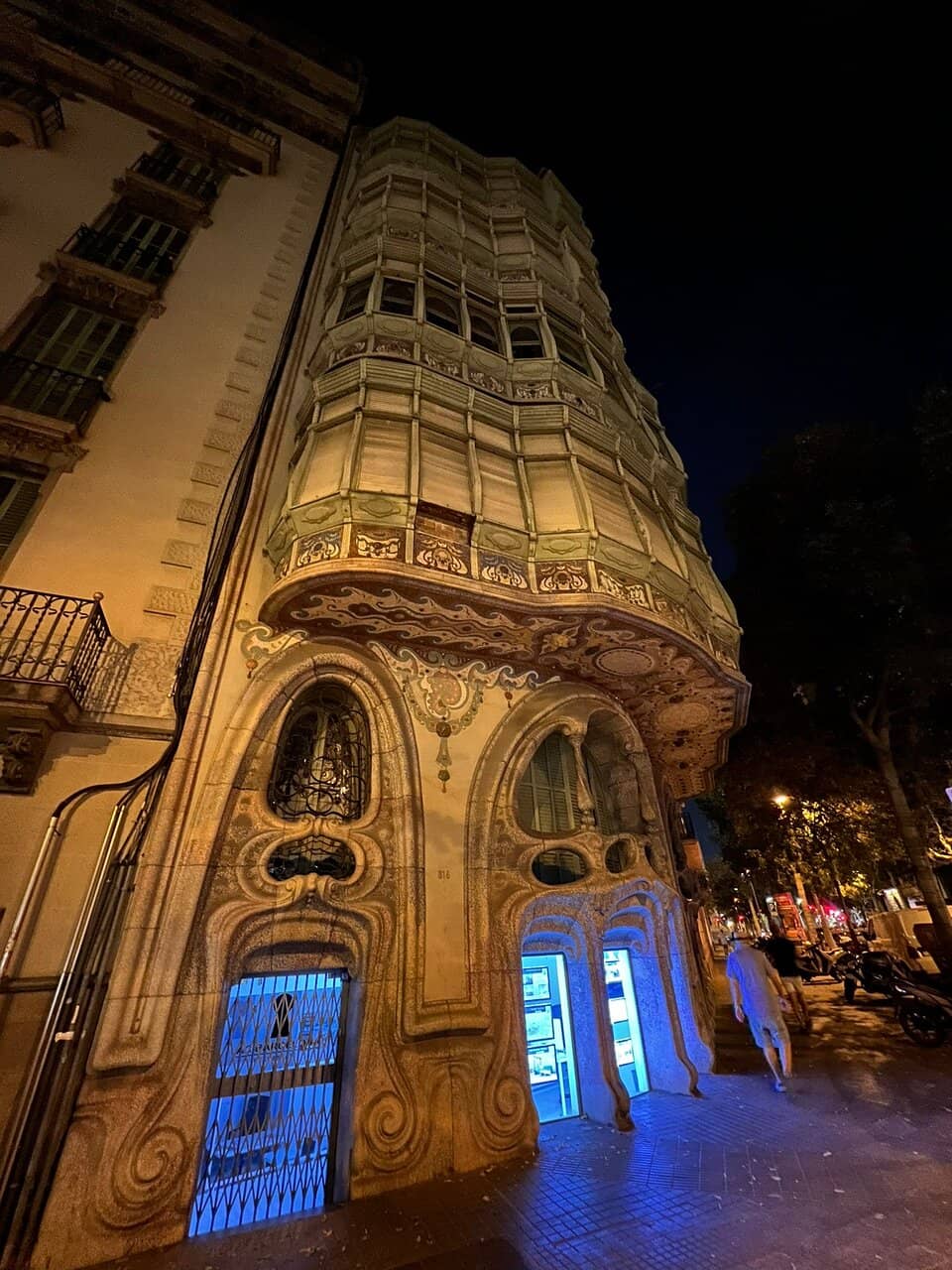
Main Facade Grandeur
Avinguda Diagonal
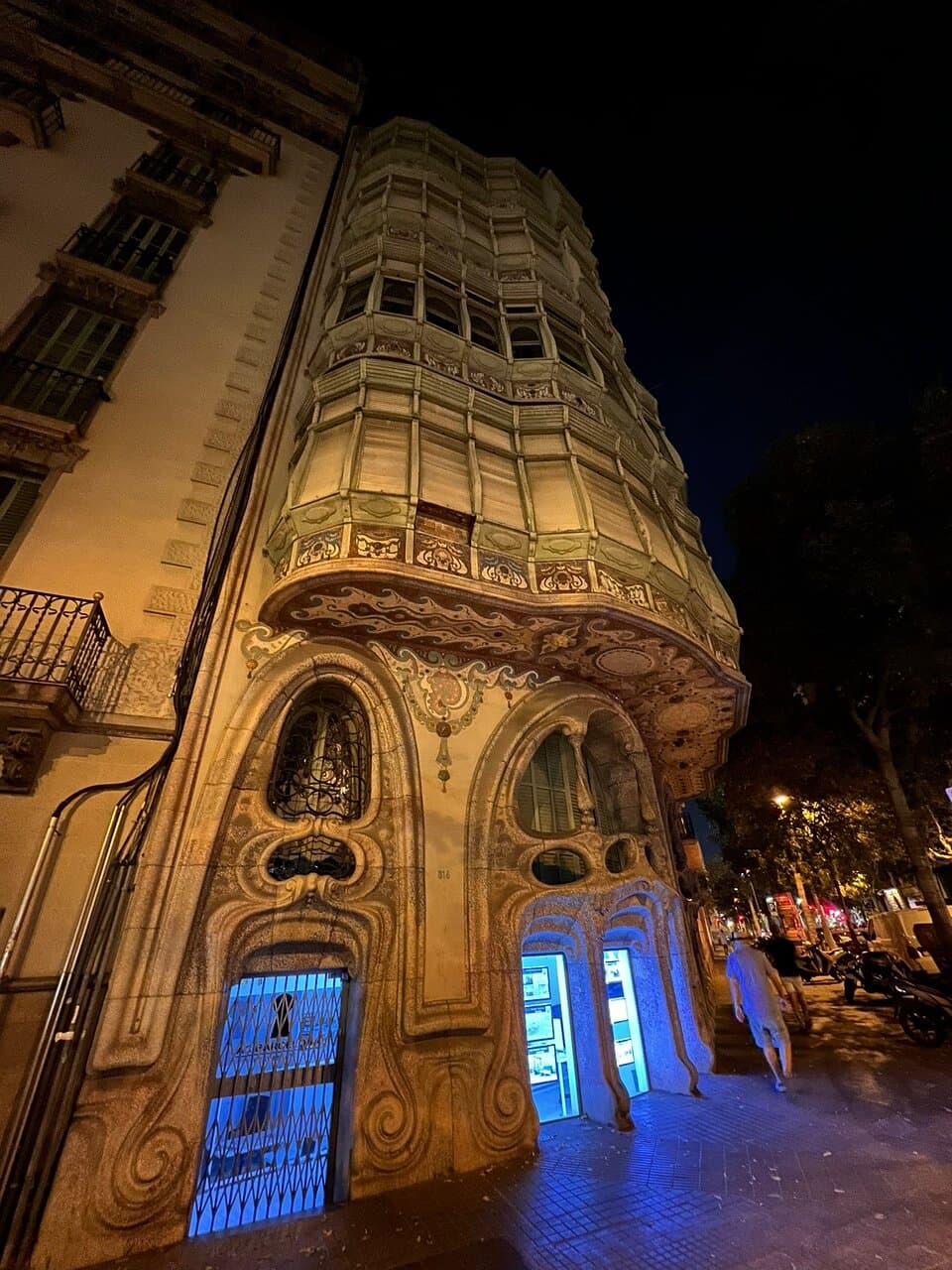
A striking stone facade with undulating shapes and an impressive carved wood door, a true Catalan Modernisme masterpiece.
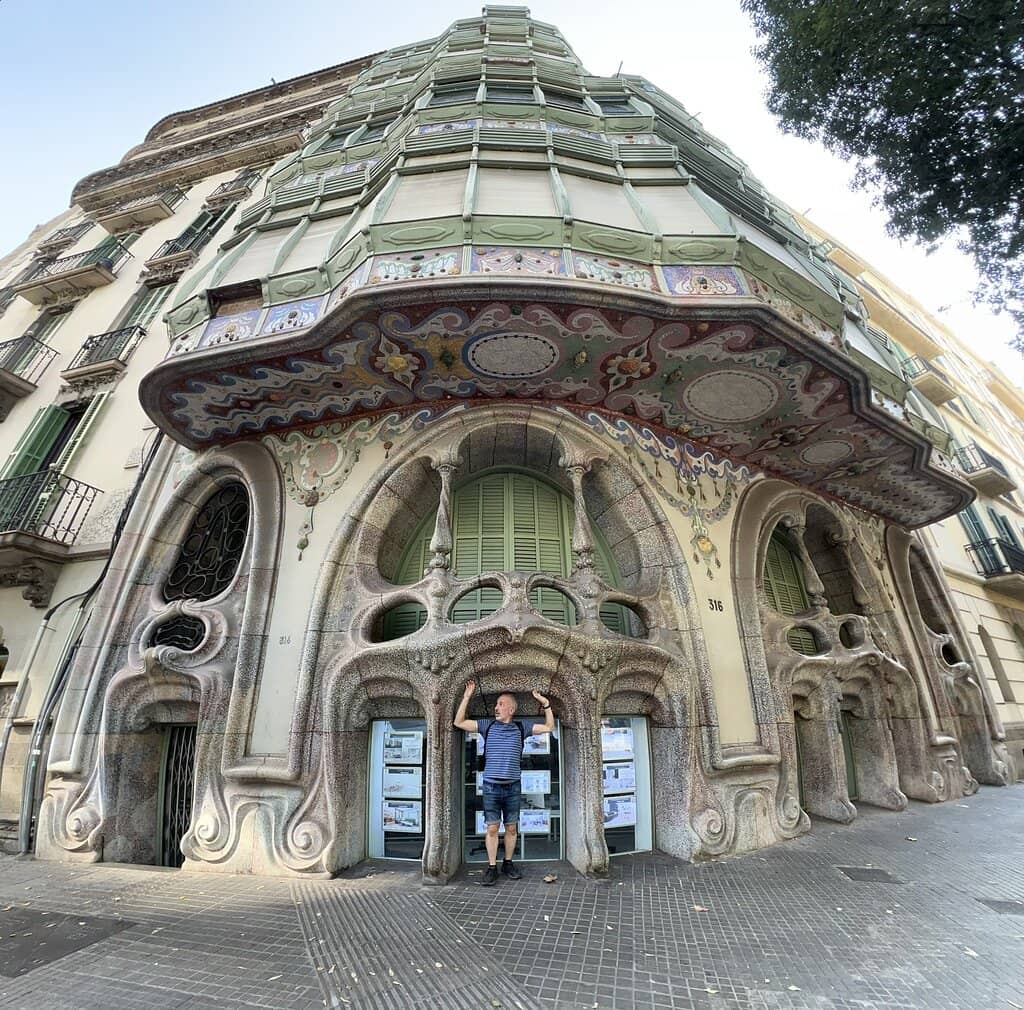
Mosaic Rear Facade
Carrer de Còrsega
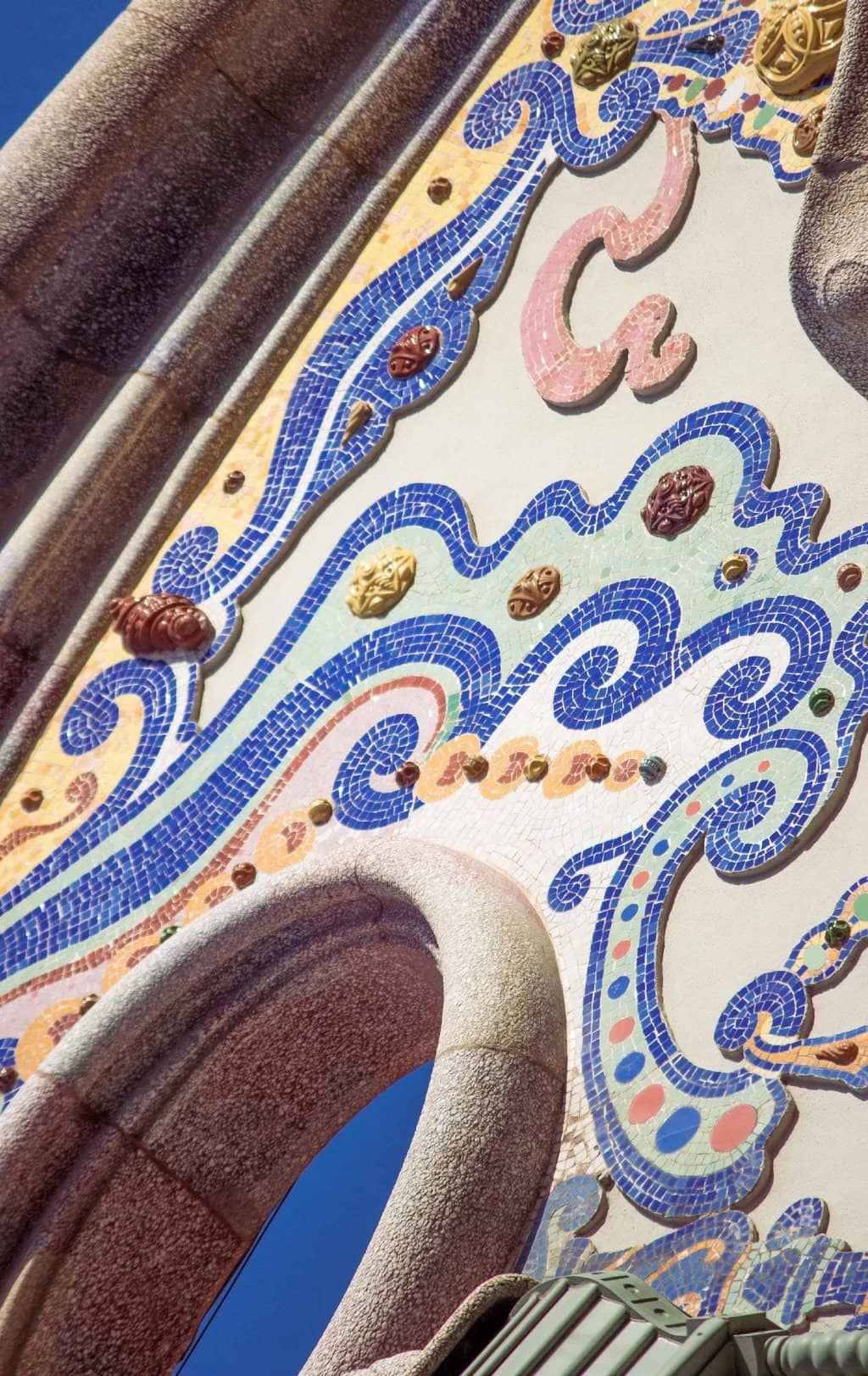
A vibrant contrast with colorful ceramic mosaics, showcasing a different, joyful artistic expression.
Intricate Doorway
Avinguda Diagonal
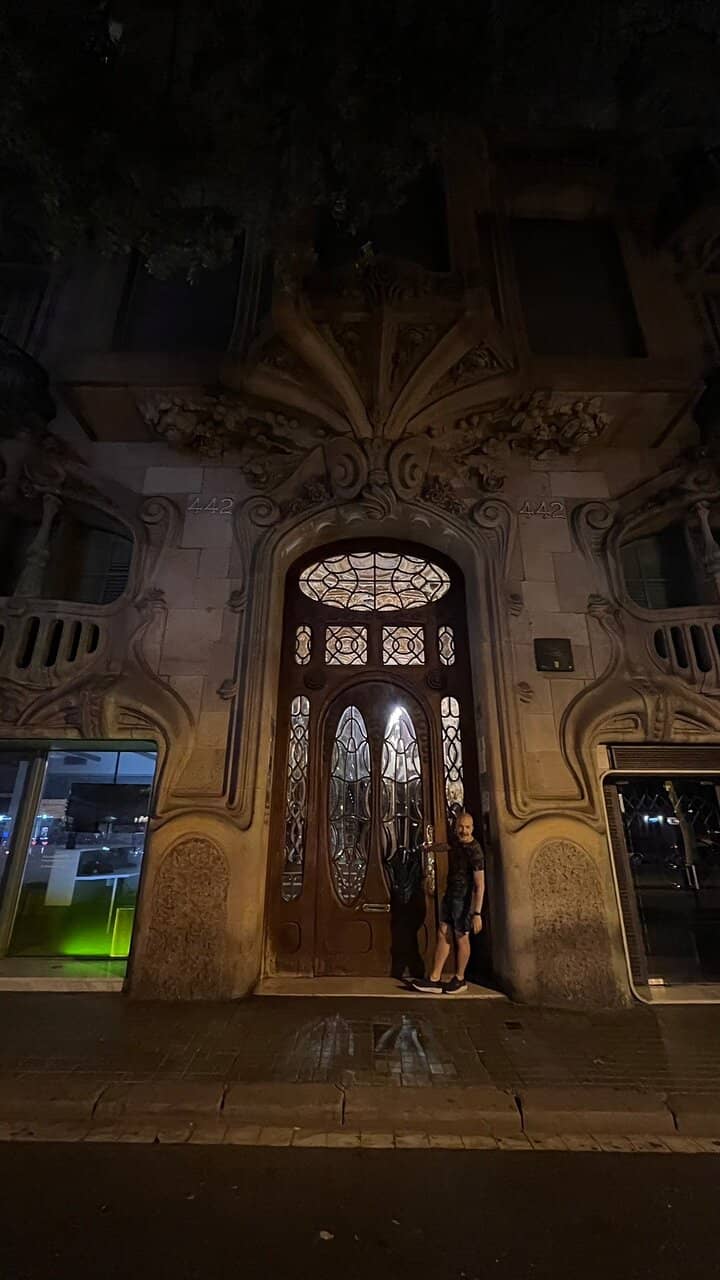
The carved wood door is a stunning example of Modernisme, featuring intricate details and cut glass.
Plans like a pro.
Thinks like you
Planning Your Visit
Exterior Views Only
Dual Facade Marvel
Best Times
Insider Tips
from TikTok, Instagram & Reddit
🚶♀️ Walk Both Sides
See the grand stone facade on Diagonal & the colorful mosaics on Còrsega. They're like two buildings in one! +1
🤫 Lobby Peek
If the main door is open, you might glimpse the lobby. Be quiet & respectful of residents.
📸 Capture the Details
Focus on the unique textures, mosaics, and carved elements for stunning photos.
💡 Not Gaudí, But Inspired
Designed by Salvador Valeri i Pupurull, inspired by Gaudí's organic style. +1
Tips
from all over the internet
🚶♀️ Walk Both Sides
See the grand stone facade on Diagonal & the colorful mosaics on Còrsega. They're like two buildings in one! +1
🤫 Lobby Peek
If the main door is open, you might glimpse the lobby. Be quiet & respectful of residents.
📸 Capture the Details
Focus on the unique textures, mosaics, and carved elements for stunning photos.
💡 Not Gaudí, But Inspired
Designed by Salvador Valeri i Pupurull, inspired by Gaudí's organic style. +1
What Travellers Say
Reviews Summary
Casa Comalat is celebrated for its stunning and unique dual facades, offering a captivating architectural experience. While interior access is restricted, visitors are enchanted by the contrasting styles, from the grand stone exterior to the vibrant mosaic rear. It's considered a hidden gem of Catalan Modernisme, offering a visual delight for all who seek it out.
"Interior is not open to the public, but you can try to get an appointment with one of the businesses.
Casa Comalat was built in 1911 by architect Salvador Valeri i Pupurull, who was inspired by the organic bone shapes of Antoni Gaudí's Casa Batlló.
The main façade on Avinguda Diagonal is made of Montjuïc stone with a dense decorative scheme of undulating shapes.
The carved wood door is one of the most impressive in Catalan modernisme with extensive use of cut glass.
Between the main and first floors runs a central tribune supported by a fan-shaped structure with sculpted floral decoration, topped by a dome and a pinnacle. Above this pinnacle is a shield with a dove with an olive branch in its beak.
The rear façade of Casa Comalat on Carrer de Còrsega drastically differs from the main façade, with extensive colored mosaics by Lluís Bru i Salelles.
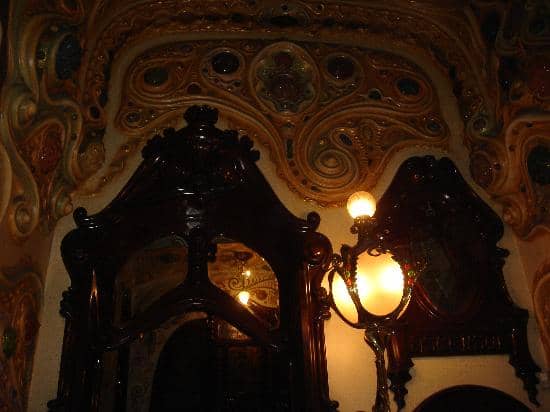
The interior of Casa Comalat is completely unique, like a mashup of Catalan modernisme and the gilded extravagance of Rococo.
The walls are decorated with fresco painting, gilded stucco, and glazed ceramic sconces.
The doors and windows are framed with dark mahogany. The vestibule has wainscoting and a built-in bench, both in mahogany."
Kent Wang
"Conflicting information here about whether you can or cannot visit this place.
We visited in late November, but only stayed in the lobby area. There was a delivery man and another occupant that went out for a smoke and none said anything to us about being there.
We were extra careful not to make any noise or get in anyone's way though.
Beware the door is very heavy and would shut very loudly so please cushion the closing properly"
Chi Kit Wong
"One of the least visited yet most worthy modernist buildings by Salvador Valeri, not only because of its amazing facade, but also because it has an equally amazing “rear” part.
Make sure you visit both of your way (or on a short detour) from Paseo de Gracia."
Germán Fernández-Moreno Plaza
What People Like
What People Dislike
Frequently Asked Questions
🚇 🗺️ Getting There
Casa Comalat is easily accessible via public transport. The nearest metro stations are Diagonal (L3, L5) and Gràcia (L3). Numerous bus lines also stop nearby along Avinguda Diagonal.
Yes, Casa Comalat is located in the Eixample district, a hub for Catalan Modernisme. It's a short walk from other notable buildings like Casa Milà and Casa Batlló.
Yes, it's a pleasant walk of about 15-20 minutes from Passeig de Gràcia, allowing you to see more of Barcelona's architecture along the way.
🎫 🎫 Tickets & Entry
The interior of Casa Comalat is generally not open to the public as it's a residential building. However, you might be able to see the lobby if you're lucky or if you have an appointment with a business located inside.
No tickets are required to view the exterior facades of Casa Comalat. It's a building you admire from the street.
Since it's a private residence, there are no official visiting hours for the interior. You can view the exteriors at any time of day.
There is no entrance fee to see the exterior of Casa Comalat. You can freely admire its unique architecture from the sidewalks.
📸 📸 Photography
For the main facade, stand across Avinguda Diagonal for a full view. For the mosaic facade, walk to Carrer de Còrsega. Capturing both sides is key! +1
Photography of the exterior facades is generally allowed and encouraged, as it's a significant architectural landmark. Be mindful of residents if you're near the entrance.
Late afternoon can offer beautiful golden hour light on the mosaic facade, while daytime provides clear views of both sides.
🎫 💡 Architecture & History
Casa Comalat was designed by architect Salvador Valeri i Pupurull and built in 1911. +1
It's a prime example of Catalan Modernisme, a style influenced by Art Nouveau, with organic forms and rich ornamentation. +1
Architect Salvador Valeri i Pupurull was inspired by Antoni Gaudí's organic style, particularly the bone-like structures of Casa Batlló.
The building was designed with two distinct facades to offer different aesthetic experiences on the grand Avinguda Diagonal and the more residential Carrer de Còrsega. +1
Social
from TikTok, Instagram & Reddit