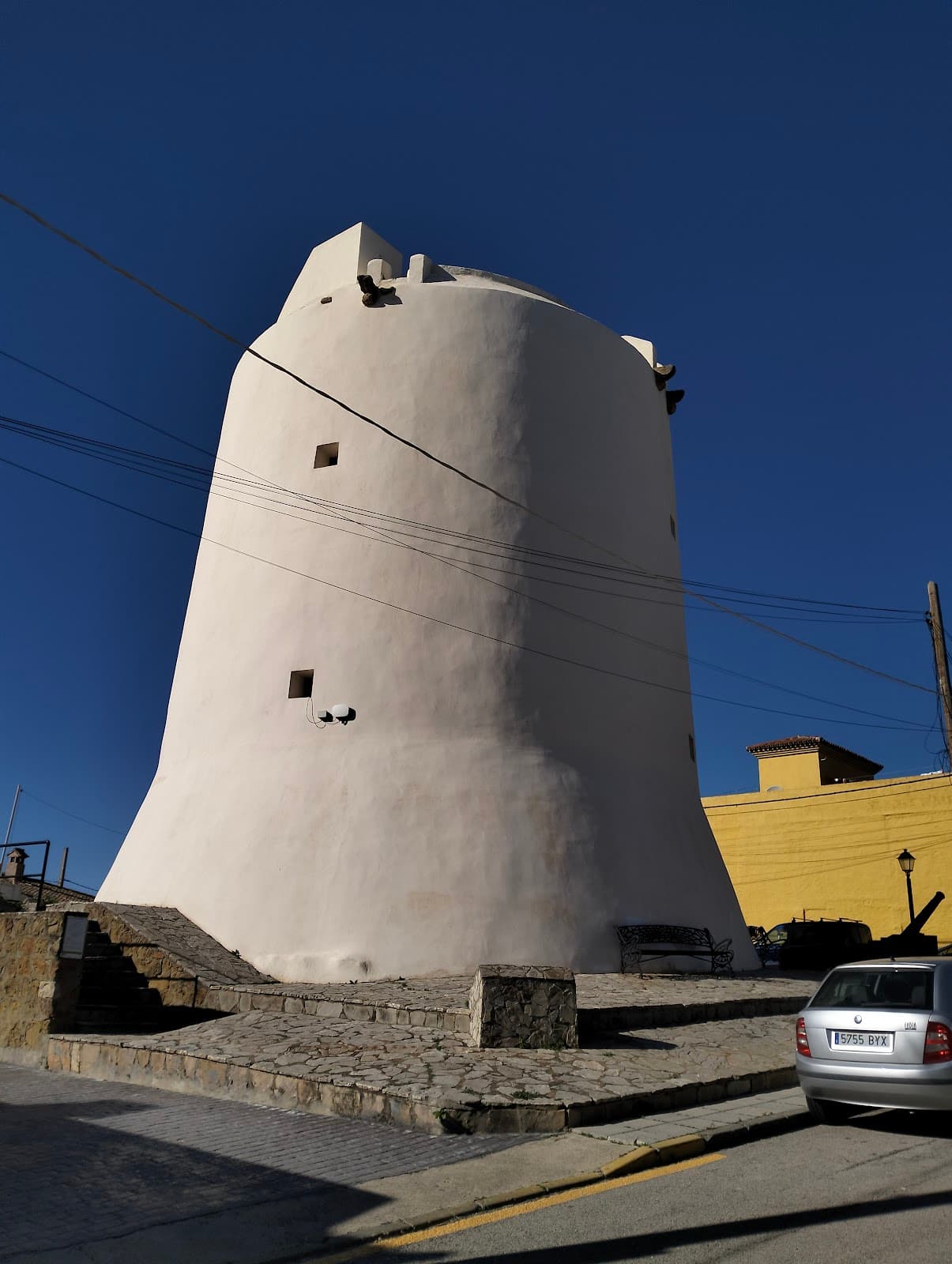
Torreguadiaro Watchtower
A 16th-century watchtower guarding the coast, offering historical insights and scenic views. Free and accessible 24/7.
Highlights
Must-see attractions

Social
From TikTok & Reddit
Best Time
Always open and free to explore
Torreguadiaro Watchtower
Best Time
Always open and free to explore
Highlights
Must-see attractions
A 16th-century watchtower guarding the coast, offering historical insights and scenic views. Free and accessible 24/7.
"A historic coastal defense tower, free to visit anytime, though the white paint is a point of contention."

Free to Visit! 💰
Enjoy this historical site without any admission fee. It's an outdoor attraction open 24/7.
Parking Nearby 🚗
Convenient parking is available just about 100 meters from the watchtower.

Highlights
Discover the most iconic attractions and experiences
16th-Century Defense Tower
Explore a historic watchtower built to defend against Barbary pirates, part of a larger coastal fortification system.
Reconstructed Cannons
See two restored cannons positioned outside the tower, offering a glimpse into its military past.

Coastal Views
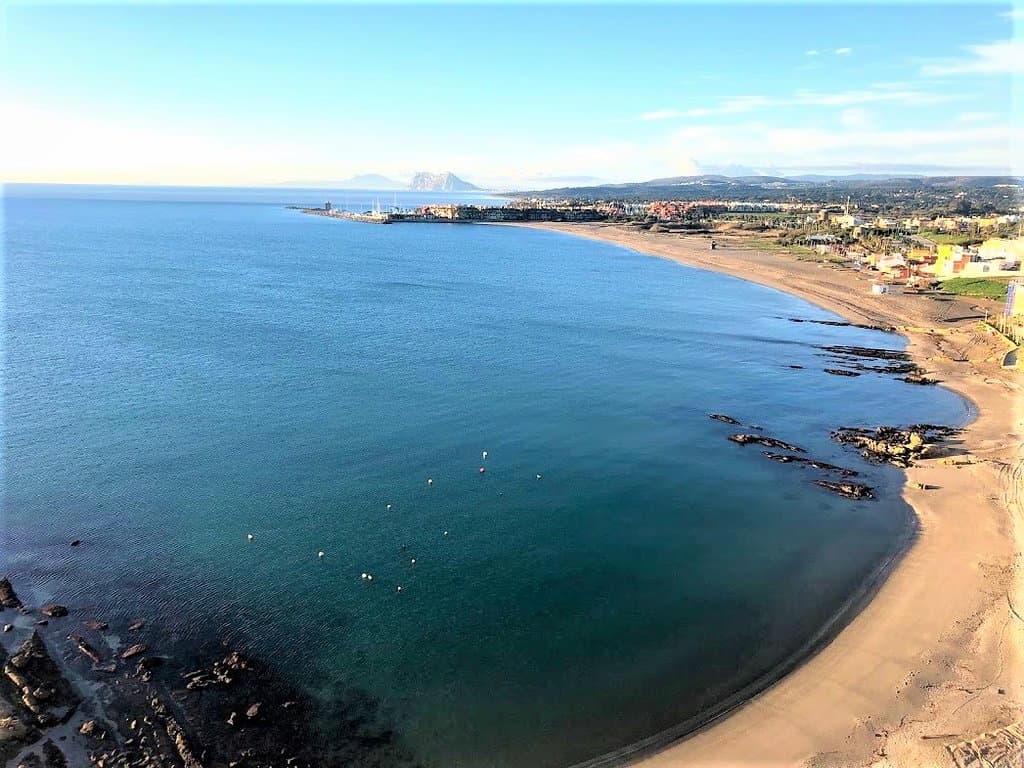
Enjoy scenic views of the coastline near the mouth of the Guadiaro River from this elevated vantage point.
Plans like a pro.
Thinks like you
Planning Your Visit
Access & Visiting Hours
Restoration & Appearance
Best Times
Insider Tips
from TikTok, Instagram & Reddit
Free to Visit! 💰
Enjoy this historical site without any admission fee. It's an outdoor attraction open 24/7.
Parking Nearby 🚗
Convenient parking is available just about 100 meters from the watchtower.
Accessibility Friendly 👍
The exterior of the tower is accessible for people with reduced mobility.
Photo Opportunity 📸
Capture the tower and surrounding coastal scenery, especially during golden hour.
Tips
from all over the internet
Free to Visit! 💰
Enjoy this historical site without any admission fee. It's an outdoor attraction open 24/7.
Parking Nearby 🚗
Convenient parking is available just about 100 meters from the watchtower.
Accessibility Friendly 👍
The exterior of the tower is accessible for people with reduced mobility.
Photo Opportunity 📸
Capture the tower and surrounding coastal scenery, especially during golden hour.
What Travellers Say
Reviews Summary
Visitors appreciate the Torreguadiaro Watchtower for its historical significance and free, 24/7 access. The convenient parking and accessibility are also noted positives. However, the white paint applied during restoration is a common point of criticism, with many feeling it detracts from the tower's original character.
"The New Tower of Guadiaro is a watchtower located in the Andalusian town of San Roque, near the mouth of the Guadiaro River. It was built in the 16th century to guard the adjacent stretch of coast against the presence of Barbary pirates. The tower is circular, with a truncated cone-shaped shaft and a height of about 12 meters. It is built with masonry and ashlar, and presumably has a lintelled access door located about 4 meters from the ground with a wooden ladder that could be retracted by a rope into the interior in the event of an enemy attack. Inside, the tower is divided into two floors, connected by a spiral staircase. The ground floor was used as a warehouse, while the upper floor was used for surveillance and had a cannon for defense. It also has several loopholes around it for defense and surveillance. It was part of a system of beacon towers that extended along the entire coast of Campo de Gibraltar. These towers served to warn of the presence of enemies and to protect the population from pirate attacks. It was declared a Site of Cultural Interest in 1993. It is currently in use. After the renovation, the original gate was covered up and a new one was built at street level. The stone was covered over and painted entirely white, distorting the original. It has two restored cannons on the exterior. The tower is in good condition.
There is parking about 100 meters away.
It is accessible for people with reduced mobility from the exterior.
It can be visited 24 hours a day, 365 days a year.
Free, outdoors.
Give us a thumbs up if you like it. Thanks."
J L Rodríguez
"📍 16th-century defense tower
One of the defensive towers on the Costa del Sol, it was also part of the Campo de Gibraltar fortification system.
The restoration work has been effective, but it has a regrettable visual impact as it has been completely covered in white.
Surrounding it are several reconstructed cannons."
•Pablompsy
"If you want to know more, continue reading: This is a 16th-century coastal watchtower, built to replace the nearby Torre Caída (Cadiz-Málaga Tower). Access is via a path heading towards the sea, starting at kilometer 140 of main road 340 from Cádiz to Málaga (the old route).
It is located 2,200 meters southwest of Punta Chullera, on a sandy platform at a certain height above sea level. Its floor plan is circular, with a maximum diameter of 14 meters at the base of the escarpment. It is 16 meters high, of which 4 belong to the truncated cone escarpment with an approximate inclination of 70°. Above this, another truncated cone body rises with a lesser slope (85°) and is 11 meters high, reaching the outer edge of the low parapet.
The construction is made of ashlar, relatively well arranged in horizontal courses, joined with mortar, with the gaps filled with smaller stones. On the outside, there is an opening that today serves as a door, but its characteristics suggest that it was not the original one. This one is located higher up, and as was normal, was accessed by a rope ladder that could be removed at night. In addition to these, there are other smaller openings, resembling loopholes, and the remains of four machicolations, or garret holes, in the parapet that protected the respective openings from possible enemy access.
The interior is divided into two chambers covered with brick half-vaults and connected by a stone staircase attached to the internal wall, now practically destroyed. The staircase leads to the upper platform, which was used for observation and combat. The chimney flue also leads there, and there are two stone platforms to allow the firing of two artillery pieces. It is also evident that the parapet was modified in a way that partially rendered the machicolations useless, and the crenellations, if they ever existed, were eliminated. The purpose of this reform was to provide the artillery pieces with a clear field of fire. A Royal Decree of 1516 inquired about the need to build a new tower at the mouth of the Guadiaro River to replace a nearby, demolished tower. The new tower served as a shelter for livestock farmers, passengers, and local lumbermen, and was visually connected to the Chullera tower.
According to Villalonga's report of 1796, the tower had a 4-pounder cannon and had a guardhouse next to an inn. The typology of this tower is closer to those of the province of Huelva, also from the 16th century and designed for sandy areas. There is another tower, the so-called "Fallen Tower of Guadiaro," about 2 km southwest of the Chullera Tower, possibly built in the late 15th or early 16th centuries, as it is mentioned in the Royal Decree of 1516 as being divided by a lightning bolt. Today, it is divided in two, with half of its construction material scattered around the area. In 1985, its appearance was altered with the construction of an unrelated enclosure.
If you liked it, give it a Like. Thanks.
Source: IAPH and Monumental.net"
ClÁsico
What People Like
What People Dislike
Frequently Asked Questions
🚇 🗺️ Getting There
The watchtower is located near the mouth of the Guadiaro River in San Roque. Access is via a path heading towards the sea, starting from kilometer 140 of the old N-340 road (from Cadiz to Malaga). Parking is available about 100 meters away.
Yes, there is parking available approximately 100 meters from the Torreguadiaro Watchtower, making it easy to access.
Information on direct public transport to the watchtower is limited. It's best to check local bus routes serving San Roque or Torreguadiaro and be prepared for a short walk or taxi ride.
🎫 🎫 Tickets & Entry
The Torreguadiaro Watchtower is an outdoor site and can be visited 24 hours a day, 365 days a year. There are no specific opening or closing times.
No, visiting the Torreguadiaro Watchtower is completely free of charge. It's a public outdoor monument.
While the exterior is always accessible, information on interior access is not readily available. The original access was via a retractable ladder, and a new street-level entrance was created during restoration.
🎫 🧭 Onsite Experience
Built in the 16th century, this circular tower was part of a system to defend the coast against Barbary pirates. It replaced a nearby older tower and served as a beacon and defense point.
The tower is in good condition following restoration. It features masonry and ashlar construction, with two restored cannons on the exterior.
Yes, the exterior of the Torreguadiaro Watchtower is accessible for people with reduced mobility.
The tower is circular with a truncated cone-shaped shaft, standing about 12 meters tall. It's constructed with masonry and ashlar, and historically had a lintelled access door about 4 meters from the ground.
📸 📸 Photography
Early morning or late afternoon (golden hour) offers the best light for photography, highlighting the tower's structure and the coastal scenery. The white paint can be quite bright in direct midday sun.
Capture the tower from different angles along the path leading to it. The surrounding beach and coastline also offer great photographic opportunities.
For Different Travelers
Tailored advice for your travel style
👨👩👧 Families with Kids
Parking is conveniently located, and the site is accessible for strollers or those with mobility challenges. While there's no playground or specific child-focused activities, the historical context and coastal setting make it a pleasant stop on a family outing. Pack snacks and drinks, as amenities are limited.
🚶 Budget Travelers
This makes it a perfect addition to any itinerary without impacting your spending. You can combine a visit with a walk along the coast or a picnic, maximizing your experience without incurring significant expenses. It's a great way to soak in some local history and enjoy scenic views on a shoestring budget.
Deep Dives
In-depth insights and expert knowledge
Historical Significance
The tower's design is characteristic of its era, featuring a circular base and a height of approximately 12 meters. Built with robust masonry and ashlar, it was engineered for defense. Historically, access was gained via a lintelled door about 4 meters above the ground, reachable by a rope ladder that could be retracted for security. The interior was divided into two levels, with the upper floor serving as a surveillance and combat post, equipped with artillery. The tower's strategic location allowed it to be visually connected with other watchpoints, forming a crucial communication and defense line.
Declared a Site of Cultural Interest in 1993, the Torreguadiaro Watchtower stands as a preserved piece of history. Despite a restoration that involved painting the stone white, which some find detracts from its original aesthetic, the tower remains a significant landmark. The addition of two reconstructed cannons on the exterior further enhances its historical narrative, offering visitors a tangible connection to its past defensive role.
Restoration and Modernization
Despite the aesthetic changes, the restoration has made the tower accessible and preserved its structural integrity. The original access point, a high-set door requiring a ladder, has been supplemented by a new entrance at street level, making it easier for visitors to approach. The surrounding area has also been enhanced with the placement of two reconstructed cannons, which serve as visual reminders of the tower's military function.
From a practical standpoint, the restoration has ensured the tower's continued presence as a historical marker. While the white paint might be a point of contention for purists, it undeniably makes the structure stand out and is easily visible. The site remains free to visit and accessible, allowing everyone to appreciate its historical context and coastal location.


Social
from TikTok, Instagram & Reddit