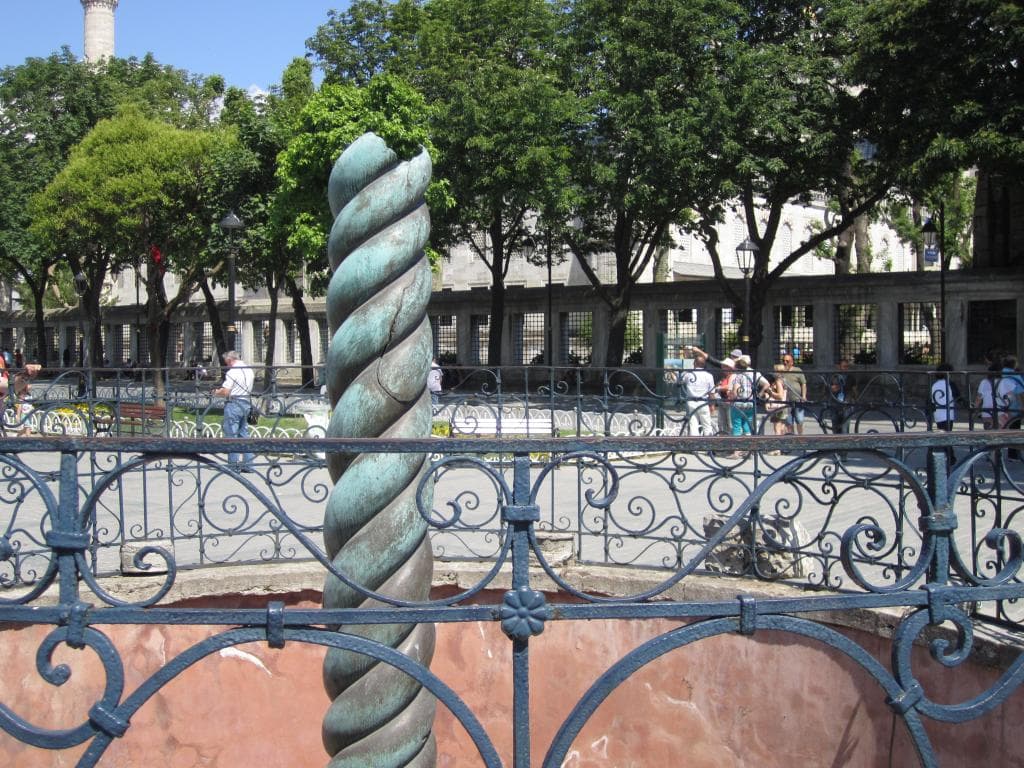
Serpent Column
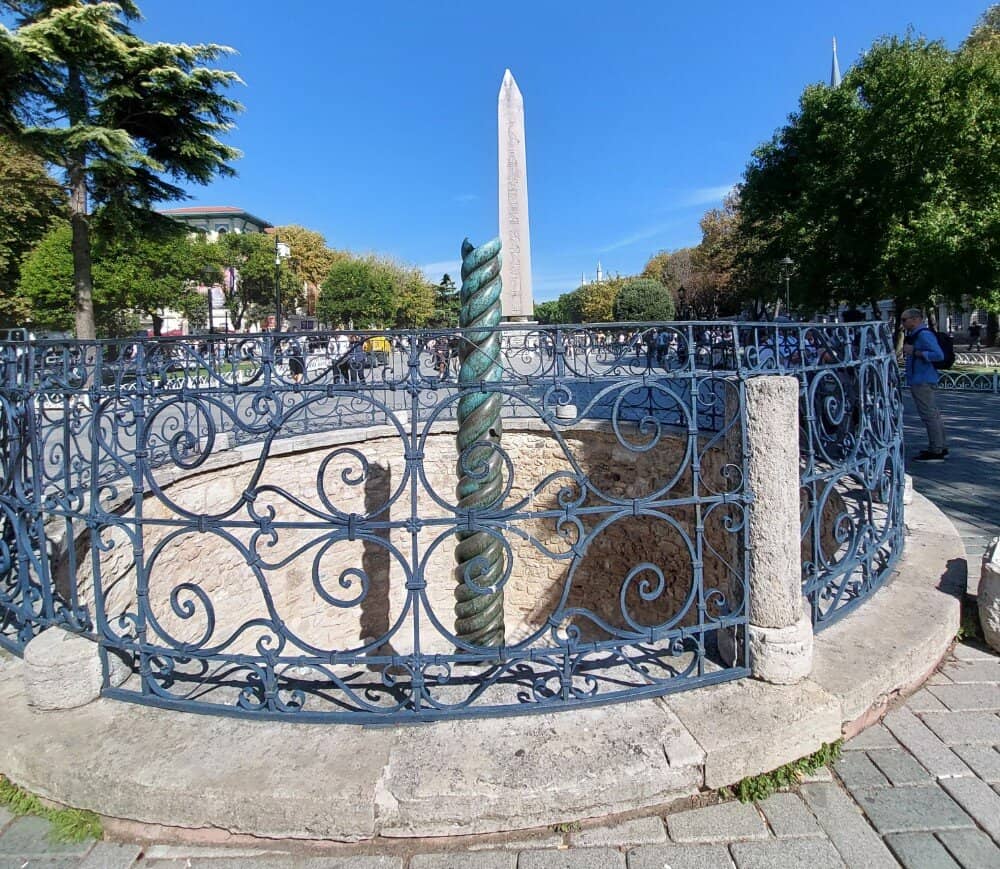
An ancient bronze column from Delphi, Greece, commemorating a historic Greek victory over the Persians. One of Istanbul's oldest surviving monuments.
Highlights
Must-see attractions

Social
From TikTok & Reddit
Best Time
Beat the crowds, better light.
Serpent Column
Best Time
Beat the crowds, better light.
Highlights
Must-see attractions
An ancient bronze column from Delphi, Greece, commemorating a historic Greek victory over the Persians. One of Istanbul's oldest surviving monuments.
"Its history goes back more than 2,500 years, making it one of the oldest monuments in Istanbul!"
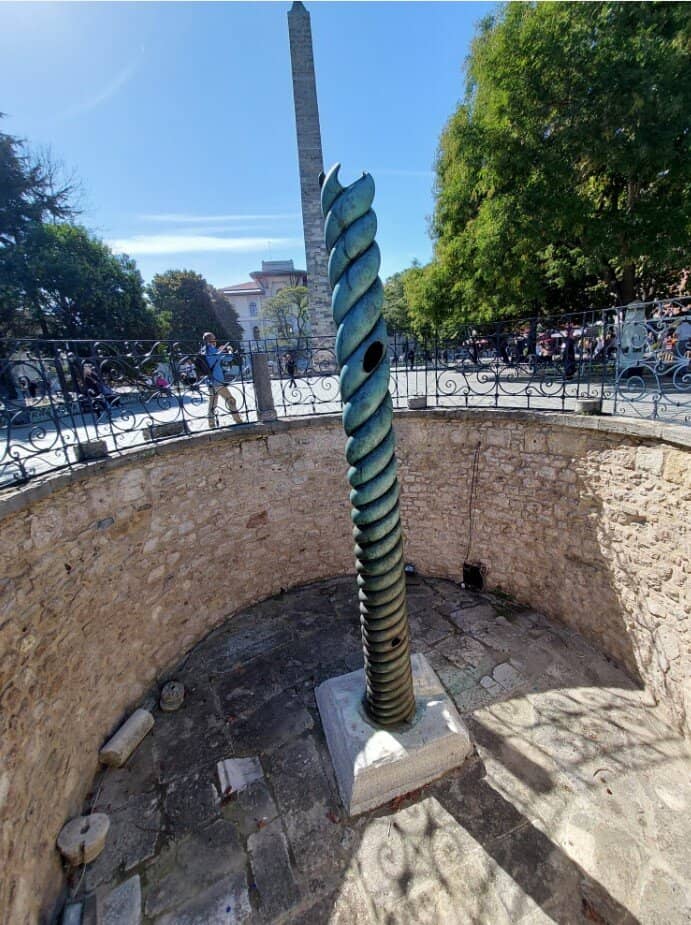
Look for the Serpent Head
One original serpent head is in the Istanbul Archaeology Museum! :museum:
It's Older Than Istanbul!
This column predates Constantinople by centuries. :clock1:
Quick Facts
Hours
Rating
4.6 · 904 reviews
Type
Historical Landmark
Highlights
Discover the most iconic attractions and experiences
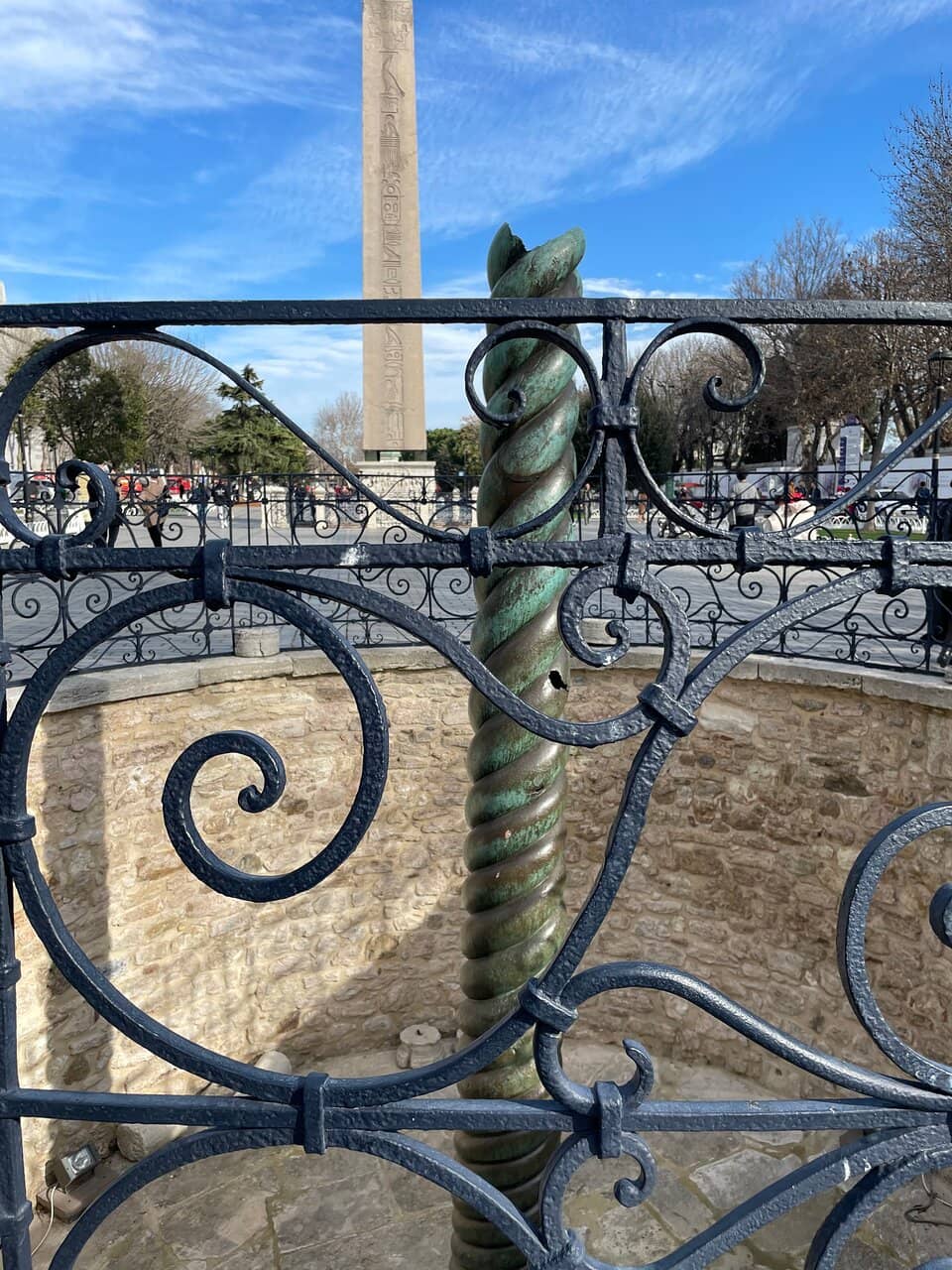
The Twisted Bronze Base
Sultanahmet Square
Witness the intertwined bronze serpents, a powerful symbol of ancient Greek victory and resilience.
A Fragment of History
Istanbul Archaeological Museum (one serpent head)
See one of the original serpent heads, a rare artifact offering a glimpse into the column's former glory.
Ancient Hippodrome Site
Sultanahmet Square
Stand where chariot races once thundered, with the column as a silent witness to Byzantine grandeur.
Plans like a pro.
Thinks like you
Planning Your Visit
Ancient History in Plain Sight
Location & Context
Best Times
Insider Tips
from TikTok, Instagram & Reddit
Look for the Serpent Head
One original serpent head is in the Istanbul Archaeology Museum! :museum:
It's Older Than Istanbul!
This column predates Constantinople by centuries. :clock1:
Part of a Larger Site
It's located in Sultanahmet Square, near other ancient monuments. :world_map:
Commemorates Greek Victory
Built to celebrate the Greek win over Persians at Plataea. 🏆
Tips
from all over the internet
Look for the Serpent Head
One original serpent head is in the Istanbul Archaeology Museum! :museum:
It's Older Than Istanbul!
This column predates Constantinople by centuries. :clock1:
Part of a Larger Site
It's located in Sultanahmet Square, near other ancient monuments. :world_map:
Commemorates Greek Victory
Built to celebrate the Greek win over Persians at Plataea. 🏆
Originally from Delphi
This ancient artifact was moved from Greece to Istanbul. :greece:
What Travellers Say
Reviews Summary
Visitors find the Serpent Column a fascinating, albeit modest, monument in Sultanahmet Square. Its immense historical significance as one of Istanbul's oldest artifacts, originally from Delphi and commemorating a key Greek victory, is highly appreciated. While the missing serpent heads are noted, its enduring presence and connection to both Greek and Byzantine history make it a worthwhile stop.
"The Serpent Column is a fascinating monuments you’ll find in Sultanahmet Square, right in the area of the old Byzantine Hippodrome. At first glance, it might seem modest compared to the nearby obelisks, but its history goes back more than 2,500 years, making it one of the oldest monuments in Istanbul!
The column was originally created in 479 BC to celebrate the Greek victory over the Persians at the Battle of Plataea. It once stood in the Temple of Apollo at Delphi, Greece, and was later brought to Constantinople by Emperor Constantine the Great in the 4th century AD to decorate the Hippodrome.
The column was originally topped with three serpent heads that supported a golden bowl, but these were damaged and lost over time, although one serpent head is now preserved in the Istanbul Archaeological Museum.
Even if it’s not as tall or flashy as the nearby obelisks, the Serpent Column carries an incredible story of ancient alliances, victory, and resilience — definitely worth a few moments of your visit!"
Stefan
"The Serpent Column (Yılanlı Sütun) is one of a handful of interesting monuments and ruins situated upon Sultanahmet Square in the heart of Istanbul. Historically, the monument was first erected in Delphi, Greece but moved to Constantinople by Emperor Constantine in the 4th-century. Today, it is situated at Sultanahmet Square in between the ancient Obelisk of Theodosius and Walled Obelisk.
What you see now is only a fragment of the original monument created in 479 BC to commemorate the Greek victory over the Persian army at the Battle of Plataea. It was made from melted down Persian shields and included three serpent heads. Originally 8 metres in height the three serpent heads which topped the column were removed sometime around the end of the 17th-century.
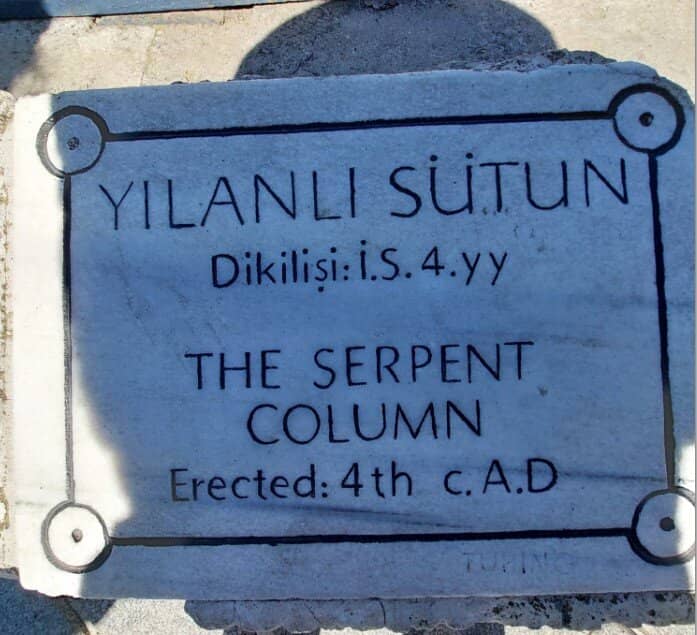
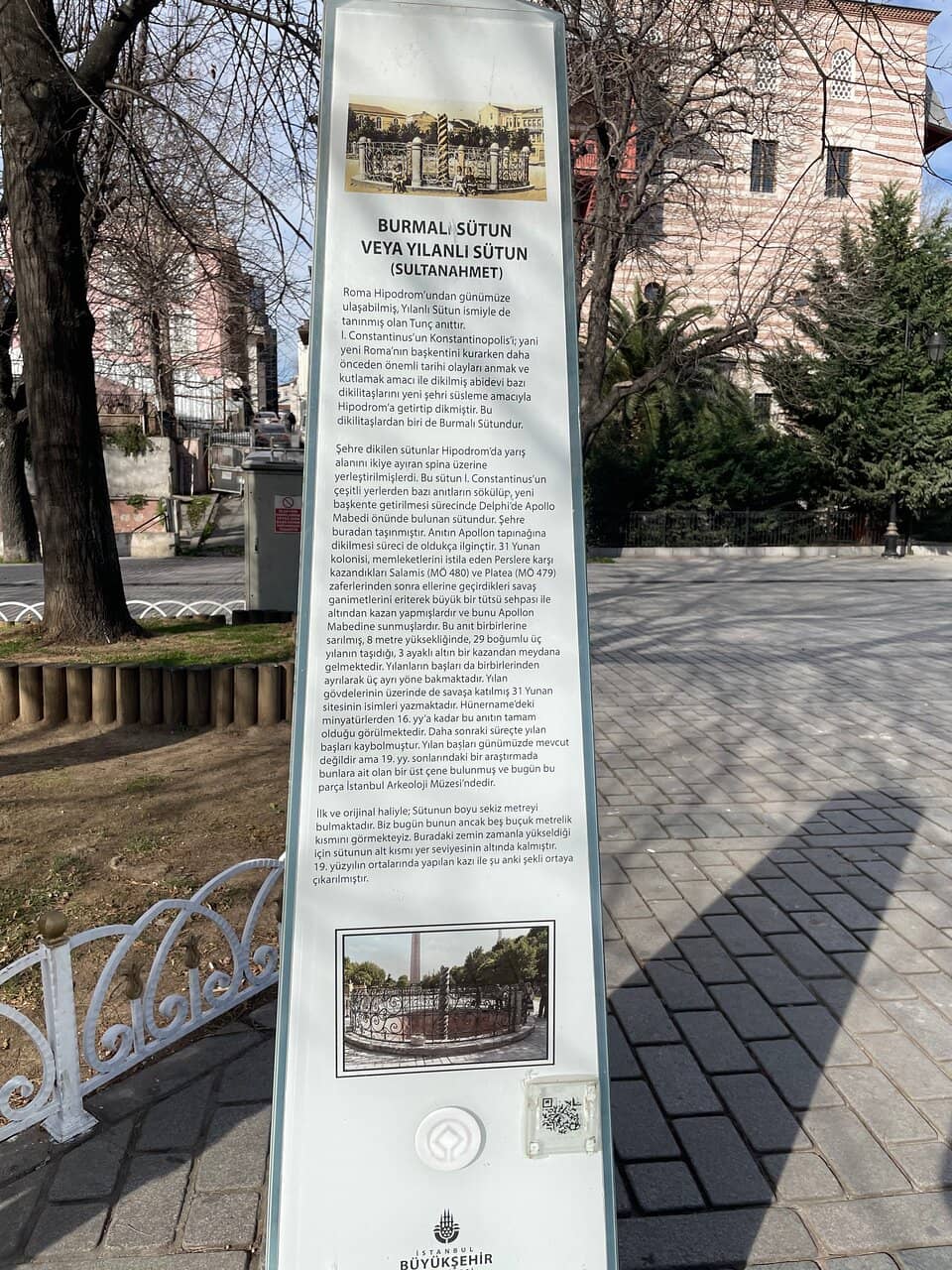
Today what you see is the bottom column fragment, bronze twisted serpent bodies which once held the three heads. One of which is on held at the Istanbul Archaeology Museum. There is an information panel next to the Serpent Column if you want to learn more about its history."
Brad
"Right next to the Obelisk of Theodosius, in the ancient Hippodrome, lies one of the oldest monuments in the city. It is a bronze column, very weathered by time. The most fascinating part is its history: it was brought from Delphi, Greece, where it stood at the Temple of Apollo. It was made to commemorate the Greek victory over the Persians in 479 BC. Originally, it consisted of three intertwined bronze serpents supporting a golden tripod (which has been lost). Today, the serpents' heads are also gone, but the column itself endures."
Luana Bedin
What People Like
What People Dislike
Frequently Asked Questions
🚇 🗺️ Getting There
The Serpent Column is located in Sultanahmet Square, easily accessible by public transport. Take a tram to the Sultanahmet stop. From there, it's a short walk to the square where the column is prominently displayed near the Obelisk of Theodosius.
Yes, it's very easy to find! It's situated in the heart of Sultanahmet Square, a major tourist hub, right next to other significant ancient monuments.
Driving directly to Sultanahmet Square can be challenging due to traffic and pedestrian zones. It's recommended to use public transport or a taxi to a nearby drop-off point and walk the rest of the way.
🎫 🎫 Tickets & Entry
No, the Serpent Column is an outdoor monument located in Sultanahmet Square and is freely accessible to the public. You can view it at any time.
As it's an outdoor monument in a public square, there are no specific opening hours. You can visit it 24/7.
No, Sultanahmet Square itself is a public space and does not have an entrance fee. You can explore the area and its monuments freely.
🎫 🧭 Onsite Experience
The Serpent Column is made of bronze. It was originally constructed from melted-down Persian shields.
The original three serpent heads that topped the column were damaged and lost over time, likely around the late 17th century. One head is now housed in the Istanbul Archaeological Museum. +1
The original monument, including the serpent heads, was approximately 8 meters (26 feet) tall.
It was erected in 479 BC in Delphi, Greece, to commemorate the Greek victory over the Persian Empire at the Battle of Plataea. It was later moved to Constantinople by Emperor Constantine the Great. +1
Yes, there is usually an information panel located next to the Serpent Column that provides details about its history and significance.
📸 📸 Photography
Early morning or late afternoon offer the best light for photography, avoiding harsh midday sun and the largest crowds. Golden hour can create beautiful shots.
Generally, photography is allowed in Sultanahmet Square. However, always be mindful of other visitors and avoid using flash photography if it might disturb others.
You'll have excellent photo opportunities with the Obelisk of Theodosius, the Walled Obelisk, and the Blue Mosque, all within close proximity.
Social
from TikTok, Instagram & Reddit