Wat Pa Sawang Bun
A serene temple complex in Saraburi, famous for its 500 golden stupas and a colossal 200m reclining Buddha.
Highlights
Must-see attractions

Social
From TikTok & Reddit
Best Time
Beat the heat and crowds
Wat Pa Sawang Bun
Best Time
Beat the heat and crowds
Highlights
Must-see attractions
A serene temple complex in Saraburi, famous for its 500 golden stupas and a colossal 200m reclining Buddha.
"A landmark of Saraburi! Definitely a place to visit for a beautiful absolutely gigantic reclining buddha."

Dress Modestly
Cover shoulders and knees out of respect for this sacred site. 🙏
Allow Plenty of Time
Explore the many hidden gems and photogenic spots. Don't rush your visit! :camerawithflash:

Quick Facts
Hours
Rating
4.6 · 2,223 reviews
Type
Place of Worship
Highlights
Discover the most iconic attractions and experiences
The 500 Golden Stupas
Main temple grounds
An awe-inspiring collection of 500 golden stupas, creating a dazzling and unique visual spectacle.
Colossal Reclining Buddha
Near the main temple
An absolutely gigantic reclining Buddha, stretching over 200 meters, a truly impressive sight.
The Black Buddha Image
Temple complex
A significant and striking black Buddha image, offering a different artistic and spiritual perspective.
Panoramic Mountain View
Top of the mountain
Breathtaking panoramic views of the surrounding area after a climb up hundreds of stairs.
Plans like a pro.
Thinks like you
Planning Your Visit
Embrace the Serenity
Capture the Grandeur
Best Times
Insider Tips
from TikTok, Instagram & Reddit
Dress Modestly
Cover shoulders and knees out of respect for this sacred site. 🙏
Allow Plenty of Time
Explore the many hidden gems and photogenic spots. Don't rush your visit! :camerawithflash:
Climb for the View
The stairs to the top are worth it for stunning panoramic vistas. :hiking_boot:
Photography Paradise
Numerous photogenic sites, from stupas to deities, offer endless photo opportunities. :iphone:
Tips
from all over the internet
Dress Modestly
Cover shoulders and knees out of respect for this sacred site. 🙏
Allow Plenty of Time
Explore the many hidden gems and photogenic spots. Don't rush your visit! :camerawithflash:
Climb for the View
The stairs to the top are worth it for stunning panoramic vistas. :hiking_boot:
Photography Paradise
Numerous photogenic sites, from stupas to deities, offer endless photo opportunities. :iphone:
What Travellers Say
Reviews Summary
Visitors consistently praise Wat Pa Sawang Bun for its stunning and unique architectural features, particularly the impressive 500 golden stupas and the colossal reclining Buddha. Many highlight the temple as a must-visit landmark with numerous photogenic spots and a serene atmosphere. Some note ongoing construction, but the overall experience is highly recommended for its grandeur and spiritual significance.
"Beautiful temple with an amazing 500-spire chedi. Really worth visiting."
Steven Lee
"Amazingly large temple to visit with many hidden gems"
CHARLES LEE
"There is a beautiful chedi here surrounded by more than 500 smaller ones which makes it pretty unique.
But, the highlight is the reclining Buddh. It's over 200m long and the largest in the country.
Week with a visit"
Slimey Git
What People Like
What People Dislike
Frequently Asked Questions
🚇 🗺️ Getting There
Wat Pa Sawang Bun is located in Saraburi province. You can take a bus from Bangkok's Mo Chit Bus Terminal to Saraburi town, and then hire a local taxi or songthaew to reach the temple. Renting a car or hiring a private driver is also a convenient option for exploring the area.
Yes, local taxis and songthaews (shared pick-up trucks) are readily available in Saraburi town and can take you directly to Wat Pa Sawang Bun. Negotiate the fare beforehand.
If you are in Saraburi town, a short taxi or songthaew ride will get you to the temple. For those exploring Saraburi province, consider renting a motorbike for more flexibility.
The temple is quite large and visible from a distance. Look for the distinctive golden stupas and the massive reclining Buddha statue as you get closer.
While direct public transport might be limited from very distant cities, you can usually reach Saraburi town by bus and then connect to the temple via local transport.
🎫 🎫 Tickets & Entry
Generally, there is no entrance fee to visit Wat Pa Sawang Bun, making it an accessible attraction for all travelers. Donations are welcome to support the temple's upkeep.
The temple is typically open daily from early morning until late afternoon or early evening. It's advisable to check for any specific holiday hours.
No, advance booking is not required as there is no admission fee. You can visit anytime during opening hours.
While generally open, it's best to visit during daylight hours to fully appreciate the temple's beauty and safety. Some areas might have specific access times.
Yes, you can visit on public holidays, but expect potentially larger crowds. It's always a good idea to confirm any special holiday operating hours.
📸 📸 Photography
The 500 golden stupas offer a stunning backdrop, especially during sunrise or sunset. The colossal reclining Buddha is also a must-capture. Don't miss the intricate details on the temple buildings and the panoramic view from the mountain.
Generally, photography is allowed for personal use. However, be respectful and avoid intrusive photography, especially in areas where people are meditating or praying. Drone photography might be restricted.
Early mornings and late afternoons offer the best light for photography, with softer shadows and a warm glow. The golden hour can make the stupas truly shine.
Photography inside meditation pavilions might be restricted out of respect for practitioners. Always observe signage and local customs.
A wide-angle lens is great for capturing the scale of the reclining Buddha and the stupas. A telephoto lens can be useful for details. A tripod can help with low-light conditions, but check if they are permitted.
🎫 🚶 Onsite Experience
To truly appreciate the scale and details, allocate at least 2-3 hours. If you plan to climb the mountain for the view, add an extra hour.
Dress modestly, covering your shoulders and knees. Comfortable walking shoes are essential, especially if you plan to explore the grounds or climb the mountain.
Basic restroom facilities are usually available. It's advisable to carry your own water, especially during hot weather.
The main temple grounds are relatively flat, but the climb to the mountain viewpoint involves many stairs. Some areas might be challenging for those with significant mobility issues.
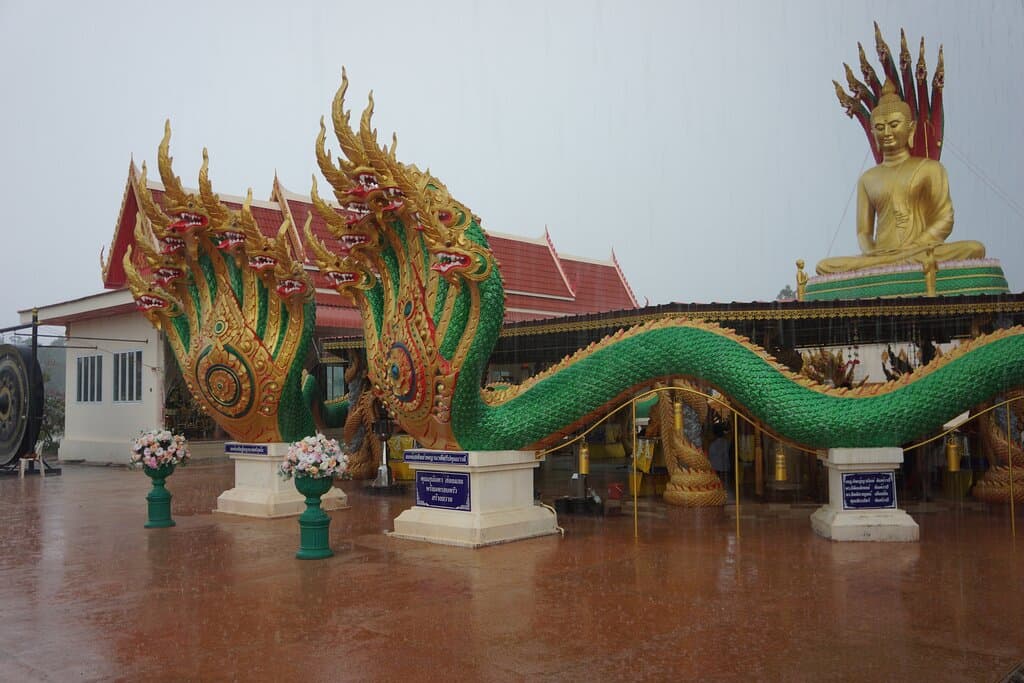
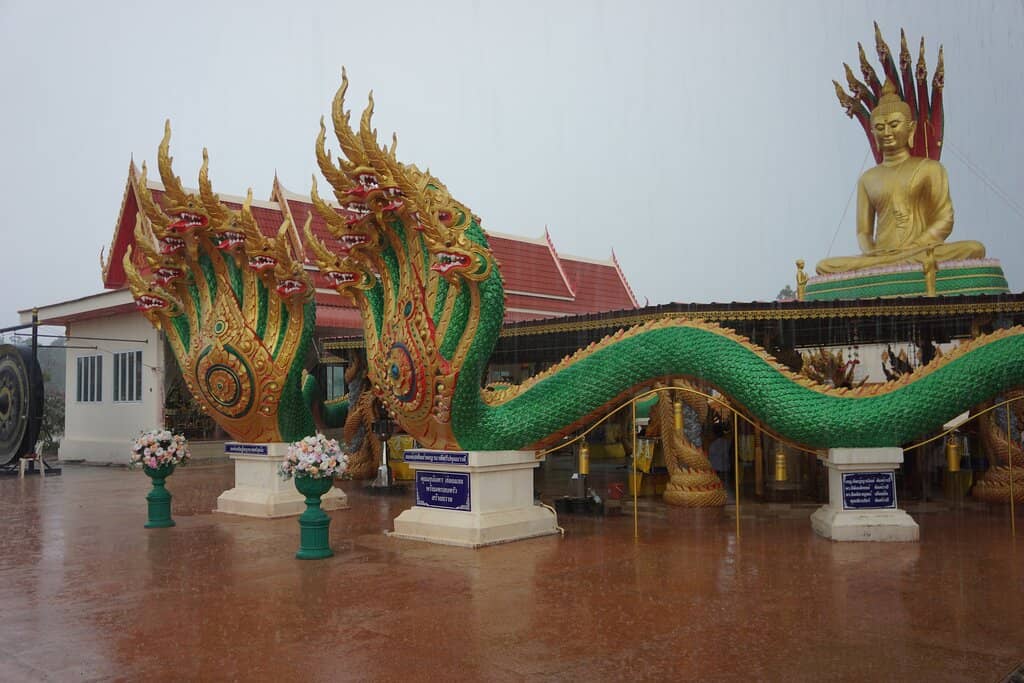
The Naga Cave is an ongoing construction project at the temple, featuring mythical serpent (Naga) imagery. It's an interesting addition to the temple complex.
Social
from TikTok, Instagram & Reddit