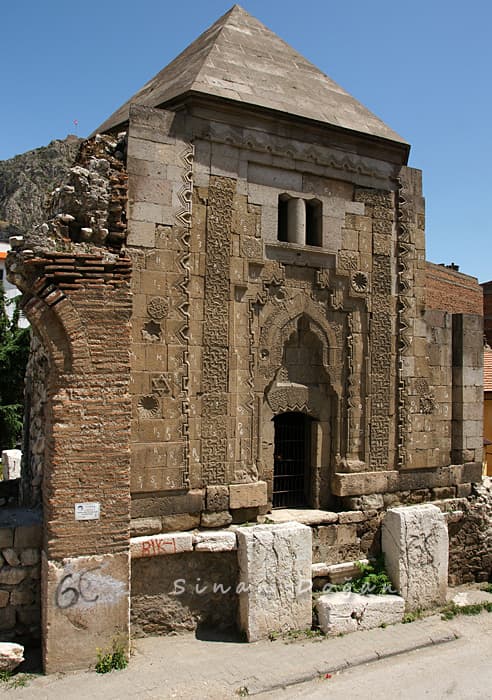
Halifet Gazi Tomb
An 800-year-old tomb featuring a saint's burial in a Roman sarcophagus, showcasing unique Seljuk architecture.
Highlights
Must-see attractions

Social
From TikTok & Reddit
Best Time
Fewer crowds, better light
Halifet Gazi Tomb
Best Time
Fewer crowds, better light
Highlights
Must-see attractions
An 800-year-old tomb featuring a saint's burial in a Roman sarcophagus, showcasing unique Seljuk architecture.
"A saint's tomb in a Roman sarcophagus is a very funny and interesting historical find."

Look for the Ram's Head
The sarcophagus on the lower floor features a distinctive ram's head carving. :statueofliberty:
Appreciate the Contrast
Notice how only the south facade is decorated, a deliberate architectural choice. :art:

Highlights
Discover the most iconic attractions and experiences
The Roman Sarcophagus
Interior
A saint's tomb rests within a Roman sarcophagus, a fascinating blend of cultures and eras.
Intricate South Facade
Exterior
Admire the geometric patterns, rosettes, and muqarnas niche framing the entrance.

Adjacent Madrasa Remains
Exterior
See the remnants of the adjoining madrasa, hinting at the complex's original grandeur.
Plans like a pro.
Thinks like you
Planning Your Visit
Timing is Key for Amasya's History
Understanding the Architecture
Best Times
Insider Tips
from TikTok, Instagram & Reddit
Look for the Ram's Head
The sarcophagus on the lower floor features a distinctive ram's head carving. :statueofliberty:
Appreciate the Contrast
Notice how only the south facade is decorated, a deliberate architectural choice. :art:
Imagine the Past
Consider the tomb's history, from Danishmend emir to Seljuk governor. :scroll:
Tips
from all over the internet
Look for the Ram's Head
The sarcophagus on the lower floor features a distinctive ram's head carving. :statueofliberty:
Appreciate the Contrast
Notice how only the south facade is decorated, a deliberate architectural choice. :art:
Imagine the Past
Consider the tomb's history, from Danishmend emir to Seljuk governor. :scroll:
What Travellers Say
Reviews Summary
Visitors find the Halifet Gazi Tomb an interesting historical site, particularly noting the unique blend of a saint's tomb within a Roman sarcophagus. While the architecture and historical context are appreciated, some reviews mention the tomb's current state of neglect, which detracts from the overall experience for some.
"Interesting place. The tomb of the saint is in a roman sarcophagus which is very funny"
Rafi Kassimov
"There are several differing opinions regarding the tomb's construction date. While the construction date is generally stated to be 1225, it is suggested that the tomb's west facade was built around the same time as the madrasa, to which it adjoins, and only a single arched column and the stone remains of the tomb's west wall remain. An inscription indicates that the madrasa was built in 1210. Therefore, it is assumed that the tomb was built at this time or earlier. There are also differing opinions regarding its builder. However, the general consensus is that the tomb was commissioned by Halifet Gazi, a Danishmend emir.
Following the collapse of the Danishmend Principality, Halifet Gazi entered the service of the Seljuks and became governor of Amasya in 1222. Gazi later served as governor of Erzurum. When he died during a campaign in 1232, his remains were brought to Amasya and buried in the tomb. The two-story tomb has a square base, an octagonal body, and a pyramidal spire. The tomb, constructed of smooth cut stone, is entered through a low arched door on the south side. Only this side of the structure is decorated, while the other sides are left plain. A zigzag outer border, crafted in a geometric pattern, frames these decorations. Above the door arch is another zigzag motif. The door is set within a muqarnas niche. The spaces above the arch and the outer edges are decorated with rosettes, each decorated with geometric inlays and stars. The upper part of the facade features a twin-arched window. The octagonal body has another low-arched window on the west side and a round-arched window on the east side. The eastern window also has three rows of muqarnas. On the lower floor, which serves as a burial place, is a marble sarcophagus, arranged east-west. The south-facing side of the sarcophagus features a ram's head with curved horns. The decoration continues with winged cupids and medusas resting on these."
KoSeKu
"The eight-hundred-year-old tomb has survived despite all the disloyalty. The current neglect of such a valuable monument to Amasya and Turkish Islamic culture doesn't embarrass its administrators, as the tomb's deplorable state is not surprising. Here's some information about the tomb:
Following the dissolution of the Danishmend Principality, Khalifet Gazi entered the service of the Seljuks and became governor of Amasya in 1222. He later served as governor of Erzurum. When he died during a campaign in 1232, his remains were brought to Amasya and buried in the tomb. The tomb, with a square base, an octagonal body, and a pyramidal spire, is two stories high. Built of smooth cut stone, the tomb is entered through a low arched door on the south facade. Only this facade of the building is decorated, while the other facades are plain. The adjacent building, of which only the wall remains of one arch remain, belongs to a madrasah dating back to a period similar to the tomb."
Alaaddin Kaynak
What People Like
What People Dislike
Frequently Asked Questions
🚇 🗺️ Getting There
The Halifet Gazi Tomb is located in Amasya, Turkey. It's often visited as part of exploring the city's historical sites. Public transport within Amasya is generally good, with local buses and taxis readily available to reach the tomb's vicinity. Walking is also an option if you are staying nearby.
Yes, the tomb is generally accessible. It's situated within the city, making it a common stop for those exploring Amasya's historical attractions. Wear comfortable shoes as you'll likely be walking around the historical area. :athletic_shoe:
🎫 🎫 Tickets & Entry
Information regarding ticket prices and entry fees for the Halifet Gazi Tomb is not widely publicized. It's often considered part of the general historical area of Amasya. It's advisable to check with local tourist information centers upon arrival for the most current details. :ticket:
Specific opening hours for the Halifet Gazi Tomb are not always clearly stated. As it's a historical monument, it's generally accessible during daylight hours. Visiting during the day is recommended to best appreciate the architecture and surrounding historical context. :clock1:
The Halifet Gazi Tomb can typically be visited year-round, as it is an outdoor historical site. However, weather conditions in Amasya can vary, with summers being hot and winters cold. Spring and autumn often offer the most pleasant weather for exploration. :seedling:
🎫 🧭 Onsite Experience
The tomb is believed to be the burial place of Halifet Gazi, a Danishmend emir who later served the Seljuks. Its construction date is debated, with links to a madrasa built around 1210, suggesting the tomb is at least 800 years old. :history_edu:
Key features include its square base, octagonal body, and pyramidal spire. The south facade is uniquely decorated with geometric patterns, rosettes, and a muqarnas niche, contrasting with the plain other sides. :building_construction:
Inside, you'll find a marble sarcophagus believed to be from the Roman era, which is quite unusual for a tomb of this period. It's decorated with a ram's head and other motifs. :statueofliberty:
While the tomb has survived for centuries, reviews suggest it has suffered from neglect. Despite its historical value, its current state may not be pristine, but it remains a significant cultural monument. :sadbutrelieved:
The tomb is located near other historical sites in Amasya, including the adjoining madrasa remains. Amasya itself is rich in history, with the Amasya Castle and rock tombs also being major attractions. :map:
📸 📸 Photography
Focus on the intricately decorated south facade for close-ups of the geometric patterns and rosettes. The contrast between the decorated and plain sides also makes for interesting shots. Capturing the Roman sarcophagus inside is a must. :camerawithflash:
Photography is generally allowed at historical sites like the Halifet Gazi Tomb. However, it's always good practice to be respectful and avoid using flash photography if it might disturb other visitors or damage delicate artifacts. :iphone:
Morning or late afternoon light can provide beautiful soft illumination for the tomb's facade, highlighting its textures and details. Avoid midday sun, which can create harsh shadows. :sunriseovermountains:
For Different Travelers
Tailored advice for your travel style
👨👩👧 Families with Kids
🏛️ History Buffs & Architecture Enthusiasts
Deep Dives
In-depth insights and expert knowledge
A Glimpse into Amasya's Past
The tomb's architecture is a notable feature. It stands two stories high with a square base, an octagonal body, and a pyramidal spire.
Despite its historical importance, the current state of the Halifet Gazi Tomb has been noted as a point of concern, with some reviews mentioning neglect.
Architectural Marvels and Debates
The most visually arresting element is the decorated south facade. This side features a low-arched doorway set within a muqarnas niche, framed by zigzag motifs and adorned with rosettes and geometric inlays.
Inside, the tomb's most peculiar artifact is the Roman sarcophagus used for the burial. This sarcophagus is not merely a container but a piece of art, decorated with a ram's head, winged cupids, and medusas.
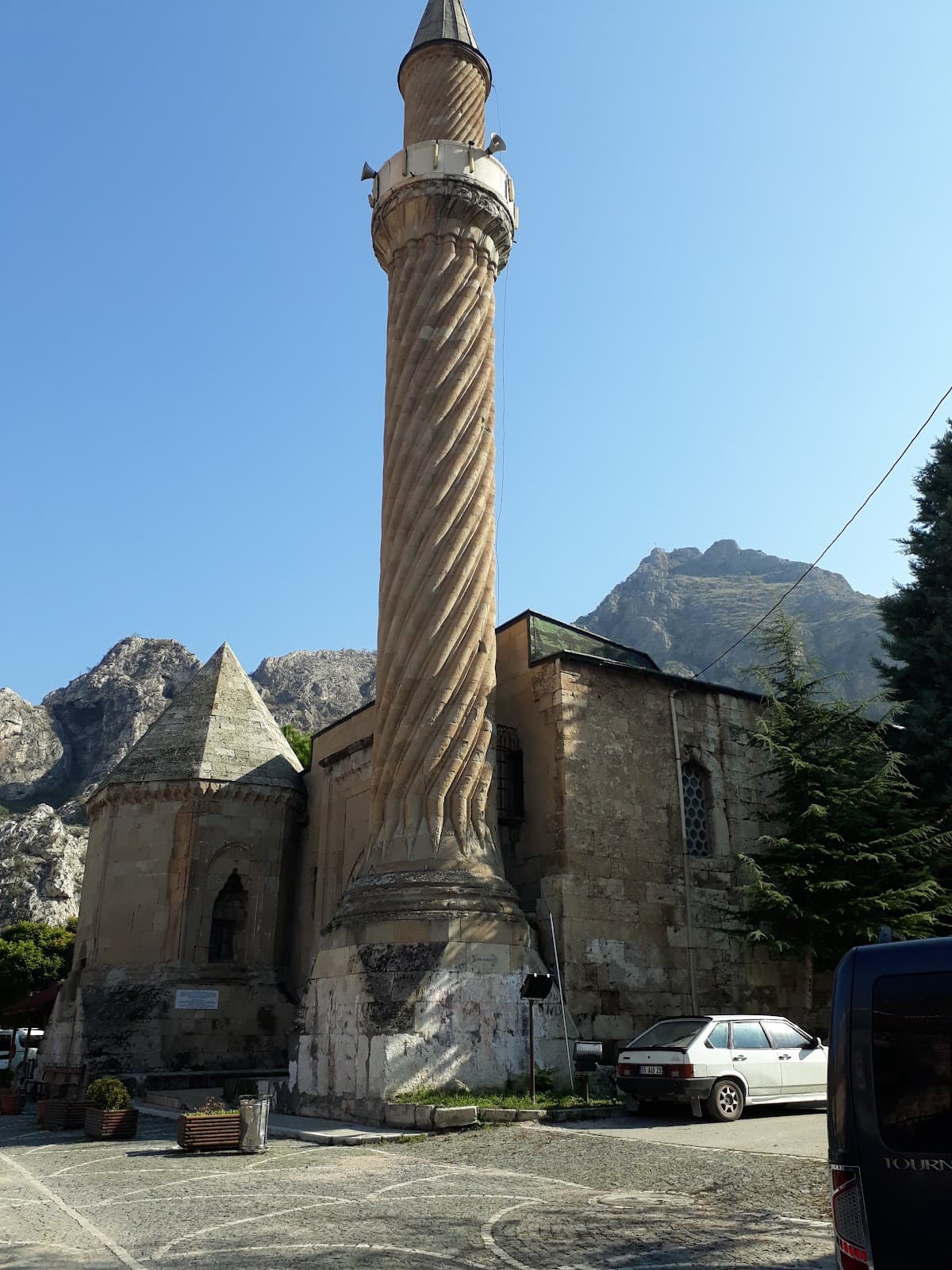


Social
from TikTok, Instagram & Reddit