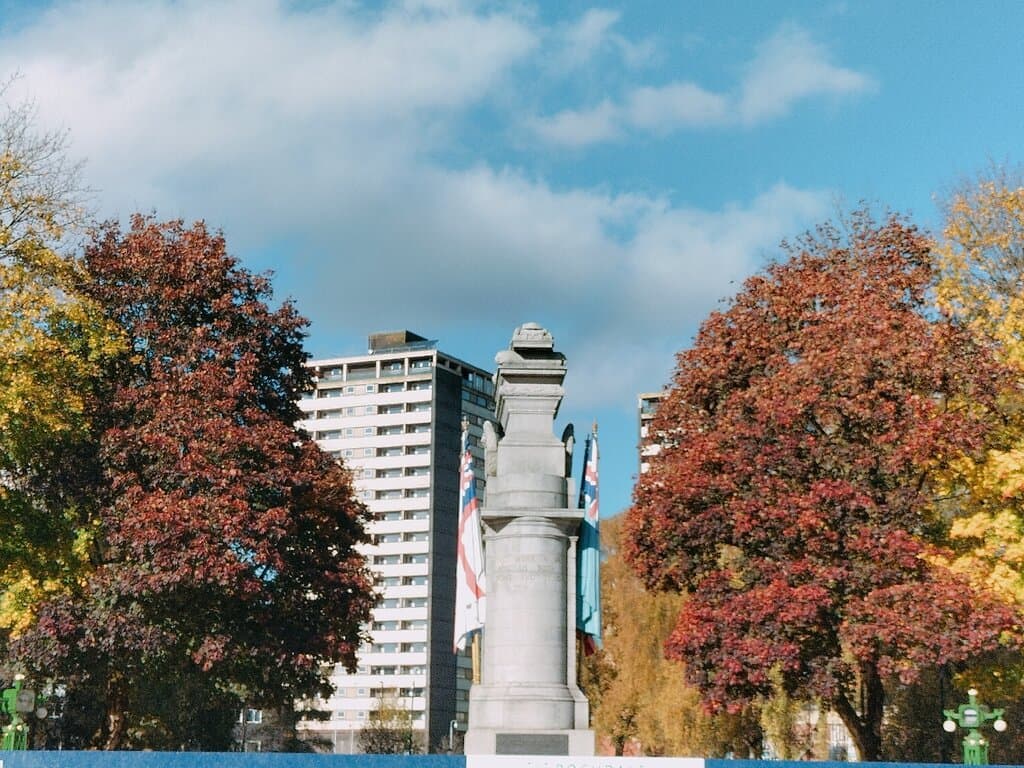
Rochdale Cenotaph
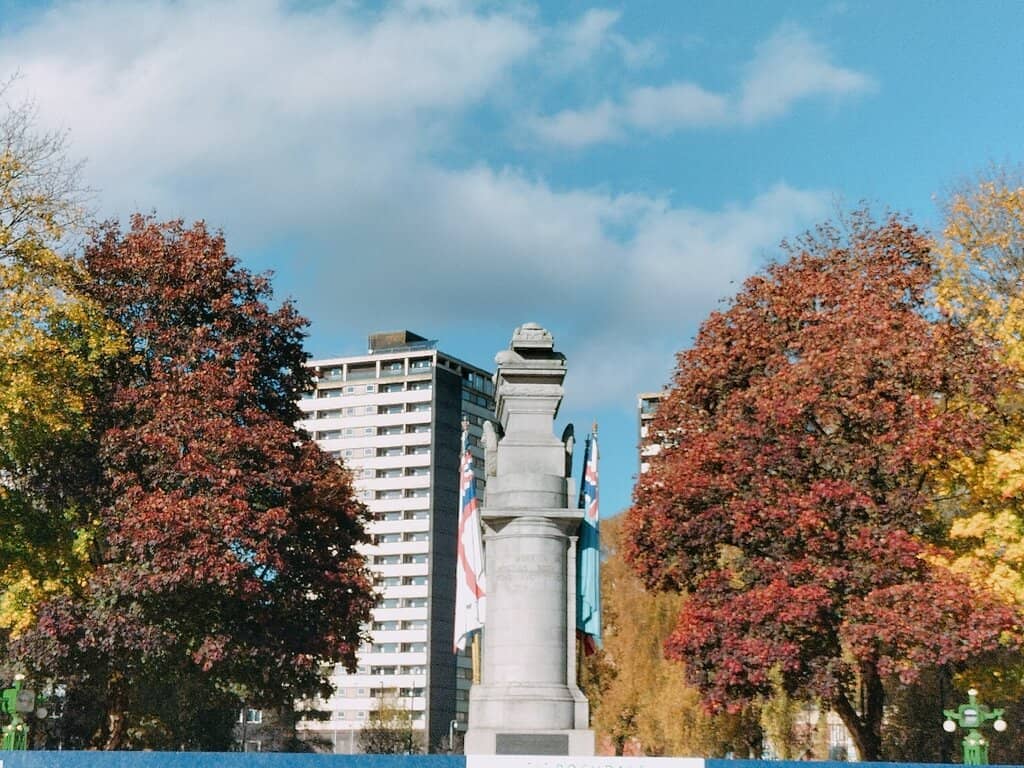
A significant Grade I listed war memorial designed by Sir Edwin Lutyens, featuring a striking pylon and Stone of Remembrance.

Highlights
Must-see attractions

Social
From TikTok & Reddit
Best Time
Peaceful reflection
Rochdale Cenotaph
Best Time
Peaceful reflection
Highlights
Must-see attractions
A significant Grade I listed war memorial designed by Sir Edwin Lutyens, featuring a striking pylon and Stone of Remembrance.
"Admire the striking architectural design by Sir Edwin Lutyens, a significant example of his war memorial work."
🕊️ Visit with Respect
This is a war memorial; approach with reverence. Avoid disruptive behavior or political statements.
📅 Check Event Schedules
Major commemorations like Remembrance Sunday can draw large crowds and may have ceremonies.

Quick Facts
Hours
Rating
4.7 · 31 reviews
Address
Website
rochdale.gov.ukHighlights
Discover the most iconic attractions and experiences
Lutyens' Architectural Design
The Esplanade
Admire the striking 10-meter pylon and Stone of Remembrance, a significant example of Sir Edwin Lutyens' war memorial architecture.
Stone of Remembrance
Base of the pylon
A key feature of Lutyens' memorials, this stone is designed for quiet contemplation of the sacrifices made.

Recumbent Soldier Effigy
Top of the pylon
The poignant effigy of a soldier lying on a bier, a powerful symbol of remembrance and sacrifice.
Plans like a pro.
Thinks like you
Planning Your Visit
Respectful Visitation
Commemoration Dates
Best Times
Insider Tips
from TikTok, Instagram & Reddit
🕊️ Visit with Respect
This is a war memorial; approach with reverence. Avoid disruptive behavior or political statements. 
📅 Check Event Schedules
Major commemorations like Remembrance Sunday can draw large crowds and may have ceremonies.
📸 Capture the Architecture
The design by Sir Edwin Lutyens is notable. Consider visiting during quieter times for photography.
📍 Location Context
Situated on The Esplanade, it's part of Rochdale's civic heart, near the Town Hall.
Tips
from all over the internet
🕊️ Visit with Respect
This is a war memorial; approach with reverence. Avoid disruptive behavior or political statements.
📅 Check Event Schedules
Major commemorations like Remembrance Sunday can draw large crowds and may have ceremonies.
📸 Capture the Architecture
The design by Sir Edwin Lutyens is notable. Consider visiting during quieter times for photography.
📍 Location Context
Situated on The Esplanade, it's part of Rochdale's civic heart, near the Town Hall.
What Travellers Say
Reviews Summary
Visitors often praise Rochdale Cenotaph for its striking architectural design by Sir Edwin Lutyens, noting its imposing pylon and Stone of Remembrance. It's recognized as a significant historical monument and a focal point for community remembrance. However, recent incidents of vandalism and protest have unfortunately drawn attention to the site, overshadowing its intended solemn purpose for some.
"Such a great architectural building I was amazed!"
Nishant Verma
"Rochdale Cenotaph is a First World War memorial on the Esplanade in Rochdale, Greater Manchester, in the north west of England. Designed by Sir Edwin Lutyens, it is one of seven memorials in England based on his Cenotaph in London and one of his more ambitious designs. The memorial was unveiled in 1922 and consists of a raised platform bearing Lutyens' characteristic Stone of Remembrance next to a 10-metre (33 ft) pylon topped by an effigy of a recumbent soldier. A set of painted stone flags surrounds the pylon.
A public meeting in February 1919 established a consensus to create a monument and a fund for the families of wounded servicemen. The meeting agreed to commission Lutyens to design the monument. His design for a bridge over the River Roch was abandoned after a local dignitary purchased a plot of land adjacent to Rochdale Town Hall and donated it for the site of the memorial. Lutyens revised his design, and Edward Stanley, 17th Earl of Derby, unveiled the memorial on 26 November 1922. It is a Grade I listed structure, having been upgraded in 2015 when Lutyens' war memorials were declared a national collection.
In the aftermath of the First World War and its unprecedented casualties, thousands of war memorials were built across Britain. Almost all towns and cities erected some form of memorial to commemorate their fallen. The mayor of Rochdale called a public meeting on 10 February 1919, three months after the armistice, to discuss proposals for the town's commemorations. Consensus was that the town should have a monument and a fund to provide for wounded servicemen, their families, and the families of the 2,000 war dead from Rochdale. Public subscription raised £29,443 10s, covering the £12,611 cost of the memorial.
The public meeting in February 1919 agreed to appoint Sir Edwin Lutyens as architect for the project. He was one of the most prominent designers of war memorials in Britain, described by Historic England as "the leading English architect of his generation". Before the war, Lutyens established a reputation designing country houses for wealthy patrons, but the war had a profound effect on him. From 1917 onwards, he dedicated much of his time to memorialising the casualties. He went on to design The Cenotaph on Whitehall in London, which became the focus for the national Remembrance Sunday commemorations and subsequently the Thiepval Memorial to the Missing on the Somme in France and many other memorials in Britain and the Commonwealth.
Lutyens proposed a memorial bridge crossing the River Roch in front of Rochdale Town Hall. At that time the river flowed openly through the town centre but has since been culverted. On either side of the bridge would have been recumbent effigies of a soldier lying on a bier and a Stone of Remembrance on the bridge. The plan was abandoned when Alderman William Cunliffe, a former mayor, bought a dilapidated 18th-century house (known as "the Manor House" or "the Orchard") on the opposite side of the river and donated the site for the war memorial. The site had particular poignancy as the building had been used as a recruiting station during the war. Lutyens' new design involved demolishing the Manor House to make way for a cenotaph and a Stone of Remembrance. Lutyens designed the stone for use in Imperial War Graves Commission cemeteries but it also features in several of his war memorials. Rochdale's cenotaph is among seven others by Lutyens in England based on the one on Whitehall, and is among the most ambitious of his designs to come to fruition."
penny sung
"If you are proud of your country, you should be proud to be able to go and remember all of those soldiers who died so we could live in a free country"
Bernard Cass
What People Like
What People Dislike
Frequently Asked Questions
🚇 🗺️ Getting There
Rochdale Cenotaph is located on The Esplanade in Rochdale, Greater Manchester. It's easily accessible by public transport, with bus routes serving the town center. If driving, there are several car parks nearby, though it's advisable to check for event-day restrictions.
Yes, Rochdale town center is well-served by buses, and the Cenotaph is a short walk from many stops. Train services also run to Rochdale station, which is a walkable distance or a short bus ride away.
Several public car parks are available in Rochdale town center, within walking distance of the Cenotaph. It's recommended to check parking availability and charges in advance, especially on event days.
🎫 🎫 Tickets & Entry
No, Rochdale Cenotaph is an outdoor memorial and is freely accessible to the public at all times. There is no admission fee.
As an outdoor memorial, Rochdale Cenotaph is accessible 24/7. However, visiting during daylight hours is recommended for better visibility and appreciation of the site.
Yes, you can visit during special events like Remembrance Sunday. Be aware that these times can be very busy and may involve ceremonies.
While generally open, visitors are expected to behave respectfully. Disruptive behavior or political demonstrations that disrespect the memorial are not permitted.
📸 📸 Photography
Yes, photography is generally allowed at Rochdale Cenotaph. However, visitors are encouraged to be mindful of any ongoing ceremonies or events and to photograph respectfully.
Early mornings or late afternoons can offer softer light for photography. Visiting during off-peak hours will also allow for more unobstructed shots of the architecture.
The Stone of Remembrance and the recumbent soldier effigy are key photographic subjects. Capturing the scale of the pylon against the sky can also be striking.

Social
from TikTok, Instagram & Reddit