Amistad Memorial City Hall
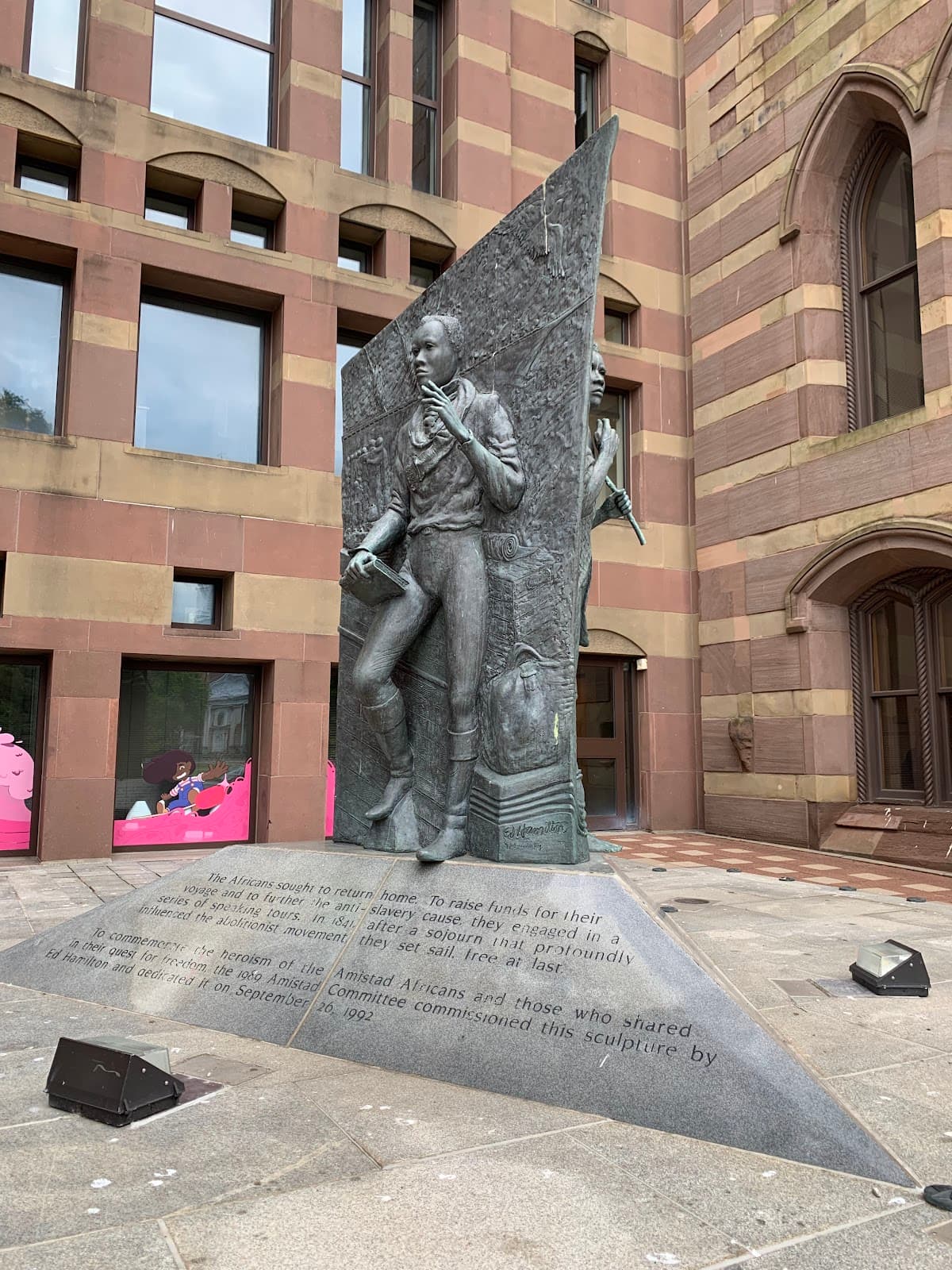
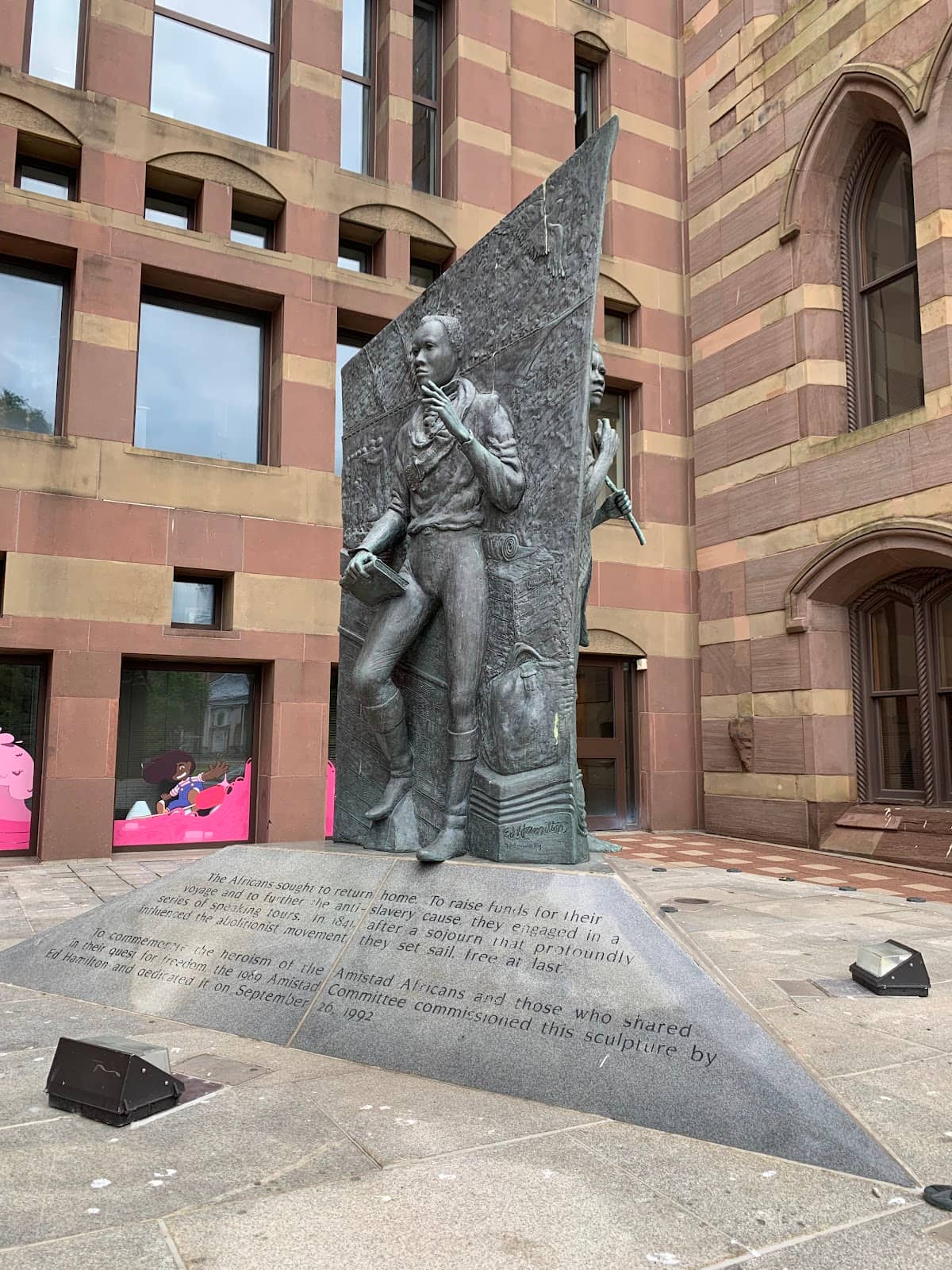
A striking memorial in New Haven's City Hall courtyard, honoring the Amistad revolt and the fight for freedom with powerful bronze sculptures.
Highlights
Must-see attractions

Social
From TikTok & Reddit
Best Time
Dramatic lighting enhances sculptures
Amistad Memorial City Hall
Best Time
Dramatic lighting enhances sculptures
Highlights
Must-see attractions
A striking memorial in New Haven's City Hall courtyard, honoring the Amistad revolt and the fight for freedom with powerful bronze sculptures.
"A beautiful testament to the strength and courage of the members of the Amistad revolt against slaver scum."
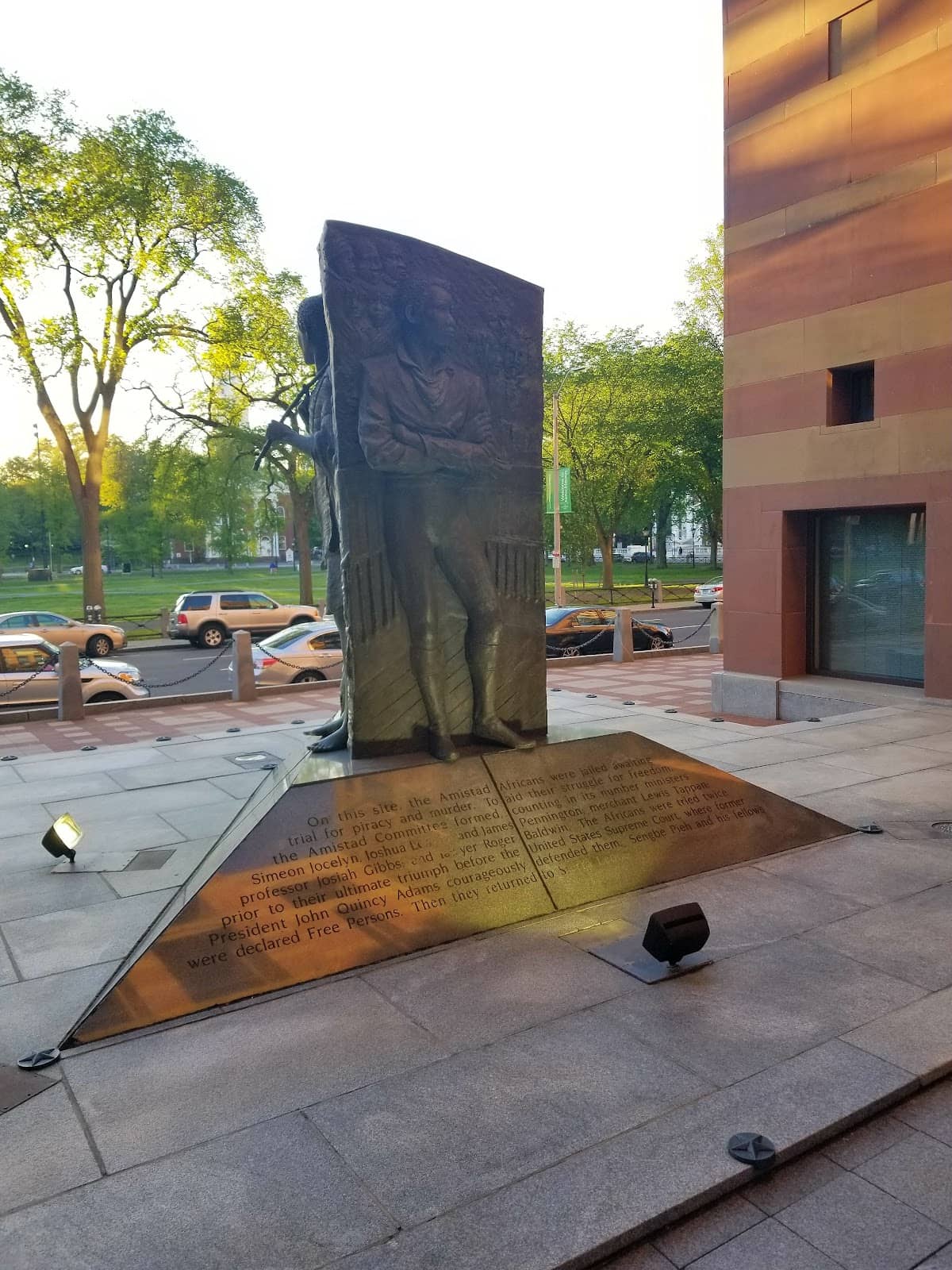
🎯 Evening Illumination Magic
Visit after dark to see the memorial dramatically lit, bringing the bronze figures to life.
🚶♂️ Walk Around for Details
Circle the monument slowly; each angle reveals new details and perspectives on the story.

Quick Facts
Hours
Rating
4.6 · 13 reviews
Highlights
Discover the most iconic attractions and experiences
Sengbe Pieh (Joseph Cinqué) Sculptures
Central bronze reliefs
Witness Cinqué's journey from captive to free man through powerful bronze figures emerging from stone.
The "MAKE US FREE" Inscription
Base of the memorial
A direct and poignant quote from Cinqué, grounding the memorial in the voices of those who fought for liberty.
Dramatic Evening Illumination
Courtyard of City Hall
Ground-mounted spotlights cast upward shadows, animating the bronze figures against the building's facade.
Plans like a pro.
Thinks like you
Planning Your Visit
Timing Your Visit for Impact
Understanding the Historical Context
Best Times
Insider Tips
from TikTok, Instagram & Reddit
🎯 Evening Illumination Magic
Visit after dark to see the memorial dramatically lit, bringing the bronze figures to life.
🚶♂️ Walk Around for Details
Circle the monument slowly; each angle reveals new details and perspectives on the story.
🧒 Kids Can Touch Inscriptions
Children often enjoy tracing the inscribed words, offering a tactile connection to history.
📍 Downtown New Haven Hub
Easily combined with Yale University visits and dining.
Tips
from all over the internet
🎯 Evening Illumination Magic
Visit after dark to see the memorial dramatically lit, bringing the bronze figures to life.
🚶♂️ Walk Around for Details
Circle the monument slowly; each angle reveals new details and perspectives on the story.
🧒 Kids Can Touch Inscriptions
Children often enjoy tracing the inscribed words, offering a tactile connection to history.
📍 Downtown New Haven Hub
Easily combined with Yale University visits and dining.
🆓 Free to Visit Anytime
The memorial is accessible 24/7, making it a flexible stop on your itinerary.
What Travellers Say
Reviews Summary
Visitors praise the Amistad Memorial as a powerful and moving testament to the fight for freedom, with many highlighting the dramatic evening lighting and the compelling bronze sculptures. Some note the presence of homeless individuals in the area, which can be a somber addition to the historical reflection.
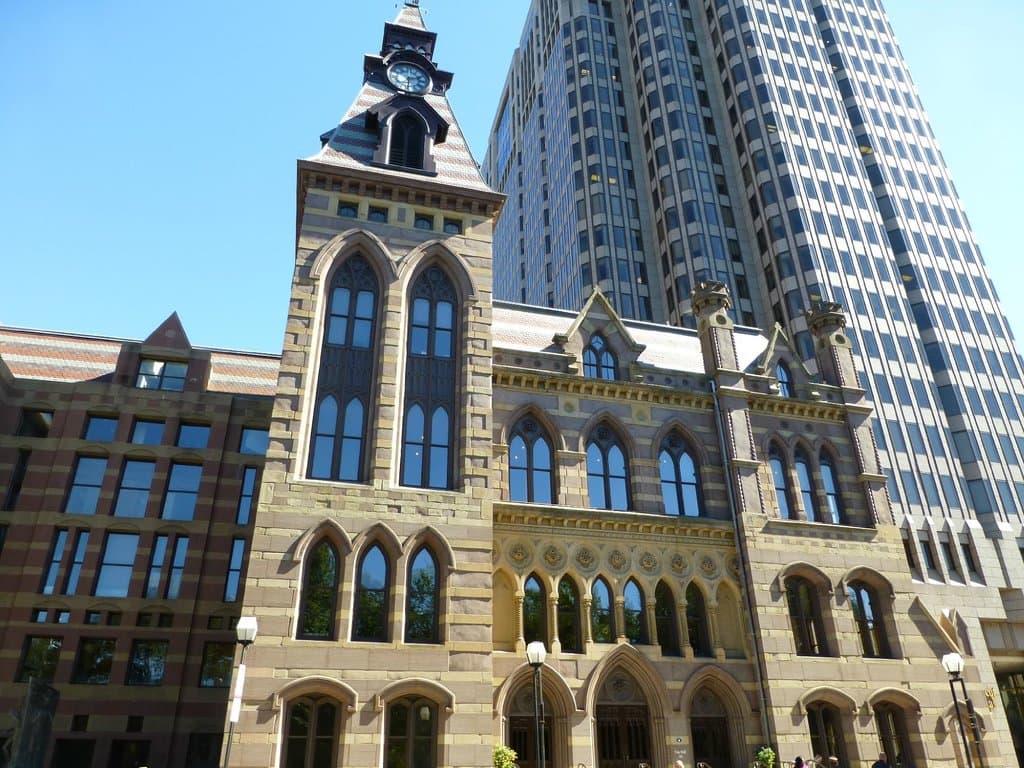
"In the courtyard of New Haven's City Hall, a striking memorial rises from the stone pavement, illuminated dramatically against the building's striated pink and beige facade. The Amistad Memorial stands as a powerful testament to one of the most significant legal battles in American history, where the fight for human freedom reached the highest court in the land.
The memorial consists of several bronze relief sculptures emerging from stone slabs arranged in a star-like formation. The central figure is Sengbe Pieh, also known as Joseph Cinqué, depicted at different points in his extraordinary journey - as a defiant leader, a man on trial, and finally as a free individual returning home. His face, with its determined expression and penetrating gaze, seems to watch visitors from multiple angles, creating an encounter that feels oddly personal.
What makes sculptor Ed Hamilton's work particularly compelling is how the figures appear to be emerging from the stone itself, breaking free from their constraints both literally and symbolically. The effect is heightened at night, when ground-mounted spotlights cast dramatic shadows upward, giving the bronze figures an almost animated quality against the institutional architecture.
The inscription at the base reads "MAKE US FREE," words attributed to Cinqué himself. Additional text recounts how the 53 Africans were kidnapped from their homes, their rebellion aboard the Spanish schooner La Amistad, and their eventual legal victory which allowed them to return to Sierra Leone as free individuals.
This courtyard marks the actual site where the Amistad captives were imprisoned while awaiting trial for piracy and murder in 1839. Standing here, one can almost imagine them looking up at the same building, though in a very different circumstance. It was in this city that the abolitionists formed the Amistad Committee to support their cause, with prominent local figures including Yale professors and ministers rallying to their defense.
The location feels particularly poignant given New Haven's complex history with slavery and abolition. While Connecticut was nominally a free state by the time of the Amistad event, it had deep economic ties to the slave economy. The memorial doesn't shy away from this contradiction, instead placing it literally at the doorstep of government power.
Visitors often circle the monument slowly, discovering new details with each angle. The varying heights of the stone platforms invite viewers to crouch down or stand tall, experiencing the memorial from multiple perspectives. Children frequently trace the inscribed words with their fingers, a tactile connection to history that formal museums rarely permit.
The memorial is freely accessible at all hours, though evening visits offer the most dramatic lighting. Its location in downtown New Haven places it just blocks from Yale University and near several notable restaurants, making it an easy addition to a day of cultural exploration in the city.
Dedicated in 1992, the Amistad Memorial has become a gathering place for celebrations of freedom and commemorations of the ongoing struggle for human rights. While New Haven offers many attractions, few speak so directly to America's complicated moral journey or invite such personal reflection on justice and liberty."
Jeremy Edmunds
"Only saw the statues. Downtown location has several homeless people"
M. Clark
"A beautiful testament to the strength and courage of the members of the Amistad revolt against slaver scum."
Heli Aldridge
What People Like
What People Dislike
Frequently Asked Questions
🚇 🗺️ Getting There
Take the Metro-North train from Grand Central to New Haven - Union Station (approx. 2 hours). From there, a free shuttle bus (USS bus) departs every 20 minutes to the New Haven Green, which is near City Hall.
Yes, there are several parking garages and street parking options available in downtown New Haven, close to City Hall. It's recommended to check parking apps for real-time availability and rates.
Absolutely! The Amistad Memorial is located in downtown New Haven, just a few blocks from Yale University, making it an easy walk.
New Haven has a bus system, and the free shuttle from the train station is very convenient. Ride-sharing services are also readily available.
The memorial is located in a courtyard with paved surfaces, making it generally accessible. The stone platforms vary in height, but the main inscriptions are at ground level.
🎫 🎫 Tickets & Entry
No, the Amistad Memorial is a public monument located in the courtyard of City Hall and is completely free to visit.
The memorial is accessible 24 hours a day, 7 days a week. However, the most impactful experience is during evening hours when the lighting is on.
There is no admission fee. It's a public space dedicated to remembrance and education.
Yes, the memorial is often a site for commemorations and celebrations of freedom. Check local New Haven event listings for any scheduled activities.
While located in the City Hall courtyard, the memorial is an independent monument. City Hall tours may or may not include it, but it's easily accessible on your own.
📸 📸 Photography
For dramatic shots, visit during the evening when the ground-mounted spotlights create striking upward shadows on the bronze figures.
Generally, photography is allowed for personal use. However, always be respectful of the solemn nature of the memorial and other visitors.
Experiment with different heights and distances. Getting low can emphasize the figures emerging from the stone, while a wider shot captures the context with City Hall.
Yes, the inscriptions are a key part of the memorial's message and are encouraged to be photographed and read.
The memorial has its own dramatic lighting. Consider using a tripod for sharper images in low light or embracing the ambient light for a more atmospheric feel.
🎫 🏛️ Onsite Experience
Most visitors spend 30-60 minutes, allowing time to walk around, read the inscriptions, and reflect on the history.
It commemorates the Amistad revolt of 1839, a landmark legal case where enslaved Africans fought for their freedom, ultimately winning their case and returning home.
Official guided tours specifically for the memorial are not common, but local historical societies or walking tours of New Haven might include it.
The figures depict Sengbe Pieh (Joseph Cinqué) at various stages of his journey: as a leader, on trial, and as a free man. They symbolize the struggle and triumph of freedom.
Crowds are generally low, especially during weekday evenings. Weekends and daytime can see more visitors, particularly those exploring downtown New Haven.
🍽️ 🍽️ Food & Dining
Yes, the memorial is in downtown New Haven, surrounded by numerous restaurants, cafes, and eateries catering to various tastes and budgets.
You'll find everything from classic New Haven pizza (apizza) to diverse international cuisines, casual cafes, and upscale dining options.
While there are no explicit rules against it, it's generally best to consume food and drinks away from the immediate memorial area to maintain its solemnity.
Many popular spots are within walking distance. Consider exploring the area around the New Haven Green for a variety of choices.
While not ideal for a full picnic, you could grab a quick bite from a nearby cafe and enjoy it in a nearby park or public space before or after visiting the memorial.



Social
from TikTok, Instagram & Reddit