Kafir Kala Archaeological Site
Explore Kafir Kala, an ancient Sogdian city and fortress, offering a tangible connection to the Silk Road's rich history.
Highlights
Must-see attractions

Social
From TikTok & Reddit
Best Time
Pleasant temperatures for exploring
Kafir Kala Archaeological Site
Best Time
Pleasant temperatures for exploring
Highlights
Must-see attractions
Explore Kafir Kala, an ancient Sogdian city and fortress, offering a tangible connection to the Silk Road's rich history.
"An impressive view of the territory and a highly recommended visit for history lovers."
Wear Comfortable Shoes
You'll be walking on uneven terrain, so sturdy footwear is a must for exploring the vast site. :athletic_shoe:
Bring Water & Sun Protection
The site is exposed with little shade. Stay hydrated and protected from the sun, especially during warmer months. :droplet: :sunwithface:
Quick Facts
Hours
Rating
4.8 · 20 reviews
Type
Historical Landmark
Highlights
Discover the most iconic attractions and experiences
The Imposing Fortress Walls
Main Citadel Area
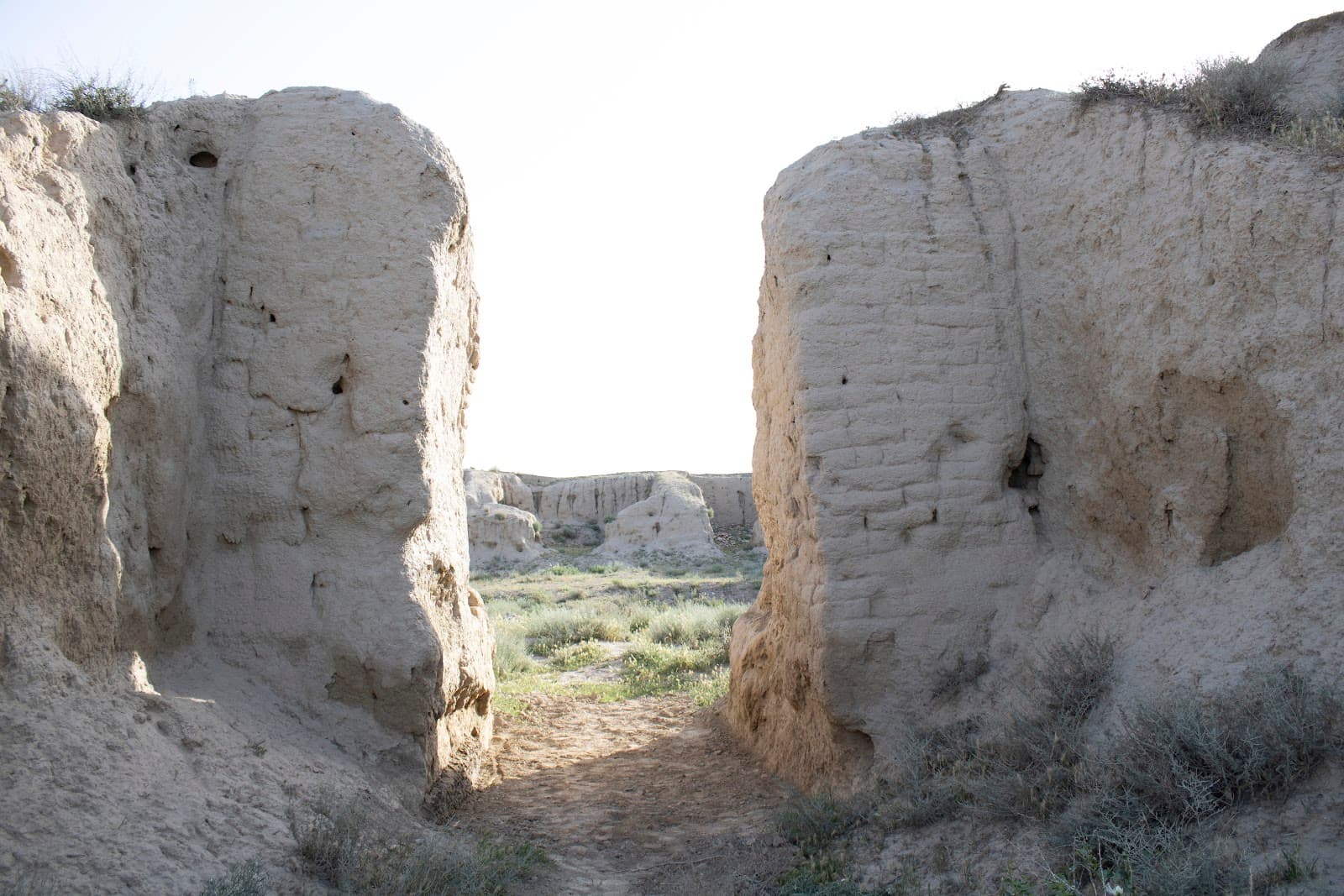
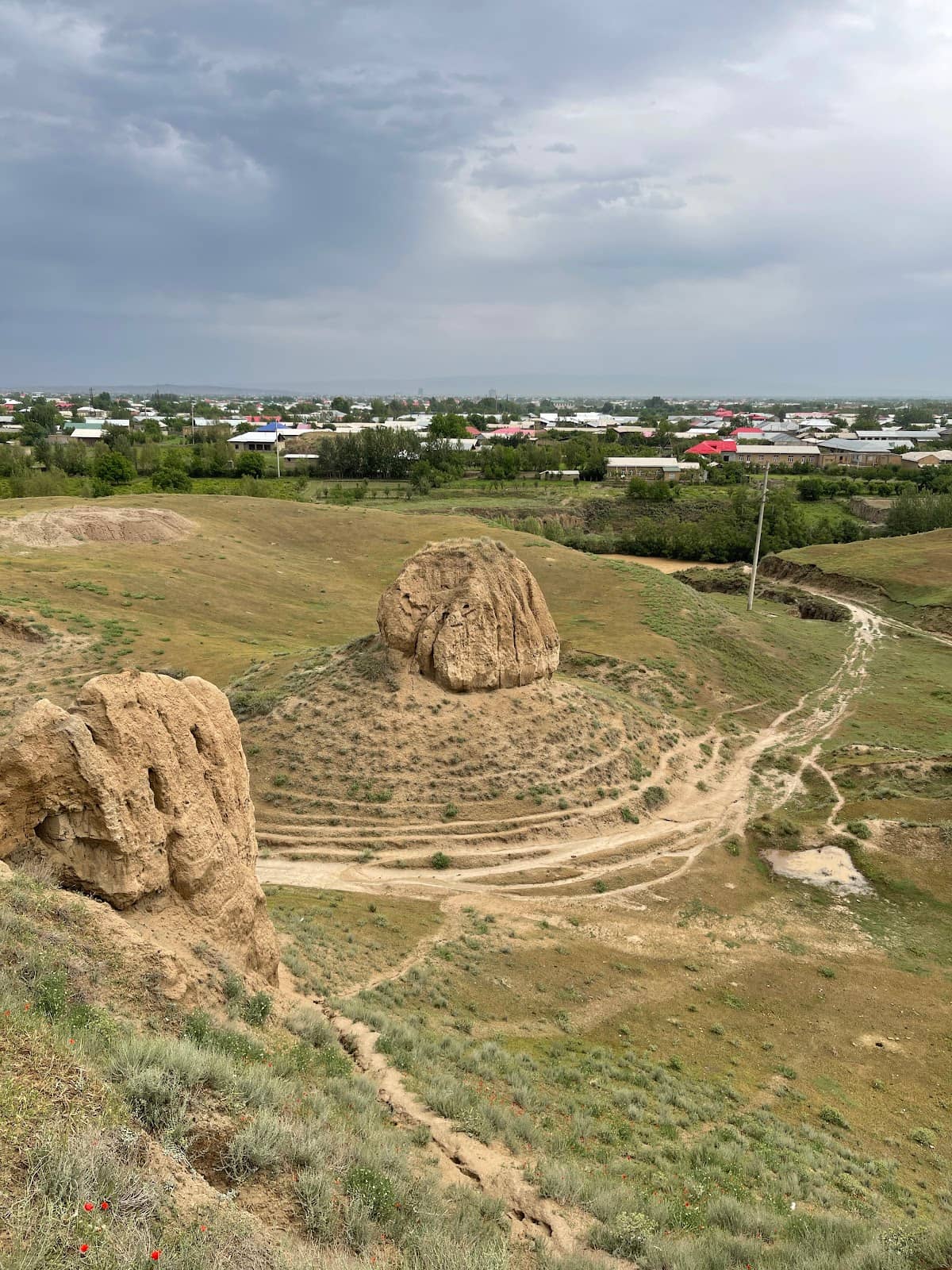
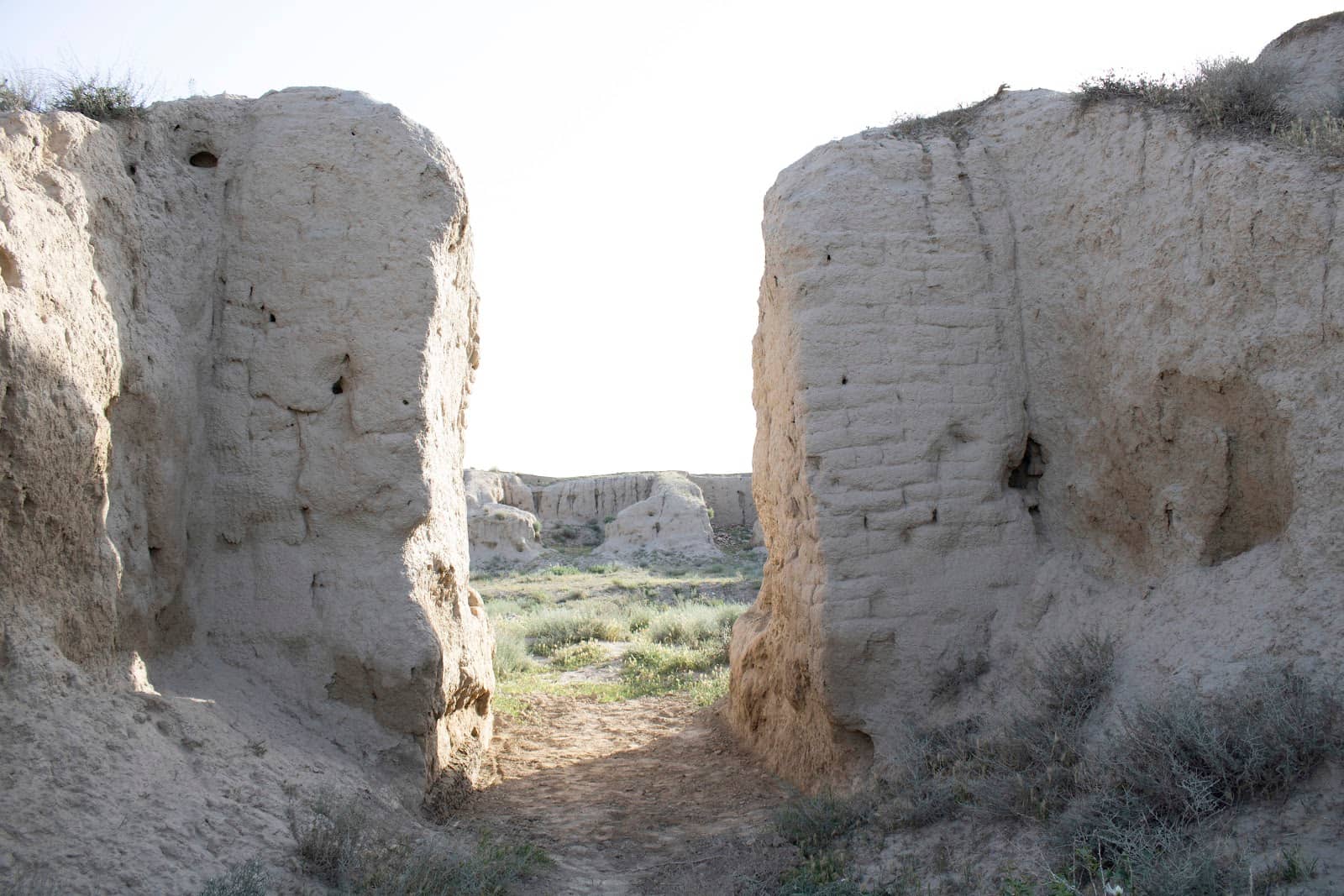
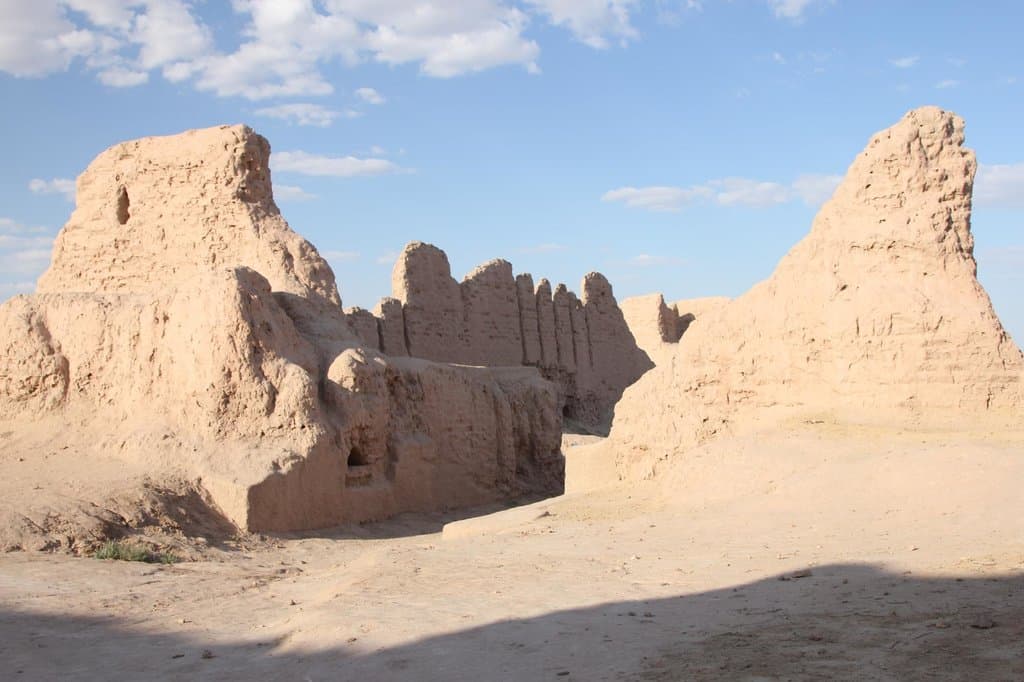
Stand in awe of the 25-meter high quadrangular fortress, a testament to ancient Sogdian architecture and defense.
The Ancient Ark and Moat
Central Citadel
Explore the remnants of the fortified citadel, once surrounded by a wide moat, offering a glimpse into its strategic design.
Sogdian Era Cretulae Collection
Archaeological Museum (if available)
Discover clay seals from the 7th century, revealing administrative and artistic insights from the Sogdian period.
Plans like a pro.
Thinks like you
Planning Your Visit
Timing Your Visit to Kafir Kala
Getting to Kafir Kala
Best Times
Insider Tips
from TikTok, Instagram & Reddit
Wear Comfortable Shoes
You'll be walking on uneven terrain, so sturdy footwear is a must for exploring the vast site. :athletic_shoe:
Bring Water & Sun Protection
The site is exposed with little shade. Stay hydrated and protected from the sun, especially during warmer months. :droplet: :sunwithface:
Allow Ample Time
Kafir Kala is larger than it appears. Dedicate at least 2-3 hours to truly appreciate its historical depth. 🕐
Consider a Guide
A local guide can bring the history to life, explaining the significance of different structures and artifacts. :man_teacher:
Tips
from all over the internet
Wear Comfortable Shoes
You'll be walking on uneven terrain, so sturdy footwear is a must for exploring the vast site. :athletic_shoe:
Bring Water & Sun Protection
The site is exposed with little shade. Stay hydrated and protected from the sun, especially during warmer months. :droplet: :sunwithface:
Allow Ample Time
Kafir Kala is larger than it appears. Dedicate at least 2-3 hours to truly appreciate its historical depth. 🕐
Consider a Guide
A local guide can bring the history to life, explaining the significance of different structures and artifacts. :man_teacher:
What Travellers Say
Reviews Summary
Visitors praise Kafir Kala for its historical significance and impressive ancient architecture, offering a compelling glimpse into the Sogdian era. Its strategic location and the discovery of unique artifacts like cretulae are highlighted as major draws. While the site is vast and requires comfortable footwear, the immersive historical experience is widely recommended for those exploring Samarkand.
"One of the most historical places of Samarkand and an impressive view of the territory around it. A visit here is strongly recommended"
Naturopata Elisabetta Sedda Ravenna
"Sogdian city remains before the invasion of Islamic Troops at 7th century"
winnie leung
"Just a 20-minute drive from the center of Samarkand, 12 kilometers south of the city, is the large archaeological complex of Kafir Kala. From the Arabic "fortress of the infidels", the site of Kafir Kala represents one of the most important monuments of the Sogdian period in the entire region. The site extends over 20 hectares, on the left bank of the Dargom, which is the great canal that once fed the ancient city. The fortress, quadrangular in shape, which with its height of 25 meters stands out in a particular way on the plain in front. It is therefore an imposing structure and, without a doubt, very scenic and suggestive, today as in the past. The fortress is built according to traditional architecture that combines raw clay bricks and paksha, and is in a fairly good state of conservation.
The location is particularly strategic: the complex was in fact defended by two natural drainage channels, the say, from east and west, and the Dargom to the north. importance, being located at the southern gates of Samarkand, the ancient capital of Sogdiana. In addition, the site was located at the center of a major communications crossroads along the southern Middle Valley route of Zeravshan and Kashkadarya.
During the Sogdian phase, a few miles below an important intersection of the Silk Road was to be found, which connected the site with India and Bactria to the south, while to the west it was possible to reach Persia, passing through Buhkara.
The complex is divided into various parts which reflects, in its small size, the typical conformation of the centers of Central Asia: in the center, there is the ark, or the fortified citadel, surrounded by a 30 meter wide moat, which separated it from the shahristan, i.e. the residential district. At the edge of the moat, there are six square towers. To the west, a second moat separated the residential district from the rabat, perhaps intended to house the military troops stationed here. The complex also includes a large necropolis to the south, and an artisan district to the west, where numerous kilns for the production of ceramics have been found.
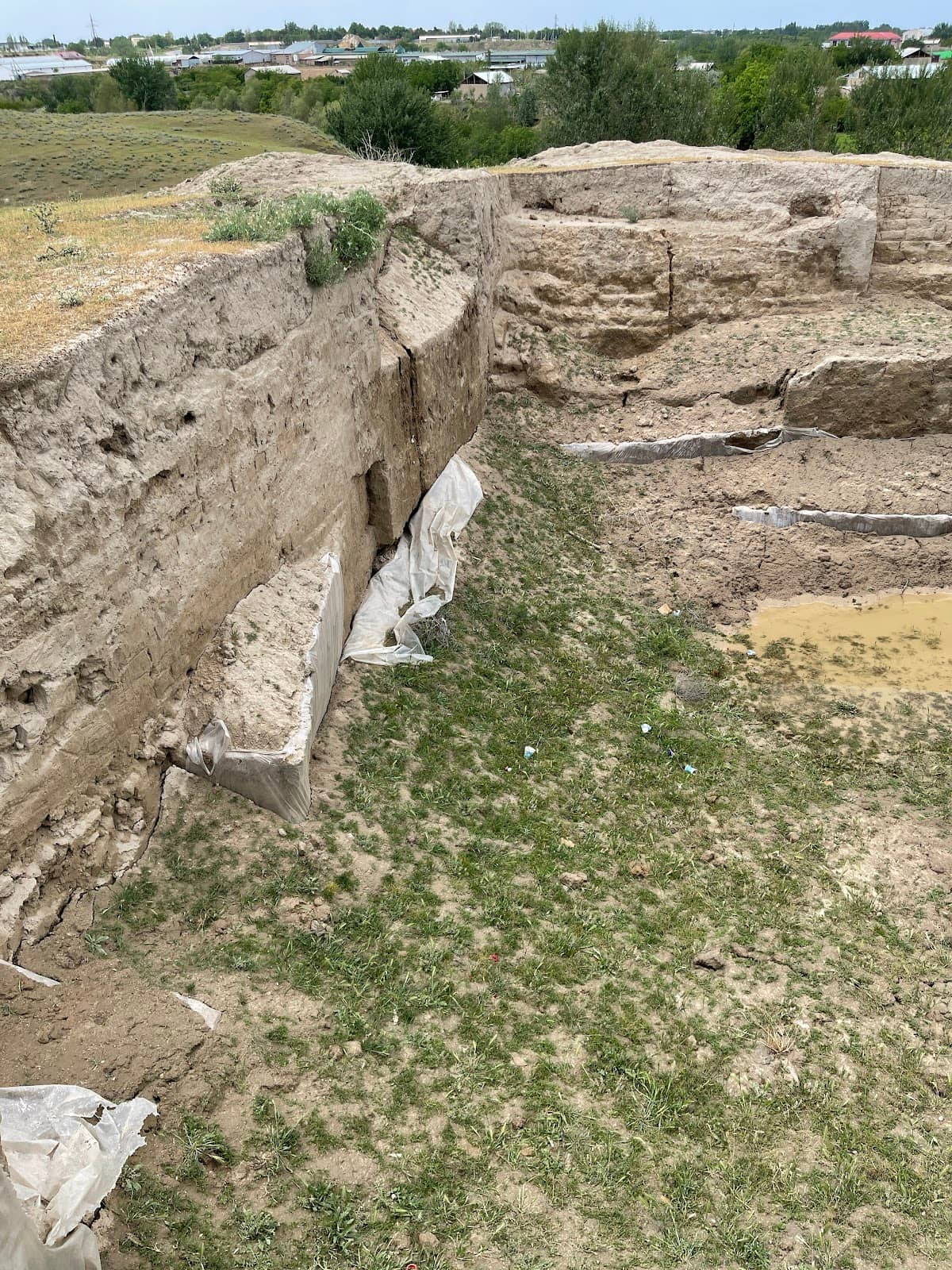
Archaeological excavations have been in the Kafir Kala area at least since the early 1900s.
The first reconnaissance dates back to 1918, when M. E. Masson drew the first relief of the complex. Masson, based on the written sources of Ruy Gonzàlez de Clavijo, was in search of the Davlet-abad, the gardens built by Tamerlane.
During the excavations of the which involved the citadel area (KK-1), the Italo-Uzbek mission found over 500 cretulas between 2001-2005.
They were scattered on a floor, covered by a layer of wooden beams burned during the pre-Islamic phase and dating from around the 7th century. The presence of ash and coal is attributable to a traumatic event in the fortress, perhaps linked to a fire caused by the conquest of Samarkand in 712 AD. by the Arab army.
This is an exceptional discovery, representing the richest collection of cretula ever found in Central Asia. These seals are made of clay and measure approximately 1 to 4cm. The cretulas were used to seal documents, letters or mark goods and products. The presence of such a high number indicated the presence of an important administrative archive, perhaps the seat of an important political entity, perhaps the rural seat of the local governor, and which would see Kafir Kala play a role of primary importance within the panorama political and social of the Samarkand region. The cretulas portray very varied subjects: The richest group is the one that portrays human busts, mainly male figures portrayed in profile, although there are also images of whole figures, standing or seated, as well as representations of animals. it is possible to understand that the time span covered is decidedly large: taking as an example the seals of the nomadic princes, which represent the richest group of seals, the chronology dates back to between the 4th and 6th centuries AD."
Orlando Patone
What People Like
What People Dislike
Frequently Asked Questions
🚇 🗺️ Getting There
Kafir Kala is located about 12 kilometers south of Samarkand, a roughly 20-minute drive. The most convenient way to reach it is by taxi or private car. While public transport is not readily available, the short distance makes it an easy trip from the city center.
Yes, the site is accessible by car. There is typically parking available near the entrance, making it convenient for those who choose to drive or hire a taxi.
For solo travelers, a taxi is often the most straightforward option. You can negotiate a round-trip fare with a driver, ensuring easy transport back to Samarkand. Alternatively, consider joining a small group tour if available.
Many local tour operators in Samarkand offer day trips that can include Kafir Kala as part of a broader historical tour of the region. It's worth inquiring with your accommodation or local tourist information centers.
While possible, cycling to Kafir Kala might be challenging due to the distance and potential traffic. It's generally recommended to use a taxi or car for a more comfortable and time-efficient journey.
🎫 🎫 Tickets & Entry
Kafir Kala is an open archaeological site, and typically does not have strict opening or closing hours like a museum. However, it's best to visit during daylight hours for safety and visibility.
While specific fees can vary, archaeological sites often have a nominal entrance fee. It's advisable to check with local authorities or your guide upon arrival for the most current pricing.
No, advance booking is generally not required for Kafir Kala as it's an open-air site. You can usually purchase tickets upon arrival if there is a fee.
As an archaeological site, visitors are expected to respect the ruins and not disturb any artifacts. Stick to designated paths and avoid climbing on structures.
Yes, Kafir Kala is generally accessible on public holidays. However, it might be busier with local visitors during these times.
🎫 🏛️ Onsite Experience
The best way to explore Kafir Kala is on foot. Wear comfortable shoes as the terrain can be uneven. Consider hiring a local guide to gain deeper insights into the history and significance of the site.
To fully appreciate the scale and history of Kafir Kala, allocate at least 2 to 3 hours for your visit. This allows time for exploring the main citadel, residential areas, and surrounding necropolis.
Facilities at Kafir Kala are generally limited. It's advisable to use restrooms before you arrive and bring your own water and snacks.
Due to the uneven terrain and archaeological nature of the site, Kafir Kala may present challenges for visitors with significant mobility issues. Some areas might be difficult to navigate.
While many artifacts are housed in museums, excavations at Kafir Kala have uncovered significant finds like cretulae (clay seals), pottery, and remnants of ancient structures, offering a glimpse into Sogdian life.
📸 📸 Photography
The imposing fortress walls, the strategic layout of the citadel with its moat, and the panoramic views of the surrounding territory offer excellent photographic opportunities. The late afternoon light can create dramatic shots.
Generally, photography for personal use is allowed at Kafir Kala. However, it's always good practice to be respectful and avoid intrusive photography, especially if there are any ongoing excavations or specific signage.
The late afternoon, especially during the 'golden hour,' provides beautiful lighting for photography, casting long shadows and highlighting the textures of the ancient structures. Morning light is also good for softer illumination.
Drone usage regulations can vary by country and specific site. It's best to check with local authorities or the site management beforehand to inquire about drone policies at Kafir Kala.
A versatile lens (like a 24-70mm equivalent) is useful for capturing both wide shots of the site and details of the architecture. A wide-angle lens can be great for the expansive views. Consider a tripod for low-light conditions or long exposures.
Social
from TikTok, Instagram & Reddit