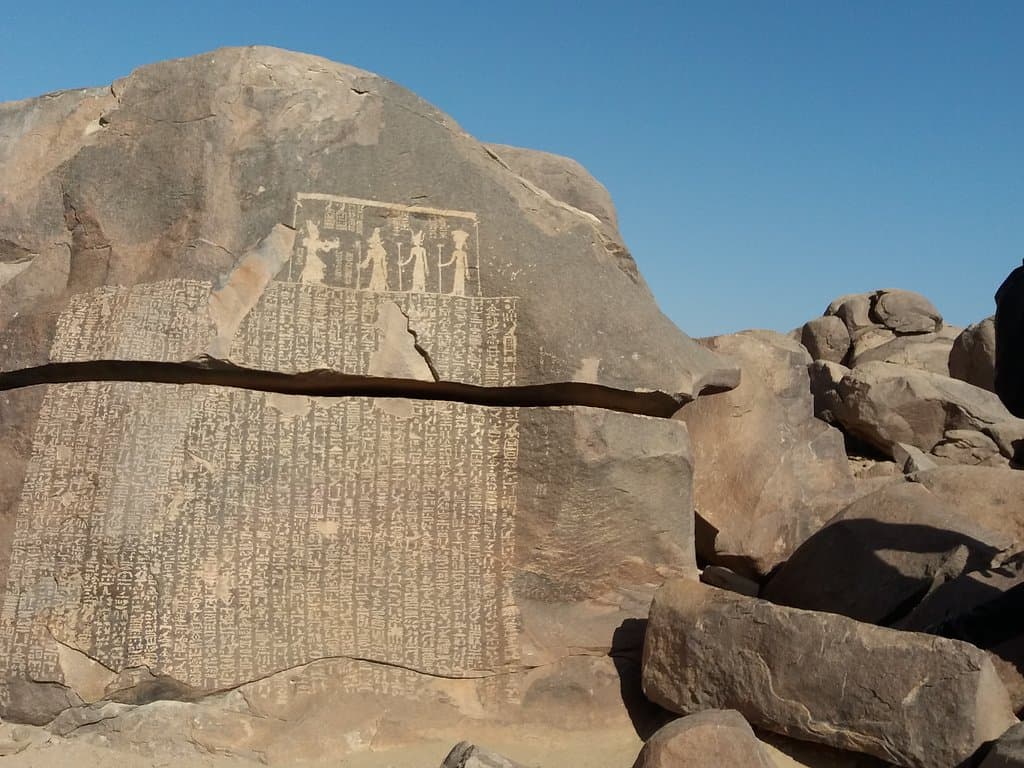
Famine Stela
Discover the Famine Stela on Sehel Island, an ancient inscription detailing a historic famine and offering breathtaking Nile views.

Highlights
Must-see attractions

Social
From TikTok & Reddit
Best Time
Avoid midday heat
Famine Stela
Best Time
Avoid midday heat
Highlights
Must-see attractions
Discover the Famine Stela on Sehel Island, an ancient inscription detailing a historic famine and offering breathtaking Nile views.
"A peaceful, off-the-beaten-path gem with stunning views and fascinating ancient carvings."
Bring Plenty of Water 💧
The hike can be strenuous; stay hydrated, especially during warmer months.
Wear Comfy Shoes 👟
The path is rocky and moderately steep. Good footwear is essential for the climb.

Quick Facts
Rating
4.4 · 59 reviews
Type
Historical Landmark
Highlights
Discover the most iconic attractions and experiences
The Famine Stela Itself
Sehel Island
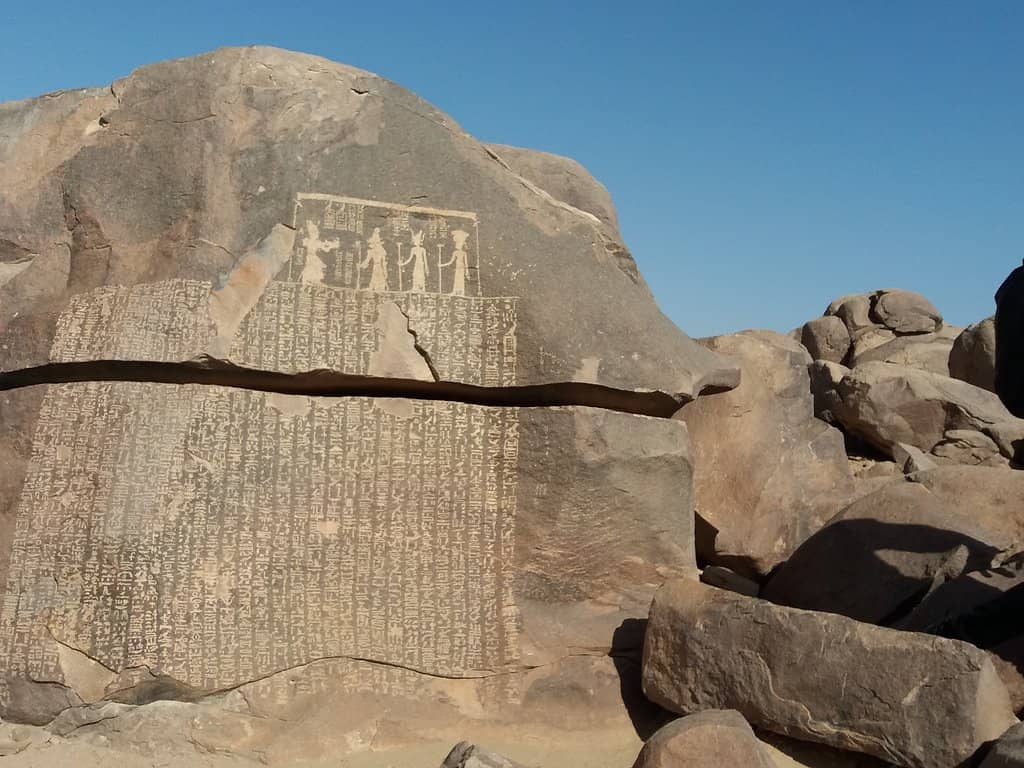
An ancient inscription detailing a seven-year famine and Pharaoh Djoser's efforts to end it.

Panoramic Nile Views
Top of Sehel Island
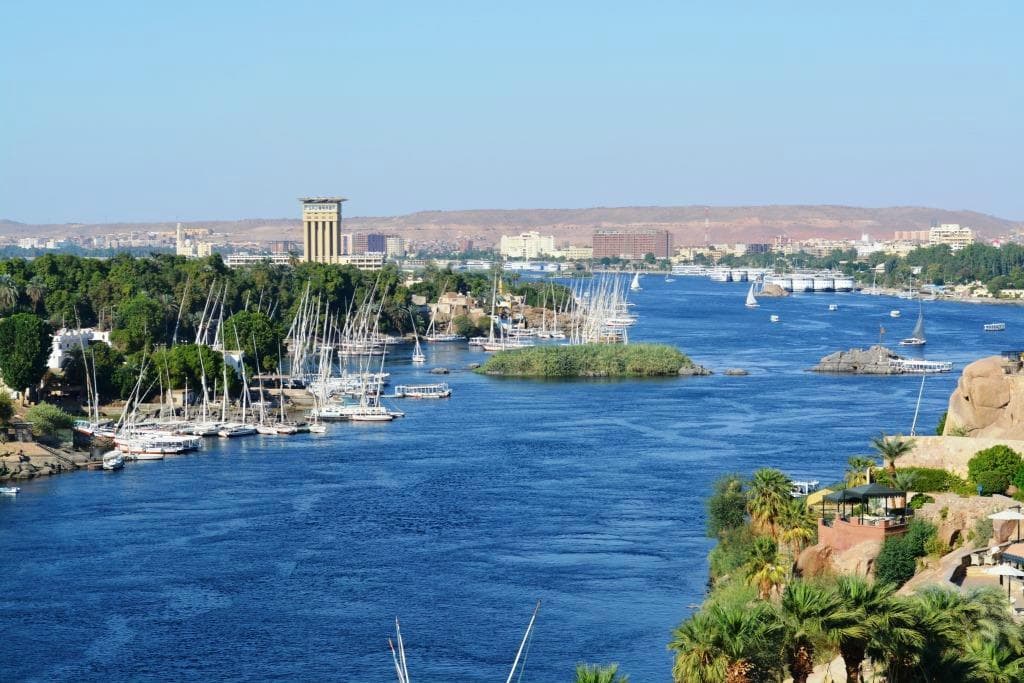
Breathtaking vistas of the Nile River and surrounding desert landscape from the summit.

Ancient Rock Carvings
Path to the Stela
Discover New Kingdom inscriptions and carvings on rocks along the trail, including those by Ramses II.
Plans like a pro.
Thinks like you
Planning Your Visit
Getting to Sehel Island
Best Time to Visit
Best Times
Insider Tips
from TikTok, Instagram & Reddit
Bring Plenty of Water 💧
The hike can be strenuous; stay hydrated, especially during warmer months.

Wear Comfy Shoes 👟
The path is rocky and moderately steep. Good footwear is essential for the climb.
Explore Beyond the Stela
Look for New Kingdom carvings on rocks along the path, not just at the stela.
Consider a Felucca Ride
Enjoy a scenic journey to Sehel Island on a traditional felucca boat.
Tips
from all over the internet
Bring Plenty of Water 💧
The hike can be strenuous; stay hydrated, especially during warmer months.
Wear Comfy Shoes 👟
The path is rocky and moderately steep. Good footwear is essential for the climb.
Explore Beyond the Stela
Look for New Kingdom carvings on rocks along the path, not just at the stela.
Consider a Felucca Ride
Enjoy a scenic journey to Sehel Island on a traditional felucca boat.
Entry Fee & Tips
There's an entry fee (around 60 EGP) and guides may expect a tip.
What Travellers Say
Reviews Summary
Visitors praise the Famine Stela as a peaceful, off-the-beaten-path gem with stunning Nile views and fascinating ancient carvings. The hike is considered moderately challenging but rewarding. Some note the entry fee and potential for guides to expect tips.
"If you're an archaeology need like me, take plenty of water, hire a falluca boat and make your way up to this hidden gem. It's peaceful, off the main tourist trail, and has stunning views when you clamber up to the top of the island where the stele is located.
The first km or so is paved road; an easy walk, which I'd recommend over hiring a tuk tuk, as if you look left and right you'll see new kingdom carvings on the rocks behind the fences.
The entry fee is now 60 pounds (and the guide will want a tip of course!) and the climb is moderately steep in places.
There are plenty of new kingdom inscriptions on the rock opposite the ticket hut and all the way up to the famine stele. I noticed Ramses II and Merenptah, but there were plenty of others. (There are none on the way back.)
The stele itself is a fascinating piece; it tells a story about Djoser (3rd dynasty king who built the step pyramid in Saqqara) ending a seven year famine by fixing up the neglected temple to the god who controlled the flooding of the river. It was written in about 200 bc, so 2,400 years or so later. That would be like us dedicating a mural to ancient Athens."
Michael Power
"Located on Sehel or Sohail Island.
Walk is 1.5km up on rocky trail.
40 Egyptian pounds to enter.
The Stela is impressive.
The view is amazing."
S Hetherington
"Rocky area full of ancient egyptian carvings on the rocks, located in the rarely visited Sehel Island. To reach the island, you need to walk awhile, then you get a local boat to the island dock, then 5 minutes walk to the archeological site "Famine Stela."
The Famine Stela is an inscription written in Egyptian hieroglyphs located on Sehel Island in the Nile near Aswan in Egypt, which tells of a seven-year period of drought and famine during the reign of pharaoh Djoser of the Third Dynasty. It is thought that the stele was inscribed during the Ptolemaic Kingdom, which ruled from 332 to 31 BC.
The Famine Stela was inscribed into a natural granite block whose surface was cut into the rectangular shape of a stela. The inscription is written in hieroglyphs and contains 32 columns. The top part of the stele depicts three Egyptian deities: Khnum, Satis, and Anuket. In front of them, Djoser faces them, carrying offerings in his outstretched hands. A broad fissure, which already existed at the time of creating the stela, runs horizontally through the middle of the rock. Some sections of the stela are damaged, making a few passages of the text unreadable."
Ismael Khalifa
What People Like
What People Dislike
Frequently Asked Questions
🚇 🗺️ Getting There
The Famine Stela is located on Sehel Island, southwest of Aswan. You'll need to take a local boat or felucca from Aswan to reach the island.
Parking is not directly available at the archaeological site. You'll arrive by boat and then walk.
Many visitors opt for a felucca ride for a more scenic and traditional experience.
While possible, a walk is recommended as you can see New Kingdom carvings along the paved road.
The boat ride from Aswan to Sehel Island is relatively short, but the overall journey time depends on your departure point and boat type.
🎫 🎫 Tickets & Entry
The entry fee is approximately 60 Egyptian Pounds.
Tickets can typically be purchased on-site. It's advisable to check for any updates closer to your visit.
Yes, guides are often available at the site, and they may expect a tip for their services.
While specific hours aren't always listed, it's generally accessible during daylight hours when boat services are available.
The path is rocky and involves a climb, so it may not be suitable for those with mobility issues.
🎫 🧭 Onsite Experience
Allow about 30 minutes to an hour for the hike and exploration, depending on your pace and interest in the carvings.
It's an inscription from the Ptolemaic period detailing a seven-year famine during Pharaoh Djoser's reign and his efforts to end it.
Sehel Island also features ancient Egyptian carvings on rocks and offers beautiful views of the Nile.
Comfortable walking shoes are a must due to the rocky terrain. Light clothing is recommended for the Egyptian climate.
Yes, photography is generally allowed, but be mindful of other visitors and the historical significance of the site.
📸 📸 Photography
The top of the island offers panoramic views of the Nile. The stela itself and the ancient rock carvings are also prime subjects.
Yes, the hieroglyphs are well-preserved on the stela and surrounding rocks, offering great opportunities for detailed shots.
Early morning or late afternoon light provides softer shadows and a more atmospheric glow for your photos.
Drone usage is often restricted at historical sites in Egypt. It's best to check local regulations before flying.
A wide-angle lens is useful for capturing the landscape, while a zoom lens can help get closer shots of the inscriptions.
Social
from TikTok, Instagram & Reddit