Lakshmi Narasimha
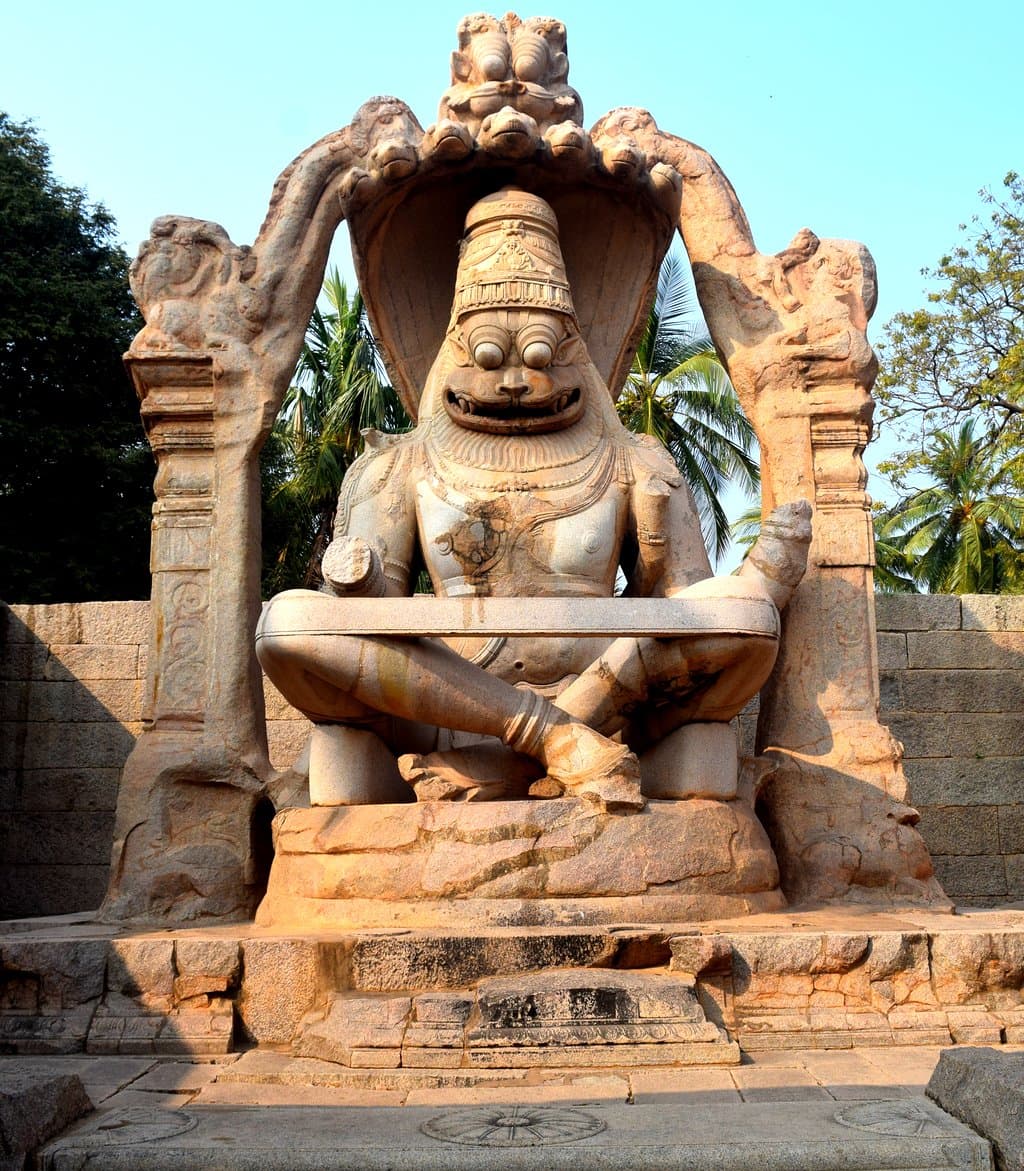
A colossal 22-foot monolithic statue of Lord Narasimha, a fierce avatar of Vishnu, showcasing Vijayanagara artistry and divine power.

Highlights
Must-see attractions

Social
From TikTok & Reddit
Best Time
Beat the heat and crowds
Lakshmi Narasimha
Best Time
Beat the heat and crowds
Highlights
Must-see attractions
A colossal 22-foot monolithic statue of Lord Narasimha, a fierce avatar of Vishnu, showcasing Vijayanagara artistry and divine power.
"The sheer size of the monolithic Narasimha statue will leave you speechless!"
Monolithic Marvel
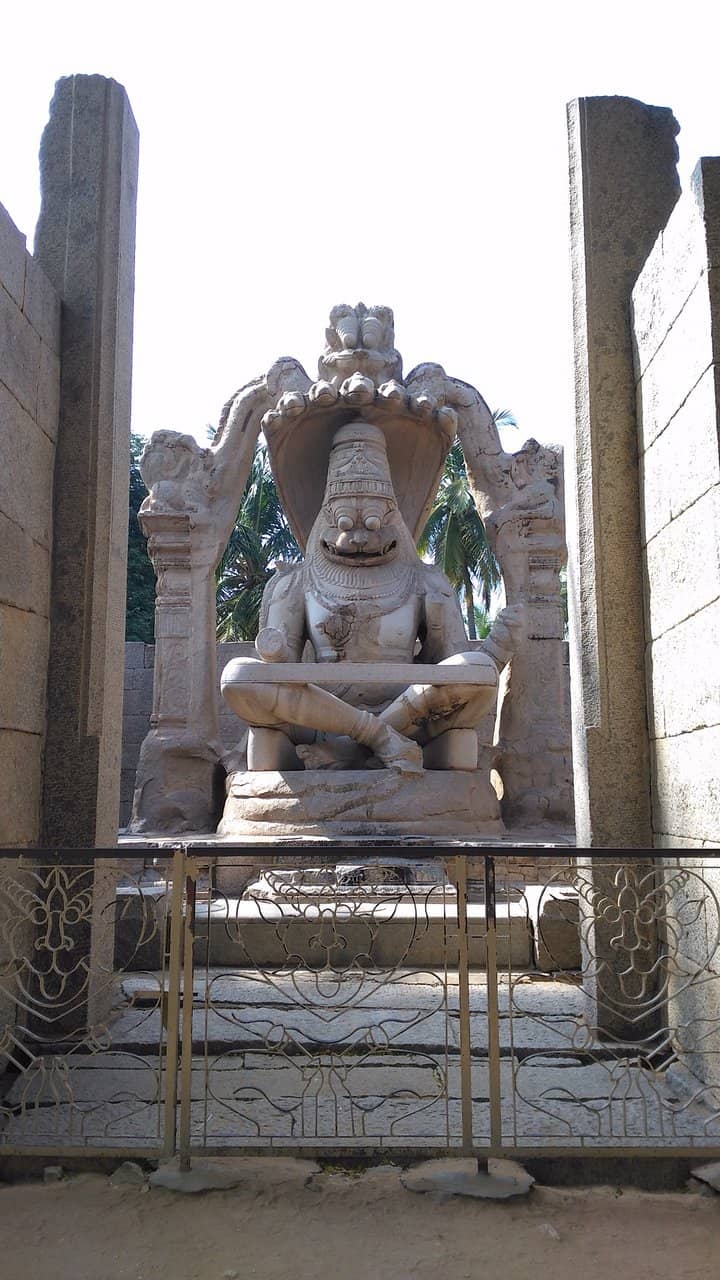
Marvel at the 22-foot-tall Narasimha statue, carved from a single granite block! 🗽
Historical Significance
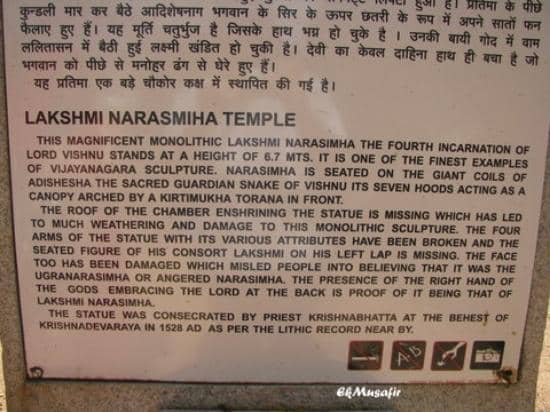
Built in 1528 CE, this site holds immense historical and religious importance. 📜
Quick Facts
Hours
Rating
4.7 · 3,005 reviews
Type
Hindu Temple
Highlights
Discover the most iconic attractions and experiences
The Monolithic Narasimha Statue
Main temple area
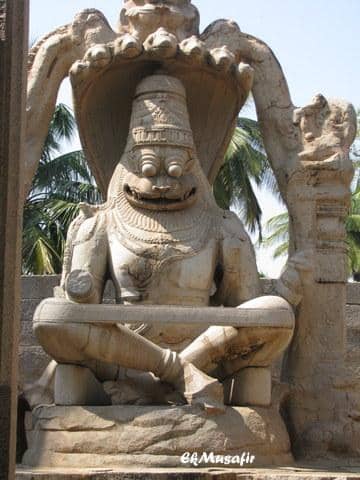
A colossal 22-foot-tall statue carved from a single granite block, radiating divine power and protection.
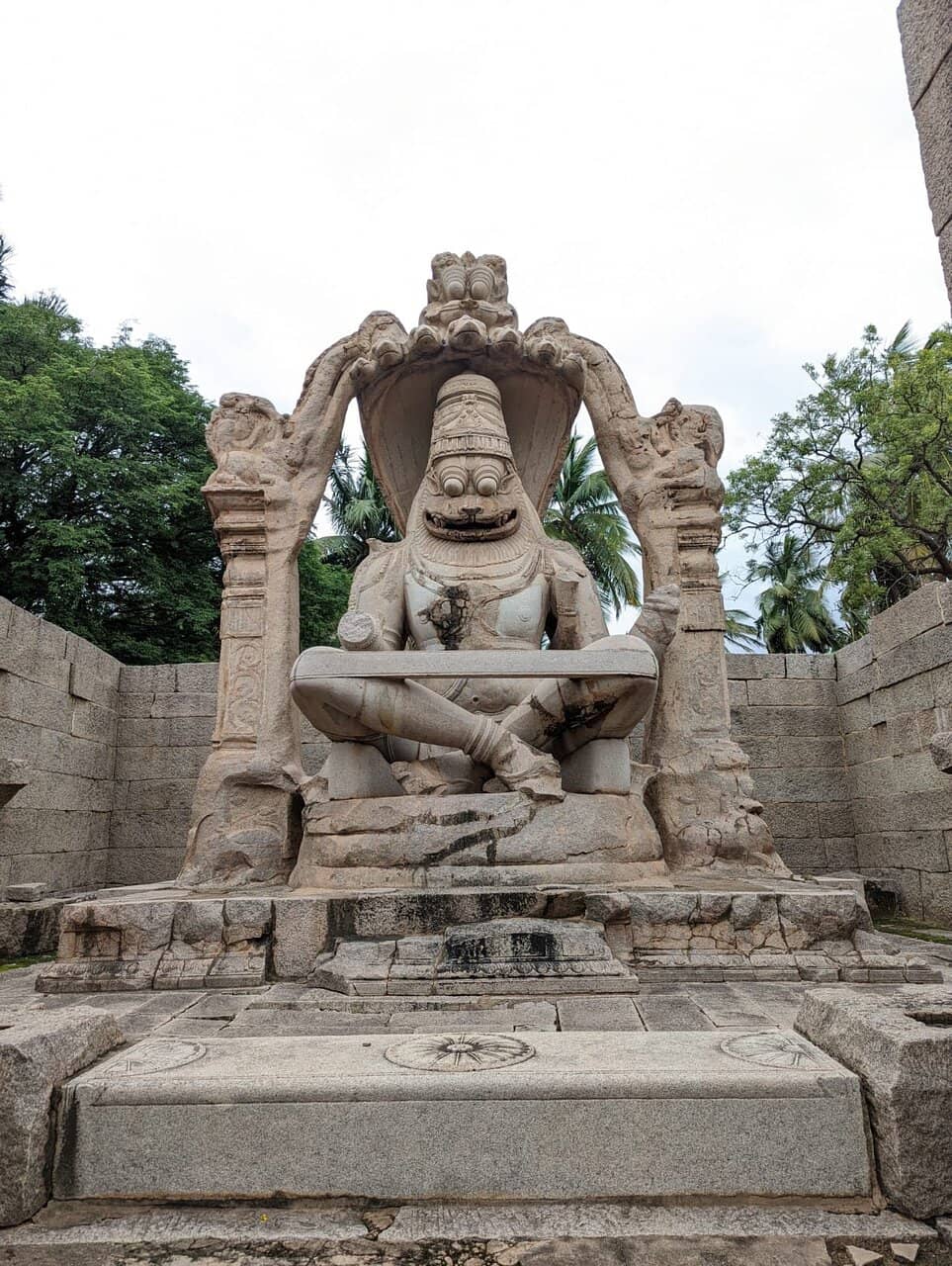
The Serpent Adishesha
Sheltering the Narasimha statue
A seven-headed serpent coiled to form a canopy, adding to the grandeur and divine aura of the deity.
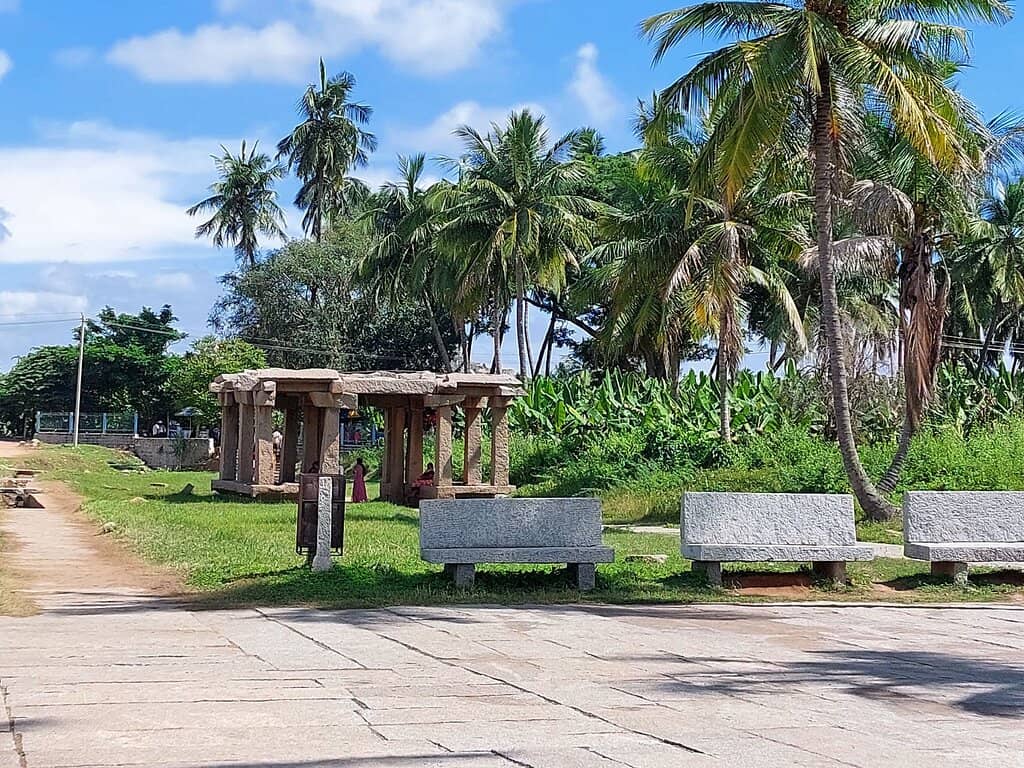
Adjacent Shiva Linga
Near the Narasimha statue
A breathtaking Shiva Linga, showcasing the spiritual harmony and architectural prowess of the era.
Plans like a pro.
Thinks like you
Planning Your Visit
Timing Your Visit to Hampi's Narasimha
Understanding the Lakshmi Narasimha Statue
Best Times
Insider Tips
from TikTok, Instagram & Reddit
Monolithic Marvel
Marvel at the 22-foot-tall Narasimha statue, carved from a single granite block! 🗽
Historical Significance
Built in 1528 CE, this site holds immense historical and religious importance. 📜
Photographer's Dream
The sheer scale and divine presence make it incredibly photogenic. 📷
Vandalized Past
Originally with Goddess Lakshmi, the statue was damaged in 1565. :broken_heart:
Tips
from all over the internet
Monolithic Marvel
Marvel at the 22-foot-tall Narasimha statue, carved from a single granite block! 🗽
Historical Significance
Built in 1528 CE, this site holds immense historical and religious importance. 📜
Photographer's Dream
The sheer scale and divine presence make it incredibly photogenic. 📷
Vandalized Past
Originally with Goddess Lakshmi, the statue was damaged in 1565. :broken_heart:
No Entry Ticket
Enjoy this magnificent monument without any admission fee. :moneywithwings:
What Travellers Say
Reviews Summary
Visitors are consistently awestruck by the sheer scale and artistic mastery of the monolithic Lakshmi Narasimha statue, a testament to the Vijayanagara Empire's grandeur. While the damage to the Goddess Lakshmi's idol is noted, the powerful presence of Lord Narasimha and the surrounding spiritual ambiance leave a lasting impression. It's a must-see for its historical significance and awe-inspiring sculpture.
"Shri Lakshmi Narasimha Temple at Hampi
The Shri Lakshmi Narasimha Temple, also known as the Lakshmi Narasimha statue or Ugra Narasimha, is one of the most striking monuments of Hampi. Built in 1528 CE during the reign of Krishnadevaraya of the Vijayanagara Empire, the temple is dedicated to Lord Narasimha, the fierce man-lion incarnation of Lord Vishnu. This monument is not only an artistic marvel but also a symbol of the religious devotion and sculptural excellence of the Vijayanagara period.
The central feature of this temple is the giant monolithic statue of Narasimha, which is the largest stone idol in Hampi. The statue is about 6.7 meters (22 feet) tall and carved out of a single granite block. Lord Narasimha is depicted in a seated posture with a broad chest, strong arms, and a fierce expression, symbolizing protection and divine power. Originally, the statue also included the figure of Goddess Lakshmi seated on Narasimha’s lap, which gave the temple its name Lakshmi Narasimha. However, the idol of Lakshmi was damaged and separated during invasions, leaving only Narasimha visible today.
Architecturally, the temple area is simple yet powerful. The focus remains on the massive statue itself, which is sheltered by the coiled body of a seven-headed serpent, Adishesha, spreading its hoods like an umbrella. This adds to the grandeur of the sculpture and emphasizes Narasimha’s divine energy. The expression of the deity, with bulging eyes and a fierce smile, represents his “Ugra” or ferocious form, which was believed to protect devotees from evil.
The Lakshmi Narasimha Temple had deep spiritual importance in Vijayanagara times. Devotees visited to seek the blessings of Lord Vishnu in his Narasimha avatar, a form known for destroying evil and protecting righteousness. Even today, pilgrims and tourists alike are drawn to the statue for its sheer scale and the emotions it conveys.
Although the statue suffered damage after the fall of the Vijayanagara Empire, restoration efforts by the Archaeological Survey of India have helped preserve its grandeur. Today, it stands as one of the most photographed and admired monuments in Hampi.
In conclusion, the Shri Lakshmi Narasimha Temple at Hampi is more than a religious structure — it is a masterpiece of stone carving, a symbol of divine strength, and a reminder of the artistic and cultural heights achieved by the Vijayanagara Empire. Its towering presence continues to inspire awe and devotion, making it one of Hampi’s most unforgettable landmarks."
SHIVRAJ NALAWADE
"Here the Deity is called as Lakshmi Narasimha, Yoga Narasimha. This is the largest Monolithic statue in Hampi situated in the Hemakuta hills. The deity’s idol is somewhat ruined here. Good to know the history of this place. Beside of this temple shiva temple is also there. No entry ticket."
Nandini
"The Shiva Linga adjacent to the Narasimha statue was breathtaking. The ingenious water stream system, which fills the temple's water feature and flows back into the canal, showcases the remarkable engineering prowess of King Krishnadevaraya's era. The architectural marvel is truly fabulous."
Midhun Uthradam
What People Like
What People Dislike
Frequently Asked Questions
🚇 🗺️ Getting There
The Lakshmi Narasimha Temple is located in Hampi, Karnataka, India. You can reach Hampi by bus or train to Hospet, the nearest major town, and then take a local bus, auto-rickshaw, or taxi to the temple site. Many visitors explore Hampi on foot or by bicycle.
While there isn't dedicated parking directly at the monolithic statue, you can usually find space for vehicles in the vicinity, especially if you arrive early. Auto-rickshaws and taxis can drop you off close to the site.
Many travelers find renting a bicycle or hiring an auto-rickshaw to be the most convenient ways to explore Hampi's various sites, including the Lakshmi Narasimha Temple. Walking is also an option for those who enjoy exploring on foot.
Yes, guided tours are available in Hampi, which can provide in-depth historical and cultural context for sites like the Lakshmi Narasimha Temple. You can often arrange these through your accommodation or local tour operators.
Within Hampi, you can use auto-rickshaws, bicycles, or even walk to get around. For longer distances or to cover multiple sites efficiently, hiring an auto-rickshaw for a few hours or a full day is a popular choice.
🎫 🎫 Tickets & Entry
No, there is no entry ticket required to visit the Lakshmi Narasimha Temple and view the monolithic statue. It is freely accessible to all visitors.
The Lakshmi Narasimha statue is an open-air monument and is generally accessible during daylight hours. There are no strict opening or closing times, but it's best to visit when there is sufficient light for viewing and photography.
While there are no official timings, it's advisable to visit during daylight hours for safety and better viewing. Early mornings and late afternoons offer pleasant weather and good lighting for photography.
Generally, photography is allowed at the Lakshmi Narasimha Temple. However, always be respectful of the site and other visitors.
The area around the Lakshmi Narasimha statue is largely uneven terrain with boulders. While the main viewing area is accessible, navigating the entire site might be challenging for individuals with mobility issues.
📸 📸 Photography
The golden hours, shortly after sunrise and before sunset, offer the most beautiful light for photographing the Lakshmi Narasimha statue. The warm, soft light enhances the texture and grandeur of the monolith.
Popular shots include wide-angle views capturing the entire monolithic statue with Adishesha, close-ups of Narasimha's fierce expression, and shots that incorporate the surrounding boulder landscape of Hampi.
Drone usage is typically restricted in historical and archaeological sites like Hampi to preserve the monuments and ensure visitor safety. It's best to check with local authorities or the Archaeological Survey of India for current regulations.
For daylight shots, use a moderate aperture (f/8-f/11) for good depth of field. In low light (sunrise/sunset), consider a wider aperture and a tripod for sharper images. Experiment with different angles to capture the statue's imposing presence.
Yes, you can take photos of the adjacent Shiva Linga. It's a significant part of the site and offers a different perspective on the spiritual offerings of the era.
🎫 📜 History & Significance
The Lakshmi Narasimha Temple was built in 1528 CE during the reign of Krishnadevaraya of the Vijayanagara Empire. It is dedicated to Lord Narasimha, a fierce avatar of Vishnu, and was originally depicted with Goddess Lakshmi.
The idol of Goddess Lakshmi was damaged and separated from the Narasimha statue during invasions, particularly in 1565 CE by the forces of a coalition of sultanates.
'Ugra' refers to the fierce or ferocious form of Lord Narasimha, symbolizing his power to destroy evil and protect righteousness. The statue's expression reflects this formidable aspect.
Adishesha is a divine serpent in Hindu mythology, often depicted as the couch of Lord Vishnu. Here, Adishesha's coiled body supports Narasimha, and its hoods form a protective canopy, symbolizing divine protection and cosmic energy.
The temple is characterized by its monolithic sculpture, with the focus being the colossal statue of Narasimha. The surrounding area is simple yet powerful, with the coiled serpent and an open pavilion, showcasing the grandeur of Vijayanagara architecture.





Social
from TikTok, Instagram & Reddit