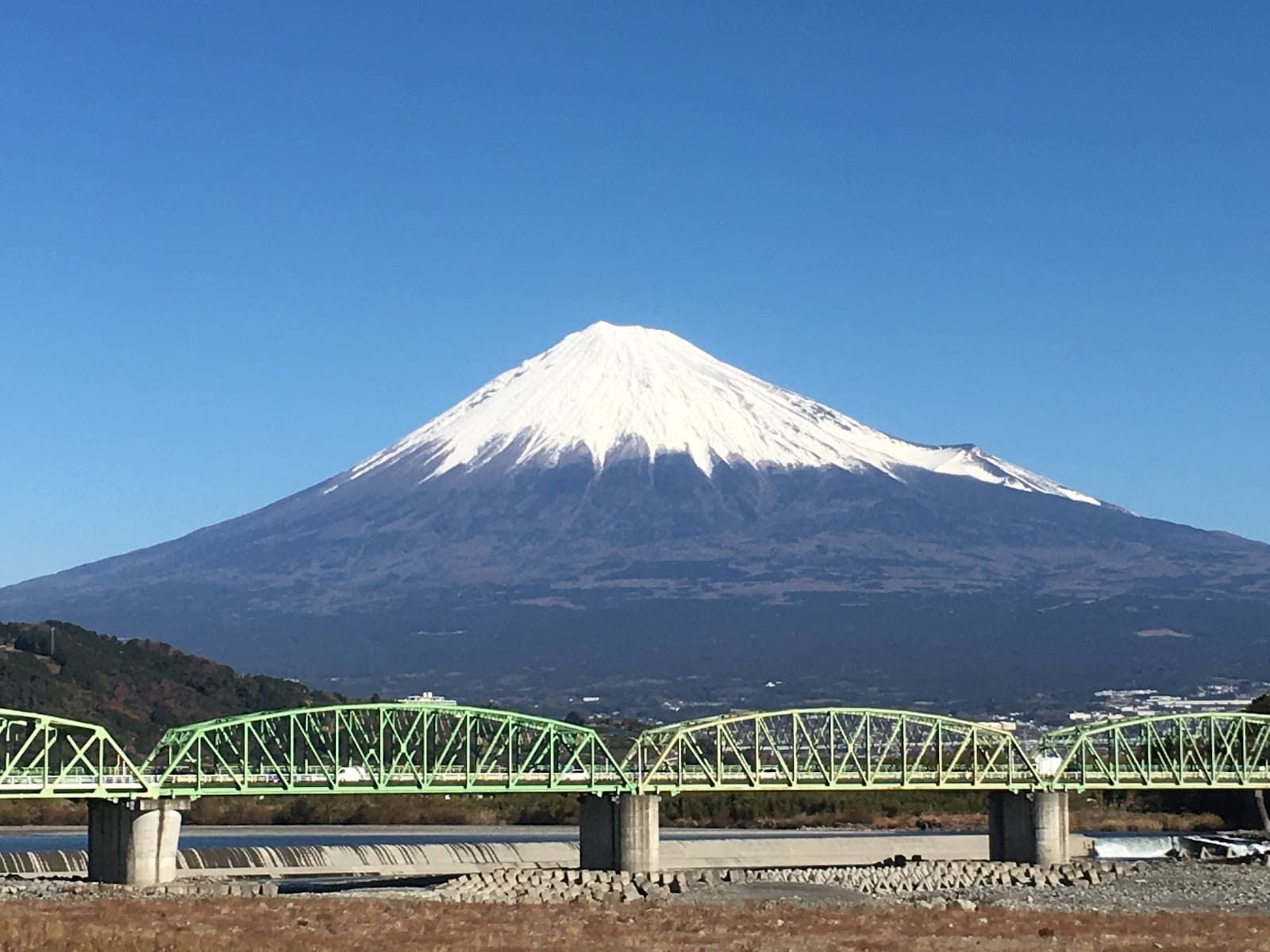
Fujikawa Bridge
A historic bridge offering iconic framed views of Mt. Fuji and the majestic Fuji River, a dreamlike vista.
Highlights
Must-see attractions

Social
From TikTok & Reddit
Best Time
Best chance for clear Mt. Fuji views
Fujikawa Bridge
Best Time
Best chance for clear Mt. Fuji views
Highlights
Must-see attractions
A historic bridge offering iconic framed views of Mt. Fuji and the majestic Fuji River, a dreamlike vista.
"On a clear day, the view of Mt. Fuji from the Fujikawa Bridge is spectacular and overwhelming."

🎯 Patience for Fuji Views
Don't get discouraged if Fuji is hidden; try multiple times! :camerawithflash:
🚗 Check Traffic Conditions
This is a busy transport hub, plan accordingly. :car: :traffic_light:

Highlights
Discover the most iconic attractions and experiences
The Iconic Mt. Fuji Frame
Fujikawa Bridge
Witness Mt. Fuji perfectly framed by the bridge's unique design – a truly dreamlike vista.
Panoramic River and Mountain Views
Fujikawa Bridge
Enjoy breathtaking, sweeping views of the majestic Fuji River and surrounding landscapes.
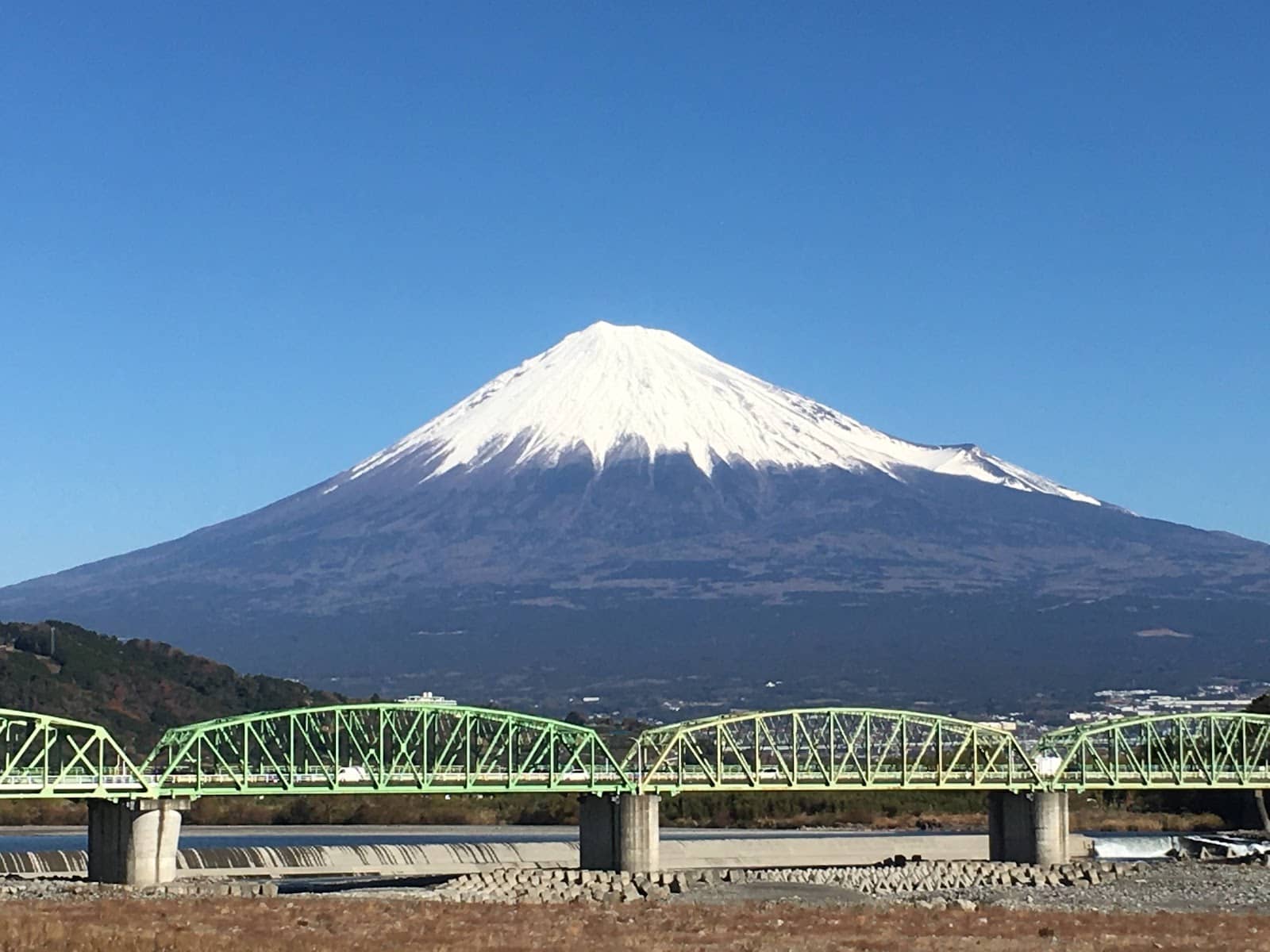
Historic Tokaido Route Crossing
Fujikawa Bridge
Walk or drive across a bridge that echoes the historic Tokaido road, a journey for centuries.
Plans like a pro.
Thinks like you
Planning Your Visit
Timing is Everything for Mt. Fuji Views
Navigating the Fujikawa River
Best Times
Insider Tips
from TikTok, Instagram & Reddit
🎯 Patience for Fuji Views
Don't get discouraged if Fuji is hidden; try multiple times! :camerawithflash:
🚗 Check Traffic Conditions
This is a busy transport hub, plan accordingly. :car: :traffic_light:
📸 Angle is Key
Find the perfect spot for that iconic Mt. Fuji frame. :iphone:
🧥 Dress for the Weather
Views are best on clear days, but weather can change. :cloud:
Tips
from all over the internet
🎯 Patience for Fuji Views
Don't get discouraged if Fuji is hidden; try multiple times! :camerawithflash:
🚗 Check Traffic Conditions
This is a busy transport hub, plan accordingly. :car: :traffic_light:
📸 Angle is Key
Find the perfect spot for that iconic Mt. Fuji frame. :iphone:
🧥 Dress for the Weather
Views are best on clear days, but weather can change. :cloud:
What Travellers Say
Reviews Summary
Visitors are captivated by the potential for iconic photos of Mt. Fuji framed by the Fujikawa Bridge, especially on clear days. The bridge's historical significance as part of the Tokaido route and the scenic beauty of the Fuji River are also frequently praised. However, the unpredictability of Mt. Fuji's visibility due to clouds is a common point of frustration, with many needing multiple attempts to see the peak.
"This bridge runs along the old Tokaido route. About 50 meters upstream from this bridge was a ferry across the Fuji River.
I was hoping to cross the Fujikawa Bridge on a day when I could see Mt. Fuji, so I adjusted my schedule and time accordingly. After about three days of persistence, I finally caught sight of Mt. Fuji. While the probability of seeing Mt. Fuji is high from November through February, it was still October today, so I had some trouble.
There are actually several bridges with the same name as the "Fujikawa Bridge." Excluding the railway bridge, which is called the "Fujikawa Bridge," the others are the Fujikawa Bridge on the Chubu-Odan Expressway, the Fujikawa Bridge (Minobu Town) on Yamanashi Prefectural Route 405, the Fujikawa Bridge on the Tomei Expressway, and this Fujikawa Bridge on Shizuoka Prefectural Route 396.
The Fujikawa Bridge on Shizuoka Prefectural Route 396 was completed in 1924 (Taisho 13), making it the oldest of the Fujikawa bridges. A 2015 survey recorded a daily traffic volume of 26,000 vehicles on both the inbound and outbound lanes.
It's my ninth day since I started (strolling) along the old Tokaido road from Nihonbashi, and today the weather was fine, with the magnificent Mt. Fuji, the beautiful and majestic Fuji River, and the surrounding beautiful scenery - this may be the most spectacular view overall (in my opinion)."
あきら
"It's a key transportation hub in the region. Last year, the Fujikawa Karigane Bridge opened a little way in from here on the Yamanashi side, which has eased traffic congestion a little.
You can take photos of Mt. Fuji and the Fujikawa River."
daisuke Mochizuki
"Challenge to traverse the old Tokaido road
I left Nihonbashi on the cold morning of January 25th, and crossed the Fuji River on July 26th. It took me half a year to finally reach the Fuji River. I'm not making much progress by only taking on the challenge on Saturdays when I can. At this rate I won't reach Kyoto by the end of the year. I have to work hard."
Tetsushi Okawa
What People Like
What People Dislike
Frequently Asked Questions
🚇 🗺️ Getting There
From Tokyo, you can take the Shinkansen (bullet train) to Shin-Fuji Station, which is the closest station to the Fujikawa Bridge. From Shin-Fuji, you can take a local bus or a taxi to reach the bridge. The journey can take around 2-3 hours depending on your mode of transport and connections.
Yes, the Fujikawa Bridge is accessible by car. It's located on Shizuoka Prefectural Route 396. If you're driving, use GPS navigation to find the specific bridge, as there are several bridges with similar names in the area. Parking availability might vary, especially during peak times.
While possible, visiting Fujikawa Bridge as a day trip from Tokyo can be a long day due to travel time. Many travelers suggest combining it with other nearby attractions if possible, or staying overnight in the Fuji City area for a more relaxed experience.
The closest major train station is Shin-Fuji Station. From there, local buses and taxis are available to reach the bridge. It's advisable to check local bus schedules in advance, as they might not be as frequent as in larger cities.
Yes, the Fujikawa Bridge is a pedestrian and vehicle bridge. There are sidewalks, making it safe for pedestrians to walk across and enjoy the views.
🎫 🎫 Tickets & Entry
No, there are no admission fees or tickets required to visit and cross the Fujikawa Bridge. It is a public infrastructure.
The Fujikawa Bridge is open 24 hours a day, 7 days a week, as it is a public road. However, the best time to visit for views of Mt. Fuji is during daylight hours.
There are no entrance fees for the viewing spots directly around the Fujikawa Bridge. You can access these areas freely to take photos and enjoy the scenery.
Yes, the bridge is accessible at night. However, visibility of Mt. Fuji will be limited or impossible in the dark. The surrounding area might also be less illuminated.
Generally, there are no specific restrictions for personal photography on the Fujikawa Bridge. However, always be mindful of traffic and pedestrian safety. Commercial photography might require permits.
📸 📸 Photography
The best time for photos is during the 'golden hours' – shortly after sunrise or before sunset – when the light is soft and can create beautiful colors. However, for clear views of Mt. Fuji, mornings are often recommended, especially from November to February.
A wide-angle lens is great for capturing the bridge and the expansive landscape. A telephoto lens can be useful for zooming in on Mt. Fuji. A tripod can help with low-light conditions or for sharper images.
Yes, the most iconic view is when Mt. Fuji appears framed by the bridge's structure. Experiment with different angles along the bridge to find your perfect shot. +1
Besides Mt. Fuji, you can capture the impressive scale of the Fujikawa River, the bridge's architecture, and the surrounding natural scenery. The contrast between the man-made bridge and the natural landscape is also a great subject.
Drone usage is often restricted in populated areas and near infrastructure. It's best to check local regulations regarding drone operation in Fuji City before flying.
🎫 🏞️ Onsite Experience
You can walk or cycle across the bridge, enjoying the fresh air and scenic views. It's also a great spot to reflect on the historical significance of the old Tokaido route.
Most visitors spend 30 minutes to an hour at the Fujikawa Bridge, primarily for photos and enjoying the view. If you're waiting for clear weather to see Mt. Fuji, you might spend longer.
Restroom facilities might be limited directly at the bridge. It's advisable to use facilities at nearby train stations or service areas before or after your visit.
Yes, the road and sidewalk are separated, making it safe for pedestrians. However, always be aware of your surroundings and traffic.
The Fujikawa Bridge is part of the historic Tokaido road, a major route in Japan's Edo period. It's also a vital transportation link today and offers iconic views of Mt. Fuji and the Fuji River.
For Different Travelers
Tailored advice for your travel style
👨👩👧 Families with Kids
Tip: If Mt. Fuji is hidden, focus on the impressive scale of the river and the bridge's structure. You can turn it into a mini-adventure by talking about historical travelers who crossed the river long ago.
📸 Photography Enthusiasts
Consider: Bringing a tripod for sharper images, especially if you're shooting in lower light conditions. Also, explore different vantage points along the bridge and its approaches to find unique perspectives. Be patient; waiting for the clouds to clear can be part of the photographic challenge.
🚶♀️ History Buffs & Hikers
Explore: Consider researching the Battle of Fujikawa, a significant historical event that took place near the river in the late Heian period.
Deep Dives
In-depth insights and expert knowledge
The Quest for the Perfect Mt. Fuji View
When the conditions are right, the view is described as spectacular and overwhelming, with the majestic peak rising above the Fuji River.
Pro-tip: Check weather forecasts diligently and be flexible with your itinerary. If Fuji is playing hide-and-seek, consider visiting nearby areas like the Momiji Corridor in Fujikawaguchiko, which also offers stunning views of Mt. Fuji, especially during autumn.
Navigating the Fujikawa River Crossings
Today, the Fujikawa Bridge is a busy transportation hub, handling a substantial daily traffic volume.
Understanding that this is an active transportation route helps in planning your visit. While it's safe for pedestrians, being mindful of vehicles and traffic flow is essential. The bridge's longevity and continued importance underscore its role in regional connectivity and its place in Japan's travel history.

Social
from TikTok, Instagram & Reddit