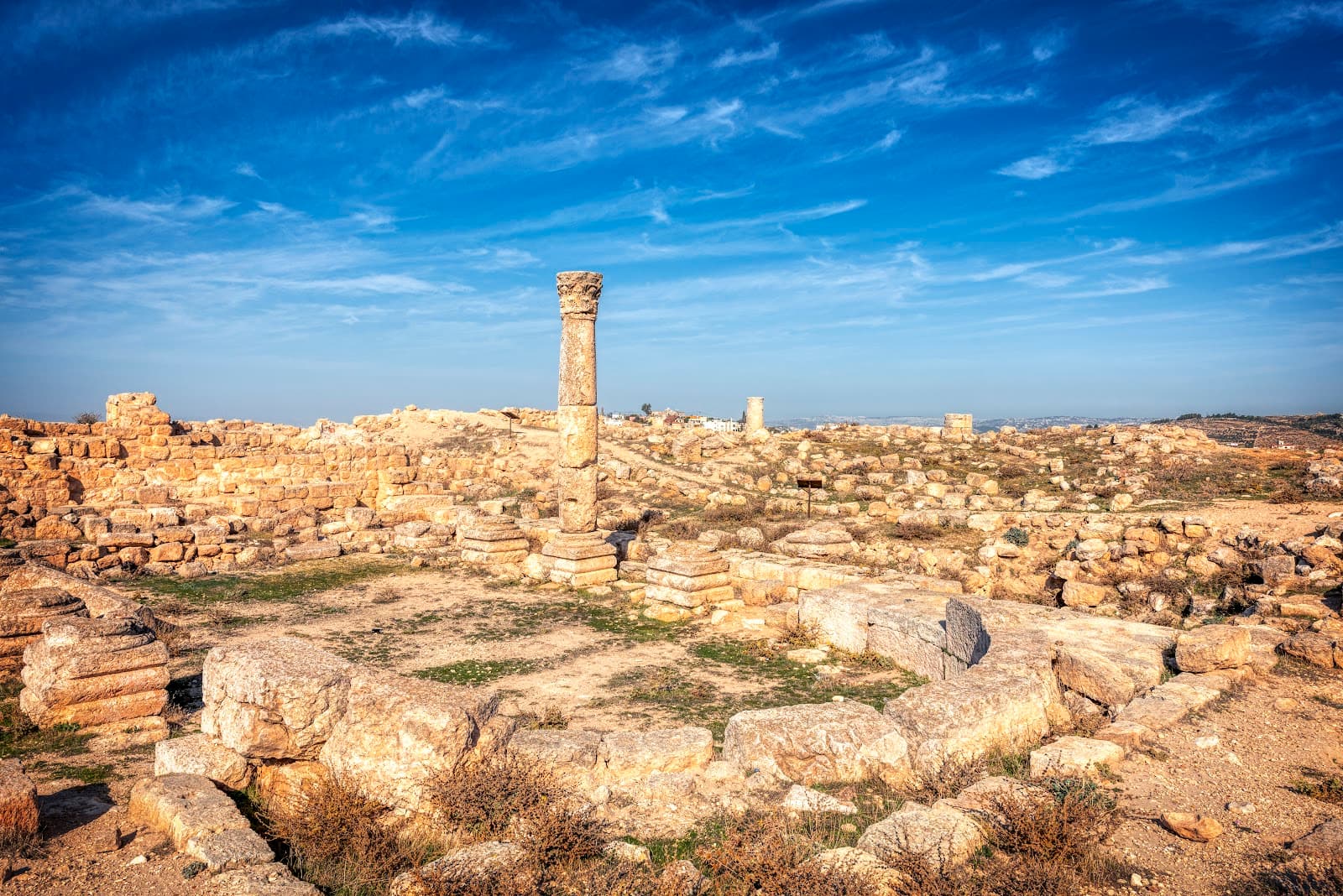
Dhiban / Dibon Archaeological Tell
Explore the ancient biblical city of Dhiban, a significant archaeological tell in Moab offering stunning views and a deep dive into history.
Highlights
Must-see attractions

Social
From TikTok & Reddit
Best Time
Pleasant temperatures for exploring
Dhiban / Dibon Archaeological Tell
Best Time
Pleasant temperatures for exploring
Highlights
Must-see attractions
Explore the ancient biblical city of Dhiban, a significant archaeological tell in Moab offering stunning views and a deep dive into history.
"Beautiful and you will find yourself into a Indiana Jones movie!"

Wear Sturdy Shoes
The terrain can be uneven; comfortable walking shoes are a must for exploring the ruins safely. :athletic_shoe:
Bring Water & Sun Protection
Jordan can be hot. Stay hydrated and protected from the sun, especially during warmer months. :droplet: :sunwithface:

Highlights
Discover the most iconic attractions and experiences
Biblical Significance
Walk through the ruins of Heshbon, mentioned in the Old Testament. A truly immersive historical experience.
Panoramic Vistas
Enjoy breathtaking views of the Jordanian landscape from this elevated archaeological tell. Stunning scenery awaits.

Ancient Church Remains
Discover remnants of one of the earliest churches in the land of Moab. A unique historical layer.
Indiana Jones Vibe
Experience the thrill of exploring ancient ruins that evoke a sense of adventure and discovery.
Plans like a pro.
Thinks like you
Planning Your Visit
Uncover Ancient Moab
Preservation & Potential
Best Times
Insider Tips
from TikTok, Instagram & Reddit
Wear Sturdy Shoes
The terrain can be uneven; comfortable walking shoes are a must for exploring the ruins safely. :athletic_shoe:
Bring Water & Sun Protection
Jordan can be hot. Stay hydrated and protected from the sun, especially during warmer months. :droplet: :sunwithface:
Embrace the History
Research the biblical and historical context beforehand to fully appreciate the significance of Dhiban. :scroll:
Capture the Views
The panoramic vistas are stunning, especially during sunrise or sunset. Don't forget your camera! :camerawithflash:
Tips
from all over the internet
Wear Sturdy Shoes
The terrain can be uneven; comfortable walking shoes are a must for exploring the ruins safely. :athletic_shoe:
Bring Water & Sun Protection
Jordan can be hot. Stay hydrated and protected from the sun, especially during warmer months. :droplet: :sunwithface:
Embrace the History
Research the biblical and historical context beforehand to fully appreciate the significance of Dhiban. :scroll:
Capture the Views
The panoramic vistas are stunning, especially during sunrise or sunset. Don't forget your camera! :camerawithflash:
What Travellers Say
Reviews Summary
Visitors often find Dhiban to be a historically significant and visually rewarding site, offering a glimpse into ancient Moab and biblical narratives. The panoramic views are frequently praised, and the adventurous atmosphere appeals to many. However, some note that the site is 'run down' and could benefit from further investment and better amenities.
"These are often missed ruins. It is mentioned in the book Numbers and other places in the Bible."
Andrew Stabeno
"Nice place, great views. Very run down though. Needs investment."
Liam Williamson
"I love this place! It's the Old Testament Heshbon in the land of Moab. And was one of the 1st existing churches there."
Judy Pos
What People Like
What People Dislike
Frequently Asked Questions
🚇 🗺️ Getting There
Dhiban is located south of Amman. You can reach it by car, which is the most convenient option, taking approximately 1-1.5 hours via the Desert Highway or King's Highway. Public transportation options are limited, so renting a car or hiring a taxi is recommended for ease of access.
Public transport to Dhiban is not straightforward. While buses travel between major cities, reaching the specific archaeological site might require a local taxi from the nearest town or a pre-arranged tour.
Renting a car offers the most flexibility to explore Dhiban and its surroundings at your own pace. This allows you to combine your visit with other nearby historical sites in the region.
While not as common as for major tourist hubs, some local tour operators in Jordan may offer excursions that include Dhiban. It's advisable to check with your hotel or a local travel agency in Amman.
Roads leading to Dhiban are generally well-maintained, especially the main highways. However, the final approach to the site might be on unpaved or rougher terrain, so a vehicle with decent clearance is beneficial.
🎫 🎫 Tickets & Entry
Yes, typically an entrance fee is required to access the Dhiban archaeological site. It's advisable to check the current admission fees at the site or with local tourism authorities.
Opening hours can vary, but archaeological sites in Jordan are generally open during daylight hours. It's best to confirm the exact times before your visit, especially if traveling during holidays.
Online ticket purchasing for Dhiban may not be widely available. It's common to buy tickets directly at the site's entrance upon arrival.
The Jordan Pass often includes entry to many major archaeological sites. It's worth checking if Dhiban Archaeological Tell is covered by the Jordan Pass for potential cost savings.
Standard archaeological site rules apply, such as not removing artifacts and respecting the historical structures. Specific restrictions might be in place depending on ongoing excavations or preservation efforts.
🎫 🧭 Onsite Experience
Dhiban features the ruins of an ancient Moabite city, including remnants of fortifications, dwellings, and a significant ancient church. The site offers a glimpse into biblical history and early Christian presence in the region.
A visit to Dhiban Archaeological Tell typically requires 1-2 hours to explore the main ruins and enjoy the surrounding views. Allow extra time if you plan to picnic or simply soak in the atmosphere.
Facilities at Dhiban can be basic. Restrooms might be available, but cafes or extensive services are unlikely. It's recommended to bring your own refreshments and snacks.
Children can enjoy the sense of adventure exploring ancient ruins, but supervision is essential due to uneven terrain. The historical context might be more engaging for older children.
Dhiban offers excellent photography opportunities, from close-ups of ancient stonework to sweeping panoramic shots of the landscape. The 'Indiana Jones movie' vibe is perfect for dramatic shots.
🍽️ 🍽️ Food & Dining
Dining options directly at Dhiban are very limited or non-existent. You'll find more choices in nearby towns like Madaba or along the King's Highway, offering traditional Jordanian cuisine.
Yes, bringing your own food and drinks is a good idea. Many visitors enjoy having a picnic amidst the historical ruins and scenic views. Remember to take all your trash with you.
In the broader region, expect classic Jordanian dishes such as Mansaf, Maqluba, various grilled meats, mezze (appetizers), and fresh bread. Local eateries will offer authentic flavors.
While street food can be tempting, it's generally safer to eat at established restaurants or cafes, especially if you have a sensitive stomach. Stick to well-cooked foods and bottled water.
For a more extensive dining experience, consider heading back towards Madaba, which has a good selection of restaurants. Alternatively, explore local eateries along the King's Highway for regional specialties.
📸 📸 Photography
The golden hours, shortly after sunrise and before sunset, offer the most dramatic lighting for photography at Dhiban, casting long shadows and warm hues across the ruins and landscape.
A versatile camera with a good zoom lens is ideal for capturing both the expansive views and the intricate details of the ruins. A wide-angle lens can also be useful for landscape shots.
Drone usage is often restricted at archaeological sites and historical landmarks in Jordan. It's crucial to check with local authorities or site management before flying a drone to avoid penalties.
The elevated points offering panoramic views, the weathered stone structures, and any visible remnants of the ancient church are particularly photogenic. Look for interesting textures and patterns in the stonework.
Experiment with different angles, focus on details like ancient inscriptions or worn steps, and try to capture the sense of scale and history. The 'Indiana Jones' feeling can inspire creative, adventurous shots.
For Different Travelers
Tailored advice for your travel style
👨👩👧 Families with Kids
🏛️ History Buffs & Archaeologists
📸 Photographers & Art Lovers
Deep Dives
In-depth insights and expert knowledge
The Biblical Narrative of Dhiban
One of the most compelling aspects of Dhiban's history is its connection to the Mesha Stele, also known as the Moabite Stone. Discovered nearby, this stele is a crucial artifact that provides an independent Moabite perspective on events mentioned in the Bible, including King Mesha's account of his victories over Israel. The presence of such significant historical markers underscores Dhiban's role as a center of power and culture in ancient Moab. Exploring the tell allows visitors to walk through layers of history, from its Moabite origins to later periods, including its time as a Roman settlement and its association with early Christianity.
Visitors often describe the experience of exploring Dhiban as stepping into a real-life historical drama, with some even likening it to an 'Indiana Jones movie' adventure. The ruins, though sometimes described as run-down, possess a raw, authentic charm that appeals to history enthusiasts and those seeking less commercialized historical sites. The great views from the tell add another dimension, offering a sense of the strategic importance of the location throughout history.
Exploring Dhiban: What to Expect
Beyond the archaeological remains, the panoramic views from the tell are a major draw. Overlooking the surrounding Jordanian landscape, these vistas provide a stunning backdrop to the historical exploration. The best times to visit for photography and comfortable exploration are typically during the cooler parts of the day, such as spring and autumn mornings or late afternoons, when the light is softer and the heat less intense. Bringing water and sun protection is crucial, as shade can be limited across the open site.
The site's historical layers are evident, with remnants suggesting occupation from the Moabite period through to Byzantine times, including evidence of early churches. This multi-layered history makes Dhiban a rich destination for those interested in biblical archaeology and the evolution of settlements in the region. While amenities are basic, the profound sense of history and the dramatic scenery make Dhiban a rewarding visit for the intrepid traveler.

Social
from TikTok, Instagram & Reddit