
Silifke Stone Bridge
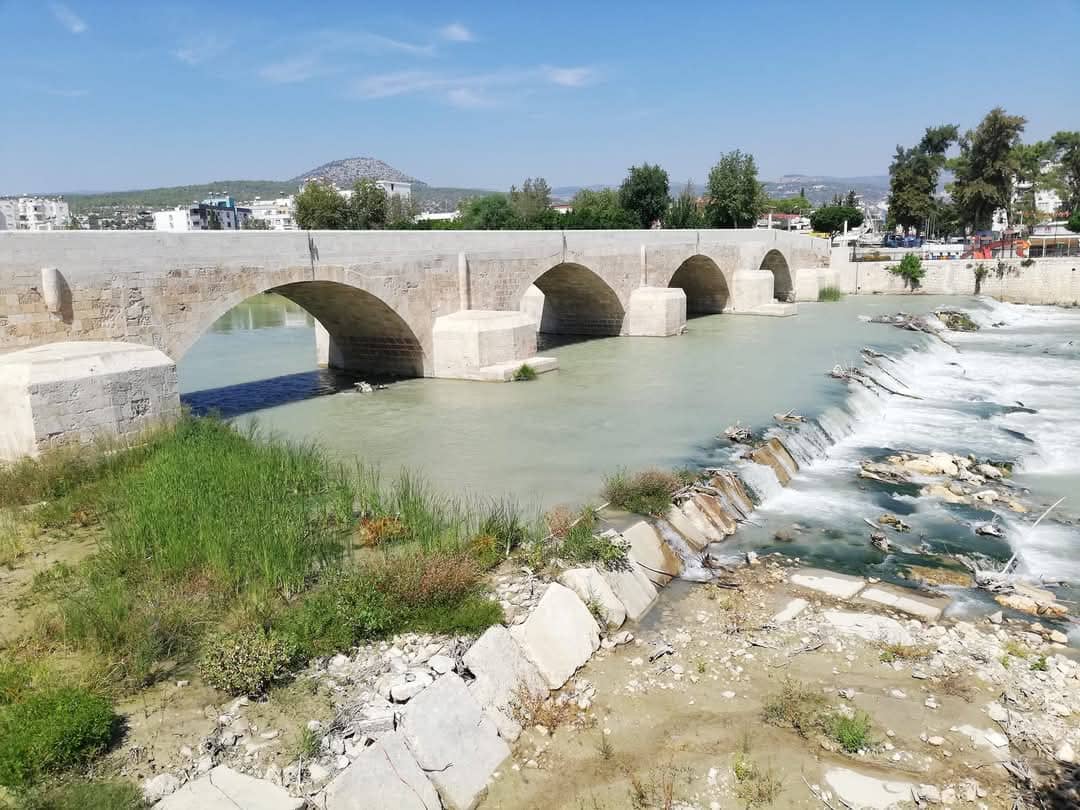
A 1st-century Roman marvel, the Silifke Stone Bridge gracefully spans the Gökksu River, offering a glimpse into ancient engineering.
Highlights
Must-see attractions

Social
From TikTok & Reddit
Best Time
Magical light for photos
Silifke Stone Bridge
Best Time
Magical light for photos
Highlights
Must-see attractions
A 1st-century Roman marvel, the Silifke Stone Bridge gracefully spans the Gökksu River, offering a glimpse into ancient engineering.
"Beautiful at night when illuminated, a peaceful walk across history."

📸 Best photo spots
Capture stunning shots from the riverbanks, especially during golden hour for that perfect glow.
🚶♀️ Pedestrian paradise
The bridge is closed to vehicles, making it a peaceful spot for a stroll and enjoying the river views.

Quick Facts
Rating
4.7 · 97 reviews
Type
Historical Landmark
Highlights
Discover the most iconic attractions and experiences
The Roman Arches
Gökksu River
Marvel at the ancient Roman engineering of this 1st-century AD stone bridge, a vital link across the Gökksu River.
Nighttime Illumination
Gökksu River
Experience the bridge transformed at night, beautifully lit to showcase its historic architecture against the dark sky.
Gökksu River Views
Bridge surroundings
Enjoy picturesque views of the Gökksu River flowing beneath the ancient stone structure, offering a tranquil atmosphere.
Plans like a pro.
Thinks like you
Planning Your Visit
Timing is Key for Photos
Understand Its History
Best Times
Insider Tips
from TikTok, Instagram & Reddit
📸 Best photo spots
Capture stunning shots from the riverbanks, especially during golden hour for that perfect glow.

🚶♀️ Pedestrian paradise
The bridge is closed to vehicles, making it a peaceful spot for a stroll and enjoying the river views.
💡 Evening charm
Don't miss seeing the bridge illuminated at night; it's a truly magical sight!
🏛️ Historical context
Learn about its Roman origins (AD 77-78) and Ottoman restorations to fully appreciate its history.
Tips
from all over the internet
📸 Best photo spots
Capture stunning shots from the riverbanks, especially during golden hour for that perfect glow.
🚶♀️ Pedestrian paradise
The bridge is closed to vehicles, making it a peaceful spot for a stroll and enjoying the river views.
💡 Evening charm
Don't miss seeing the bridge illuminated at night; it's a truly magical sight!
🏛️ Historical context
Learn about its Roman origins (AD 77-78) and Ottoman restorations to fully appreciate its history.
What Travellers Say
Reviews Summary
Visitors find the Silifke Stone Bridge a charming historical landmark, especially appreciating its Roman origins and beautiful nighttime illumination. While some note its simple structure, its accessibility and picturesque setting on the Gökksu River make it a pleasant stop. It's particularly enjoyed for leisurely walks and photography.
"It is located in the district center of Silifke. M.S. It was built by the Governor of Cilicia L. Octavius Memor in 77-78 for the Roman Emperors Vespasianus and his sons Titus and Domitianus. The Stone Bridge on the Göksu River preserved its original form until the end of the 19th century. It has been repaired and renovated many times. The largest known repair was made in 1875 by the Silifke Mutasarrıf Mehmet Ali Pasha. In 1972, expansion work was done on the bridge. The 5-arched bridge originally had 7 eyes. Today it is completely modern except for the basics."
Ramil Khasanov
"Nice to walk"
Nes Ka
"Built in the 1st century AD by L. Octavius Memor, Governor of Cilicia, in honor of the then-Emperor Vespasian and his sons Titus and Domitian, the bridge underwent extensive restoration in 2022. Spanning the Göksu River, the bridge connects the two sides of the city. It is closed to vehicular traffic and is open only to pedestrians."
İbrahim
What People Like
What People Dislike
Frequently Asked Questions
🚇 🗺️ Getting There
The Silifke Stone Bridge is conveniently located in the center of Silifke town, Mersin province. It spans the Gökksu River, making it easily accessible on foot once you are in the town center. If arriving by car, look for parking near the riverbanks.
Yes, Silifke is well-connected by intercity buses. Once you arrive at the Silifke bus terminal, the bridge is a short walk or a quick taxi ride away, as it's situated right in the heart of the town.
Walking is the best way to explore the bridge and its surroundings. The area is pedestrian-friendly, allowing you to fully appreciate the architecture and the Gökksu River.
🎫 🎫 Tickets & Entry
No, there is no admission fee to visit or walk across the Silifke Stone Bridge. It is a public monument accessible to everyone.
The bridge is always accessible as it is an open public space. You can visit it at any time of the day or night, though nighttime offers a unique illuminated experience.
No, the Silifke Stone Bridge is closed to vehicular traffic and is exclusively open to pedestrians. This ensures a safer and more enjoyable experience for visitors.
📸 📸 Photography
For the best photographic opportunities, aim for the golden hours around sunrise and sunset. The soft, warm light beautifully highlights the ancient stone. The bridge is also stunning when illuminated at night.
You can capture architectural shots of the Roman arches, scenic views of the Gökksu River, and atmospheric images of the bridge illuminated at night. Wide-angle lenses are great for capturing the entire structure.
Try shooting from the riverbanks on either side for a full view of the bridge. Getting closer allows you to focus on the intricate stonework and arch details.
🎫 🏛️ History & Architecture
The Silifke Stone Bridge was originally built in AD 77-78 by L. Octavius Memor, the Governor of Cilicia, in honor of Roman Emperor Vespasian and his sons Titus and Domitianus.
Yes, the bridge has undergone numerous restorations. Notable repairs were made in 1875 by Ottoman governor Mehmet Ali Pasha, and further expansion work occurred in 1972. It was also extensively restored in 2022.
Originally, the bridge had seven arches. Over time, through various restorations, it has been modified, and today it features five arches, though its foundational elements remain from the Roman era.
The primary building material for the Silifke Stone Bridge is limestone, a durable stone commonly used in Roman construction.






Social
from TikTok, Instagram & Reddit