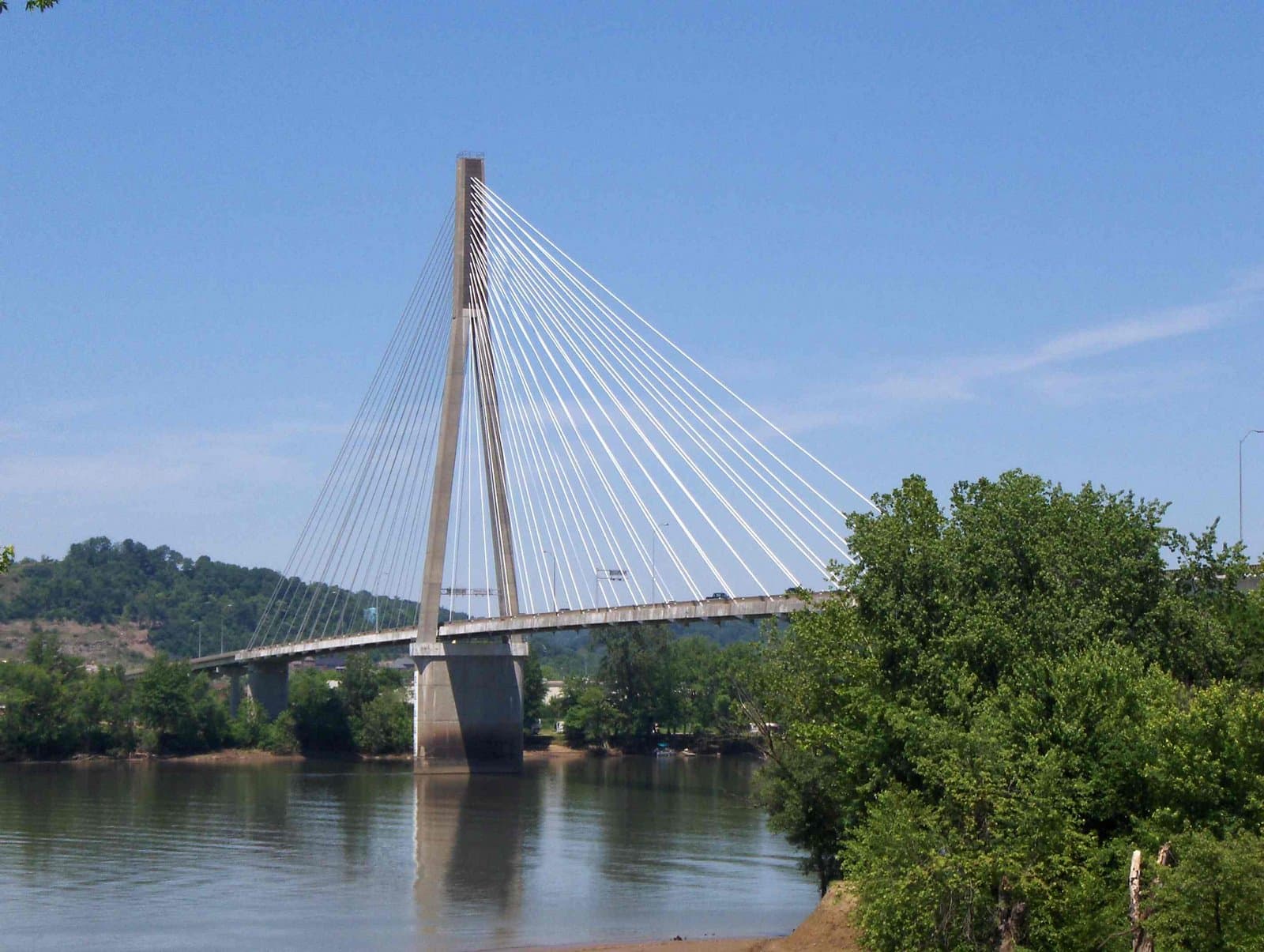
East Huntington Bridge
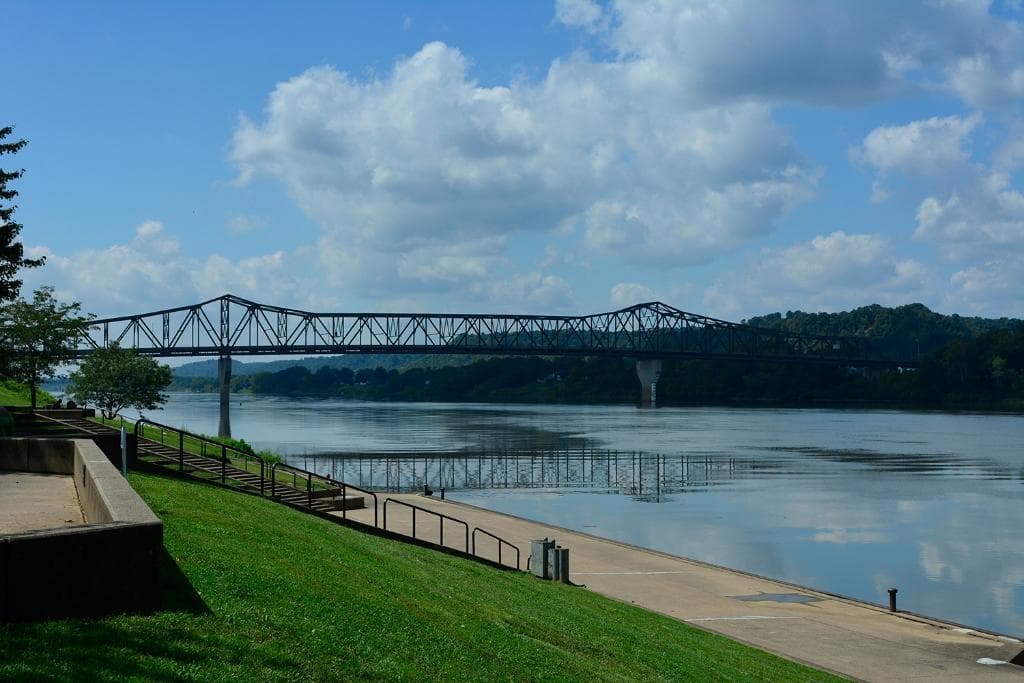
A pioneering cable-stayed bridge spanning the Ohio River, named after football legend Frank Gatski.
Highlights
Must-see attractions

Social
From TikTok & Reddit
Best Time
Best views of the structure
East Huntington Bridge
Best Time
Best views of the structure
Highlights
Must-see attractions
A pioneering cable-stayed bridge spanning the Ohio River, named after football legend Frank Gatski.
"It's a very elegant structure, and one of the best looking bridges in the region."
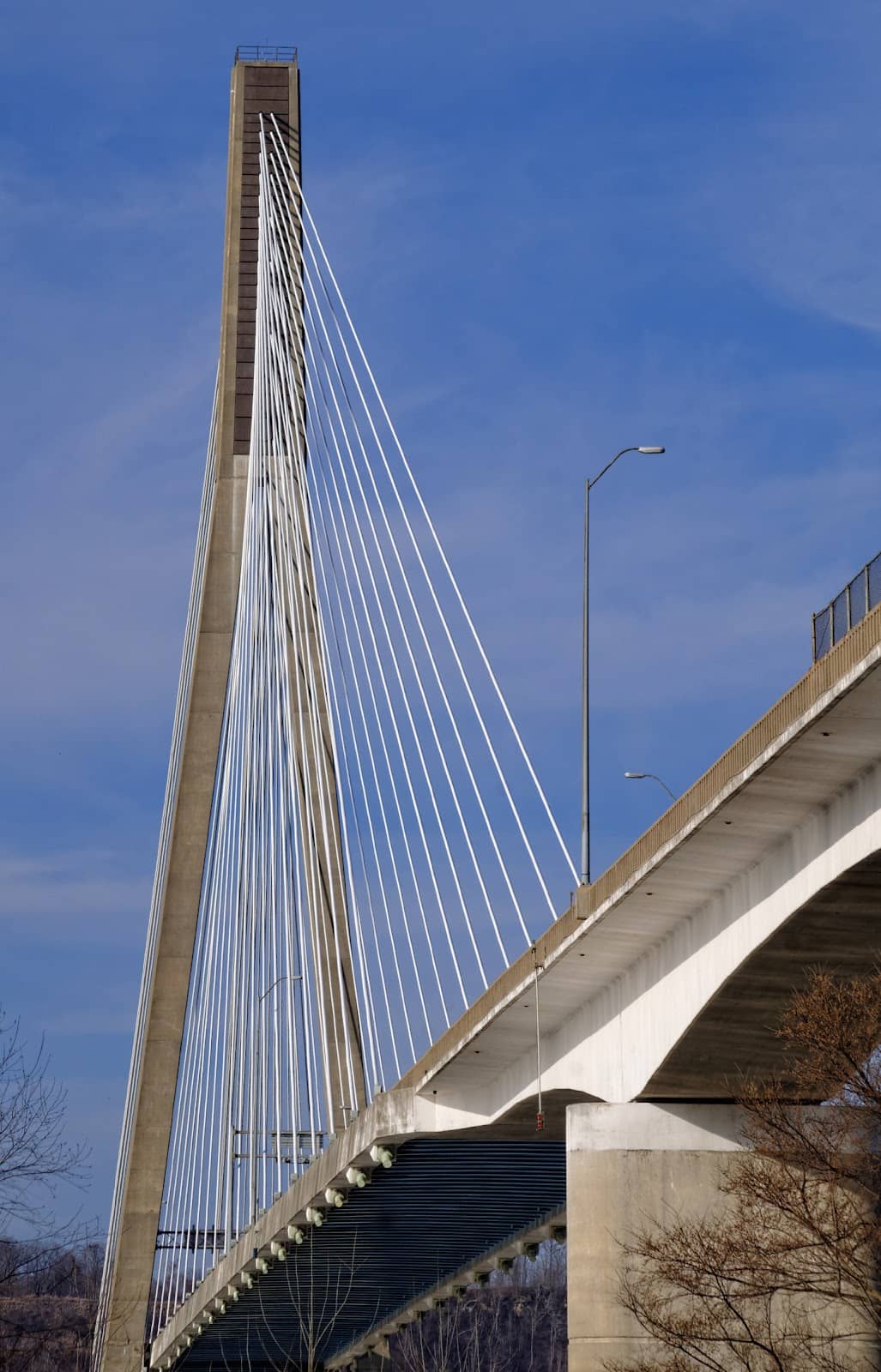
📸 Best Photo Spots
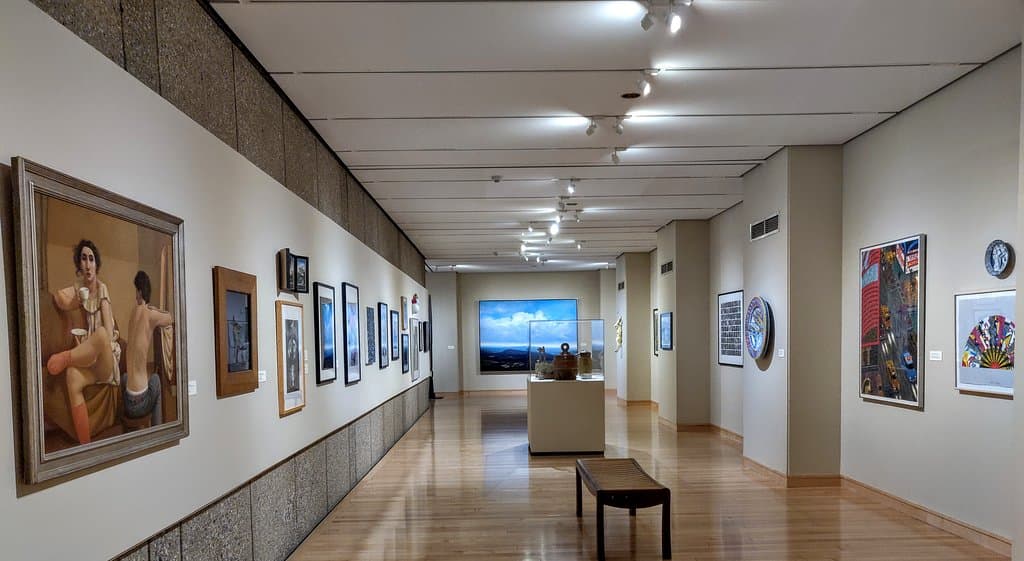
Seek out overlooks near the art museum for stunning city and bridge views.
🚶♀️ No Pedestrian Access
Walking the bridge is dangerous; view from afar.
Quick Facts
Hours
Rating
4.1 · 41 reviews
Address
Highlights
Discover the most iconic attractions and experiences
Cable-Stayed Design
Admire the elegant, modern cable-stayed architecture, a pioneering design in the US.
Ohio River Span
Experience the impressive scale of this bridge as it gracefully crosses the Ohio River.
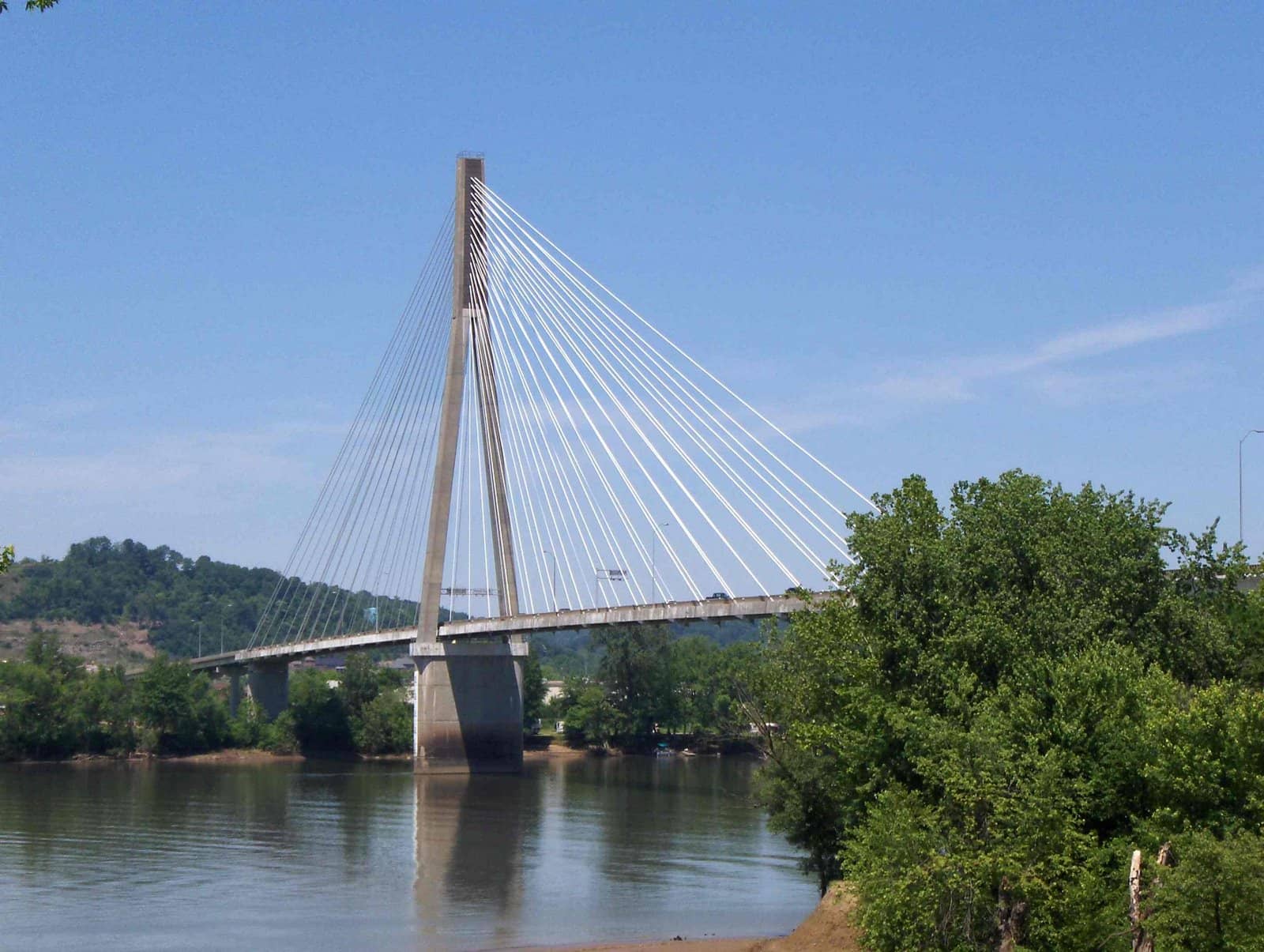
Frank Gatski Memorial
Honor the bridge's namesake, a Pro Football Hall of Famer from nearby Marshall University.
Plans like a pro.
Thinks like you
Planning Your Visit
Timing Your Visit
Experiencing the Bridge
Best Times
Insider Tips
from TikTok, Instagram & Reddit
📸 Best Photo Spots
Seek out overlooks near the art museum for stunning city and bridge views.
🚶♀️ No Pedestrian Access
Walking the bridge is dangerous; view from afar.
Scenic overlooks/Lookouts in the area?
Hey everyone, are there any good scenic overlooks or lookouts for good views in the area? Views of the city or area? (Tri state/Boyd/Lawrence/Wayne/Cabell counties)
overlook spots
Hey! I was curious if anyone knew of any nice overlook spots in the area?
🚗 Toll-Free Crossing
Enjoy the scenic drive across the Ohio River without any tolls.
💡 Lighting Potential
The bridge could be enhanced with lighting for nighttime appeal.
Tips
from all over the internet
📸 Best Photo Spots
Seek out overlooks near the art museum for stunning city and bridge views.
🚶♀️ No Pedestrian Access
Walking the bridge is dangerous; view from afar.
🚗 Toll-Free Crossing
Enjoy the scenic drive across the Ohio River without any tolls.
💡 Lighting Potential
The bridge could be enhanced with lighting for nighttime appeal.
What Travellers Say
Reviews Summary
The East Huntington Bridge is recognized as an elegant and impressive cable-stayed structure, notable for its pioneering engineering in the U.S. While its primary function is vehicular, its design is aesthetically pleasing. However, a significant drawback is the lack of safe pedestrian access, and some reviewers feel it could benefit from better lighting.
"The East Huntington Bridge, officially named the Frank Gatski Memorial Bridge, is a striking cable-stayed structure that spans the Ohio River between Huntington, West Virginia, and Proctorville, Ohio. It’s not just a beautiful bridge and an engineering feat - it is a landmark with a story.
The East Huntington Bridge was built as a Federal Highway Administration demonstration to test and promote cable-stayed technology which was widely used in Europe but still novel in the United States during the early 1980s. It features hydraulic dampers to reduce cable vibration, with upgrades made in the 2000s.
This was the first concrete cable-stayed bridge in West Virginia and only the third of its kind in the country at the time. The earlier two were the Pasco-Kennewick Intercity Bridge completed in 1978 and the Hale Boggs Memorial Bridge in Louisiana completed in 1983. With the concept proven, later built cable-stayed bridges include the Sunshine Skyway Bridge in Tampa completed in 1987, the Dames Point Bridge in Jacksonville completed in 1989 and the Sidney Lanier Bridge in Georgia completed in 2003.
With a total length of 900 feet and a main span of 900 feet, the deck is 40 feet wide and has 33 feet of clearance over the Ohio River. There are 62 stay cables in a fan arrangement stemming from the single central pylon.
It is named for Frank “Gunner” Gatski, a legendary football player from West Virginia. Gatski played for nearby Marshall University in the early 1940s and went on to have a stellar professional career with the Cleveland Browns, winning eight championships and earning induction into the Pro Football Hall of Fame in 1985. He was the first Marshall alumnus to reach the Hall of Fame.
There is no toll to cross the bridge.
[Review 605 of 2025 - 302 in Ohio - 24166 overall]"
Bruce InCharlotte
"The bridge has the potential to really look nice with some lighting. If someone needed to cross the bridge by walking it is extremely dangerous as there is no room on either side for one to walk."
Sarah Stamper
"This bridge is made to look like it won't stand."
JB Brown
What People Like
What People Dislike
Frequently Asked Questions
🚇 🗺️ Getting There
The East Huntington Bridge, also known as the Frank Gatski Memorial Bridge, connects Huntington, West Virginia, and Proctorville, Ohio, across the Ohio River. You can access it via US-52 on the West Virginia side and State Route 7 on the Ohio side. It's a key part of the local transportation network for drivers.
Public transportation options directly to the bridge itself are limited. It's primarily designed for vehicular traffic. Travelers typically use personal vehicles or ride-sharing services to reach viewpoints or cross the bridge.
Designated parking for viewing the bridge isn't widely advertised. However, local parks or public access points along the Ohio River in Huntington or Proctorville might offer suitable vantage points.
For drivers, US-52 provides direct access from Huntington, WV, while State Route 7 offers access from Proctorville, OH. These routes are well-maintained and offer good views as you approach the bridge.
No, there is no toll to cross the East Huntington Bridge. It serves as a free crossing over the Ohio River for commuters and travelers.
🎫 🎫 Tickets & Entry
No tickets are required to cross the East Huntington Bridge, as it is a toll-free public roadway.
The East Huntington Bridge is open 24/7 as it is a public highway. There are no specific operating hours for crossing.
There is no admission fee for viewing the East Huntington Bridge from public areas. Access to the bridge itself is free.
Walking across the East Huntington Bridge is not recommended and is considered dangerous due to the lack of pedestrian space. It is designed for vehicular traffic only.
Standard traffic laws apply. Oversized vehicles may have restrictions, but for typical passenger vehicles, there are no special restrictions beyond normal road usage.
📸 📸 Photography & Views
Great photo opportunities exist from overlooks near the Huntington Museum of Art, offering panoramic views of the city and the bridge. You can also find vantage points along the Ohio River banks on both the West Virginia and Ohio sides.
While the bridge itself doesn't have extensive lighting, the surrounding city lights can create a nice backdrop for night photography. Some reviewers have noted its potential for better lighting.
The fan arrangement of the 62 stay cables stemming from the single central pylon is a key visual element. Capturing this from a slightly elevated position, like the suggested overlooks, can highlight the bridge's unique structure.
Daylight hours offer the clearest views of the bridge's architecture and its setting over the Ohio River. Sunrise and sunset can provide dramatic lighting, but be mindful of traffic.
While you can drive across it, getting very close for detailed photography on foot is difficult and unsafe due to the lack of pedestrian pathways. Viewing from a distance is the safest and most practical approach.
🎫 💡 History & Engineering
The East Huntington Bridge was built as a demonstration project by the Federal Highway Administration to showcase cable-stayed bridge technology, which was more common in Europe at the time. It was the first concrete cable-stayed bridge in West Virginia and the third in the U.S.
The bridge is officially named the Frank Gatski Memorial Bridge in honor of Frank 'Gunner' Gatski, a legendary football player from nearby Marshall University who went on to a Hall of Fame career with the Cleveland Browns.
It was one of the earliest cable-stayed bridges in the United States, featuring a single central pylon and 62 stay cables in a fan arrangement. It also incorporates hydraulic dampers to manage cable vibration.
Construction of the East Huntington Bridge took place in the early 1980s, with the technology being a novel approach for bridge building in the United States during that period.
Its construction proved the viability and effectiveness of cable-stayed bridge technology in the U.S., paving the way for many subsequent similar structures across the country.


Social
from TikTok, Instagram & Reddit