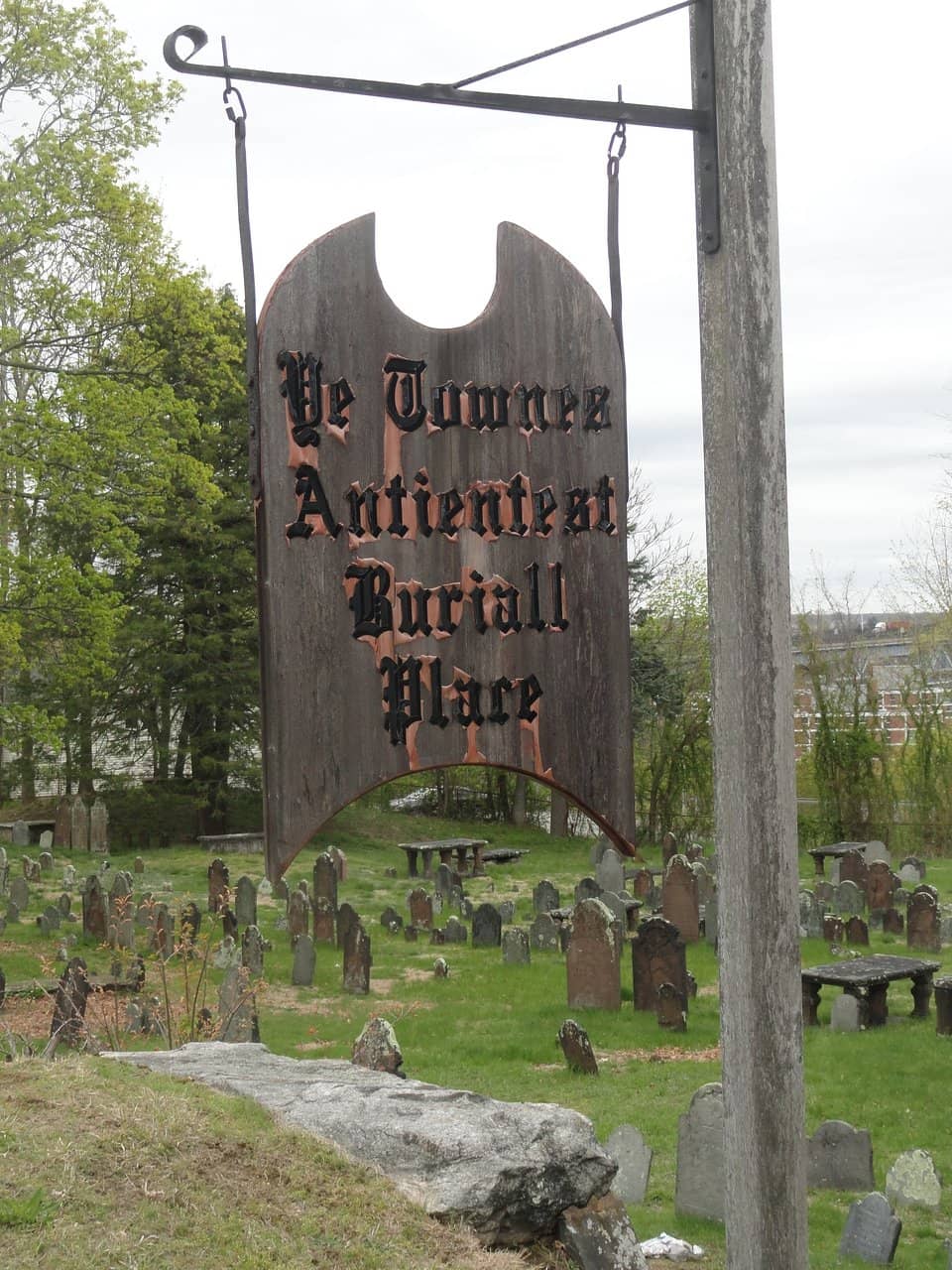
Ye Antientist Burial Ground
A historic hillside cemetery in New London, CT, featuring unique colonial gravestone art and poignant stories of early settlers and Black history.
Highlights
Must-see attractions

Social
From TikTok & Reddit
Best Time
Pleasant weather for exploring
Ye Antientist Burial Ground
Best Time
Pleasant weather for exploring
Highlights
Must-see attractions
A historic hillside cemetery in New London, CT, featuring unique colonial gravestone art and poignant stories of early settlers and Black history.
"Besides having the best name of a burial ground in CT this is a very beautiful and well preserved cemetery."
Wear Comfortable Shoes
The ground is uneven and hilly. Sturdy footwear is a must for exploring this historic site. :athletic_shoe:
Allow Ample Time
Give yourself at least an hour to wander and absorb the history. There's more here than meets the eye. :clock1:
Quick Facts
Rating
5 · 4 reviews
Type
Cemetery
Highlights
Discover the most iconic attractions and experiences
Colonial Gravestone Art
Throughout the cemetery
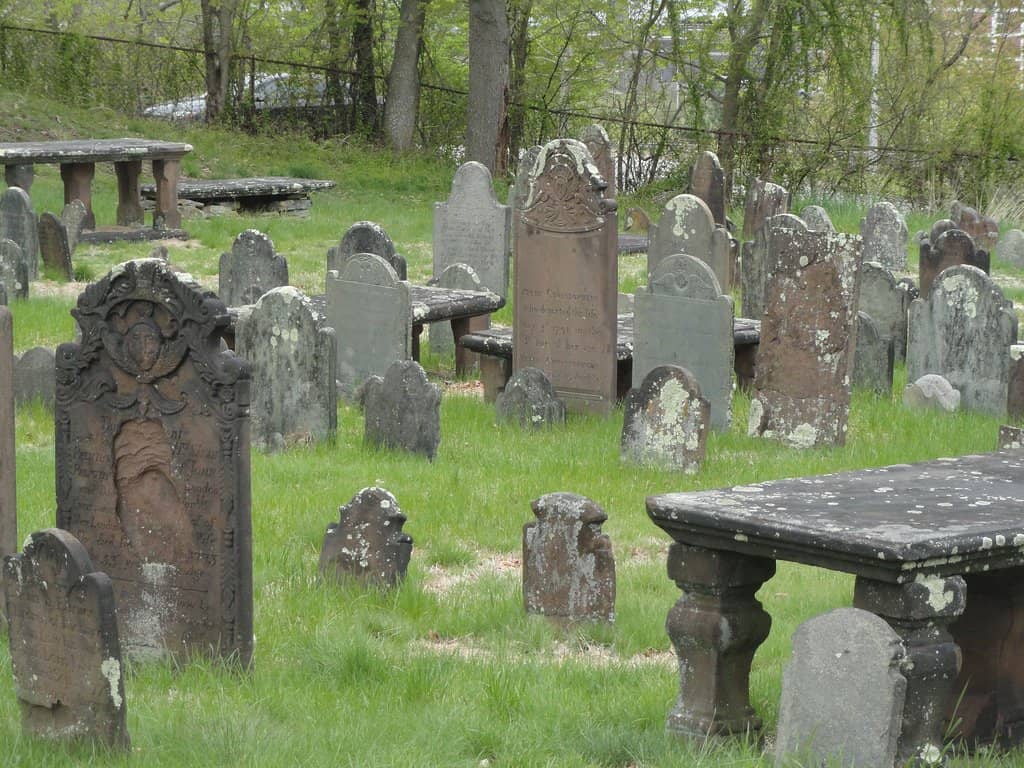
Marvel at unique winged head and soul effigies carved before 1800, showcasing regional artistry.
Florio Hercules' Story
Black Heritage Trail marker
Discover the poignant history of 'Governor of the Negroes' wife, a testament to Black history in colonial New England.
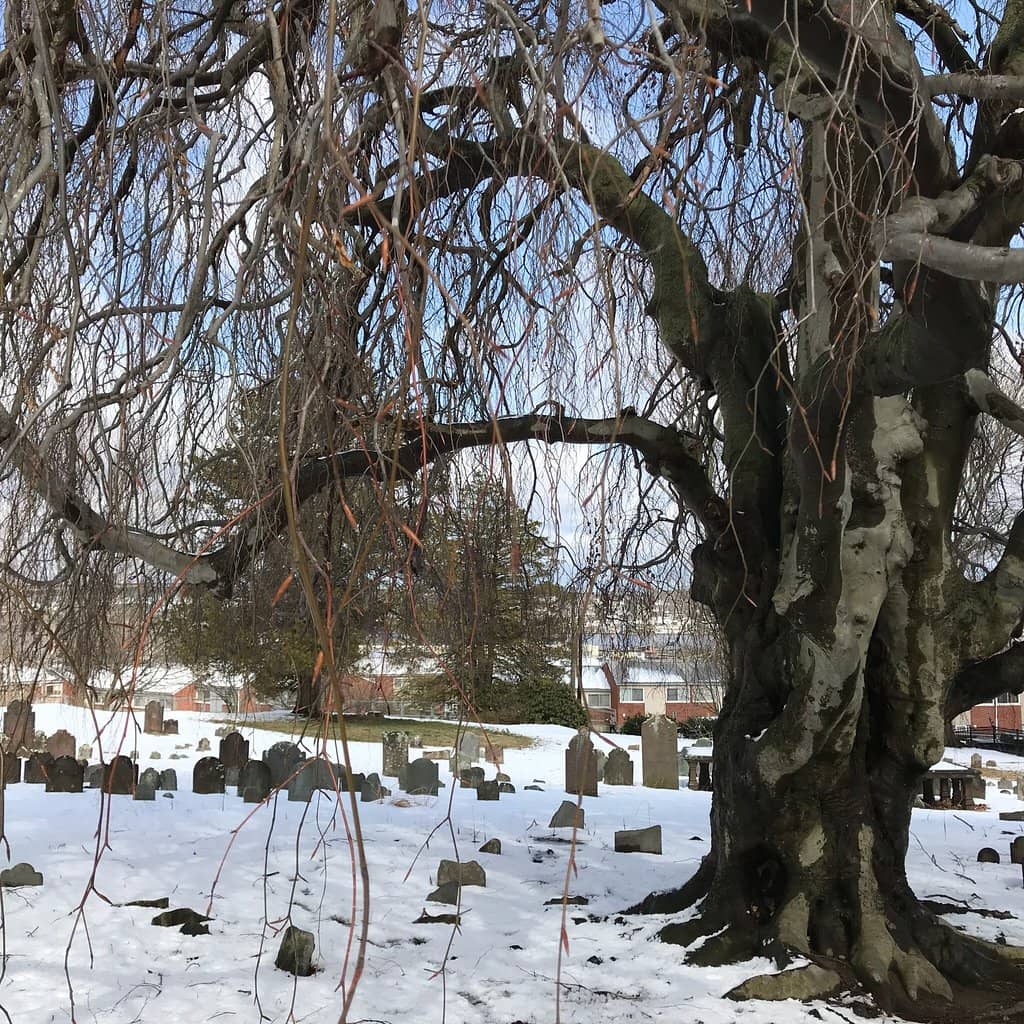
The Weeping Beech Tree
Above the cemetery
A magnificent, cascading tree offers a dramatic, mournful canopy over the ancient stones, especially stunning in summer.
Plans like a pro.
Thinks like you
Planning Your Visit
Respectful Exploration
Navigating the Stones
Best Times
Insider Tips
from TikTok, Instagram & Reddit
A uniquely dated stone at Antientist Burial Ground in New London, CT.
Prior to the Calendar Act of 1750, the English new year was legally in March, while most other countries had January 1st as the start new year - hence the odd years on this stone.
Wear Comfortable Shoes
The ground is uneven and hilly. Sturdy footwear is a must for exploring this historic site. :athletic_shoe:
Allow Ample Time
Give yourself at least an hour to wander and absorb the history. There's more here than meets the eye. :clock1:
Respect the Space
This is a sacred place. Please be quiet, no pets, and do not disturb the gravestones. 🙏
Look for Double Dates
Some stones show odd years due to calendar changes before 1750. 📅
Tips
from all over the internet
Wear Comfortable Shoes
The ground is uneven and hilly. Sturdy footwear is a must for exploring this historic site. :athletic_shoe:
Allow Ample Time
Give yourself at least an hour to wander and absorb the history. There's more here than meets the eye. :clock1:
Respect the Space
This is a sacred place. Please be quiet, no pets, and do not disturb the gravestones. 🙏
Look for Double Dates
Some stones show odd years due to calendar changes before 1750. 📅
What Travellers Say
Reviews Summary
Visitors praise Ye Antientist Burial Ground for its beauty, historical significance, and unique colonial gravestone art. The poignant stories, like that of Florio Hercules, add depth to the experience. While some stones are weathered, this contributes to its authentic charm. It's a place for quiet reflection and a deep connection to the past.
"Besides having the best name of a burial ground in CT this is a very beautiful and well preserved cemetery. I love looking at the variety, creativity and skill of stone carvers of grave stones carved before 1800 because they usually featured winged head or soul effigies. Each area of New England had their own carvers and so each burial ground has variations on basically the same theme for grave stones. This burial ground has some of the most original and beautiful grave stones in the state. It is well worth a visit."
Sam Smith
"Standing among the weathered gravestones of Ye Antientist Burial Ground in New London, Connecticut, one is struck by the peculiar silence that envelops this 1.5-acre hillside cemetery. Established in 1645 and legally designated as a "Common Buriall place" by a 1653 ordinance, this is one of New England's earliest graveyards — a repository of colonial history hiding in plain sight.
The cemetery presents itself as a study in ordered chaos. Stones tilt at precarious angles, crowded together "without avenues or spaces between families." Some bear the distinctive "death's head" or "soul effigies" — those haunting carved faces that exemplified Puritan gravestone art. These markers, described in historical accounts as "rude in form and material, or quaint and grotesque in workmanship," tell stories of the region's earliest European settlers.
But the most compelling narrative emerges from a Black Heritage Trail marker near the entrance. It commemorates Florio Hercules, who died in 1749 at age 60. She was wife to Hercules, "Governor of the Negroes," and her gravestone represents the earliest known record of Connecticut's Black governors. Beginning in the mid-18th century, Black Americans throughout New England elected their own leaders in annual festivals based on African celebrations. These respected figures helped settle disputes and maintain peace within their communities.
Florio's story is heartbreaking in its stark reality — enslaved by three generations of the Hallam family, separated from her husband in life and death. Her presence here transforms this colonial cemetery into something more nuanced: a physical record of America's complicated racial history.
Above the cemetery, a magnificent weeping beech creates a natural canopy. Its dramatic branches cascade toward the gravestones below in a gesture that feels like perpetual mourning; this tree is particularly stunning in summer, its verdant curtain creating dappled light across the ancient stones.
From this elevation, visitors can glimpse the Thames River and the heights of Groton beyond — the same view that would have greeted mourners centuries ago when the dead were "brought in from a distance of six or seven miles, either carried in hurdles, or borne on a bier upon men's shoulders."
Notable residents include Gurdon Saltonstall, Connecticut's colonial governor from 1708 to 1724; Sarah Kemble Knight, author of an important colonial-era travel journal; and Lucretia Harris Shaw, who transformed her home into a hospital for soldiers returning from British prison ships during the Revolutionary War.
The cemetery isn't perfectly maintained. Many stones have suffered damage over time, their inscriptions fading into illegibility. A community group formed in recent years organizes periodic cleanups, but this place wears its age honestly — moss-covered stones and irregular maintenance are part of its authenticity.
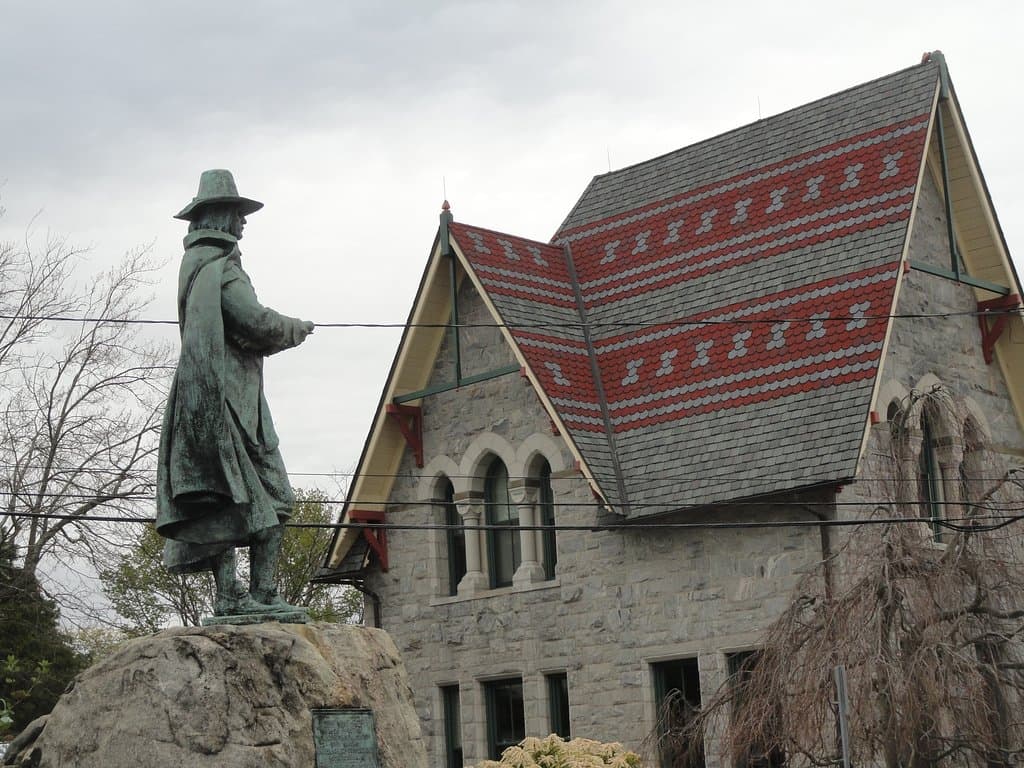
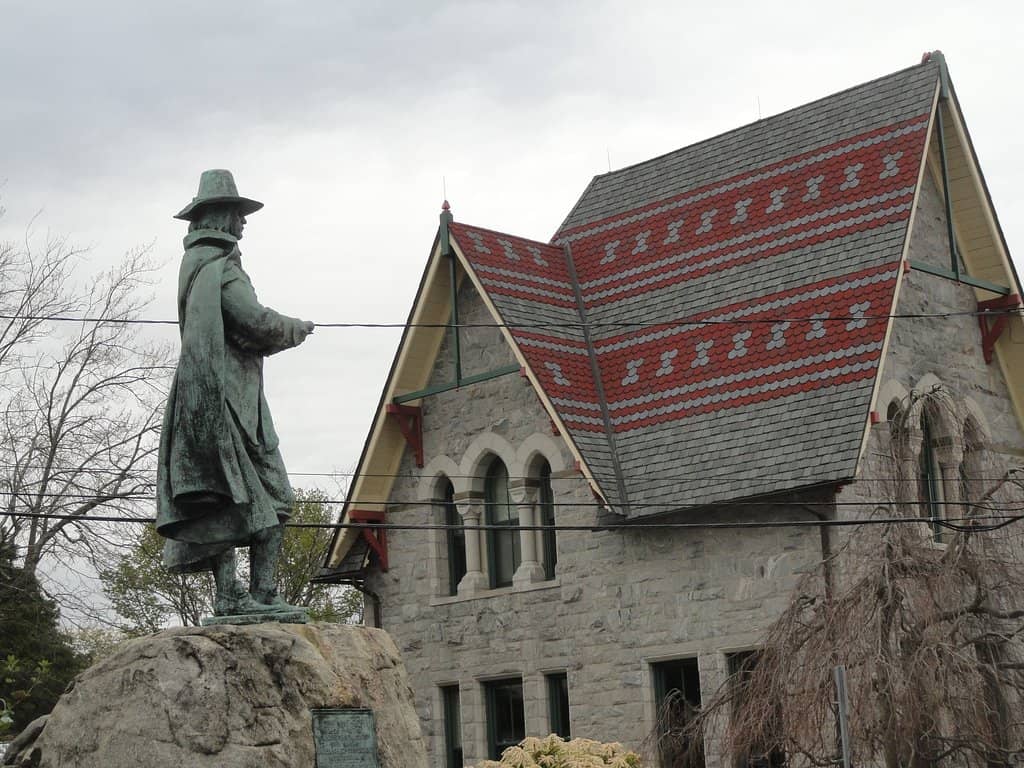
To visit, park on nearby streets and make your way to Hempstead Street. The actual location is slightly beyond the listed address (1 Bulkeley Place), adjacent to a school and statue of John Winthrop. Allow at least an hour for exploration. Those using the Thames River Heritage Park transportation can reach it via a 0.8-mile walk from the Water Taxi Landing.
In an era of carefully curated historical experiences, Ye Antientist Burial Ground offers something increasingly rare: unvarnished communion with the past. Here, among these "irreplaceable jewels" of colonial stone carving, you'll find not just the expected tales of Puritan settlers, but also threads of Black history woven into New England's cultural fabric — stories that waited centuries to be properly acknowledged."
Jeremy Edmunds
"Just one of the many places filled with amazing colonial history scattered throughout New London. This is an special burial ground. Don't miss it, but please be respectful. No pets and no etchings. Enjoy!"
S Nahr
What People Like
What People Dislike
Frequently Asked Questions
🚇 🗺️ Getting There
The burial ground is located on Hempstead Street in New London, CT, slightly beyond 1 Bulkeley Place, near a school and statue. Parking is available on nearby streets. If using the Thames River Heritage Park transportation, it's about a 0.8-mile walk from the Water Taxi Landing.
Yes, street parking is generally available on the roads surrounding the burial ground.
The Thames River Heritage Park Water Taxi can bring you close, with a short walk to the site. Check their schedule for operational times.
Look for the historic cemetery adjacent to a school and a statue. The entrance is not always clearly marked, so keep an eye out for the gravestones.
Due to the uneven terrain and densely packed gravestones, wheelchair accessibility may be challenging. It's best to be prepared for uneven surfaces.
🎫 🎫 Tickets & Entry
No, there are no tickets or admission fees required to visit Ye Antientist Burial Ground. It is a public historical site.
As an outdoor historical site, it is generally accessible during daylight hours. There are no set opening or closing times.
No, entry to Ye Antientist Burial Ground is free. It's a historical landmark open to the public for respectful visitation.
While it's an open-air site, it's best to visit during daylight hours for safety and to fully appreciate the gravestones and surroundings.
Yes, visitors are asked to be respectful, keep pets leashed (or not bring them at all, as per some advice), and refrain from touching or etching the gravestones.
🎫 🧭 Onsite Experience
You'll find a remarkable collection of colonial-era gravestones, including unique 'death's head' and 'soul effigy' carvings, the Black Heritage Trail marker for Florio Hercules, and a beautiful weeping beech tree.
Most visitors find that 1-2 hours is sufficient to explore the grounds, read inscriptions, and appreciate the historical significance.
While official guided tours may not be regularly scheduled, local historical societies sometimes offer them. It's also a great place for self-guided exploration.
The gravestones are significant for their artistry, representing early New England Puritan gravestone carving styles, and for the stories they tell of colonial settlers and early Black history.
Wander slowly, read the inscriptions carefully, and take time to observe the details on the gravestones. The hillside terrain requires careful footing.
📸 📸 Photography
Yes, photography is generally allowed for personal use. Please be respectful of the solemn nature of the site.
The unique gravestone carvings, the weeping beech tree, and the overall atmosphere of the hillside cemetery offer many photographic opportunities.
Avoid intrusive photography, especially if other visitors are present. Focus on capturing the historical and artistic elements respectfully.
Early morning or late afternoon light can create dramatic shadows and highlight the textures of the gravestones.
While not explicitly forbidden, it's best to use tripods discreetly to avoid obstructing pathways or disturbing the atmosphere.



Social
from TikTok, Instagram & Reddit