Makgadikgadi Pans National Park Boteti
A land of extremes: vast salt pans meet the seasonal Boteti River, drawing massive wildlife migrations. Experience raw, wild Botswana.
Highlights
Must-see attractions

Social
From TikTok & Reddit
Best Time
Migration & waterholes
Makgadikgadi Pans National Park Boteti
Best Time
Migration & waterholes
Highlights
Must-see attractions
A land of extremes: vast salt pans meet the seasonal Boteti River, drawing massive wildlife migrations. Experience raw, wild Botswana.
"The Boteti River is the heartbeat of this park, especially in the dry season, drawing unbelievable numbers of zebra and wildebeest."
4x4 is a must! 🚗
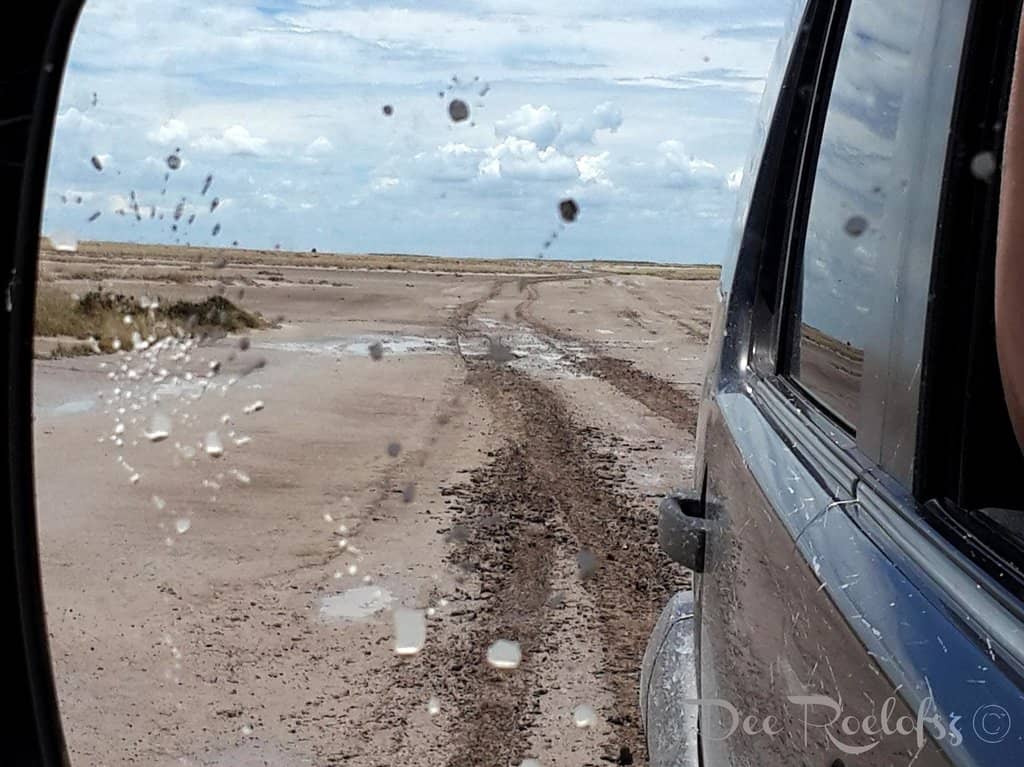
Don't attempt with a 2WD. Sandy tracks and potential for getting stuck are real. Plan your route carefully.
Pack extra fuel! ⛽
Fuel stations are scarce. Ensure you have enough for your entire trip, especially if self-driving.
Quick Facts
Highlights
Discover the most iconic attractions and experiences
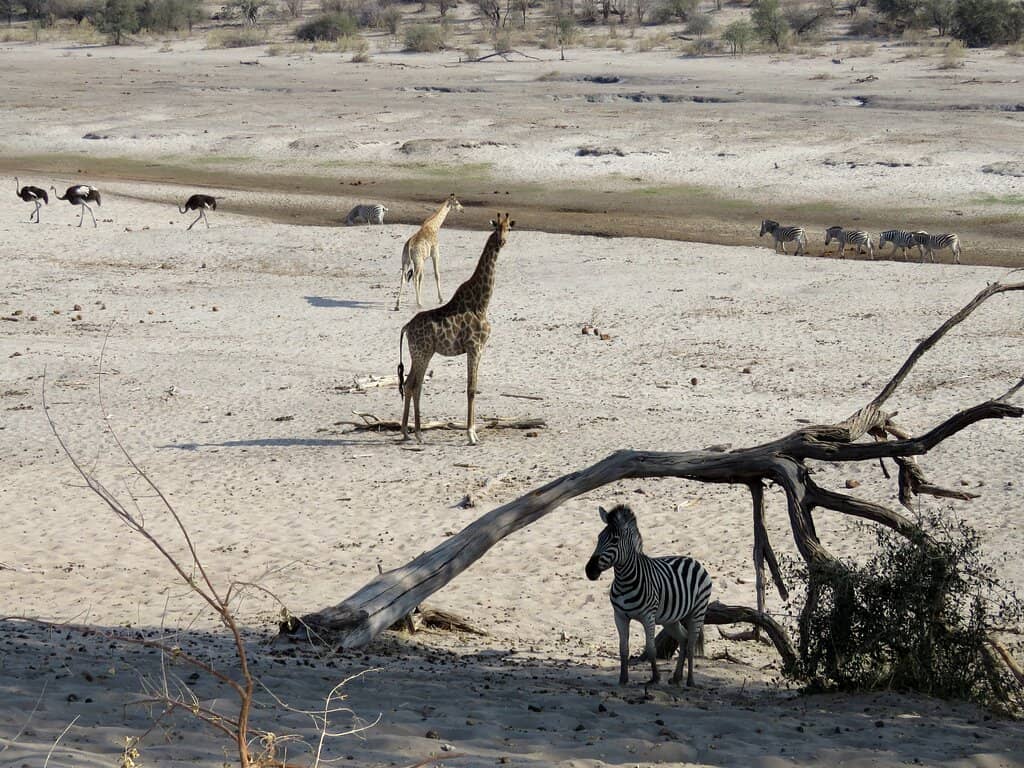
Boteti River Wildlife Spectacle
Western boundary of the park
Witness tens of thousands of zebras and wildebeest converging on the river's waterholes during the dry season. A truly breathtaking sight!
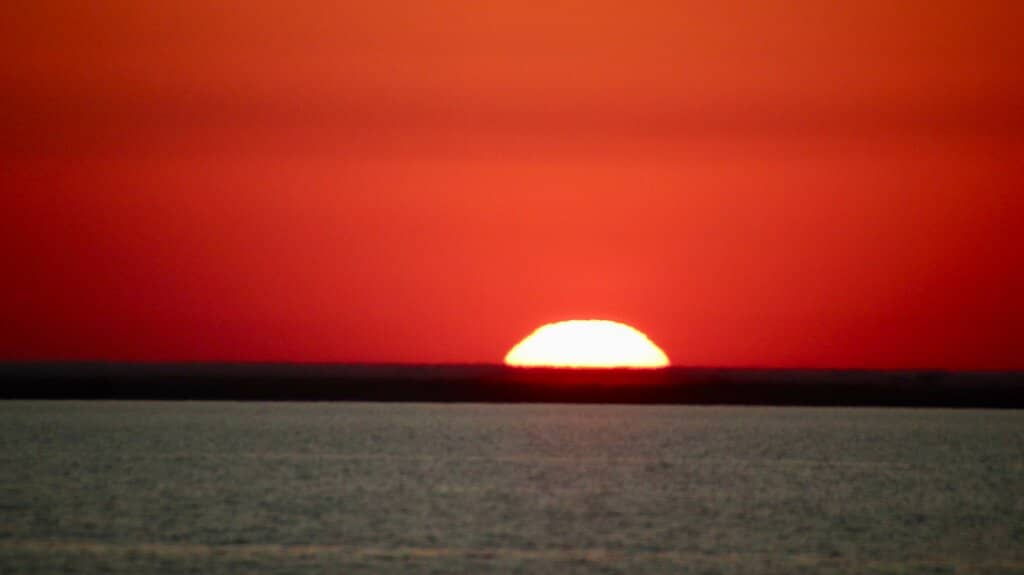
Vast Salt Pans
Eastern side of the park
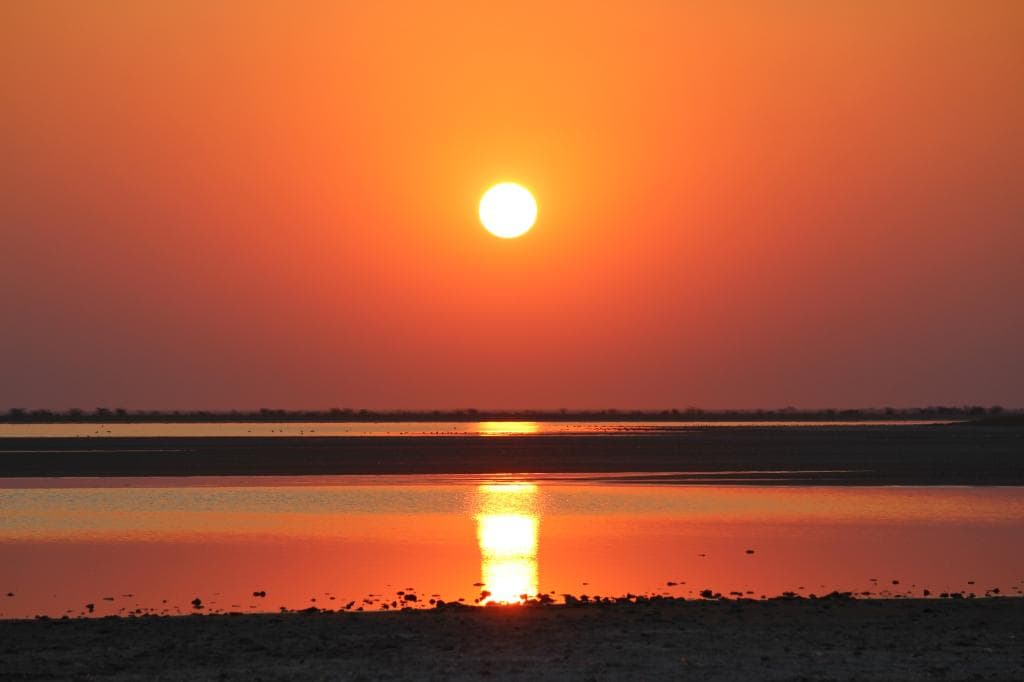
Experience the surreal, moon-like landscapes of the ancient salt pans. Stunning for photography, especially at sunrise and sunset.
Baobab Trees
Scattered throughout the park
Marvel at the iconic, ancient baobab trees, often found near water sources, adding a prehistoric charm to the scenery.
Plans like a pro.
Thinks like you
Planning Your Visit
Timing is Everything for the Migration
4x4 Essential for Rough Terrain
Best Times
Insider Tips
from TikTok, Instagram & Reddit
4x4 is a must! 🚗
Don't attempt with a 2WD. Sandy tracks and potential for getting stuck are real. Plan your route carefully.
Pack extra fuel! ⛽
Fuel stations are scarce. Ensure you have enough for your entire trip, especially if self-driving.
Dry season = Migration! 🦓
Visit during the dry months for the incredible zebra and wildebeest migrations along the Boteti River. 
Respect park rules 🚫
Stay on main roads and exit by 6 PM. No night drives allowed in the national park.
Tips
from all over the internet
4x4 is a must! 🚗
Don't attempt with a 2WD. Sandy tracks and potential for getting stuck are real. Plan your route carefully.
Pack extra fuel! ⛽
Fuel stations are scarce. Ensure you have enough for your entire trip, especially if self-driving.
Dry season = Migration! 🦓
Visit during the dry months for the incredible zebra and wildebeest migrations along the Boteti River.
Respect park rules 🚫
Stay on main roads and exit by 6 PM. No night drives allowed in the national park.
Bring binoculars! 🔭
Essential for spotting wildlife, especially smaller animals and birds, from a distance.
What Travellers Say
Reviews Summary
Visitors are captivated by the dramatic landscapes of the salt pans and the incredible wildlife spectacles, particularly the massive zebra and wildebeest migrations along the Boteti River during the dry season. The park offers a raw, wild experience, though the challenging terrain and seasonal nature of the river require careful planning.
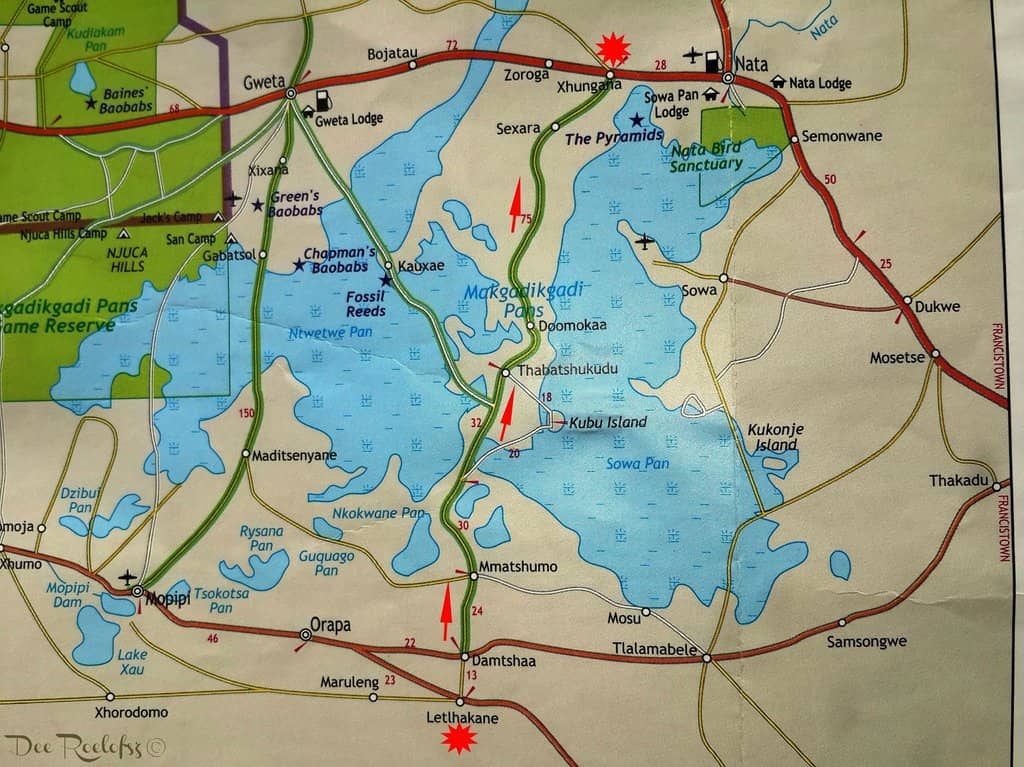
"Makgadikgadi Pans National Park presents one of the most visually and ecologically fascinating landscapes in Africa, and its map captures this uniqueness in bold strokes of emptiness punctuated by surprising lifelines. Located in northeastern Botswana, the park encompasses a portion of the greater Makgadikgadi salt pans—among the largest in the world. While the wider Makgadikgadi region includes both protected and unprotected areas, the National Park section specifically lies to the west of the pans, bordered in part by the Boteti River.
At first glance, the map reveals vast open spaces—much of it appearing as a blank canvas. This isn’t an error but a reflection of reality: these are ancient salt pans, remnants of a vast prehistoric lake. The pans dominate the eastern portion of the region, and within the National Park boundary, the map shows the Western edge of the Sua Pan and parts of the Ntwetwe Pan, with their flat, white expanses often resembling a moonscape on satellite imagery.
One of the most important geographical features on the map is the Boteti River, flowing along the park’s western boundary. This river is seasonal, but when in flow, it becomes the heartbeat of the park. The map marks its winding course, with associated lagoons and pools attracting herds of zebra, wildebeest, and antelope, especially in the dry season when animals migrate here from the salt flats. Points like Meno a Kwena, Khumaga Camp, and Tiaan’s Camp (just outside the official park boundary) are often highlighted as viewing bases along the river.
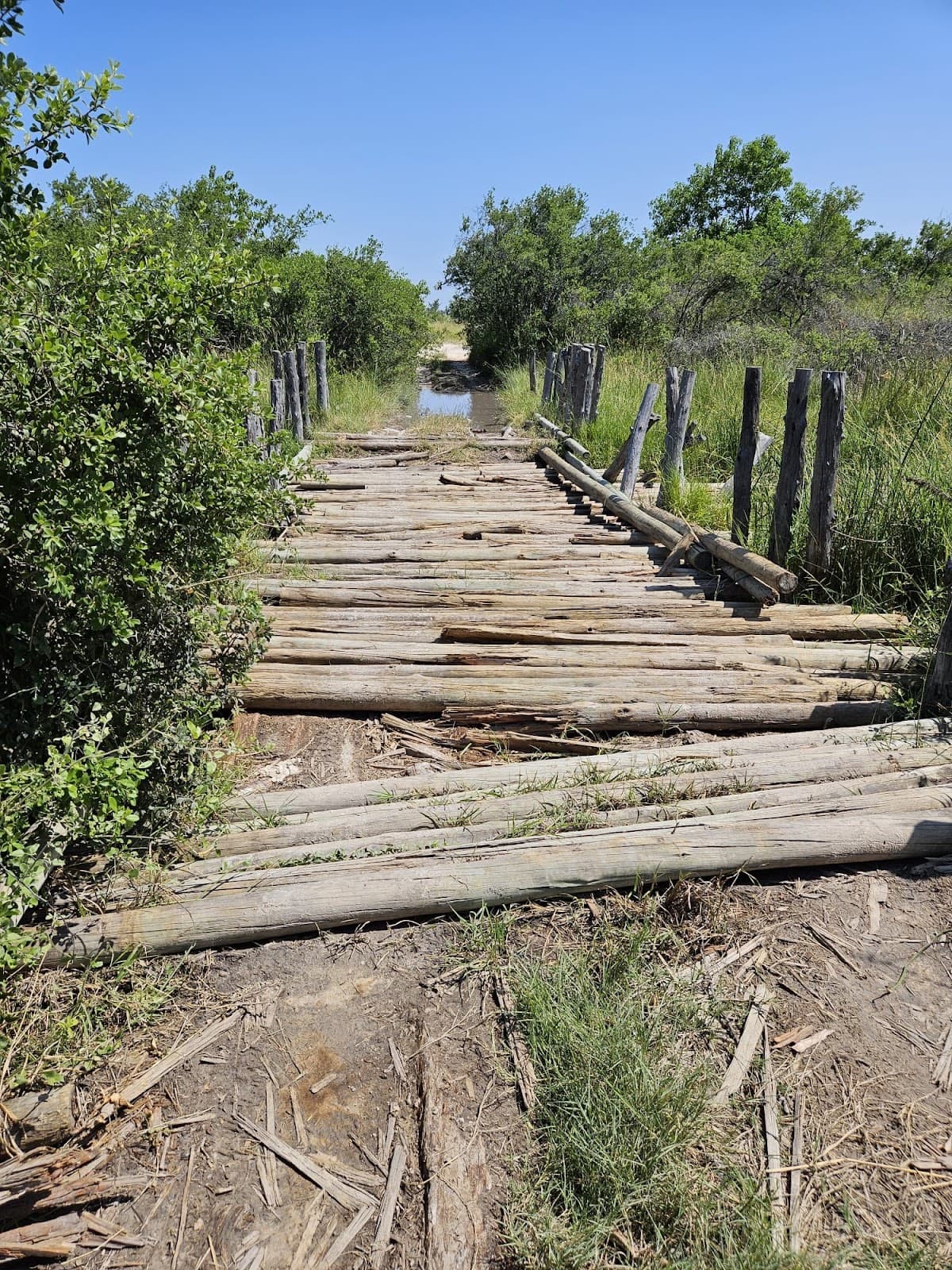
Roads on the map are sparse and rough, emphasizing the park’s wild nature. A few 4x4 tracks run from the Khumaga Gate in the west to other entry points like Phuduhudu Gate to the south. These are typically sand or salt-crusted tracks, with the main internal loop near the Boteti often being the only passable route during the rainy season. The dry pans, although seemingly empty, can become traps for the unwary driver after rain—and the map often includes advisory notations about seasonal access and vehicle requirements.
The map also marks designated wildlife-viewing areas near the river and some fossilized islands in the pans, such as Njuca Hills and Kubu Island (although the latter technically lies outside the park in a community-managed zone, it’s often included in broader Makgadikgadi maps due to its cultural and scenic significance).
Key features included on a quality map of the park would be:
Camping areas (e.g., Khumaga Camp inside the park and community camps just outside)
Vehicle routes and 4x4 trails
Seasonal waterholes
Wildlife migration corridors
Gates and park boundaries
Fauna is not specifically marked on the map, but informed travelers know that the Makgadikgadi zebra migration, one of Africa’s largest and least-known, travels seasonally between the pans and the river—driven by rainfall and grass growth. During the rainy season (November–April), the pans become shallow lakes, attracting thousands of flamingos and other migratory birds. The map’s elevation and water flow indicators can help pinpoint these transformation zones.
In conclusion, the map of Makgadikgadi Pans National Park is a guide to extremes—dry vs. wet, silence vs. seasonal abundance, and desolation vs. sudden, explosive life. It’s a map not of dense infrastructure or tourist stops, but of time, space, and nature’s slow drama, unfolding across an ancient salt-encrusted desert. It’s a place where the journey is as significant as the destination—and the map reflects just that."
krrazie
"After a few long days of game viewing driving in the Khwai/Moremi areas we decided on some quiet days here, we’ll pass on heading to the salt pans. We didn't expect particularly good game viewing along the Bo-teti river but we'd just do that. We entered one afternoon around 2pm, after dropping some tables and chairs at our SKL Khumaga campsite we set off along the river bank. And what an afternoon. A long drought for Botswana left the Boteti dry apart from a few remaining waterholes along the river. Everything was either heading to or from water. Thousands of zebra, as many wildebeest, impala, kudu and giraffe. And elephants. Down on the river bed more than 200 spread over a 15km drive. And when on the banks curving in the sand track there seemed an elephant behind every bush either coming or going to the river.
The following morning, same animals but only 10% of the volume of the previous afternoon and few ele-phant. But again by 2.30 pm literally a few thousand animals covering the dry riverbed, unbelievable."
Kevin Stephens
"We stayed at a near by Safari camp and visited here multiple times on our stay. It is very dry and dusty here, and the rivers are very low but it has its own beauty. Since this is a national park, you can’t go off the main roads to follow animals like in a private reserve. You also can’t go in after 6pm so there are no night game drives. You can camp in this park and there are many self-drive tourist in here.
It’s very bumpy so you must be able to handle the jostling and bouncing.
We saw many male elephants who weee often aggressive. We didn’t see any female elephants or babies. We saw hippos, giraffes, ostrich, jackals, monitor lizards, crocodiles, vervet monkeys, baboons, many hoofed animals, many birds, etc. We did not see any cats in this area.
If you visit this area, mix it with a trip to Okavanga Delta or Chobe."
Born To Be Retired
What People Like
What People Dislike
Frequently Asked Questions
🚇 🗺️ Getting There
The park is best accessed by a 4x4 vehicle. The main entry point is often via the Khumaga Gate from the west. Roads are sandy and can be challenging, especially during the rainy season. Many visitors combine a trip here with other Botswana destinations like the Okavango Delta or Chobe National Park.
A 4x4 is essential for navigating the sandy tracks within Makgadikgadi Pans National Park. Self-driving is popular, but ensure you have a reliable vehicle and a good map. Guided tours are also available and can offer a more relaxed experience.
The closest major airports are in Maun and Gaborone. From there, you would typically arrange for a 4x4 transfer or rent a vehicle to reach the park.
Yes, the Boteti River forms the western boundary of the park, and tracks connect it to areas near the salt pans. However, these tracks are rough and require a 4x4. Always check local conditions before attempting.
While possible, it's not recommended. The park is vast, and travel times can be long. To truly experience the wildlife and landscapes, an overnight stay is highly advised.
🎫 🎫 Tickets & Entry
Park entry fees are typically charged per person per day, and there may be additional vehicle fees. It's advisable to check the latest fees with the Botswana Department of Wildlife and National Parks or your lodge/tour operator before your visit.
The park generally opens at sunrise and closes at sunset. Night game drives are not permitted within the national park boundaries.
Yes, booking accommodation, whether it's a campsite or a lodge, well in advance is highly recommended, especially during peak migration seasons. Options range from self-catering campsites to luxury lodges.
Yes, there are designated campsites within the park, such as Khumaga Camp. These offer basic facilities and a true wilderness experience. Booking is essential.
Visitors must adhere to park rules, including staying on designated roads, not driving off-road, and exiting the park by sunset. Respecting wildlife and the environment is paramount.
🎫 🦁 Onsite Experience
The park is famous for its massive dry-season migrations of zebras and wildebeest along the Boteti River. You can also spot elephants, lions, hyenas, giraffes, ostriches, and a variety of antelope and birds. +2
The zebra and wildebeest migrations are most prominent during the dry season, typically from May to October, when they are drawn to the remaining water sources along the Boteti River. +1
The Boteti River banks are prime locations, especially during the dry season. Areas around waterholes and lagoons are also excellent for spotting animals. +1
No, off-roading is strictly prohibited within Makgadikgadi Pans National Park to protect the fragile ecosystem and wildlife. Stick to the designated tracks.
Yes, many lodges and tour operators offer guided game drives, which can enhance your wildlife viewing experience and provide valuable insights from experienced guides.
🍽️ 🍽️ Food & Dining
Within the national park itself, dining options are limited to what's available at lodges or what you bring for self-catering at campsites. Lodges offer full dining services.
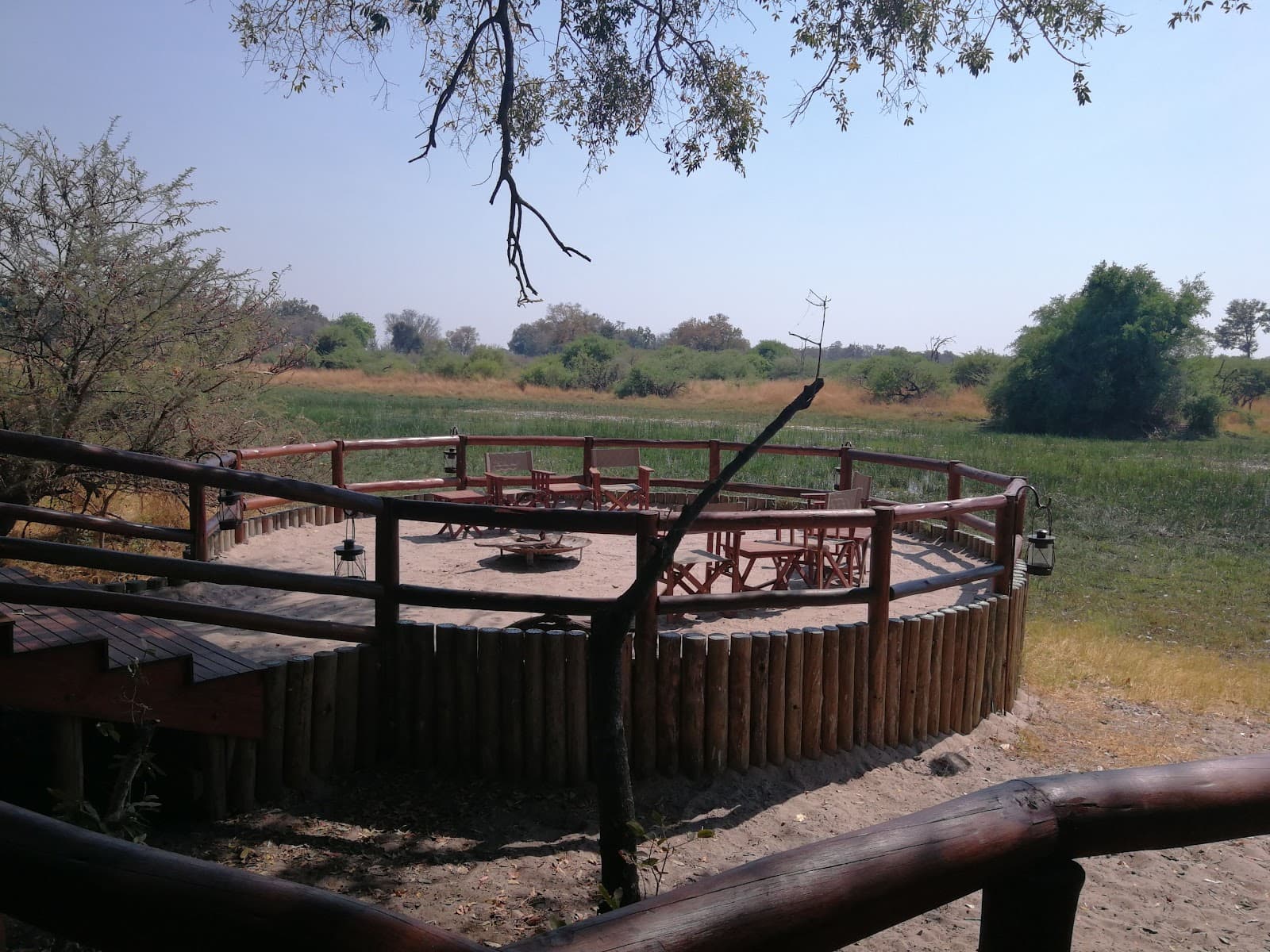
Lodges like Leroo La Tau offer full-board dining, often featuring a mix of local and international cuisine, with stunning views of the river and wildlife.
Yes, if you are self-driving or camping, you can bring your own food and drinks. Ensure you have adequate storage and dispose of waste properly.
Designated picnic spots might be available, but it's best to confirm with park authorities or your lodge. Always pack out everything you pack in.
Safari lodges typically offer a range of meals, from breakfast buffets to multi-course dinners. Many cater to dietary requirements if notified in advance.
📸 📸 Photography
Early mornings and late afternoons offer the best light for photography, with golden hour casting a beautiful glow on the landscapes and wildlife.
Wildlife photography, especially of the migrations, is a major draw. Landscape photography of the vast pans and baobab trees is also highly rewarding.
A telephoto lens (e.g., 300mm or more) is highly recommended for capturing wildlife details from a safe distance. A wide-angle lens is great for landscapes.
Generally, photography is allowed, but always be mindful of wildlife and avoid disturbing them. Drone usage may be restricted or require special permits.
The sheer numbers of migrating animals, interactions at waterholes, and the dramatic contrast of wildlife against the dry riverbed are key photographic subjects.



Social
from TikTok, Instagram & Reddit