Cabo Verde
About Cabo Verde
Cabo Verde only began competing internationally in the 1990s and their World Cup 2026 appearance marks a historic milestone — their first-ever FIFA World Cup finals qualification. At AFCON, they have become a genuine force, reaching the quarter-finals in 2021 and 2023, with the 2023 edition in Ivory Coast particularly memorable as they defeated Ghana in the group stage. Players like Garry Rodrigues and Ryan Mendes have been central to that AFCON journey. Arriving in 2026 as debutants, they carry the pride of an entire archipelago nation.
Cabo Verde are out of the World Cup
Cabo Verde were knocked out in the Round of 32, losing 2–3 to Argentina.
Players to watch
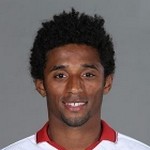 Ryan Mendes
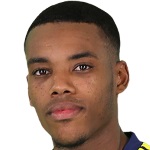 Garry Rodrigues
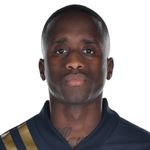 Jamiro Monteiro
Bubista typically deploys a 4-3-3 that quickly becomes a 4-5-1 out of possession, with the wide forwards Garry Rodrigues and Ryan Mendes tucking in to form a compact mid-block. Jamiro Monteiro sits as the deepest of the three central midfielders, recycling possession and protecting the back four. Build-up is direct rather than elaborate, with Logan Costa and Wagner Pina encouraged to play forward quickly to trigger transitions.
Watch Jamiro Monteiro pull the strings in central midfield — a technically tidy operator who has spent years in professional European football and gives Cabo Verde their best chance of controlling a game. Out wide, Garry Rodrigues brings direct, explosive running from the right flank, capable of beating defenders in one-on-one situations, while veteran Ryan Mendes offers the clinical edge and experience to punish any defensive lapse in the final third.
Logan Costa's composure at Villarreal gives the back line genuine top-level quality, while Garry Rodrigues's ability to carry the ball at pace makes Cabo Verde dangerous on the counter. The team's collective defensive discipline under Bubista — proven across multiple AFCON campaigns — makes them genuinely difficult to break down.
The squad's attacking depth beyond the established trio of Ryan Mendes, Garry Rodrigues, and Jovane Cabral is thin, with several forwards playing in lower-tier leagues. Jamiro Monteiro operating at PEC Zwolle in the Dutch second tier raises questions about whether the midfield engine room can cope with the intensity of World Cup group-stage opponents.
The lines
Ryan Mendes leads the line with experience and movement, supported by Garry Rodrigues's directness on the right and Jovane Cabral's trickery on the left. Nuno da Costa offers a physical, hold-up option from the bench, giving Bubista a different shape when chasing a game.
Jamiro Monteiro anchors the three-man midfield, breaking up play and distributing simply. Kevin Pina of Krasnodar and Telmo Arcanjo of Vitoria Guimaraes offer box-to-box energy alongside him. Laros Duarte and Deroy Duarte provide further cover, though the group lacks a genuine creative playmaker.
Logan Costa at Villarreal is the standout, bringing La Liga experience to a back four that also includes Wagner Pina at Trabzonspor. Steven Moreira provides reliability at right back from his Columbus Crew base. Stopira, a long-serving stalwart, adds experience, though the unit has limited exposure to elite attacking opposition.
Vozinha, based at Chaves in the Portuguese second tier, is the established first choice and has been Cabo Verde's reliable last line through their AFCON campaigns. His shot-stopping has been tested at continental level, though his club football is not at the highest tier.
Squad





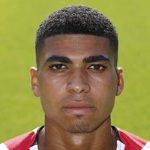
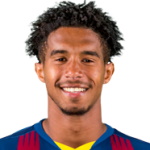
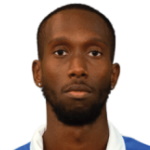

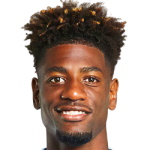

Fixtures & results
Frequently asked questions
What group is Cabo Verde in at the 2026 World Cup?
Cabo Verde are in Group H at the 2026 FIFA World Cup.
Who is Cabo Verde's manager?
Cabo Verde are managed by Bubista.
Who are Cabo Verde's players to watch?
Key players to watch for Cabo Verde include Ryan Mendes, Garry Rodrigues, Jamiro Monteiro.
See the full World Cup 2026 title odds and predicted bracket.