Belgium
About Belgium

Belgium have never won the World Cup, but their 1986 squad reached the semi-finals in Mexico, with Jan Ceulemans as the iconic figurehead. The so-called Golden Generation — built around Eden Hazard, De Bruyne and Lukaku — reached the semi-finals in Russia 2018, losing to eventual champions France, and finished third. At Euro 2020 they were eliminated in the quarter-finals by Italy. The 2026 tournament may represent the last realistic window for this core group to convert promise into silverware.
Belgium's road to the final
Players to watch
 Kevin De Bruyne
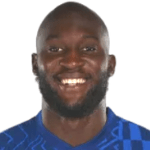 Romelu Lukaku
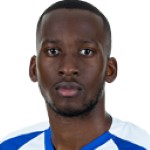
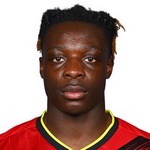 Jérémy Doku
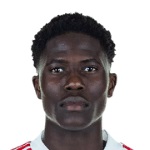
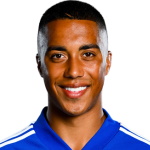
Garcia typically deploys a 4-2-3-1, with Amadou Onana and Youri Tielemans forming a double pivot — Onana providing athleticism and ball-winning, Tielemans adding composure in possession. De Bruyne operates in the ten role, dictating tempo. Doku stretches play from the left, while Lukaku holds the line and links play. Belgium press selectively rather than intensely, preferring to defend in a mid-block and exploit transitions.
Watch Jérémy Doku for the most direct, defender-terrifying running in the tournament — his dribbling numbers at Manchester City place him among Europe's elite ball-carriers. Kevin De Bruyne, now orchestrating from Napoli, remains the fulcrum: a passer who can split any defensive block with a single diagonal. Romelu Lukaku, also at Napoli, is Belgium's all-time top scorer and still a physical nightmare for centre-backs at close range.
De Bruyne's passing range and Doku's dribbling give Belgium the tools to unlock any low block. Thibaut Courtois, back fit at Real Madrid, is one of the world's best shot-stoppers and single-handedly capable of keeping Belgium in tight knockout matches.
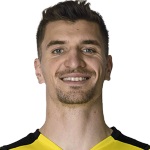
The right side of defence is a persistent concern — Thomas Meunier offers less defensive solidity than his attacking ambition suggests. Belgium's squad is also ageing at its core, and if De Bruyne is crowded out by a physical midfield, the team's creative engine stalls with no obvious replacement of comparable quality.
The lines
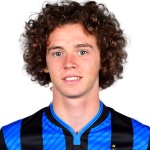
Lukaku leads the line as a powerful target striker, with Doku cutting in from the left and Leandro Trossard — a reliable Premier League performer at Arsenal — offering an intelligent alternative. Charles De Ketelaere, in fine form at Atalanta, provides a creative secondary option.
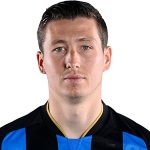
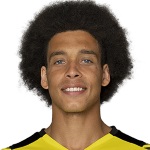
Onana is the engine — a box-to-box midfielder who wins the ball and drives forward. Tielemans provides the passing rhythm alongside him, while De Bruyne operates ahead of both as the creative hub. Hans Vanaken and Axel Witsel offer experienced depth.
Zeno Debast has emerged as a composed centre-back at Sporting CP, partnering veterans like Brandon Mechele. Arthur Theate adds physicality from the left. The back line is functional but not elite — it relies heavily on Courtois behind it to mask individual errors.
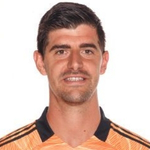
Thibaut Courtois is the undisputed starter — a Champions League winner with Real Madrid and arguably the best goalkeeper of his generation. His shot-stopping and aerial command give Belgium a significant safety net, and the position is the least concerning area of the squad.
Squad












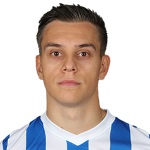
 Manager: Rudi GarciaView profile →
Fixtures & results
Frequently asked questions
What are Belgium's chances of winning the 2026 World Cup?
Belgium have a 3% chance to win the World Cup and 7% to reach the final, per our simulation.
What group is Belgium in at the 2026 World Cup?
Belgium are in Group G at the 2026 FIFA World Cup.
Who is Belgium's manager?
Belgium are managed by Rudi Garcia.
Who are Belgium's players to watch?
Key players to watch for Belgium include Kevin De Bruyne, Romelu Lukaku, Jérémy Doku.
See the full World Cup 2026 title odds and predicted bracket.