Qatar
About Qatar

Qatar made history as the first Middle Eastern nation to host the FIFA World Cup in 2022, but their debut on that stage was painful: they became the first host nation to be eliminated in the group stage, losing to Ecuador, Senegal, and the Netherlands without winning a match. Before 2022 they had never qualified for a World Cup. Their proudest moment remains the 2019 AFC Asian Cup triumph on home soil, where Almoez Ali finished as top scorer. The 2026 tournament represents their first chance to prove 2022 was not a ceiling.
Qatar are out of the World Cup
Qatar did not advance from the group stage, so there is no knockout path to project.
Players to watch
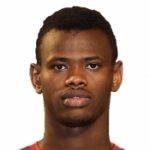
 Akram Afif
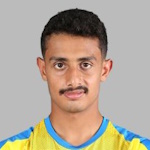
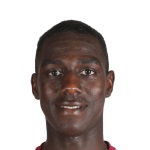 Almoez Ali
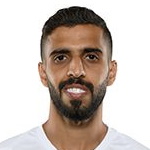 Hassan Al-Haydos
Lopetegui organises Qatar in a 4-3-3, with Akram Afif and Edmílson Junior providing width and directness on the flanks around a central striker. Karim Boudiaf anchors the midfield as a defensive screen, allowing Abdulaziz Hatem and Assim Madibo to carry the ball forward. The full-backs Pedro Miguel and Sultan Al Brake push high to create overloads, and the press is triggered from the front three to force turnovers in the middle third.
The player every neutral should watch is Akram Afif, Qatar's left-sided forward whose dribbling and direct running earned him the 2023 AFC Asian Cup Golden Ball after he scored a hat-trick of penalties in the final. Almoez Ali is the finisher — his scissor-kick goal against Saudi Arabia at the 2019 Asian Cup remains one of the competition's great moments. Hassan Al-Haydos, the veteran captain, provides the creative intelligence and set-piece delivery that ties the attack together.
Akram Afif is a genuine match-winner capable of creating something from nothing, and his partnership with Edmílson Junior gives Qatar pace and unpredictability in wide areas. Karim Boudiaf's experience and positional discipline provides a reliable defensive foundation that keeps the team's shape intact under pressure.
The entire squad plays in the Qatar Stars League, meaning almost no player is tested weekly against top-tier opposition — a structural disadvantage that showed brutally at the 2022 World Cup. Almoez Ali's hold-up play and aerial work can be isolated when service is poor, and the team has historically struggled to maintain intensity across 90 minutes against high-pressing sides.
The lines
Almoez Ali leads the line as the central striker, relying on movement and finishing instinct. Akram Afif attacks from the left with direct dribbling, while Edmílson Junior provides pace and width on the right. Hassan Al-Haydos offers a creative alternative from a deeper forward role.
Karim Boudiaf sits deepest, protecting the back four and recycling possession. Abdulaziz Hatem is the most technically refined of the three, capable of progressing the ball through tight spaces. Assim Madibo adds box-to-box energy and defensive cover, giving Lopetegui's midfield triangle both grit and mobility.
Pedro Miguel is the most experienced defender in the squad and organises the left side of the back four. Boualem Khoukhi provides aerial presence and leadership in central defence. Sultan Al Brake is the more attack-minded right back. The unit is compact but has been exposed by pace and direct play at previous tournaments.
Meshaal Barsham is the expected first choice, having been Qatar's number one at the 2022 World Cup. He is a capable shot-stopper at domestic level but was unable to prevent Qatar from conceding seven goals across three group-stage matches in 2022.
Squad













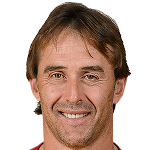 Manager: Julen LopeteguiView profile →
Fixtures & results
Frequently asked questions
What group is Qatar in at the 2026 World Cup?
Qatar are in Group B at the 2026 FIFA World Cup.
Who is Qatar's manager?
Qatar are managed by Julen Lopetegui.
Who are Qatar's players to watch?
Key players to watch for Qatar include Akram Afif, Almoez Ali, Hassan Al-Haydos.
See the full World Cup 2026 title odds and predicted bracket.