Australia
About Australia

Australia's golden era arrived at the 2006 World Cup in Germany, where Guus Hiddink guided them past Uruguay in a penalty shootout before a last-16 exit to Italy decided by a controversial Francesco Totti penalty. Tim Cahill's thunderous volleys became the defining image of Socceroos football across four World Cups. Australia qualified again in 2010, 2014, and 2022, reaching the quarter-finals in Qatar — their best finish since 2006 — after Mathew Leckie's solo goal eliminated Denmark and a shootout victory over Argentina's conquerors, the hosts.
Australia are out of the World Cup
Australia were knocked out in the Round of 32, losing 1–1 to IR Iran.
Players to watch
 Nestory Irankunda
 Jackson Irvine
Popovic typically sets Australia in a 4-3-3 or 4-2-3-1 that prioritises defensive compactness and rapid counter-attacks. Jackson Irvine drives forward from central midfield while Connor Metcalfe — also from St. Pauli — provides relentless pressing from a wider position. Nestory Irankunda and Awer Mabil stretch defences in behind, and the team looks to win the ball high and transition quickly rather than sustain possession through elaborate build-up.
Watch Nestory Irankunda first — the teenage winger signed by Watford from Bayern Munich's academy carries blistering pace and the directness to unsettle any full-back at this level. Jackson Irvine is the Socceroos' engine, a box-to-box midfielder who has captained the side and thrived in St. Pauli's high-intensity Bundesliga environment. Harry Souttar, when fit, gives Australia a commanding aerial presence and composure in possession that no other centre-back in this squad can match.
Jackson Irvine's leadership and engine in midfield give Australia genuine Bundesliga-tested intensity in the press. Nestory Irankunda's raw pace is a constant counter-attacking threat, and Mathew Leckie's big-game experience — he scored the goal that sent Australia to the 2022 quarter-finals — provides a proven match-winner.
Harry Souttar's injury record at Leicester City is a real concern; if he misses games, the central defensive options drop sharply in quality. Creative midfield depth is also thin — beyond Irvine, Cristian Volpato and Ajdin Hrustic must step up, and neither has yet nailed down consistent international form.
The lines
Mathew Leckie brings experience and a proven nose for crucial goals, while Nestory Irankunda and Awer Mabil offer pace on either flank. Tete Yengi and Mohamed Toure provide physical options through the middle when Australia need to hold the ball up.
Jackson Irvine is the fulcrum — combative, mobile, and capable of arriving late into the box. Connor Metcalfe presses relentlessly alongside him, a partnership forged at St. Pauli. Ajdin Hrustic and Cristian Volpato compete for the creative role behind the forwards.
Harry Souttar's aerial dominance anchors the back four when fit, with Alessandro Circati and Cameron Burgess as cover. Jordan Bos at Feyenoord brings genuine European pedigree at left-back. The unit is organised but relies heavily on Souttar staying healthy throughout the tournament.
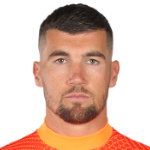
Mathew Ryan, now at Levante after spells at Brighton and Real Sociedad, remains Australia's undisputed first choice. He has over 80 caps and is an experienced shot-stopper who marshals his defence confidently — a reliable foundation for Popovic's defensive structure.
Squad
















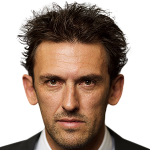 Manager: Tony PopovicView profile →
Fixtures & results
Frequently asked questions
What group is Australia in at the 2026 World Cup?
Australia are in Group D at the 2026 FIFA World Cup.
Who is Australia's manager?
Australia are managed by Tony Popovic.
Who are Australia's players to watch?
Key players to watch for Australia include Nestory Irankunda, Jackson Irvine, Harry Souttar.
See the full World Cup 2026 title odds and predicted bracket.