Austria
About Austria
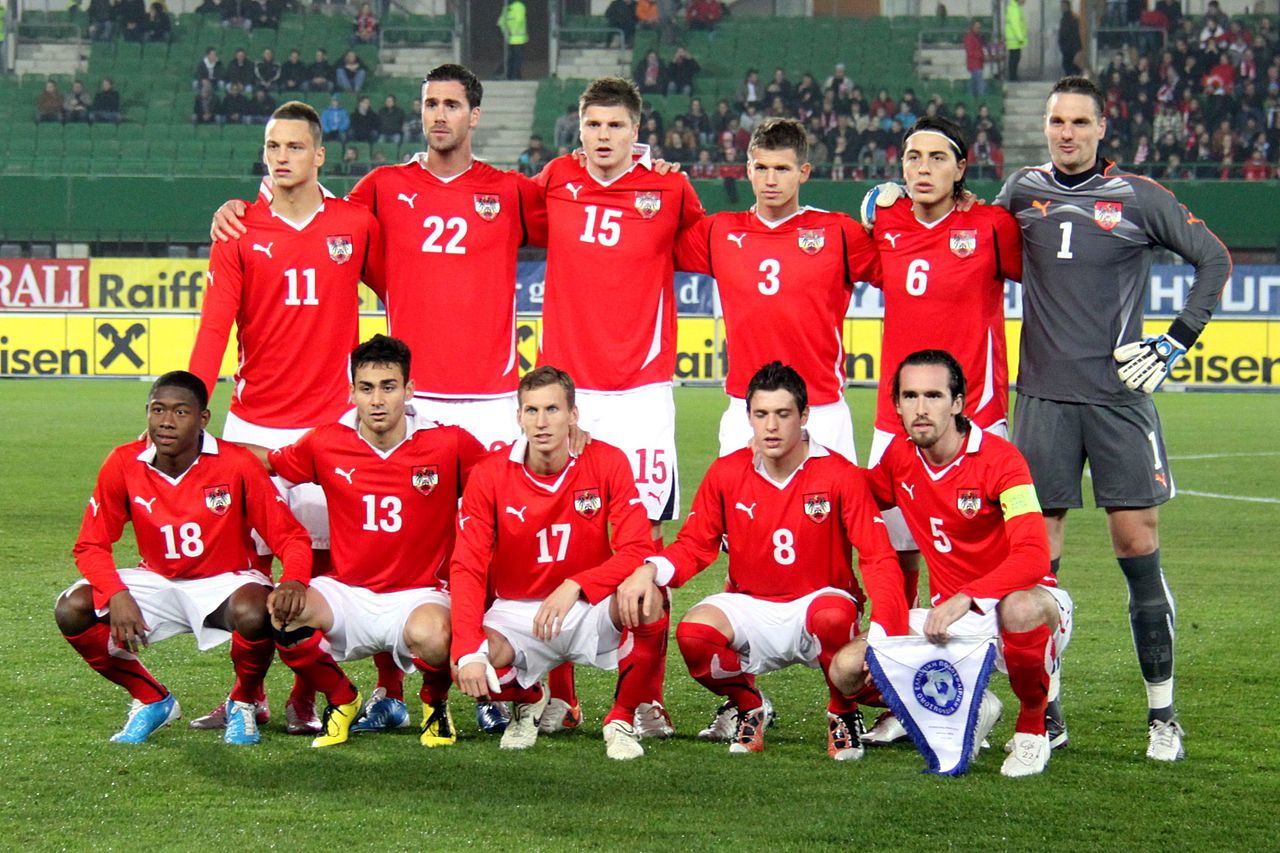
Austria were a genuine world power in the 1930s, with the celebrated Wunderteam coached by Hugo Meisl finishing fourth at the 1934 World Cup. Ernst Ocwirk and Gerhard Hanappi carried the tradition into the 1950s, and the 1978 squad produced the infamous 'Disgrace of Gijón' match against West Germany in 1982. Austria's most recent World Cup appearance was 1998 in France. The 2026 tournament represents their return to the global stage after a long absence, arriving with genuine Bundesliga and Champions League quality throughout the squad.
Austria are out of the World Cup
Austria were knocked out in the Round of 32, losing 0–3 to Spain.
Players to watch
Rangnick sets Austria up in a 4-2-2-2, with Nicolas Seiwald and Xaver Schlager forming a disciplined double pivot that protects the back four and recycles possession quickly. The two tens — typically Christoph Baumgartner and Marcel Sabitzer — press aggressively in the half-space. Konrad Laimer can push into a more advanced role. David Alaba drives out from left-back to initiate build-up, giving Austria an extra passing option in the first phase.
The spine of this Austria side runs through David Alaba, whose ability to carry the ball from deep at Real Madrid makes him the team's most complete footballer — a left-sided defender who reads the game at the highest level. Marcel Sabitzer brings relentless pressing and late runs into the box that Borussia Dortmund rely on, while Konrad Laimer is Bayern Munich's engine room made national — a tireless, ball-winning midfielder who covers ground at an extraordinary rate.
Austria's midfield press is among the most organised in the tournament, with Laimer, Seiwald, and Sabitzer capable of suffocating opponents in their own half. Alaba's technical quality at centre-back or left-back gives Austria a genuine ball-player at the back who can break lines under pressure.
The striker position is a concern: Marko Arnautovic is now at Red Star Belgrade in the twilight of his career, and Sasa Kalajdzic has suffered serious knee injuries that have disrupted his development. Austria lack a reliable 20-goal-a-season centre-forward, which could blunt their attacking transitions despite the quality behind the front line.
The lines
Arnautovic remains the focal point — physical, experienced, and capable of moments of quality — but his form at Red Star Belgrade is a question mark. Michael Gregoritsch offers an aerial threat from Augsburg, while Baumgartner frequently drifts into the front line from a deeper position to create overloads.
Seiwald and Xaver Schlager anchor the double pivot with discipline and range of passing, both products of the Red Bull football network. Sabitzer operates ahead of them with energy and technical quality, and Laimer provides relentless pressing intensity and box-to-box dynamism that Bayern Munich have come to depend on.
Alaba is the defensive leader, reading danger and distributing from the back with Real Madrid composure. Kevin Danso at Tottenham provides physicality alongside him. Marco Friedl and Stefan Posch offer reliable cover at full-back, though the unit's cohesion depends heavily on Alaba staying fit throughout the tournament.
Alexander Schlager of RB Salzburg is the expected first choice, experienced within the Red Bull system and comfortable with the high defensive line Rangnick demands. He is a reliable domestic-level keeper, though he has limited exposure to the highest European club competition.
Squad

























 Manager: Ralf RangnickView profile →
Fixtures & results
Frequently asked questions
What group is Austria in at the 2026 World Cup?
Austria are in Group J at the 2026 FIFA World Cup.
Who is Austria's manager?
Austria are managed by Ralf Rangnick.
Who are Austria's players to watch?
Key players to watch for Austria include David Alaba, Marcel Sabitzer, Konrad Laimer.
See the full World Cup 2026 title odds and predicted bracket.