Croatia
About Croatia

Croatia's World Cup story is astonishingly rich for a nation that only declared independence in 1991. Davor Šuker won the Golden Boot at France 1998 as Croatia finished third on debut. After years of group-stage exits, Dalic revived the golden generation: Croatia reached the 2018 final in Russia, losing to France, then claimed third place in Qatar 2022 by beating Morocco. Luka Modric won the 2018 Golden Ball. No other nation has reached two consecutive World Cup finals and third-place finishes in the modern era.
Croatia are out of the World Cup
Croatia were knocked out in the Round of 32, losing 1–2 to Portugal.
Players to watch
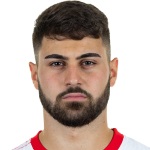 Josko Gvardiol
Dalic typically deploys a 4-3-3 with Kovacic as the box-to-box driver, Modric as the deep-lying playmaker, and Mario Pasalic or Luka Sucic as the third midfielder. Croatia build patiently from the back through Gvardiol, invite pressure, then exploit transitions with quick vertical passes. They are not a high-press team — they defend in a mid-block and rely on midfield quality to control tempo rather than intensity.
Watch Mateo Kovacic for the relentless engine work that makes Manchester City's midfield tick — his pressing triggers and forward carries are what give Croatia's build-up its tempo. Josko Gvardiol has become one of Europe's elite left-sided defenders, combining aggressive man-marking with the ability to drive forward from the back. And then there is Luka Modric, now at AC Milan in the twilight of a career that has redefined what a central midfielder can be — his spatial intelligence and touch remain extraordinary.
Croatia's midfield depth is genuinely elite: Kovacic, Modric, Pasalic, and the emerging Luka Sucic at Real Sociedad give Dalic options that most squads cannot match. Gvardiol's ability to carry the ball from deep adds a structural attacking dimension that bypasses the press.
The central striking position is a persistent concern — Andrej Kramaric is reliable but not a world-class finisher, and Petar Musa (FC Dallas) and Igor Matanovic (Freiburg) are unproven at this level. Croatia also depend heavily on Modric, now in his late thirties, and any dip in his performance directly reduces the team's creative output.
The lines
Andrej Kramaric leads the line with intelligent movement and a reliable goal return for Hoffenheim. Ivan Perisic, back from PSV Eindhoven, provides width and delivery. Ante Budimir offers a physical aerial option, while Marco Pasalic and Matanovic provide depth without proven international pedigree.
Modric orchestrates from deep, reading the game rather than covering ground. Kovacic does the pressing and carrying that Modric no longer needs to. Mario Pasalic contributes goals from late runs — he is Atalanta's most consistent midfielder — while Luka Sucic and Martin Baturina (Como) represent the next generation pushing for minutes.
Gvardiol anchors the left side and is Croatia's most important outfield defender. Josip Stanisic (Bayern Munich) covers the right. Duje Caleta-Car and Josip Sutalo (Ajax) compete for centre-back spots, with Marin Pongracic (Fiorentina) as cover. The unit is organised but not individually dominant beyond Gvardiol.
Dominik Livakovic is the undisputed first choice, having saved three penalties against Japan in the 2022 round of sixteen. Now back at Dinamo Zagreb, his shot-stopping in high-pressure moments is Croatia's most reliable last line of defence.
Squad
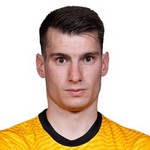
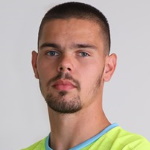







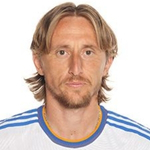

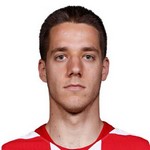




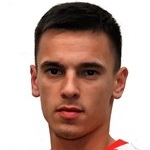


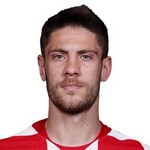
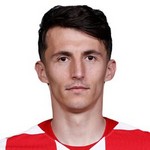



 Manager: Zlatko DalicView profile →
Fixtures & results
Frequently asked questions
What group is Croatia in at the 2026 World Cup?
Croatia are in Group L at the 2026 FIFA World Cup.
Who is Croatia's manager?
Croatia are managed by Zlatko Dalic.
Who are Croatia's players to watch?
Key players to watch for Croatia include Luka Modric, Mateo Kovacic, Josko Gvardiol.
See the full World Cup 2026 title odds and predicted bracket.