Switzerland
About Switzerland

Switzerland have never won the World Cup but boast a respectable record as consistent qualifiers. They hosted the tournament in 1954, reaching the quarter-finals on home soil. Their most celebrated modern run came at Brazil 2014, where they reached the last 16, and they repeated that at Russia 2018 and Qatar 2022. At Euro 2020 they famously eliminated France on penalties in the last 16. Xherdan Shaqiri and Stephan Lichtsteiner defined their previous golden generation; this squad aims to go further.
Switzerland's road to the final
Players to watch
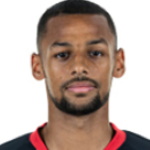
 Breel Embolo
Yakin typically lines up in a 4-2-3-1, with Xhaka and Remo Freuler forming a disciplined double pivot that protects the back four and recycles possession efficiently. Akanji steps into midfield during build-up phases, giving Switzerland an extra passing option from deep. Wide midfielders Rubén Vargas and Dan Ndoye provide pace on transitions, while the team presses in organised mid-block rather than high-intensity pressing.
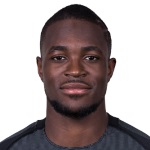
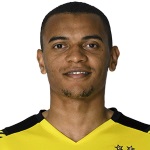
The engine of this Swiss side is Granit Xhaka, whose move to Sunderland after years at Arsenal has done nothing to diminish his authority as a ball-winning, tempo-setting captain. Manuel Akanji brings Champions League-level composure from Inter Milan's back line, reading danger before it materialises. Up front, Breel Embolo — the man who scored against his native Cameroon at Qatar 2022 — offers the physical directness and box presence Switzerland's attack is built around.
Akanji's ability to carry the ball out from defence gives Switzerland a clean first line of build-up that many sides cannot disrupt. Xhaka's positional discipline and passing range make Switzerland difficult to press effectively, and Freuler's tireless covering at Bologna has made him one of Europe's most reliable pivots.
Switzerland's attack can stall when Embolo is isolated — Amdouni and Itten are Bundesliga/Championship-level backups rather than genuine world-class alternatives. Set-piece delivery has also been an inconsistent source of goals, and the squad lacks a natural wide forward who can consistently beat defenders one-on-one at the highest level.
The lines
Embolo leads the line with physicality and intelligent movement, while Noah Okafor and Dan Ndoye offer pace from wider positions. Zeki Amdouni provides an energetic option off the bench, though Switzerland's attack remains reliant on Embolo staying fit and finding form.
Xhaka and Freuler form one of international football's most reliable double pivots — combative, positionally astute, and technically sound. Ardon Jashari, the AC Milan teenager, adds dynamism and forward runs. Denis Zakaria and Djibril Sow provide depth, ensuring Yakin can rotate without significant drop-off in the holding roles.
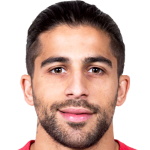
Akanji is the clear leader of a back four that also features Nico Elvedi and veteran left-back Ricardo Rodriguez, whose experience at Real Betis keeps him relevant. Silvan Widmer is an attacking right-back option. The unit is organised and hard to break down in a low block but can be stretched by pace in behind.
Gregor Kobel of Borussia Dortmund is the clear first choice — a commanding shot-stopper who was a key figure in Dortmund's run to the Champions League final in 2024. He brings elite club experience to the position and gives Switzerland genuine reliability between the posts.
Squad


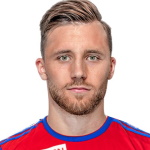





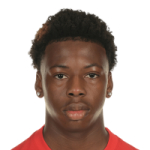
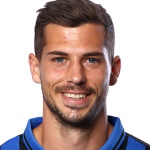
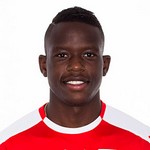









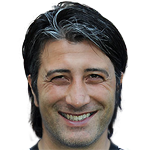 Manager: Murat YakinView profile →
Fixtures & results
Frequently asked questions
What are Switzerland's chances of winning the 2026 World Cup?
Switzerland have a 1% chance to win the World Cup and 4% to reach the final, per our simulation.
What group is Switzerland in at the 2026 World Cup?
Switzerland are in Group B at the 2026 FIFA World Cup.
Who is Switzerland's manager?
Switzerland are managed by Murat Yakin.
Who are Switzerland's players to watch?
Key players to watch for Switzerland include Granit Xhaka, Manuel Akanji, Breel Embolo.
See the full World Cup 2026 title odds and predicted bracket.