Tunisia
About Tunisia

Tunisia became the first African nation to win a World Cup match, defeating Mexico in 1978. They have qualified for six World Cups in total, though knockout-round football has eluded them — their best group-stage performance came in 2018 in Russia, where they beat Panama but were eliminated. Sami Trabelsi and Radhi Jaïdi remain iconic figures from their 2006 campaign. The Eagles of Carthage arrive at 2026 hungry to finally breach the round of 16 for the first time.
Tunisia are out of the World Cup
Tunisia did not advance from the group stage, so there is no knockout path to project.
Players to watch
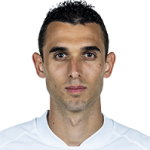 Ellyes Skhiri
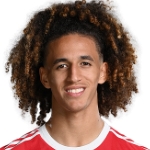 Hannibal Mejbri
Lamouchi typically deploys a 4-3-3 or 4-2-3-1 that sits in a mid-block and looks to win the ball back quickly. Skhiri and Rani Khedira — both Bundesliga-hardened — form a physical double pivot, while Hannibal Mejbri operates as the advanced midfielder linking play. Wide forwards press aggressively to force turnovers, and the team relies on rapid vertical transitions rather than patient build-up through the thirds.
The engine of this Tunisia side runs through Ellyes Skhiri, whose combative ball-winning and progressive passing from deep at Eintracht Frankfurt make him the heartbeat of the midfield. Alongside him, Hannibal Mejbri brings the unpredictability of a player who thrives in tight spaces — his dribbling and pressing intensity at Burnley mark him as the creative disruptor. At the back, Montassar Talbi offers composure and aerial authority from Lorient, anchoring a defence that needs a leader.
The double pivot of Skhiri and Khedira gives Tunisia genuine Bundesliga-level physicality and defensive cover in midfield. Hannibal Mejbri's ability to carry the ball under pressure and break lines offers a creative outlet that few African sides can match, making Tunisia dangerous on the counter.
The goalkeeping options — Aymen Dahmen, Sabri Ben Hessen and Abdelmouhib Chamakh — are all based in Tunisian domestic football or lower European leagues, raising questions about the standard behind the sticks. Up front, the attacking options lack consistent top-flight European experience, with Khalil Ayari at PSG largely a fringe player rather than a proven scorer.
The lines
Khalil Ayari carries the most prestigious club pedigree among the forwards despite limited PSG minutes, while Sebastian Tounekti at Celtic provides pace and pressing from wide. Ismaël Gharbi at Augsburg and Elias Achouri at Copenhagen offer youthful directness, though none arrives as a prolific goal-scorer at the highest level.
Skhiri and Khedira form a physically imposing double pivot — one winning, one distributing — while Hannibal Mejbri operates ahead of them as the creative fulcrum. Anis Ben Slimane at Norwich adds technical quality in reserve. The midfield trio is arguably Tunisia's most cohesive and European-tested unit.
Montassar Talbi is the defensive cornerstone, composed in possession and strong aerially for Lorient. Dylan Bronn at Servette and Yan Valery at Young Boys provide experienced cover, while Ali Abdi at Nice adds quality at full-back. The back line is organised under Lamouchi but has limited exposure to elite attacking opposition.
Aymen Dahmen of CS Sfaxien is the expected first choice, a reliable domestic-level stopper but untested against top international forwards. With all three goalkeepers playing outside Europe's major leagues, the position represents a genuine vulnerability for Tunisia at this level.
Squad






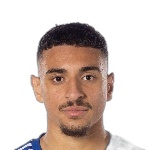


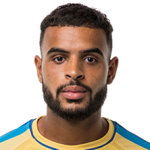

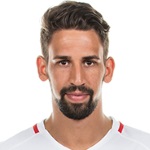



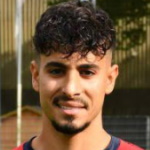
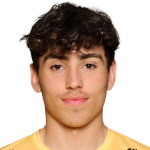



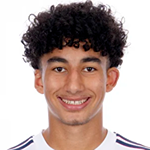
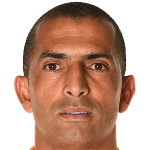 Manager: Sabri LamouchiView profile →
Fixtures & results
Frequently asked questions
What group is Tunisia in at the 2026 World Cup?
Tunisia are in Group F at the 2026 FIFA World Cup.
Who is Tunisia's manager?
Tunisia are managed by Sabri Lamouchi.
Who are Tunisia's players to watch?
Key players to watch for Tunisia include Ellyes Skhiri, Hannibal Mejbri, Montassar Talbi.
See the full World Cup 2026 title odds and predicted bracket.