Brazil
About Brazil

Brazil remain the only nation to have won five FIFA World Cups — 1958, 1962, 1970, 1994, and 2002 — and the only team to have appeared at every tournament. Pelé won three of those titles, Ronaldo was the top scorer in 2002, and Ronaldinho defined the 2002 campaign's brilliance. The shadow of 2014 looms large: a 7-1 semi-final defeat to Germany on home soil remains the tournament's most traumatic result. Brazil have not lifted the trophy since 2002 and arrive in 2026 desperate to end that 24-year wait.
Brazil's road to the final
Players to watch
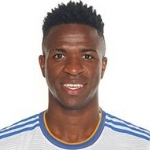 Vinícius Júnior
 Raphinha
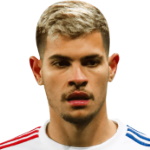 Bruno Guimarães
Ancelotti typically deploys a 4-3-3 with Vinícius Júnior on the left and Raphinha on the right, both given licence to cut inside. Bruno Guimarães sits at the base of a midfield triangle, recycling possession and breaking up play, while Lucas Paquetá and Casemiro provide the legs and creativity ahead of him. Brazil press aggressively in transition but are equally comfortable dropping into a compact mid-block and exploiting space on the counter.
Watch Vinícius Júnior for the moments that make stadiums gasp — the Real Madrid winger's low centre of gravity and explosive acceleration make him the most dangerous one-on-one attacker in the tournament. Raphinha brings relentless pressing and a clinical left foot from the right flank, having been Barcelona's top scorer in La Liga. Bruno Guimarães is the engine beneath it all, a box-to-box Newcastle midfielder who reads the game a tempo ahead of opponents.
The wide forward pairing of Vinícius Júnior and Raphinha is arguably the most dangerous in the tournament, capable of isolating full-backs and creating chances from nothing. Bruno Guimarães gives Brazil a genuine defensive midfielder who can also progress the ball, solving a positional problem that plagued the 2022 campaign.
Casemiro's decline at Manchester United raises real questions about his ability to cover ground at tournament pace, and Ancelotti has yet to find a settled midfield combination. The return of Neymar from a lengthy ACL injury at Santos means Brazil's most decorated active player arrives severely undercooked in match fitness and rhythm.
The lines
Vinícius Júnior and Raphinha provide width and direct threat, while Endrick, the teenage Lyon forward, offers a physical centre-forward option. Matheus Cunha and Gabriel Martinelli provide depth, and Neymar's fitness will determine whether he contributes meaningfully.
Bruno Guimarães anchors the unit with his pressing and distribution, while Lucas Paquetá operates as the creative link between midfield and attack. Casemiro offers experience and set-piece authority but his mobility is a concern, and Danilo Santos provides a younger, more dynamic alternative from Botafogo.
Marquinhos captains the backline from PSG and remains Brazil's most reliable centre-back, partnered by Gabriel Magalhães, Arsenal's commanding left-footed defender. Bremer offers depth from Juventus. The full-back positions carry more uncertainty, with veteran Danilo and Alex Sandro both in the later stages of their careers.
Alisson remains one of the world's elite goalkeepers and Brazil's undisputed first choice. The Liverpool stopper's distribution, shot-stopping, and reading of crosses make the position a genuine strength. Éderson, now at Fenerbahce, provides experienced cover.
Squad



















 Manager: Carlo AncelottiView profile →
Fixtures & results
Frequently asked questions
What are Brazil's chances of winning the 2026 World Cup?
Brazil have a 7% chance to win the World Cup and 16% to reach the final, per our simulation.
What group is Brazil in at the 2026 World Cup?
Brazil are in Group C at the 2026 FIFA World Cup.
Who is Brazil's manager?
Brazil are managed by Carlo Ancelotti.
Who are Brazil's players to watch?
Key players to watch for Brazil include Vinícius Júnior, Raphinha, Bruno Guimarães.
See the full World Cup 2026 title odds and predicted bracket.