France
About France

France are two-time world champions, lifting the trophy in 1998 on home soil — with Zinedine Zidane scoring twice in the final against Brazil — and again in Russia in 2018 with a Mbappé-inspired 4-2 victory over Croatia. They were runners-up in 2006, when Zidane's headbutt in the final became one of football's most infamous moments, and again in 2022 after a stunning comeback against Argentina fell short in penalties. France enter 2026 as one of the sport's most consistently elite nations.
France are out of the World Cup
France were knocked out in the Semi-finals, losing 0–2 to Spain.
Players to watch
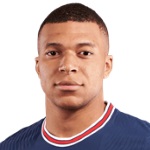 Kylian Mbappé
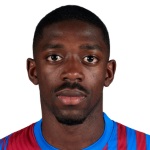 Ousmane Dembélé
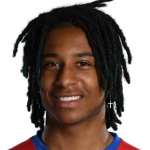 Michael Olise
Deschamps typically lines up in a 4-3-3, with Aurélien Tchouaméni anchoring deep and N'Golo Kanté providing relentless press-recovery around him. Warren Zaïre-Emery or Manu Koné adds vertical mobility as the third midfielder. Wide forwards Dembélé and Olise cut inside, freeing Malo Gusto and Theo Hernández to overlap. France defend compactly and transition at devastating speed through Mbappé.
Watch Kylian Mbappé for the moments that stop tournaments dead — his acceleration and finishing at Real Madrid have only sharpened since his 2018 winner's medal. Ousmane Dembélé at PSG has reinvented himself as a creator, leading Ligue 1 in assists, while Michael Olise's diagonal runs and left-footed strikes at Bayern Munich make him the most exciting wildcard in the squad.
France's depth at every position is unmatched in this tournament — William Saliba and Ibrahima Konaté form one of the most physically dominant centre-back pairings in the world. The front three's combined pace is a structural problem for any defence, and Kanté's return to fitness adds a press-resistance engine few nations can replicate.
Deschamps has occasionally been too conservative, sacrificing Dembélé's creativity for defensive width. The left-back position carries risk with Theo Hernández now at Al Hilal and no longer playing at the highest European club level. Converting dominance into goals against deep defensive blocks has also been a recurring issue, as the 2022 group stage showed.
The lines
Mbappé leads the line with Dembélé and Olise flanking him, creating a front three with elite pace, dribbling, and finishing. Marcus Thuram offers a powerful physical alternative through the middle, while Bradley Barcola and Désiré Doué provide genuine depth from the bench.
Tchouaméni anchors the three as the deepest midfielder, reading danger and distributing calmly. Kanté operates as the press-and-recover engine alongside him, while Zaïre-Emery's forward runs and Adrien Rabiot's physicality give Deschamps options for different game states. It is a midfield built for control and transition.
Saliba and Konaté are among the most commanding centre-back partnerships at this tournament — both dominant aerially and composed in possession. Jules Koundé adds versatility at right-back or centre, while Lucas Hernández and Dayot Upamecano provide experienced cover. Malo Gusto is the likely first-choice right-back.
Mike Maignan is the clear first choice — the AC Milan goalkeeper is one of Europe's best shot-stoppers and an exceptional sweeper-keeper. His distribution underpins France's high defensive line, and he has been outstanding in Serie A for several seasons.
Squad

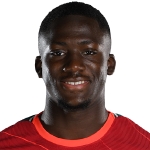
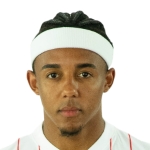
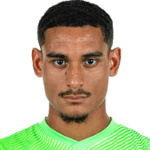
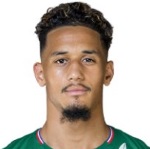
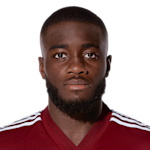
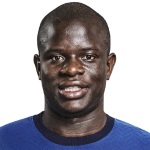
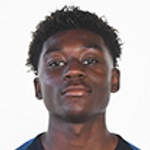

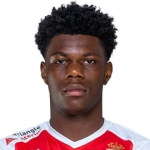
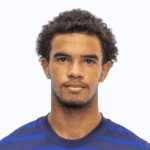
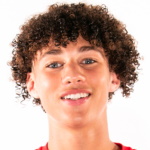
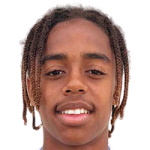


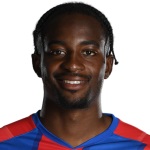
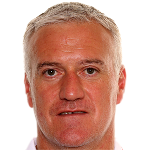 Manager: Didier DeschampsView profile →
Fixtures & results
Frequently asked questions
What group is France in at the 2026 World Cup?
France are in Group I at the 2026 FIFA World Cup.
Who is France's manager?
France are managed by Didier Deschamps.
Who are France's players to watch?
Key players to watch for France include Kylian Mbappé, Ousmane Dembélé, Michael Olise.
See the full World Cup 2026 title odds and predicted bracket.