Spain
About Spain

Spain won the World Cup once, in 2010 in South Africa, with Iker Casillas, Xavi, Andrés Iniesta and David Villa at the heart of a side that played tiki-taka into global consciousness. Iniesta's extra-time winner against the Netherlands remains one of the tournament's defining moments. Spain also won three consecutive major tournaments between 2008 and 2012. They arrive at 2026 as Euro 2024 champions and genuine favourites, with arguably their most talented generation since that golden era.
Spain's road to the final
Players to watch
 Lamine Yamal
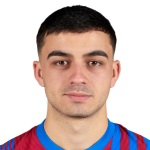 Pedri
Pedri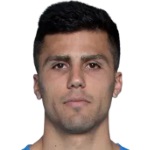 Rodri
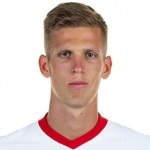
RodriDe la Fuente deploys a 4-2-3-1 or 4-3-3 depending on the opponent, with Rodri sitting deep as the pivot and Pedri or Fabián Ruiz carrying the ball forward. Marc Cucurella and Álex Grimaldo push high as inverted or overlapping full-backs, creating overloads wide. Lamine Yamal and Nico Williams stretch defences on the flanks while Dani Olmo operates as the advanced central link.
Watch Lamine Yamal for the sheer audacity of a teenager who already tormented defenders at Euro 2024 with his dribbling and diagonal cutting from the right. Pedri is the metronome who makes Spain's positional game tick — always available, always turning forward. Rodri anchors everything from deep, reading the game a beat faster than anyone around him and dictating tempo with his passing range.
Spain's midfield density — Rodri, Pedri, Zubimendi and Fabián Ruiz all competing for starts — gives De la Fuente elite options in the engine room. The Yamal–Williams wide pairing is the most explosive in international football, capable of unlocking any defence with direct dribbling and combination play.
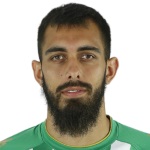
Spain lack a natural penalty-box striker in this squad; Borja Iglesias and Ferran Torres are the most conventional options but neither guarantees goals at the highest level. If Rodri picks up an injury — as happened at club level in 2024-25 — Spain's entire defensive structure loses its most important organising presence.
The lines
Lamine Yamal and Nico Williams provide pace and directness from wide positions, while Dani Olmo offers creativity and pressing intensity through the middle. Mikel Oyarzabal, who scored the winning goal in the Euro 2024 final, provides a clinical option off the bench.
Rodri anchors the double pivot, shielding the defence and distributing with authority. Pedri links play between the lines with his close control and vision. Martín Zubimendi and Fabián Ruiz offer contrasting options — the former disciplined and positional, the latter more progressive — giving De la Fuente genuine tactical flexibility.
Pau Cubarsí, still a teenager, partners Aymeric Laporte in central defence, bringing composure and a left-footed passing range that suits Spain's build-up. Marc Cucurella and Álex Grimaldo are attack-minded at full-back. The back line is technically excellent but can be exposed by direct, high-tempo transitions.
Unai Simón is the established first choice, having started every game at Euro 2024. He is a strong shot-stopper and comfortable with the ball at his feet — essential for Spain's possession-based build-up from the back. David Raya provides experienced Premier League competition.
Squad



















 Manager: Luis de la FuenteView profile →
Fixtures & results
Frequently asked questions
What are Spain's chances of winning the 2026 World Cup?
Spain have a 13% chance to win the World Cup and 24% to reach the final, per our simulation.
What group is Spain in at the 2026 World Cup?
Spain are in Group H at the 2026 FIFA World Cup.
Who is Spain's manager?
Spain are managed by Luis de la Fuente.
Who are Spain's players to watch?
Key players to watch for Spain include Lamine Yamal, Pedri, Rodri.
See the full World Cup 2026 title odds and predicted bracket.