Sweden
About Sweden

Sweden's finest World Cup moment remains the 1958 tournament on home soil, where they reached the final before losing to a Pelé-inspired Brazil. Zlatan Ibrahimović defined a generation without ever reaching those heights, yet Henrik Larsson and the golden 1994 side — third-place finishers in the USA — showed Sweden can punch above their weight. After missing Russia 2018's knockout rounds early, Sweden have rebuilt around a younger core and arrive at 2026 as genuine dark-horse contenders.
Sweden are out of the World Cup
Sweden were knocked out in the Round of 32, losing 0–3 to France.
Players to watch
 Alexander Isak
 Viktor Gyökeres
 Yasin Ayari
Potter typically deploys a 4-3-3 or 4-2-3-1, with Gyökeres pressing the defensive line aggressively from centre-forward while Isak drifts wide or underlaps. Ayari and Lucas Bergvall provide progressive passing from midfield, with Mattias Svanberg offering the defensive screen. Victor Lindelöf reads the game from centre-back to initiate build-up, and Emil Holm at right-back supports wide overloads.
Watch Viktor Gyökeres first — the Arsenal striker who torched Portuguese football with over 40 goals in a single Sporting season brings relentless pressing and a lethal finish to every game he plays. Alexander Isak offers the counterpoint: languid, technically immaculate, the Liverpool forward glides into space and finishes with ice-cold precision. Teenager Yasin Ayari is Brighton's engine-room prospect, a composed, progressive midfielder who drives Sweden forward with maturity well beyond his years.
The Gyökeres–Isak partnership is one of the most feared forward pairings at the tournament — elite pressing combined with elite finishing. Lindelöf's experience at Aston Villa anchors a defence with genuine Premier League quality, and Bergvall's composure at Tottenham gives midfield a reliable creative outlet.
Goalkeeper Viktor Johansson at Stoke City is a significant step down from top-flight European standard, leaving Sweden vulnerable to elite strikers. Depth behind Gyökeres and Isak is thin — Benjamin Nygren and Alexander Bernhardsson are unproven at this level — meaning injuries to either starter could badly blunt the attack.
The lines
Gyökeres and Isak form a devastating axis — one a high-volume goal machine who presses relentlessly, the other a silky technician who creates from deep. Anthony Elanga provides pace and directness from the wing after a strong Newcastle season, adding a third dimension to Sweden's forward play.
Bergvall at Tottenham is the creative fulcrum, while Ayari drives forward from Brighton with energy and technical quality. Svanberg at Wolfsburg provides the defensive discipline that allows those two to roam. Jesper Karlström offers a more combative alternative, giving Potter genuine tactical flexibility in the engine room.
Lindelöf and Isak Hien, who impressed at Atalanta in Serie A, form a centre-back partnership with genuine top-level pedigree. Emil Holm at Juventus brings athleticism at right-back, while Gabriel Gudmundsson covers the left. Carl Starfelt and Gustaf Lagerbielke provide experienced cover.
Viktor Johansson is the likely starter, but his Championship-level experience with Stoke City makes him the squad's most obvious weak link. Kristoffer Nordfeldt at AIK offers little upgrade, leaving Sweden's goalkeeping situation as a genuine concern heading into the tournament.
Squad

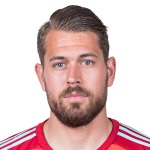

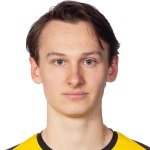


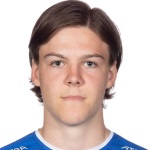






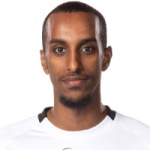

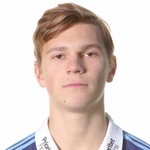
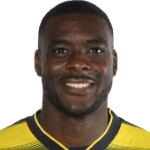



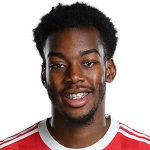
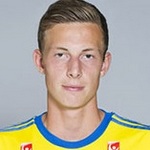

 Manager: Graham PotterView profile →
Fixtures & results
Frequently asked questions
What group is Sweden in at the 2026 World Cup?
Sweden are in Group F at the 2026 FIFA World Cup.
Who is Sweden's manager?
Sweden are managed by Graham Potter.
Who are Sweden's players to watch?
Key players to watch for Sweden include Alexander Isak, Viktor Gyökeres, Yasin Ayari.
See the full World Cup 2026 title odds and predicted bracket.