Portugal
About Portugal

Portugal have never won a World Cup, but their 1966 campaign — led by Eusébio, who finished as the tournament's top scorer — remains their finest hour, ending in third place. Luís Figo and Rui Costa powered another third-place finish in 2006. Cristiano Ronaldo has led them to three successive quarter-finals or better since 2006, including a run to the semi-finals in 2006 under Scolari. They arrive in 2026 as European champions from 2016, hungry to finally convert continental pedigree into global glory.
Portugal's road to the final
Players to watch
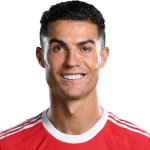 Cristiano Ronaldo
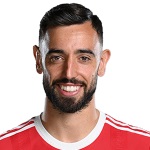 Bruno Fernandes
 Bernardo Silva
Martinez typically deploys a 4-3-3 that compresses into a 4-2-3-1 without the ball, with João Neves and Vitinha forming a double pivot that allows Bruno Fernandes to roam as a ten. Nuno Mendes and João Cancelo push high to create width, while Bernardo Silva drifts inside from the right. Rúben Dias organises the defensive line, and Gonçalo Ramos leads the press from the front.
Watch Bernardo Silva to understand why Portugal's best football happens between the lines — his ability to receive under pressure and accelerate through tight spaces makes him the team's true metronome. Bruno Fernandes supplies the creative chaos, arriving late into the box and delivering the unexpected pass. And then there is Cristiano Ronaldo, now at Al Nassr but still the gravitational centre of this squad, whose movement in the penalty area and dead-ball threat remain genuinely dangerous at any level.
Portugal's midfield depth is exceptional — João Neves, Vitinha, Bernardo Silva and Bruno Fernandes can all control tempo or break lines. Wide creativity is equally rich, with Pedro Neto, Rafael Leão and Francisco Conceição offering genuine pace and directness that punishes teams sitting deep.
The central striking position is a genuine dilemma: Cristiano Ronaldo at 41 is less mobile than the 4-3-3 ideally demands, yet dropping him risks a dressing-room rupture. Gonçalo Ramos is the more natural fit but has not yet imposed himself consistently at international level. Portugal have also repeatedly frozen in knockout moments despite superior possession.
The lines
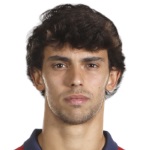
Cristiano Ronaldo leads the line with Rafael Leão and Pedro Neto providing electric width. Gonçalo Ramos offers a more mobile pressing option off the bench, while João Félix and Francisco Conceição give Martinez the ability to shift to a more fluid, interchanging front three.
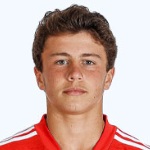
João Neves is the defensive anchor — composed and aggressive in equal measure at PSG. Vitinha links play with quick one-touch combinations, and Bruno Fernandes operates as the creative fulcrum, arriving late into dangerous areas. Bernardo Silva and Rúben Neves provide experienced cover across all three midfield roles.
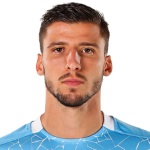
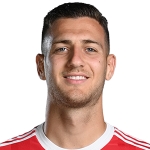
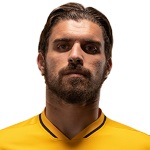
Rúben Dias is the cornerstone — a commanding, vocal centre-back who won the Premier League with Manchester City. Gonçalo Inácio partners him with composure on the ball. Nuno Mendes is one of Europe's best attacking left-backs, while João Cancelo and Diogo Dalot compete for the right flank.
Diogo Costa is the clear first choice, his shot-stopping and distribution from Porto earning him the shirt ahead of José Sá. His penalty-shootout heroics at Euro 2024 — saving three consecutive spot-kicks against Slovenia — underlined his composure in the highest-pressure moments.
Squad



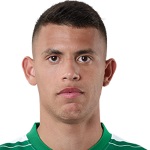
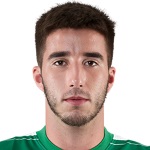
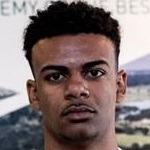
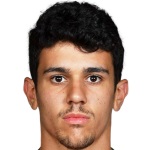


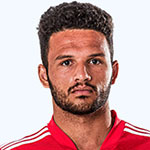
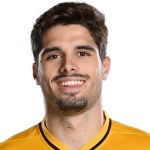
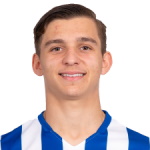


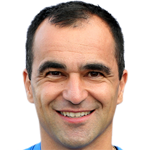 Manager: Roberto MartinezView profile →
Fixtures & results
Frequently asked questions
What are Portugal's chances of winning the 2026 World Cup?
Portugal have a 3% chance to win the World Cup and 8% to reach the final, per our simulation.
What group is Portugal in at the 2026 World Cup?
Portugal are in Group K at the 2026 FIFA World Cup.
Who is Portugal's manager?
Portugal are managed by Roberto Martinez.
Who are Portugal's players to watch?
Key players to watch for Portugal include Cristiano Ronaldo, Bruno Fernandes, Bernardo Silva.
See the full World Cup 2026 title odds and predicted bracket.